You flipped on the kitchen light at 2 AM and something skittered across the counter. Now you’re doom-scrolling Reddit trying to figure out what kind of cockroach you just saw — and whether you should panic. In NYC, the answer depends almost entirely on the species.
German cockroaches and American cockroaches are both common in the city, but they mean very different things for your apartment and your next steps. This guide breaks down exactly how to tell them apart, what each one signals about your living situation, and what to do about it — whether you’re a long-time tenant or still apartment hunting.
What Do German Cockroaches and American Cockroaches Actually Look Like?
Size and color at a glance
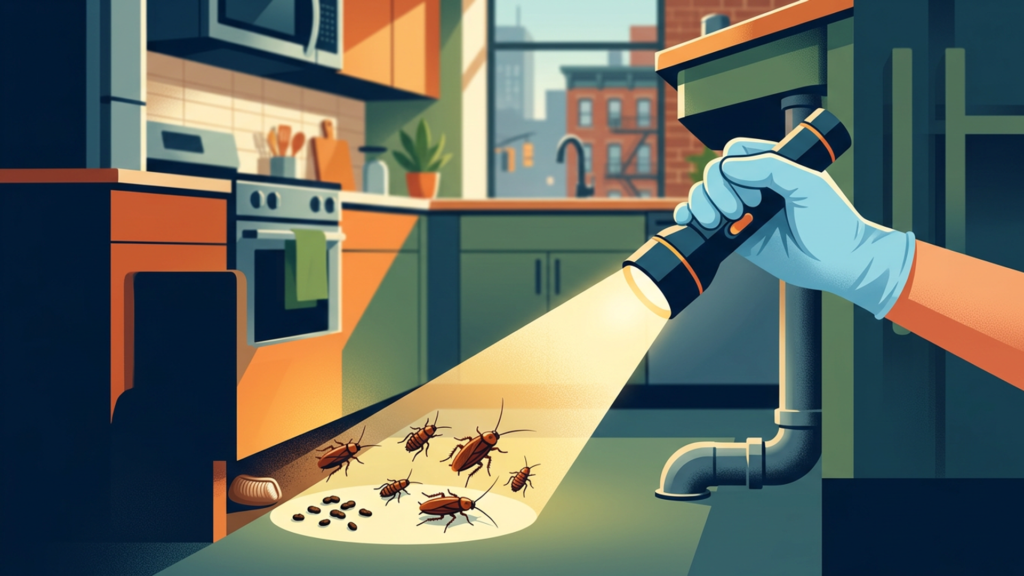
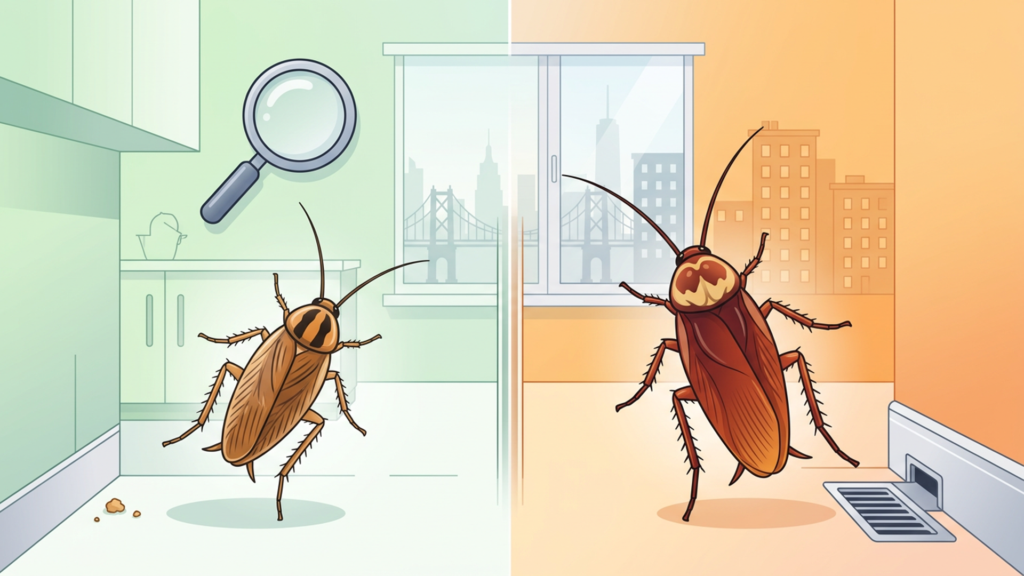
German cockroaches are small — about half an inch to five-eighths of an inch long — light brown to tan, with two distinctive dark parallel stripes running down the back of their head. American cockroaches are an entirely different beast: reddish-brown, 1.5 to over 2 inches long, with a yellowish figure-eight pattern behind the head. The American cockroach is one of the most recognizable household pests worldwide thanks to its size and coloring.
Side by side, there’s no mistaking them. An American roach is roughly three times the size of a German roach. If you need a visual reference, Cornell’s cockroach identification guide has excellent comparison images.
Flight, speed, and behavioral differences
American cockroaches can lift their wings and burst into short, clumsy flight — especially in warm, humid conditions. This is the source of the legendary NYC “flying roach” scream. German cockroaches have wings but almost never fly; they’re fast runners that prefer to stay hidden in cracks and crevices.
You’re more likely to see an American roach out in the open at night. German roaches scatter the instant lights come on in kitchens and bathrooms — they’re masters at staying invisible until the population explodes.
Baby roach (nymph) identification — the critical detail most guides miss
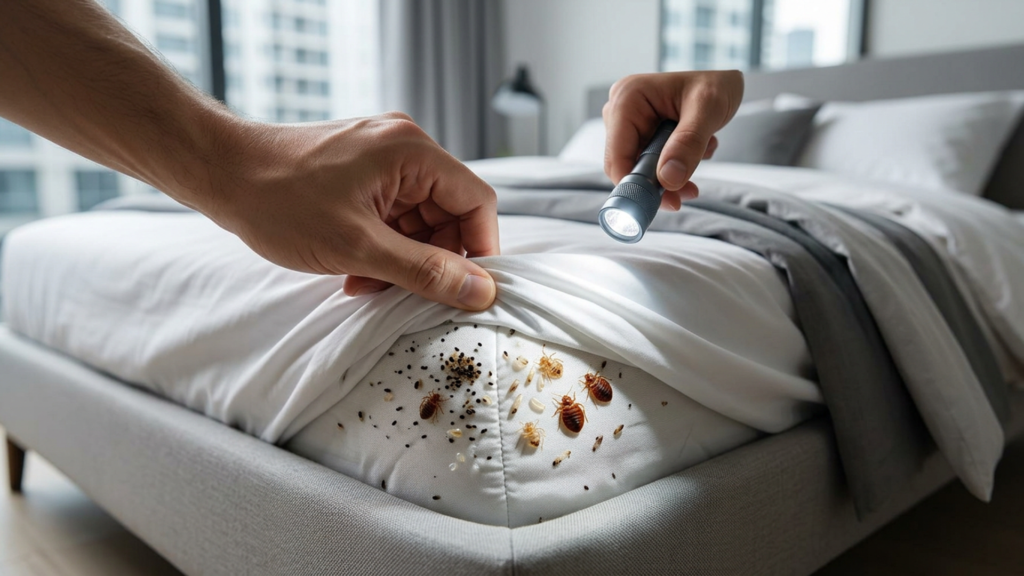
Here’s what most people get wrong. German cockroach nymphs are tiny — just a few millimeters — dark brown to nearly black, with a light stripe down the back. They’re constantly mistaken for bed bugs or other small insects. American cockroach nymphs are larger, uniformly reddish-brown, and lack those distinctive stripes.
Seeing baby roaches of any kind strongly suggests active breeding nearby. If they’re small, dark, and striped, you likely have a German cockroach infestation — the more serious scenario. A guide on identifying types of cockroaches can help you distinguish nymphs from other small insects. When in doubt, look at the stripes and overall shape rather than color alone, since lighting and photo quality make identification tricky.
Wait — What About “Water Bugs” and New Invasive Species in NYC?
The water bug myth NYC residents need to stop believing
Let’s settle this: many New Yorkers call American cockroaches “water bugs” to feel better about the situation. True water bugs are aquatic insects rarely found indoors. Smoky brown cockroaches — another species present in NYC — also get confused with American roaches, though they’re uniformly dark brown with no yellow head markings. The University of Maryland’s cockroach resource explains why correct identification matters, since treatment strategies differ significantly between species.
All the cockroach species you might encounter in NYC
The “big four” in NYC are the German cockroach (most common indoors), American cockroach, Oriental cockroach (dark, slow, often in basements), and brown-banded cockroach (less common, found in drier rooms). Fun fact: American cockroaches actually originated in Africa, and German cockroaches are from Southeast Asia — as Rockefeller University’s genetic diversity project has documented, neither species is from the country its name suggests.
The new cold-tolerant species changing NYC’s pest landscape
In recent years, researchers at Rutgers identified a cockroach never before seen in the U.S. — the Japanese cockroach (Periplaneta japonica) — found right here in NYC. Unlike most cockroach species, this one can survive freezing winter temperatures outdoors, potentially expanding the range and seasonality of roach activity in the city.
That said, scientists say New Yorkers shouldn’t panic yet — the species is unlikely to crossbreed with existing populations. But it’s worth monitoring as the pest landscape evolves.
Why Are Cockroaches So Common in NYC Apartments — And Which Floors Are Worst?
What makes NYC a cockroach paradise
Dense housing, aging infrastructure, shared plumbing, proximity to restaurants and subways, and warm steam-heated apartments create ideal conditions year-round. NYC’s public cockroach data shows roach prevalence varies significantly by neighborhood, building age, and maintenance quality. Summer heat drives seasonal spikes for American cockroaches, while German cockroaches breed year-round indoors regardless of weather.
Floor level and building location matter more than you think
American cockroaches are most common on lower floors — ground level, basements, garden apartments — because they enter from sewers, drains, and building perimeters. German cockroaches can infest any floor. They travel through wall voids, plumbing chases, and shared laundry rooms, meaning a 20th-floor apartment is absolutely not safe.
Apartments adjacent to trash compactor rooms, restaurant ventilation systems, or building garbage areas face significantly higher risk regardless of floor. If you’re dealing with persistent issues in a Manhattan high-rise, pest control in Manhattan often requires building-wide coordination.
Roaches coming from neighboring units — the NYC apartment nightmare
In multi-unit buildings, German cockroaches frequently migrate from infested neighboring apartments through shared walls, pipes, and electrical conduits. Your cleanliness alone cannot prevent this. Building-wide treatment is often the only long-term solution, but coordinating this across tenants and landlords is notoriously difficult.
Sealing entry points — caulking around pipes, outlet covers, and baseboards — is the single most effective step an individual tenant can take to slow migration from adjacent units. Residents in Brooklyn’s older brownstones and pre-war buildings face this challenge constantly, making cockroach control in Brooklyn a year-round necessity.
How Should You Treat German vs American Cockroaches in Your NYC Apartment?
Why German cockroaches are dramatically harder to eliminate
German cockroaches reproduce rapidly — one egg case produces 30 to 40 nymphs, with multiple generations per year — and they develop resistance to common insecticides. A Rutgers guide on cockroach species and their control explains how resistance patterns vary by species, which is relevant for NYC populations as well. As Cornell’s IPM program notes, a single pregnant German cockroach can lead to thousands within a year if untreated.
American cockroaches, by contrast, usually wander in from outside and don’t establish large indoor colonies in well-maintained apartments. A single sighting is often not cause for alarm.
Step-by-step DIY treatment for NYC apartments
For German cockroaches: Apply gel bait (Advion cockroach gel is the most consistently recommended product across pest control forums) in small pea-sized dots behind appliances, under sinks, inside cabinet hinges, and along wall-floor junctions. Pair gel bait with an insect growth regulator (IGR) like Gentrol Point Source discs to disrupt the breeding cycle — this combination is far more effective than boric acid alone.
For American cockroaches: Focus on exclusion. Seal gaps around doors, windows, pipes, and drains. Use drain covers at night. Apply boric acid dust in wall voids and behind large appliances. Avoid bug bombs (foggers) entirely — they scatter roaches deeper into walls and neighboring units, making the problem dramatically worse in apartment buildings.
Professional pest control vs DIY — when to call in help
If you’re seeing German cockroaches regularly — more than one or two per week — or finding nymphs, a professional treatment plan with a warranty is strongly recommended. One-time sprays rarely solve German roach infestations. Look for structured plans that include initial treatment, follow-up visits, and monitoring; cockroach control services should be IPM-based, not just chemical spraying.
For borough-specific help, professionals who understand local building stock make a real difference — whether you need cockroach control in Queens, roach control in the Bronx, or cockroach control in Staten Island.
What Are Your Rights as an NYC Tenant Dealing with Cockroaches?
NYC housing code and landlord obligations
Under NYC Housing Maintenance Code, landlords are legally required to keep apartments free of pests. Cockroach infestations are an HPD violation. Landlords must provide regular pest control services in multi-unit buildings and respond to tenant complaints with professional treatment — not just a can of Raid left under the sink.
The NYC warranty of habitability means tenants are entitled to a livable apartment. A severe roach infestation can be grounds for rent abatement or lease termination in extreme cases. Tenants in New York County facing cockroach issues should know these protections exist.
How to file complaints and escalate the problem
Call 311 or file an online complaint with HPD to document the infestation — an inspector will schedule a visit and can issue violations against the landlord. Keep written records: photograph roaches with a coin for scale, note dates and locations, and save all communication with your landlord.
If your landlord refuses to act, you may be able to hire a licensed exterminator and deduct the cost from rent. Consult a tenant rights organization first before taking that step, and always pursue documentation through official channels.
Apartment hunting red flags every NYC renter should know
If you see live cockroaches during an apartment showing — especially small German cockroaches — the consensus is clear: do not sign that lease. If they can’t hide the problem during a showing, it will be far worse once you move in. This applies whether you’re searching in Brooklyn or Queens.
Look for signs beyond live roaches: dark pepper-like droppings in kitchen cabinets, egg cases behind appliances, and a musty or oily odor in enclosed spaces. Ask the landlord directly about pest control frequency and check the HPD website for recent violations — it’s all public record.
What’s the Bottom Line — Should You Worry About That Roach You Just Saw?
A single large American cockroach in summer, especially on a lower floor or near a drain, is extremely common in NYC and usually not a sign of infestation — it likely wandered in from outside. A single small German cockroach, especially during the day, is a red flag. German roaches are nocturnal and hide aggressively, so daytime sightings suggest a population large enough to push individuals out of hiding.
Here’s your action plan based on species:
- Saw a big reddish-brown roach (American): Seal entry points, clean drains, set a few sticky traps to monitor, and don’t lose sleep — this is normal NYC life.
- Saw a small tan roach with stripes (German): Act immediately — deploy gel bait and IGR, deep clean behind all kitchen and bathroom appliances, and contact your landlord or a cockroach control service in Manhattan within the week.
- Not sure what you saw: Take a clear photo with good lighting and a size reference. Consult a pest professional rather than relying on AI identification tools, which remain inconsistent for nymph-stage roaches.
Living in NYC means coexisting with cockroaches to some degree — but a well-maintained building with proactive pest management can be virtually roach-free. You deserve nothing less.