If you’ve spotted a mouse darting across your NYC kitchen floor — or worse, heard scratching inside your walls at 2 a.m. — you’re not alone, and you’re not overreacting. Mouse infestations are one of the most common and emotionally draining problems NYC renters face, especially in older pre-war buildings with shared walls and aging infrastructure. The frustration of dealing with unresponsive landlords and ineffective exterminators makes it even worse.
This guide gives you everything you need: proven DIY methods, specific product recommendations, proper sealing techniques, your legal rights as an NYC tenant, and an honest breakdown of what actually works — and what’s a waste of your money.
What Are the Signs You Have a Mouse Infestation in Your NYC Apartment?
Droppings, Sounds, and Visual Clues
The most reliable early indicator is small, dark droppings — roughly the size of a grain of rice — found along walls, inside cabinets, under the sink, or behind appliances. If you’re hearing scratching or scurrying sounds inside walls, ceilings, or under floors (especially at night), that’s mice navigating their established runways.
Don’t overlook gnaw marks on food packaging, baseboards, or wiring. Chewed electrical wires are a serious fire hazard, and the NY State Department of Health warns that this risk is underplayed in most guidance.
Behind Appliances: The Hidden Hotspots NYC Renters Miss
Pull out your refrigerator, stove, and dishwasher. NYC renters consistently report finding horrifying amounts of droppings and nesting material behind these appliances — areas that go unchecked for months or even years.
Check gaps around under-sink plumbing pipes, which are the single most common entry point in NYC apartments. Look for grease marks (rub marks) along baseboards where mice repeatedly travel the same paths — these dark smudges are a telltale sign of an established population.
Tiny Mice Mean Active Breeding
Spotting very small mice indicates an active breeding colony, likely inside your walls — not just a single intruder that wandered in. In multi-unit NYC buildings, mice breed inside shared wall cavities, making the problem building-wide rather than unit-specific.
A single pair of mice can produce up to 60 offspring per year. Early detection is critical before the population explodes beyond what traps alone can handle.
What Attracts Mice to NYC Apartments and How Do You Eliminate Those Factors?
Food Sources and Kitchen Cleanliness
Store all dry goods — cereals, rice, pasta, pet food — in airtight glass or hard plastic containers. Mice chew through cardboard and thin plastic easily. Clean crumbs and grease from behind the stove and toaster daily; even small residue is a feast for mice.
Take garbage out nightly and use trash cans with tight-fitting lids. Never leave bags on the floor overnight. This alone won’t solve an infestation, but it removes the incentive for mice to stay.
Clutter and Nesting Opportunities
Reduce clutter in closets, storage areas, and under beds. Mice use paper, fabric, and cardboard for nesting material. Switch from cardboard boxes to sealed plastic bins, especially in closets near exterior walls.
Keep laundry off the floor — mice will happily nest in piles of clothing left in corners.
NYC Building-Specific Attractants
Old pre-war buildings with deteriorating infrastructure, crumbling mortar, and gaps around radiator pipes create easy entry for mice. Shared walls in multi-unit buildings mean your neighbor’s food habits directly impact your unit — a challenge that makes mouse control in apartments especially difficult.
Proximity to restaurants, bodegas, and subway infrastructure in neighborhoods across Manhattan, Brooklyn, and Queens increases baseline rodent pressure significantly.
How Do You Properly Seal Entry Points So Mice Can’t Get Back In?
Finding Every Gap: The Quarter-Inch Rule
Mice can squeeze through holes as small as a quarter-inch — the diameter of a pencil. Inspect every wall, floor, and ceiling penetration in your apartment. Focus on gaps around plumbing pipes under sinks, spaces where radiator pipes enter walls, and cracks along baseboards.
Use a flashlight and mirror to check behind appliances and inside cabinets where pipes enter the wall — the CDC recommends systematic sealing of entry points before any control work begins.
The Layered Sealing Technique: Steel Wool + Caulk + Foam
Steel wool alone is insufficient. NYC renters on Reddit consistently report that mice push it out or chew around it within weeks. The proven method is to stuff steel wool tightly into the gap, then seal over it with silicone caulk or spackle to lock it in place permanently.
For larger gaps (over one inch), use expanding foam behind the steel wool for structural fill, then caulk the surface. This layered approach is what professionals actually use — and it’s the difference between a temporary fix and a lasting seal.
Caulking the Exterior Perimeter Systematically
If you have access to your building’s exterior (ground-floor units, brownstones), systematically caulk around the entire foundation perimeter, window frames, and where utility lines enter. Use exterior-grade silicone caulk rated for outdoor use — interior caulk will crack and fail within one season.
Pay special attention to where cable/internet lines, gas pipes, and dryer vents penetrate exterior walls. These are frequently overlooked entry points that even some exterminators miss.
Which Mouse Traps Actually Work Best for NYC Apartments in 2026?
Snap Traps: Still the Gold Standard
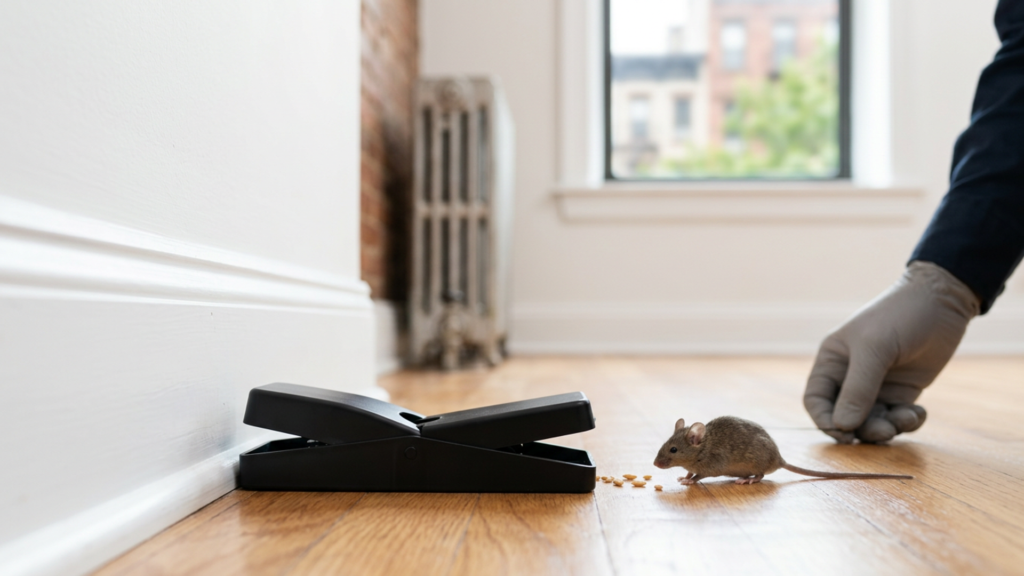
Classic wooden snap traps and modern plastic snap traps (like the T-Rex or Tomcat Press ‘N Set) remain the most effective and humane option — death is near-instantaneous. Place traps perpendicular to walls with the trigger end touching the baseboard, since mice run along edges rather than through open spaces.
Use peanut butter, chocolate, or nesting material (cotton balls) as bait — the CDC recommends placing traps along active runways in pairs every 5–10 feet for maximum effectiveness.
Electric and Multi-Kill Traps for Heavy Infestations
Electric traps (like the Victor M250S) deliver a lethal shock and are ideal for renters who don’t want to see or handle dead mice. Multi-kill electric traps — the “mouse hotel” style — can dispatch up to 10 mice per battery set and reset automatically, which exterminators recommend for severe NYC infestations.
These are more expensive ($30–$80) but cost-effective when dealing with an active breeding population in a multi-unit building.
The Ethics of Sticky Traps and Live-Catch Alternatives
Sticky/glue traps are widely considered inhumane. Trapped mice suffer for hours, sometimes pulling out their own eyes or chewing off limbs trying to escape. Live-catch traps are an option, but you must release mice at least two miles away or they return — impractical in most NYC neighborhoods.
Whatever trap you choose, check it at minimum twice daily. Leaving dead or dying mice creates odor and secondary pest problems.
What Actually Works and What’s a Waste of Money?
Ultrasonic Repellers: The Evidence Says No
Despite aggressive online marketing, ultrasonic rodent repellers have minimal to no lasting effect — mice acclimate to the sound within days. Cornell’s IPM program does not recommend ultrasonic devices as a primary or even supplementary control method. Save your $30–$50 and invest in quality snap traps and sealing materials instead.
Peppermint Oil, Dryer Sheets, and Other Natural Remedies
Peppermint oil is the most commonly recommended natural deterrent, but NYC renters overwhelmingly report it fails. The scent dissipates quickly and does not repel hungry or nesting mice. Dryer sheets and mothballs are similarly ineffective, and mothballs introduce toxic fumes into your living space.
One organic method with anecdotal support involves mixing plaster of Paris with cornmeal as a bait, but it should supplement — not replace — trapping and sealing.
Poison Bait Stations and Tracking Powder
Poison bait stations work but carry serious risks: mice can die inside walls creating terrible odors, and poison is dangerous to children and pets. Tracking powder is a more aggressive professional-grade option, but it should only be used when standard methods have failed.
If you choose chemical methods, always use tamper-resistant bait stations and follow NYC’s safe pest control guidelines to protect your household.
What Are Your Legal Rights as an NYC Tenant Dealing with Mice?
NYC Landlord Obligations Under Housing Code
NYC landlords are legally required to maintain pest-free conditions under the NYC Housing Maintenance Code — a mouse infestation is a Class B violation (hazardous). Your landlord must provide professional rodent control, not just hand you traps or tell you to “keep your apartment clean.”
If your landlord sends an exterminator who only sprays, document this. Spraying is for insects, not rodents, and it demonstrates an inadequate response.
The 311 Complaint and HPD Inspection Process Step by Step
Call 311 or file a mouse complaint online describing the infestation with specific details: where you see droppings, how many mice, and how long it’s been happening. HPD will schedule an inspection, and an inspector will visit your unit to document conditions and potentially issue violations against your landlord.
Violations create legal pressure and a paper trail. In Queens, and across every borough, this paper trail is your most powerful leverage.
When Standard Approaches Fail: Escalation Playbook
If the landlord’s exterminator has come multiple times with no results, document every visit with dates and photos, then file additional 311 complaints to build a violation history. Consult with a tenant rights organization (like Met Council on Housing) about rent abatement — some NYC tenants have successfully negotiated reduced rent due to chronic, unresolved infestations.
In multi-unit buildings, coordinate with neighbors to file simultaneous complaints, which forces building-wide treatment rather than unit-by-unit band-aids — this is the only approach that works in buildings with shared wall infestations in New York County.
How Do You Prevent Mice from Coming Back Season After Season?
Seasonal Prevention Calendar for NYC
- August–September: Conduct your annual sealing inspection before cold weather drives mice indoors. Check all previous repair points and re-seal as needed.
- October–November: Deploy monitoring traps along walls behind the stove and refrigerator — even if you haven’t seen mice — to catch early invaders before they establish nests.
- Year-round: Maintain airtight food storage, nightly garbage removal, and clutter-free conditions. Prevention is a continuous habit, not a one-time fix.
Building-Wide Coordination in Multi-Unit Apartments
Talk to your neighbors. If they also have mice, a coordinated approach — simultaneous sealing, trapping, and landlord complaints — is exponentially more effective than individual efforts. Request that your landlord hire a pest control company for building-wide rodent control in New York County, including sealing common areas, basements, and utility chaseways.
In co-ops and condos, raise the issue at board meetings and push for a building-wide integrated pest management (IPM) plan — Cornell’s StopPests program provides frameworks specifically designed for multi-unit housing.
Health Risks and Safe Cleanup of Mouse Droppings
Mouse droppings can carry hantavirus, salmonella, and other pathogens. Alarmingly, NYC house mice carry dangerous bacteria and viruses that pose real health risks, particularly in densely populated apartments.
Never sweep or vacuum droppings dry. Spray them with a bleach-water solution (1:10 ratio), wait 5 minutes, then wipe up with paper towels and dispose in a sealed bag. Wear gloves and a mask during cleanup, ventilate the area, and wash hands thoroughly afterward.
Is It Worth Hiring a Professional Exterminator in NYC — And What Should It Cost?
DIY vs. Professional: An Honest Cost Breakdown
DIY supplies (snap traps, steel wool, caulk, bait) typically cost $30–$75 and are sufficient for minor infestations caught early in a single unit. Professional one-time mouse treatments in NYC range from $200–$500 depending on borough and severity; ongoing monthly service plans run $50–$150/month.
If your landlord is responsible (rental units), they should cover all professional costs. Don’t pay out of pocket without first exhausting your 311 pest control complaint options.
What to Look for in an NYC Exterminator
Choose a company that uses integrated pest management (IPM): inspection, exclusion/sealing, trapping, and monitoring — not just bait stations dropped and forgotten. Ask specifically whether they seal entry points as part of the service; many budget exterminators only set traps and leave, which guarantees the mice return.
For borough-specific help, look for providers experienced with NYC building types in your area — whether you’re in the Bronx, Staten Island, or anywhere else in the city. Familiarity with local building infrastructure matters more than most renters realize, especially when dealing with rat control in Manhattan alongside mouse issues.
The Emotional Toll — And Why You Should Take It Seriously
If a mouse infestation is causing you anxiety, lost sleep, or an inability to use your own kitchen, know that this is a normal and valid response. You’re not overreacting. Addressing the problem methodically — seal, trap, clean, escalate legally — restores your sense of control and makes your home feel safe again.
Don’t let embarrassment stop you from asking for help. Mice in NYC are a building infrastructure problem, not a cleanliness failure on your part. The city’s pest control resources for tenants reinforce that you have a right to safe, pest-free housing regardless of the building’s age or condition.
Ready to Take Back Your NYC Apartment from Mice for Good?
Here’s your action plan:
- Week 1: Inspect and seal every entry point using the layered steel wool + caulk method. Deploy snap traps along walls behind appliances.
- Week 2: Monitor traps daily, clean droppings safely, and eliminate all accessible food sources. File a 311 complaint if your landlord hasn’t responded.
- Ongoing: Maintain seasonal prevention habits, coordinate with neighbors for building-wide pressure, and don’t hesitate to contact mouse control in Brooklyn when DIY efforts plateau.
Complete eradication in a multi-unit NYC building requires both unit-level diligence and building-wide cooperation. You can dramatically reduce your problem, but honesty demands acknowledging that shared-wall buildings need systemic solutions.
You have legal rights — use them. Document everything, file 311 complaints, and hold your landlord accountable for the pest-free home you’re entitled to. Whether you’re in a Manhattan high-rise or a Brooklyn brownstone, the fundamentals are the same: seal them out, trap the ones inside, and never stop preventing.