If you’ve spotted a line of tiny invaders marching across your kitchen counter, you’re not alone — ants are one of the most common pest complaints in New York City apartments. But here’s the thing: not every ant sighting means you have an infestation, and treating the wrong species the wrong way can actually make your problem exponentially worse. This guide will help you recognize the real signs of an ant problem, identify what you’re dealing with, understand your rights as a NYC renter, and know exactly when it’s time to call in professional help.
What Are the Most Common Signs of Ants in a NYC Apartment?
Visible Ant Trails and Consistent Sightings
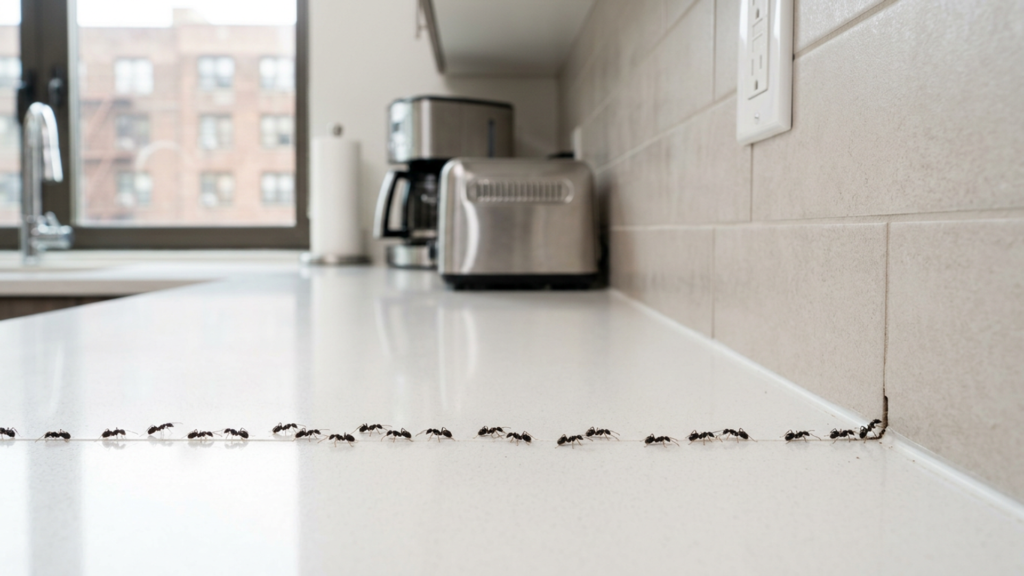
Seeing a consistent, organized trail of ants following the same path — often along baseboards, countertops, or window sills — is the clearest sign of an active colony nearby. Spotting one or two random ants is perfectly normal in NYC, especially during the summer months. But when consistent trails of the same species show up daily in the same location, you’re looking at an actual infestation.
Scout ants appear first in small numbers, searching for food and water sources. If you see even a handful of these advance scouts, a much larger colony is likely hidden somewhere nearby — behind your walls, under your floors, or in the building’s infrastructure.
Swarmers and Flying Ants Near Windows
Winged ants, known as swarmers, appearing indoors — especially near windows or light sources — indicate a mature, reproducing colony inside or very close to your building. These swarmers are reproductive ants leaving the nest to start new colonies, and their presence inside your apartment is a serious red flag.
Flying ants are often mistaken for termites, so it’s worth knowing the difference. Ant swarmers have pinched waists and bent antennae, while termites have straight waists and straight antennae — if you’re unsure, you can learn about termite identification to rule them out. Swarmer sightings in spring or early summer are particularly concerning and warrant immediate inspection.
Frass, Wood Shavings, and Rustling Sounds in Walls
Small piles of fine wood shavings, called frass, near baseboards, door frames, or window sills are a hallmark sign of an ant colony, and ant control services can help address the problem. Carpenter ants excavate wood to build their nests, and these sawdust-like piles are the debris they push out.
Faint rustling or crackling sounds inside walls — especially at night when carpenter ants are most active — suggest a colony has established itself within your apartment’s structure. Soft, hollow-sounding wood when tapped, particularly in older Brooklyn brownstones or pre-war Manhattan buildings, can indicate extensive hidden damage, as the carpenter ant guide from NPMA explains in detail.
Which Ant Species Should NYC Residents Watch For?
Carpenter Ants: The Structural Threat
NYC’s most destructive household ant is large (up to half an inch), usually black, and drawn to moist or damaged wood common in older city buildings. They don’t eat wood like termites, but they hollow it out for nesting, causing serious structural damage over time — look for smooth, sandpaper-clean galleries inside wood, as described in this overview of carpenter ant nesting.
Carpenter ants are particularly common in brownstones and pre-war buildings across Brooklyn and Manhattan, where aging wood and plumbing leaks create ideal nesting conditions. If you’re in one of these neighborhoods, staying vigilant about moisture issues is your first line of defense.
Odorous House Ants and Pavement Ants: The Kitchen Invaders
Odorous house ants are tiny, dark brown, and emit a rotten-coconut smell when crushed — they form massive colonies and are the most frequent kitchen invader in NYC apartments. Pavement ants nest in cracks in concrete and sidewalks, commonly entering ground-floor apartments and homes in Queens through foundation gaps.
Both species are attracted to sugary and greasy foods. Seeing them clustered around pet bowls, trash cans, or sticky residue on countertops is a telltale sign you’ve got a growing problem.
Pharaoh Ants: The Dangerous Misidentification
These tiny, yellowish-brown ants are extremely common in NYC high-rises and large apartment buildings — and they’re often confused with other small ant species. Here’s the critical warning: spraying pharaoh ants with repellent products causes colony budding, where one colony splits into multiple satellite colonies, making the infestation dramatically worse.
Pharaoh ants require bait-only treatment strategies, and misidentification combined with the wrong treatment is one of the most common reasons NYC ant problems spiral out of control. If you live in a high-rise building and spot tiny yellowish ants, put down the spray can immediately.
Asian Needle Ants and the ManhattAnt: Emerging NYC Threats
Asian needle ants have been spotted in 17-plus states and are moving into the NYC metro area. Their stings can cause life-threatening anaphylactic reactions in sensitive individuals — an emerging threat most residents don’t know about.
The “ManhattAnt” (Lasius emarginatus), a European species, has quietly taken over parts of Manhattan, displacing native pavement ants and fundamentally changing the city’s ant ecology. Scientists have raised concerns about this invasive ant species spreading, and NYC actually hosts a surprisingly diverse ant population — researchers have documented dozens of species through projects like the ManhattAnt project on iNaturalist, and ants serve as unsung urban heroes, consuming massive amounts of food waste on Manhattan’s streets alone.
How Do You Tell the Difference Between Normal Seasonal Activity and a Real Infestation?
NYC’s Seasonal Ant Activity Calendar
-
Spring (March–May): Ants emerge from dormancy and send scouts indoors. A few sightings are seasonal and normal, but daily appearances in the same area signal a problem.
-
Summer (June–August): Peak activity — swarmers appear, trails intensify, and new colonies establish. This is when most NYC infestations are discovered.
-
Fall–Winter (September–February): Outdoor activity drops sharply. Ants seen indoors during cold months almost certainly have a nest inside your building’s walls or structure.
The Infestation Decision Framework
-
Probably normal: A few random ants of different types near a window in July — that’s just summer in New York City.
-
Likely an infestation: Consistent, organized trails of the same species appearing in the same location day after day, especially near food or water sources.
-
Definitely an infestation: Swarmers indoors, frass piles, rustling in walls, or ants reappearing within hours of cleaning.
Borough-Specific Risk Factors
Brooklyn brownstones and older row houses face higher carpenter ant risk due to aging wood, moisture issues, and shared walls that let colonies spread between units. Manhattan high-rises are prime territory for pharaoh ants, which travel through plumbing and electrical conduits — residents dealing with these issues may need ant control in Brooklyn from someone who understands building-wide dynamics.
Homes in Staten Island with yards and gardens see more pavement ants and odorous house ants entering through ground-level entry points. And neighborhoods like Queens and the Bronx, with their mix of older housing stock and dense residential blocks, face their own unique challenges.
What Are Your Rights as a NYC Tenant When You Find Ants?
NYC Housing Code and Landlord Obligations
Under NYC housing code, landlords are legally responsible for maintaining pest-free conditions. Ant infestations are considered a violation of the warranty of habitability, which means your landlord must address the problem.
Landlords must provide pest control services at no cost to tenants in most situations — you should not be paying out of pocket for treatment in a rental apartment, as outlined in the city’s pest and pesticide laws for buildings. If your landlord is unresponsive, you can file a formal complaint through NYC 311’s pest complaint portal, which can trigger an HPD inspection.
Documenting and Reporting an Infestation
Photograph ant trails, nesting evidence, and any damage with timestamps — thorough documentation strengthens your case if your landlord disputes the problem. Notify your landlord in writing (email creates a perfect paper trail) immediately upon discovery, since verbal complaints alone are difficult to prove later.
If you’re moving into a new apartment and discover ants, document everything before unpacking and notify the landlord in writing on day one. This establishes that the infestation predated your tenancy.
When Tenants Consider Escalation
If repeated written complaints go unanswered, tenants have filed HP actions in housing court and, in severe cases, have successfully broken leases over unresolved infestations. Never withhold rent without legal guidance — consult a tenant rights organization first. Keep records of every communication, treatment attempt, and expense in case you need to pursue reimbursement or legal action.
Should You DIY or Call a Professional Exterminator for Ants in NYC?
When DIY Methods Can Work
For small, early-stage infestations of odorous house ants or pavement ants, bait stations like Terro liquid bait can be effective — but expect a massive initial surge of ants as the bait attracts the colony. This means it’s working, so resist the urge to wipe them away.
Seal entry points with caulk, eliminate food residue nightly, fix leaky pipes, and store food in airtight containers. These apartment-specific prevention steps are essential regardless of treatment method. Be aware that many highly effective products like Termidor are restricted-use in New York State and cannot be legally purchased by consumers — you can explore safer pest management options to find what’s available to you.
When You Must Call a Professional
Always call a professional for pharaoh ants — DIY spraying will cause colony budding and make the problem far worse. Only professional baiting protocols work. Carpenter ant infestations also require professional treatment to locate and eliminate the nest, especially when colonies are established inside walls or structural wood.
If you’ve been treating for more than two weeks with no improvement, or if ants have spread to multiple rooms, it’s time to bring in help. Residents across Brooklyn and other boroughs dealing with persistent issues shouldn’t hesitate to seek professional assessment.
What to Expect After Professional Treatment
Increased ant activity in the first 3–7 days after treatment is completely normal and actually a sign the bait is working — ants are carrying it back to the colony. Full colony elimination typically takes 2–4 weeks, so don’t panic or demand retreatment too early.
If activity hasn’t decreased significantly after 3–4 weeks, contact your exterminator for a follow-up. A good pest control company includes callbacks in their service plan, and residents dealing with ant problems in Brooklyn or anywhere else in the city should expect that level of service.
What’s the Bottom Line on Dealing With Ants in Your NYC Apartment?
Learn to distinguish between a few seasonal scouts and a true infestation: consistent trails, swarmers, frass, and wall sounds are the red flags that demand action. Correct species identification is everything — treating pharaoh ants like carpenter ants (or vice versa) can turn a minor problem into a building-wide nightmare.
Know your rights. NYC landlords are legally obligated to address pest infestations, and you have formal channels if they don’t respond. Photograph what you’re seeing, note the location and time of day, and try to identify the species using resources like *Dr. Eleanor’s Book of Common Ants*.
Notify your landlord in writing immediately, and avoid spraying anything until you know what species you’re dealing with. If you need help identifying or eliminating ants in your apartment, reach out to a local pest control professional who understands the unique challenges of city living — whether you’re in Brooklyn, Queens, Manhattan, or any other borough. The sooner you act with the right approach, the sooner you can get back to worrying about the things that actually make NYC living stressful — like your commute.
Related guides for NYC residents: If you’re dealing with other pests, check out our guides on Signs of Termites in NYC and Signs of Cockroaches in NYC.