Living in Manhattan means sharing the sidewalk with millions of neighbors, but some of them have four legs and a long, scaly tail. Whether you are a seasoned local who has perfected the “sidewalk dance” to avoid garbage bags or a new transplant wondering why your radiator makes that scratching sound, distinguishing between a harmless mouse and a bold Norway rat is essential. It isn’t just about peace of mind; it’s about your health, your security deposit, and, for property owners, avoiding the dreaded “Commissioner’s Order.”
The reality of New York living is that rodents are an environmental constant, but an infestation in your living space is never something you should have to accept as “part of the charm.” This guide breaks down the street-smart signs of an infestation and how to navigate the city’s complex pest landscape. By understanding the biology of our subterranean neighbors and the mice and rats data for NYC, you can protect your home from becoming a statistic on the city’s tracking maps.
Is it a Rat or a Mouse in Your Manhattan Apartment?
The Size and Behavior Identification Guide
The first step in any rodent battle is knowing exactly who you are fighting. In Manhattan, we primarily deal with the Norway rat (Rattus norvegicus) and the common house mouse. While they might look similar from a distance when scurrying across a subway platform, their physical profiles are vastly different. Rats are thick-bodied, heavy-set animals that can grow between 11 and 13 inches long, including the tail, whereas mice are small, slender, and rarely exceed 4 inches in body length.
Behaviorally, these two species occupy different niches within a building’s ecosystem. A helpful “Kitchen vs. Basement” rule of thumb exists for renters: if you find something small and nimble in your silverware drawer or behind the toaster, you are likely dealing with mouse control in Manhattan issues. Mice are curious and excellent climbers, preferring to live in the “voids” of your kitchen cabinets. Rats, conversely, are neophobic (afraid of new things) and prefer the lower levels of a building, such as the laundry room, boiler room, or trash collection areas.
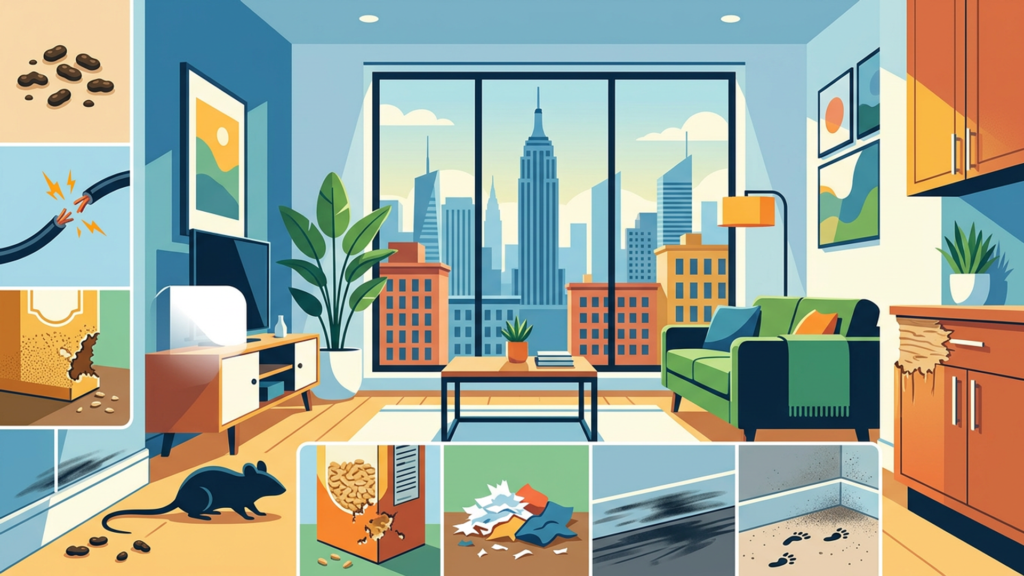
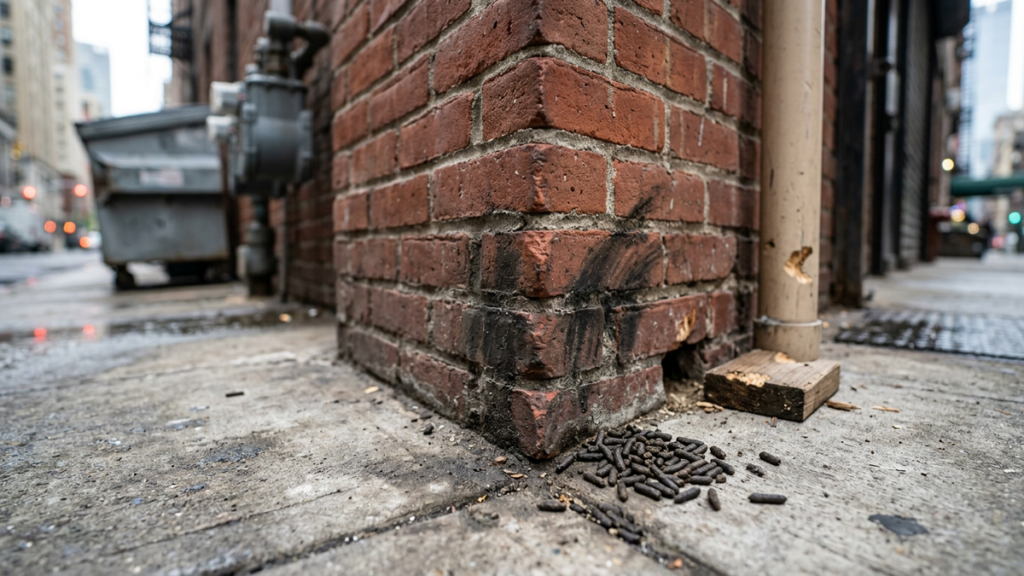
Dropping diagnostics are perhaps the most reliable way to identify your uninvited guest without actually seeing them. Rat droppings are blunt, dark, and roughly the size of an olive pit or a large bean. Mouse droppings are much smaller, pointed at the ends, and resemble dark grains of rice. If you see the former, you are dealing with a much larger caloric requirement and a higher potential for structural damage to your apartment.
Apartment Hunting Red Flags for Renters
When you are touring a potential new apartment in the West Village or the Upper East Side, the “broker babble” about stainless steel appliances can often distract you from structural flaws. One of the most important things to check is the area around radiators and risers. Look for “chew patterns” on the floorboards and dark, greasy smudge marks—known as sebum—where pipes enter the wall. If a hole is larger than a quarter, a rat can squeeze through it with ease.
Smart renters should also look beyond the glossy photos and check the building’s history. While the NYC Rat Map is a fantastic tool for seeing recent inspections, you should also utilize “JustFix” or “HPD Online” to see if there is a pattern of negligence. A landlord who ignores a leaky pipe in the basement is likely also ignoring the rodent colony that the leak is sustaining.
Always ask to see the building’s basement or laundry room before signing a lease. This is where the truth of the building’s maintenance is revealed. Look for “burrows” in any exposed dirt or gaps where the floor meets the foundation. If the laundry room smells like ammonia or you see “Trash Castles” (piles of debris pushed into corners), it is a sign that the building’s mouse control in New York County and rat prevention protocols are failing.
High-Frequency Vocalizations and the Secret Language
One of the most unsettling aspects of the Manhattan rat is the sounds they make that we can’t hear. Rats communicate using ultrasonic chatter, a series of high-frequency vocalizations that fall outside the range of human hearing. This secret language allows them to coordinate their movements and warn the colony of danger without alerting the humans living just feet away.
This social mapping is what allows rats to navigate the complex infrastructure of Manhattan’s grid. They use these frequencies to socialize and establish hierarchies, which masks the true size of a colony from the average resident. If you actually hear “squeaking” with your naked ear, it usually means there is a fight or a high-stress event occurring, suggesting the population density in your walls has reached a breaking point.
What Are the Physical Signs of a Rat Infestation in Your Building?
Active Burrows and the Trash Castle Strategy
The “Trash Castle” is a uniquely New York phenomenon. On the night before garbage day, Manhattan sidewalks are lined with mountains of black plastic bags. These provide both food and temporary shelter for rats, creating a “castle” where they can forage in safety. If you see rats darting in and out of these piles with confidence, it is a sign that the local population is thriving and likely has a permanent burrow nearby.
To identify an active infestation, look for soil displacement around tree pits or the building’s foundation. Rats are burrowers by nature, and fresh, clean-cut holes in the dirt—often about 2 to 4 inches in diameter—are a definitive sign of nesting. Effective rat control in Manhattan requires identifying these entry points before the population can expand into the upper floors of the building.
Grease Marks and Sebum Trails
Rats have notoriously poor eyesight and rely on their whiskers and sense of touch to navigate. Because of this, they tend to follow the exact same paths every night, hugging the baseboards and walls. Over time, the oils and dirt in their fur leave behind dark, waxy stains known as sebum trails or “rub marks.” If you see a dark smudge on a white baseboard that won’t easily wipe away, you are looking at a rat highway.
Gnaw marks are another physical indicator that requires immediate attention. You should look for fresh vs. old chewing; fresh gnawing on wood or plastic conduits will look light-colored and sharp, while older marks will have darkened over time. Rats must gnaw constantly to keep their incisors from overgrowing, and they can easily chew through lead pipes, cinder blocks, and heavy-duty plastic trash bins.
The Pigeon-Rat Connection in Public Squares
In many of Manhattan’s public squares, such as 96th & Broadway or Union Square, there is a direct correlation between bird feeding and rat populations. When people “feed the birds,” they are inadvertently creating a massive “buffet” for rats. The leftover seeds and bread scraps sustain localized swarms that can grow to hundreds of individuals, often living just beneath the surface of the park’s landscaping.
This has led to increased park vigilance, especially in places like Central Park or Riverside Park. Rats in these high-traffic areas have largely lost their fear of humans. There have been increasing reports of rats jumping into strollers or onto park benches in search of food. This boldness is a clear sign of overpopulation, as the competition for resources forces rats to take greater risks during daylight hours.
How Does the NYC Department of Health Inspect for Rats?
Official Inspection Criteria and Violations
The New York City Department of Health and Mental Hygiene (DOHMH) doesn’t just look for rats; they look for “signs of rats.” During a standard inspection, they use the rat indexing – NYC Health system to grade a property. This system tracks active rat signs (ARS), which include fresh droppings, active burrows, and evidence of gnawing. A building that fails this inspection can face significant fines and mandatory remediation.
Property owners have specific legal responsibilities under the city’s health code. According to rats: information for tenants and property owners, owners must keep their property free of rodents through “rat-proofing” and proper waste management. This includes sealing every crack in the foundation and ensuring that all trash is stored in rodent-proof containers with tight-fitting lids. Failure to comply often results in a summons that can cost thousands of dollars.
For businesses, the stakes are even higher. A restaurant or retail space with a visible rodent problem will quickly find itself shut down by the city. Arranging for commercial pest control in Manhattan is a legal necessity for anyone operating a food service establishment in the five boroughs.
Rat Mitigation Zones and High-Risk Areas
The city has identified specific rat mitigation zones where rat activity is historically high. Neighborhoods like the East Village, Harlem, and parts of the Lower East Side receive extra scrutiny from health inspectors. If you live in one of these zones, your building is likely inspected more frequently, and the standards for compliance are much more rigid.
Residents can take an active role in monitoring their own neighborhoods by using rodent inspection | NYC Open Data. This public database allows you to see the results of every health department inspection in your zip code. If you notice that your building has failed multiple inspections in a row, it may be worth consulting a professional pest control company that can coordinate with building management on a comprehensive remediation plan.
The Impact of Urban Planning on Rat Biology
The layout of Manhattan itself is a factor in why we have such a persistent rodent problem. The famous of rats and men study highlights how our grid system and subway tunnels act as “rat superhighways.” These underground tunnels provide a climate-controlled environment that allows rats to travel across the island without ever stepping foot on a sidewalk. This connectivity makes rodent control in Manhattan a unique challenge compared to other major cities.
The Norway rat has adapted perfectly to this environment. They have learned to thrive on the specific waste patterns of New Yorkers and have developed a genetic resistance to some older forms of rodenticide. This biological evolution means that simple traps are often not enough; a comprehensive strategy that addresses the structural “highways” within a building is required to truly solve the problem.
How Can Property Owners Prevent Rat Infestations?
Hardening the Perimeter and Waste Management
The best way to deal with rats is to ensure they never get inside in the first place. This process, known as “hardening the perimeter,” involves a meticulous inspection of the building’s exterior. Using materials like steel wool and hardware cloth is essential, as rats cannot chew through these metals. Any hole larger than a quarter must be sealed, especially around utility lines and basement windows.
Waste management is the second pillar of prevention. The city’s recent shift toward mandatory garbage containerization is a major step in the right direction. By moving away from “Trash Castles” of loose bags and toward hardside bins, buildings can significantly reduce the available food supply. Consistent rat control starts with starving the colony out by making sure every scrap of food is behind a locked, plastic or metal barrier.
Landscaping and Garden Maintenance
While we all love a bit of greenery in the concrete jungle, poorly maintained gardens are a haven for rodents. According to keep rats out of your garden standards, property owners should avoid dense ground cover like English ivy, which provides the perfect “roof” for rat burrows. Instead, choose plants that allow for clear sightlines to the soil, making it easier to spot and fill burrows as soon as they appear.
Water is just as important to a rat as food. Eliminating water sources is a critical but often overlooked step in prevention. This includes fixing leaky outdoor faucets, ensuring that gutters drain away from the foundation, and preventing water from pooling in basement “areaways.” A thirsty rat is a mobile rat, and if your building is dry, they are more likely to move on to a neighbor’s property.
Professional Remediation and Monitoring
Once a colony has established a burrow system, DIY methods are rarely effective. This is when professional rodent control becomes necessary. Professionals use a combination of strategic baiting, tracking powders, and heavy-duty trapping systems that are designed to outsmart the rat’s natural caution. They can also provide “exclusion” services that permanently block entry points using professional-grade materials.
Long-term monitoring is the final step in a successful prevention plan. Modern pest management uses digital sensors and regular inspections to catch the very first signs of a returning rodent before it becomes a full-blown infestation. For property owners, this proactive approach is much cheaper than paying DOHMH fines or dealing with the consequences of a full-blown infestation.
When Should You Call for Professional Help with Manhattan Rats?
Recognizing a Loss of Control
There is a significant difference between seeing a rat on the subway tracks and seeing one in your hallway. One of the clearest signs of a severe infestation is daytime sightings. Rats are naturally nocturnal; if you see them out during the day, it almost always indicates that the colony is overcrowded and lower-ranking rats are being forced to forage during “dangerous” hours.
Another red flag is a change in behavior, specifically boldness and aggression. When rats no longer flee from humans or domestic pets, it signals a high-density population that has become habituated to the building’s residents. This is a dangerous situation that requires immediate pest control in Manhattan to prevent bites or the transmission of diseases like Leptospirosis.
When to Seek Professional Help
If you are dealing with a persistent rodent problem in your Manhattan apartment, the most effective step is to contact a licensed pest control professional who can assess the situation and implement a targeted treatment plan. A professional inspection can identify entry points, nesting sites, and the scope of the infestation far more accurately than visual observation alone.
Documenting the evidence is also important for your own records. Take photos of droppings, gnaw marks, or burrows, and keep a log of every time you see a rodent. This information helps your pest control technician understand the severity and patterns of activity, leading to a more effective treatment strategy.
Can Manhattan Ever Win the War on Rats?
The “war on rats” is a phrase often used by city officials, but for the average resident, it is more about a strategic stalemate. By identifying the key signs—from the waxy sebum marks on your baseboards to the “Trash Castles” on the curb—you can take the necessary steps to protect your immediate environment. Vigilance is the most effective tool we have in a city as densely populated as ours.
The future of NYC rat control looks promising as the city moves toward smarter waste management and data-driven inspections. We know that rat sightings associated with urban density are a reality of metropolitan life, but they don’t have to be a reality of your life. Through resident cooperation, proper building maintenance, and professional intervention, we can keep the “four-legged neighbors” where they belong: out of our homes.
If you are currently struggling with an infestation or simply want to ensure your building is up to code, don’t wait for a health department summons. A recent evaluation of a neighborhood rat-management program suggests that community-wide efforts are most effective. Managing rat control in New York County is the only way to ensure that your Manhattan experience remains about the culture and the skyline, not the pests in the walls.
Key Takeaways for Manhattan Residents:
- Identify the species: Rats are large and blunt-tailed; mice are small and pointed.
- Watch the walls: Look for dark, greasy rub marks along the floor.
- Check the dirt: Fresh burrows in tree pits mean an active colony is nearby.
- Use the data: Check the NYC Rat Map and Open Data before signing a lease.
- Know your rights: The Warranty of Habitability protects your right to a rat-free home.
- Seal the gaps: Use steel wool for any hole larger than a quarter.