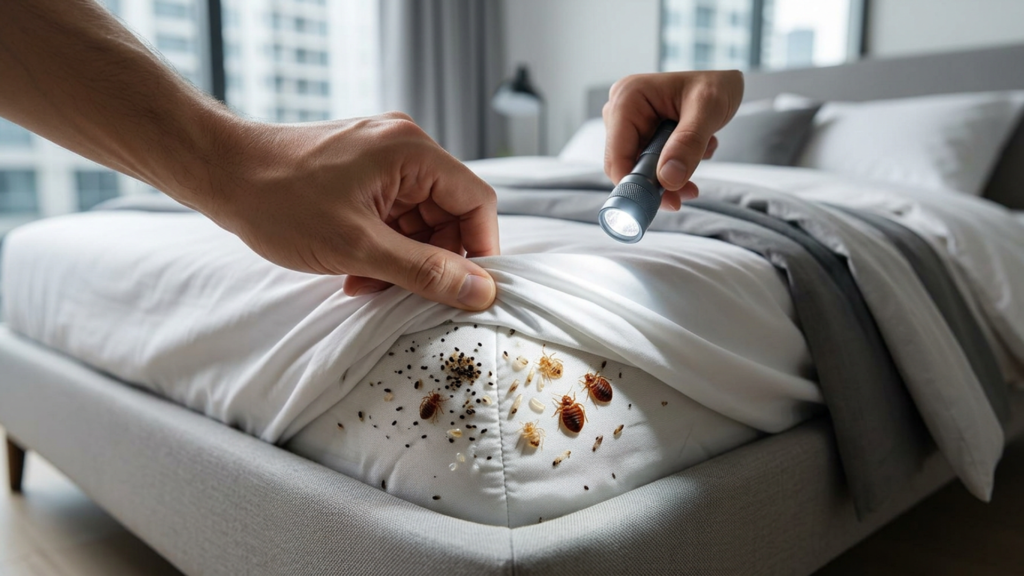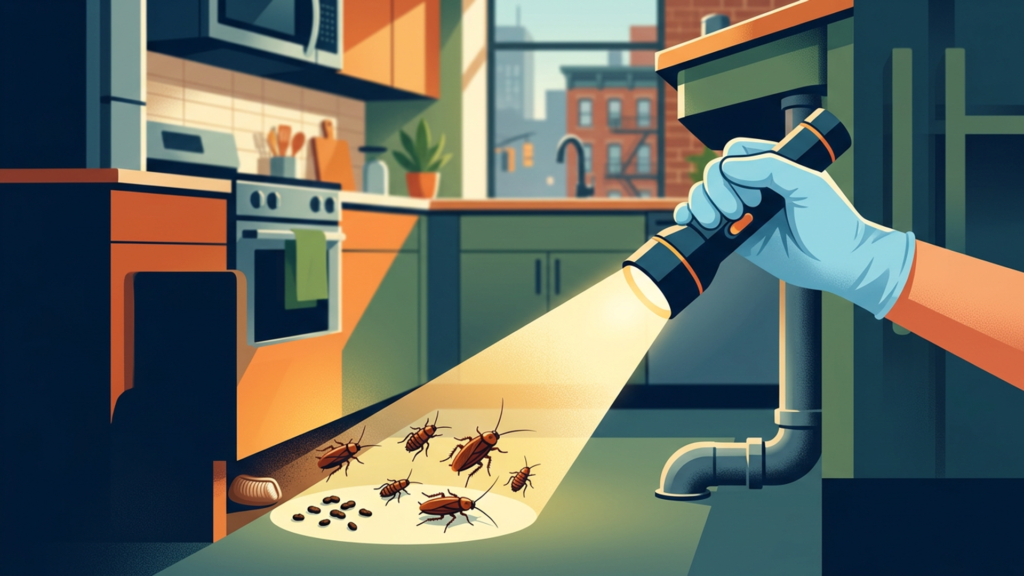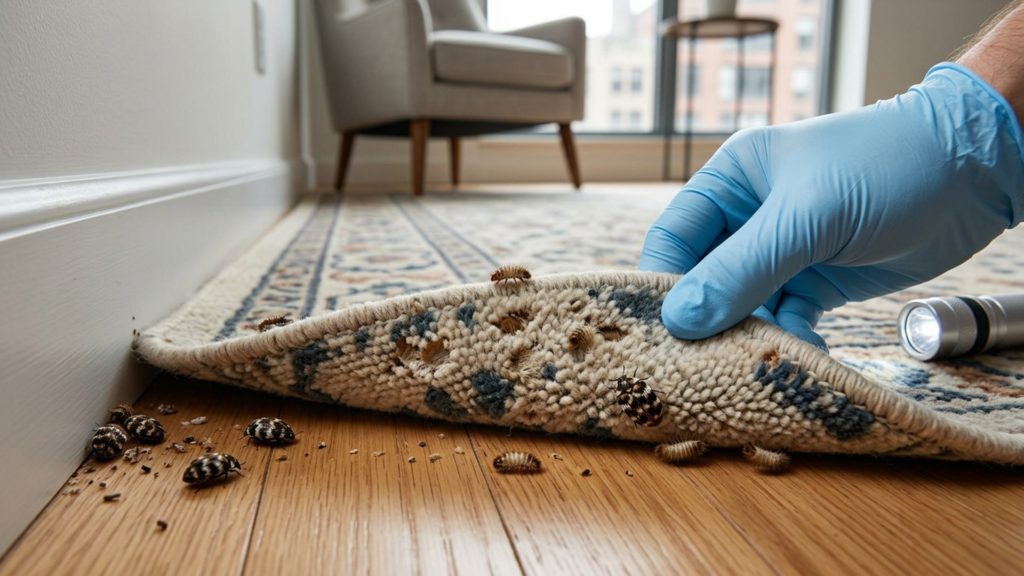
Bed bugs are one of New York City’s most persistent pests — and if you’re dealing with an infestation in your apartment, you’ve probably heard that heat is the most effective way to kill them. But what temperature actually kills bed bugs, how long does it take, and does your building’s layout change the approach? This guide breaks down the exact lethal temperatures for every life stage, explains why NYC apartments present unique challenges, and gives you a practical framework for choosing between DIY methods and professional bed bug control that actually eliminates the problem.
What Exact Temperature Kills Bed Bugs and Their Eggs?
The Lethal Heat Threshold: 120°F–122°F and Beyond
Adult bed bugs and nymphs die when exposed to temperatures of 120°F (49°C) for at least 90 minutes or 122°F (50°C) for shorter durations, according to peer-reviewed research on bed bug stress tolerance. These aren’t rough estimates — they’re lab-confirmed thresholds that professional exterminators build their entire treatment protocols around.
Professional treatments target 130°F–150°F to ensure heat penetrates deep into walls, furniture cores, and mattress interiors — not just the ambient air temperature. The critical distinction is surface vs. core temperature: air in a room may read 140°F while the inside of a wall void or couch cushion lags 20–30°F behind, leaving hidden bugs very much alive.
Research from LSU confirms that sublethal heat exposure can stress but not kill bed bugs, potentially scattering them to new hiding spots. In other words, almost hot enough isn’t just ineffective — it can make the problem worse.
Why Bed Bug Eggs Are Harder to Kill
Eggs are more heat-tolerant than adults and require sustained exposure at 122°F or higher for complete elimination. Brief temperature spikes are not enough. A common treatment failure occurs when rooms reach lethal air temperature but eggs tucked inside baseboards, electrical outlets, or furniture joints never reach that threshold.
This is why legitimate professionals monitor temperatures with multiple sensors placed at floor level, inside furniture, and along walls — not just one thermostat in the center of the room. If your exterminator isn’t doing this, they’re guessing.
Duration of Exposure Matters as Much as Temperature
At 113°F (45°C), bed bugs can survive for hours. Even extended exposure at this temperature may not kill bugs in sheltered spots that don’t fully reach the target threshold. At 122°F, direct exposure kills all life stages within minutes — but achieving this temperature throughout an entire room takes sustained heating over 4–6 hours.
The relationship is inverse: higher temperatures require shorter exposure. However, professionals build in extra time as a safety margin against thermal refuges in cluttered NYC apartments, where every bookshelf, closet, and storage bin creates a potential cold pocket.
Does Freezing Cold Kill Bed Bugs Too?
The Science Behind Cold Treatment
Bed bugs can be killed by freezing, but the threshold is far more extreme than most people realize. As Science News reports, bedbugs can survive cold briefly — 0°F (−18°C) sustained for at least four consecutive days is the minimum, and some research suggests even colder temperatures are needed for complete kill.
Studies show that bed bugs have limited cold tolerance and can survive brief cold snaps by seeking insulated harborage spots within walls and furniture. Standard home freezers may reach 0°F but often fluctuate with door openings, making consistent lethal exposure unreliable for anything larger than small sealed bags of items.
Why Freezing Is Unreliable in NYC
NYC winters rarely sustain 0°F for the consecutive days needed, and interior apartment temperatures never come close — even unheated units stay well above lethal cold thresholds. Placing items outside on a fire escape or balcony in January will not reliably kill bed bugs; interior spots within bags and boxes stay insulated above lethal cold temperatures.
The scientific consensus is clear: cold is far less practical than heat for whole-room treatment. Don’t waste your winter waiting for a freeze that won’t come.
How Does Professional Heat Treatment Work in NYC Apartments?
Whole-Room Heat Treatment Process
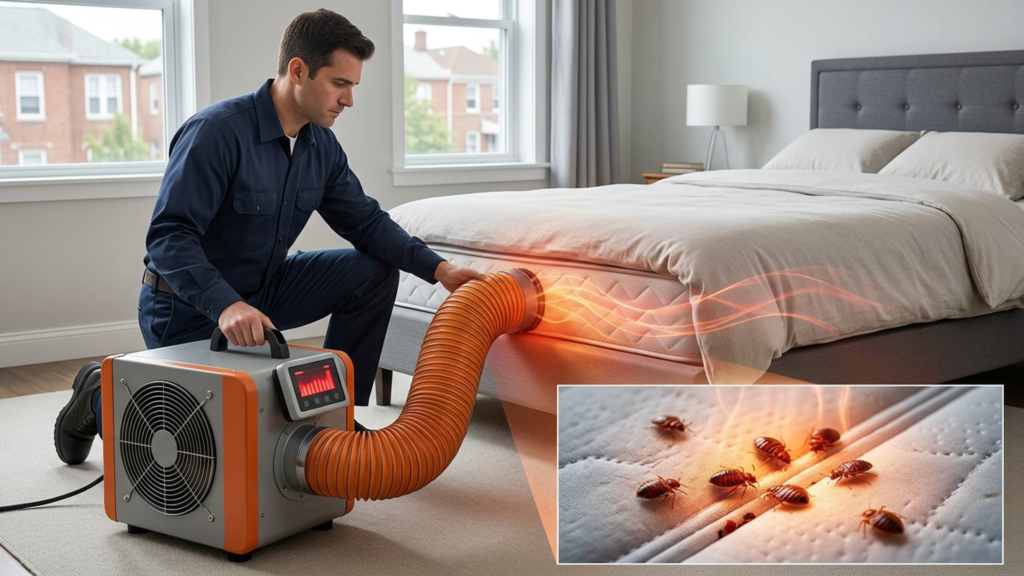
Professionals use industrial heaters to raise the entire room to 130°F–150°F and hold it there for 4–8 hours while monitoring with thermal sensors placed throughout the space. Equipment is brought in to heat entire floors of NYC buildings, with strategic fan placement to ensure hot air circulates into closets, behind walls, and under furniture.
Temperature data logs should be recorded throughout the treatment. This documentation is your proof that lethal temperatures were reached and sustained in all areas, including the hardest-to-heat zones. If a company can’t produce these logs, that’s a problem.
Room Preparation Checklist for NYC Residents
Seal HVAC vents, wall AC units, exhaust fans, electrical outlets, and gaps under doors with heat-safe materials to prevent bed bugs from escaping to adjacent apartments during treatment. Open closet doors and dresser drawers to allow airflow, and remove heat-sensitive items like candles, medications, aerosol cans, vinyl records, and certain electronics.
Follow the EPA’s guidelines for bed bug treatment prep and your pest control company’s specific checklist — proper prep is the difference between a successful treatment and a costly failure. In multi-unit NYC buildings, coordinate with your landlord and neighboring units, because bed bugs migrate through shared walls and treating one apartment while ignoring adjacent infested units guarantees reinfestation.
How to Verify Your Treatment Was Done Correctly
Demand temperature logs showing sensor readings from multiple locations — floor level, inside furniture, wall perimeters — not just a single ambient air reading. A legitimate treatment runs four or more hours minimum after the room reaches target temperature. Companies offering 1–2 hour treatments are a major red flag.
Ask how many sensors were placed and where. Reputable companies use 10 or more sensors per room and can show you the data proving every zone reached lethal temperature. Residents seeking bed bug control in New York County should hold providers to this standard without exception.
Can DIY Heat Methods Like Steamers and Dryers Kill Bed Bugs?
Using Your Dryer Effectively
A household dryer on high heat (typically 120°F–135°F) for 30 or more minutes will kill bed bugs and eggs on clothing and linens. The drying cycle, not the washing cycle, is what kills them. Dry items on high heat first before washing to minimize clothing shrinkage and fabric damage.
This method works for treating individual items but cannot address an infestation in furniture, walls, or flooring. Think of it as a containment tool, not a cure — useful for protecting your wardrobe while you arrange proper treatment.
Why Steam Cleaning and Vacuuming Fall Short
Commercial steam cleaners can reach 200°F–330°F at the nozzle, killing bed bugs on contact, but steam cannot penetrate more than a fraction of an inch into mattress seams, baseboards, or wall cracks. Vacuuming removes visible bugs but misses eggs cemented into fabric fibers and bugs hidden deep in crevices — Cornell’s guide to managing bed bugs recommends vacuuming as a supplement, never a standalone treatment.
Disturbing bed bugs with surface treatments without sealing the room can scatter them to new hiding spots, potentially spreading the infestation to other rooms or neighboring apartments. If you live in a building in western Queens, our guide on how to get rid of bed bugs in Queens covers borough-specific strategies for containing spread.
Dangerous DIY Methods to Avoid
Never use a hair dryer to try to kill bed bugs — it cannot reach or sustain lethal temperatures and can scorch mattresses, melt synthetic materials, or start a fire. Space heaters and portable propane heaters cannot safely or evenly heat a room to lethal temperatures; hot spots create fire hazards while cold spots allow bugs to survive.
Using a car or moving truck as a heat chamber in summer produces inconsistent results. Interior temperatures vary dramatically by location within the vehicle, and items packed in boxes may never reach lethal core temperatures. There are no safe shortcuts here.
What Makes Bed Bug Treatment Different in NYC?
Multi-Unit Building Challenges
NYC’s dense apartment buildings mean bed bugs travel between units through shared walls, plumbing chases, and electrical conduits. Understanding bed bug biology and behavior helps explain why treating one unit in isolation often fails without building-wide coordination. This is the single biggest reason infestations recur in the city.
Landlords in NYC are legally responsible for bed bug extermination costs in rental units. Tenants should document infestations in writing and understand their rights — Cornell’s bed bug FAQ page provides a solid overview of tenant responsibilities and landlord obligations. Professional companies experienced with NYC buildings know how to seal treatment zones to prevent bugs from fleeing to neighboring apartments — a step that generic national providers often overlook.
Heat vs. Chemical Treatment: NYC Cost and Effectiveness
Heat treatment in NYC typically costs $1,500–$4,000+ per room depending on apartment size, infestation severity, and building access logistics. That’s significantly more than chemical treatment, but it often resolves the problem in a single visit. Chemical treatments are cheaper upfront but require multiple visits over weeks, and bed bugs have developed significant insecticide resistance to many common pesticides, reducing their effectiveness dramatically.
Many NYC pest control professionals recommend integrated approaches: whole-room heat treatment combined with residual chemical barriers to prevent reinfestation from adjacent units. Residents in neighborhoods like Ozone Park can find bed bug control or those near Long Island City needing bed bug treatment should ask providers specifically about this combined strategy.
Finding a Qualified NYC Exterminator
Verify that any company is licensed by New York State DEC and carries NYC-specific insurance for working in multi-unit residential buildings. Rutgers University has published a helpful resource on bed bug prevention for health workers that also offers useful guidance for residents evaluating treatment protocols.
Borough-specific providers familiar with local building types deliver better results — whether you need bed bug control in Manhattan, bed bug control in Brooklyn, bed bug control in Queens, bed bug control in the Bronx, or bed bug control in Staten Island. Local knowledge of building construction, super access protocols, and neighborhood logistics makes a measurable difference in treatment outcomes.
What’s the Bottom Line on Temperature and Bed Bugs in NYC?
Key Temperatures to Remember
- Heat kills: 122°F (50°C) sustained exposure kills all life stages; professionals target 130°F–150°F for penetration into hiding spots
- Cold is unreliable: 0°F for 4+ consecutive days is the minimum, and NYC conditions almost never support this approach
- Dryers work for items: High heat for 30+ minutes kills bugs on clothing and linens, but this doesn’t treat your home
Your NYC Action Plan
For active infestations, professional heat treatment is the most effective single-visit solution. Verify credentials, demand temperature logs, and coordinate with your building management. Use dryer treatments and careful steam cleaning as supplementary measures while awaiting or following professional service.
If you’re in a multi-unit building, push for coordinated treatment of adjacent units. Don’t wait — bed bug populations double roughly every 16 days, and early intervention with proper heat treatment saves thousands in repeated chemical applications and months of sleepless nights. The science is settled: sustained, monitored heat is the most reliable way to eliminate bed bugs at every life stage, and in a city as dense as New York, professional execution is what separates success from an expensive lesson in what doesn’t work.