Termites cause billions of dollars in structural damage across the U.S. each year — and New York City is far from immune. Whether you live in a pre-war brownstone in Brooklyn, a row house in Queens, or a co-op in Manhattan, the signs of termites can be hiding behind walls that look perfectly fine on the surface. This guide walks you through every warning sign NYC residents should know, when to worry (and when not to), and exactly what to do if you suspect an infestation in your building.
Termite swarmers around your foundation?
26+ years on NYC and Long Island termite work. NY Category 7C licensed, 100% results guarantee, and free inspections that catch swarms before damage spreads.
What Are the Most Common Signs of Termites in NYC Homes?
Mud Tubes on Walls and Foundations
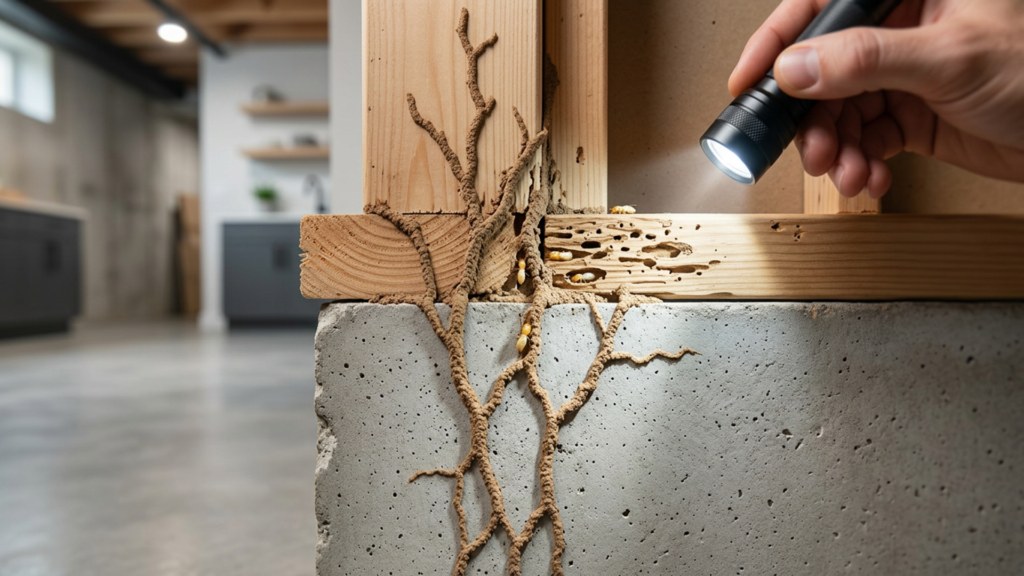
Pencil-width mud tubes running along foundation walls, pipes, or support beams are the signature calling card of subterranean termites — the dominant species in New York. According to the USDA’s guide on subterranean termites, these insects build protective tunnels from soil and saliva to travel between their underground colonies and the wood they feed on.
Check basement walls, crawlspaces, and anywhere concrete meets wood framing. If you find a mud tube on a standalone structure like a shed or fence, break it open and look for live insects — mud dauber wasps build similar structures that are often mistaken for termite tubes. When you’re unsure what you’re seeing, a professional termite control assessment can quickly confirm whether the tubes are active.
Discarded Wings Near Windows and Doors
Piles of translucent, uniform-sized wings on windowsills, near light fixtures, or along door frames indicate a recent termite swarm. Reproductive termites shed their wings after landing and pairing off to start new colonies.
In NYC, swarms are most commonly triggered by warm, humid days following heavy spring rains — typically late March through June. Wings found indoors strongly suggest a colony is living within or directly beneath the building, not just passing through.
Hollow or Damaged Wood
Tap along baseboards, door frames, window trim, and exposed wood with a screwdriver handle. A hollow sound or easy puncture indicates termites have eaten the wood from the inside out.
Termites consume wood along the grain, leaving a honeycomb pattern that can hollow out structural beams while the painted surface remains completely intact. Pay special attention to wood that contacts or is near soil level, including porch supports, stair stringers, and basement framing.
What Do Termite Droppings and Damage Look Like Up Close?
Frass: Identifying Termite Droppings
Drywood termites push tiny, six-sided fecal pellets — called frass — out of kick holes in wood. These pellets resemble coarse sand or sawdust and accumulate in small piles below infested areas. Frass is commonly misidentified as general debris or rodent droppings, and the University of Maryland Extension’s household pest guide can help you tell the difference.
While subterranean termites (NYC’s primary species) use their droppings in mud tube construction rather than expelling them, frass from drywood termites can still appear in imported furniture or lumber.
Bubbling Paint, Blistering Surfaces, and Warped Wood
Paint that bubbles, peels, or blisters without an obvious moisture source may indicate termites feeding just beneath the surface. Doors and windows that suddenly become difficult to open or close can signal termite damage warping the surrounding frames — a symptom residents often blame on NYC’s seasonal humidity shifts.
Sagging floors, buckling laminate, or soft spots underfoot in older buildings deserve immediate investigation. The CDC’s Healthy Housing Reference Manual discusses how structural deterioration from pests and moisture can compound over time, making early identification critical.
Clicking and Rustling Noises Inside Walls
Soldier termites bang their heads against tunnel walls to signal danger, producing faint clicking sounds that may be audible in quiet rooms, especially at night. A soft rustling or papery sound within walls can indicate active feeding by a large colony. These sounds are subtle and easily dismissed — but in combination with other signs, they warrant a professional inspection.
How Can You Tell Termites Apart from Carpenter Ants in NYC?
Side-by-Side Physical Identification
Termites have straight, bead-like antennae, a thick waist with no pinch, and two pairs of wings equal in size. Carpenter ants have elbowed antennae, a distinctly pinched waist, and front wings longer than rear wings.
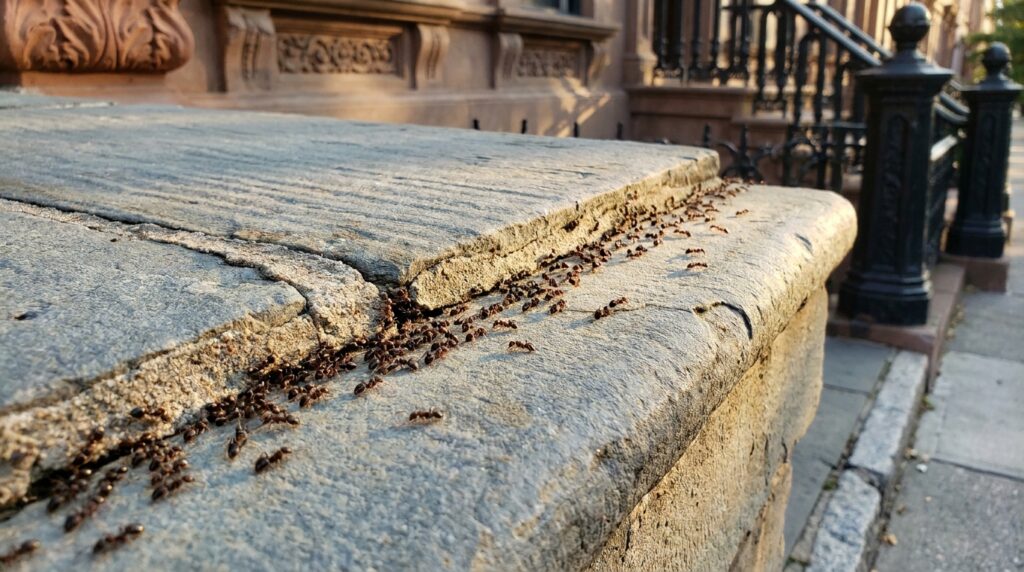
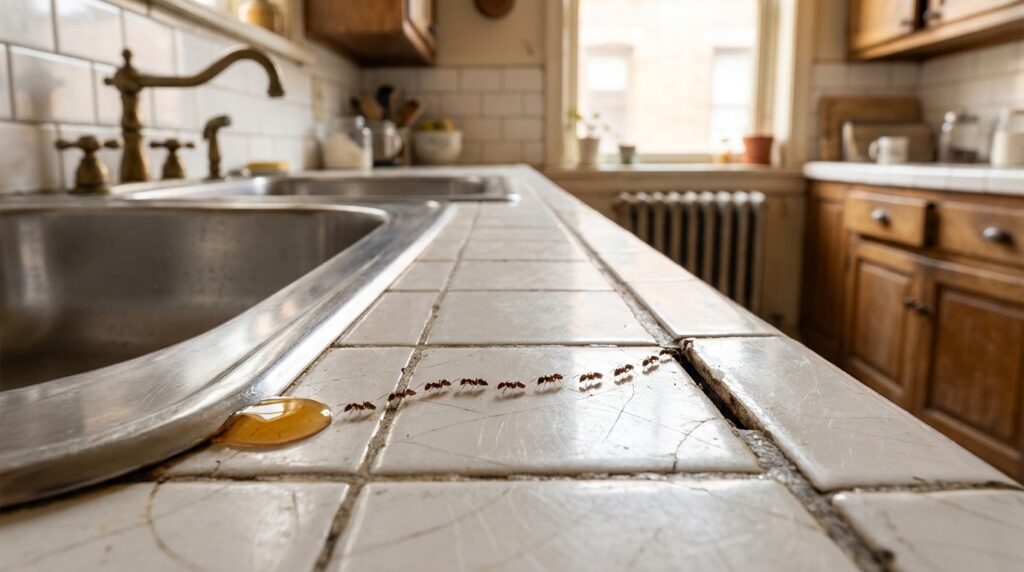
Both species swarm in spring and are frequently confused by NYC residents — it’s consistently one of the most common sources of pest anxiety in the city. If you’re dealing with ants rather than termites, the approach changes significantly, and ant control in Brooklyn requires different treatment strategies than termite remediation.
Damage Patterns and Debris Differences
Carpenter ants excavate wood to nest but don’t eat it — they leave behind smooth, clean galleries and piles of coarse sawdust mixed with insect parts. Termite galleries are rough and packed with mud or frass. If you’re unsure which pest you’re dealing with, our ant control services page can help you compare the two before calling in a professional.
When in doubt, capture a specimen in a sealed bag or take a clear photo and request a professional ID before assuming the worst.
Common False Alarms That Aren’t Termites
Drywall mud air bubbles, old nail holes, and cosmetic paint damage are frequently mistaken for termite signs — especially in NYC’s older housing stock where walls show decades of wear. Mud dauber wasp nests on exterior walls closely resemble termite mud tubes but are typically rounder and found in more exposed locations. A professional inspection can quickly distinguish real threats from cosmetic issues, saving you unnecessary stress and expense.
Why Are NYC Buildings Especially Vulnerable to Termites?
Brownstones, Pre-War Apartments, and Row Houses
NYC’s iconic brownstones and row houses feature wood-framed interiors behind brick and stone facades, providing hidden buffets for subterranean termites that enter through foundation contact points. Pre-war buildings often have aging plumbing that creates undetected moisture in wall cavities and subfloor areas — and as Consumer Reports notes about hidden water damage, the connection between leaks and pest infestations is well-documented but rarely discussed by property owners.
Whether you’re in a Brooklyn brownstone or a Queens row house, older construction creates ideal conditions for colonies to establish undetected — residents in these areas often turn to termite treatment in Brooklyn or termite treatment in Queens for help.
Concrete and Slab Foundation Entry Points
Many NYC residents assume concrete foundations make their homes termite-proof, but subterranean termites enter through slab edges, expansion joints, cracks as narrow as 1/32 of an inch, and plumbing penetrations. Bait station systems installed along the foundation perimeter are a recommended defense for slab-on-grade construction common in parts of the outer boroughs, and termite treatment in Brooklyn and termite treatment on Staten Island frequently involves addressing these specific entry points.
How Fast Can a Colony Cause Serious Damage?
A mature termite queen can lay up to 40,000 eggs per day, meaning colonies grow exponentially once established. As a resource on termite infestations explains, a single subterranean colony can contain hundreds of thousands to over a million workers, each consuming wood 24 hours a day.
Early detection is the single most cost-effective action a property owner can take — damage repair costs routinely exceed treatment costs by a factor of ten or more.
Termite swarmers around your foundation?
26+ years on NYC and Long Island termite work. NY Category 7C licensed, 100% results guarantee, and free inspections that catch swarms before damage spreads.
What Should NYC Renters and Homebuyers Do If They Spot Termite Signs?
NYC Tenant Rights and Landlord Obligations
Under New York City housing code, landlords are responsible for maintaining habitable conditions, which includes addressing pest infestations. Tenants should document all signs with dated photos and written communication, and the NY State landlord and tenant pest management guide outlines responsibilities clearly.
If a landlord is unresponsive, tenants can file a residential pest complaint through NYC 311 or contact HPD for an inspection. It’s also worth familiarizing yourself with NYC’s pest and pesticide laws for building owners to understand your rights fully — these same regulations apply to other common building pests, and cockroach control in Brooklyn falls under the same legal framework.
WDI Inspections for NYC Homebuyers
A Wood Destroying Insect (WDI) inspection should be a non-negotiable part of any NYC home purchase — standard home inspections often do not include a thorough termite assessment. Manhattan co-ops and condos in particular benefit from termite treatment in Manhattan, since shared walls and aging infrastructure can allow colonies to spread between units undetected.
Termites in older NYC homes are common and treatable, but hidden damage behind walls and beneath floors can be severe. Knowledge before closing protects your investment.
Choosing a Trustworthy Termite Inspector in NYC
Get at least two to three independent inspections before committing to treatment. As the EPA’s citizen’s guide to pest control recommends, consumers should compare findings and avoid companies that use high-pressure sales tactics after cursory inspections.
Look for companies licensed by New York State DEC, carrying proper insurance, and willing to explain their findings in detail. Ask whether they recommend integrated pest management approaches before defaulting to chemical treatments — organizations like Beyond Pesticides offer IPM resources that can help you evaluate what’s being proposed.
Found Signs of Termites in Your NYC Home — What’s Your Next Step?
Most termite damage accumulates over months and years, not days — you have time to make informed decisions, but you shouldn’t delay scheduling a professional inspection. Avoid disturbing mud tubes or damaged areas before an inspector arrives, as intact evidence helps with accurate diagnosis. Document everything with photos, especially if you’re a renter preparing to notify your landlord.
A licensed termite professional can confirm the species, assess the extent of the infestation, and recommend targeted treatment — whether you need termite treatment in Manhattan or anywhere else in the five boroughs. Early detection paired with professional treatment is the most reliable way to protect your property, your finances, and your peace of mind.
The bottom line: learn the signs, inspect regularly, act promptly, and don’t panic. Termites are a solvable problem — especially when you catch them early.
Related guides for NYC residents: If you’re dealing with other pests, check out our guide on Signs of Ants in NYC — carpenter ants are frequently confused with termites and require a completely different treatment approach.