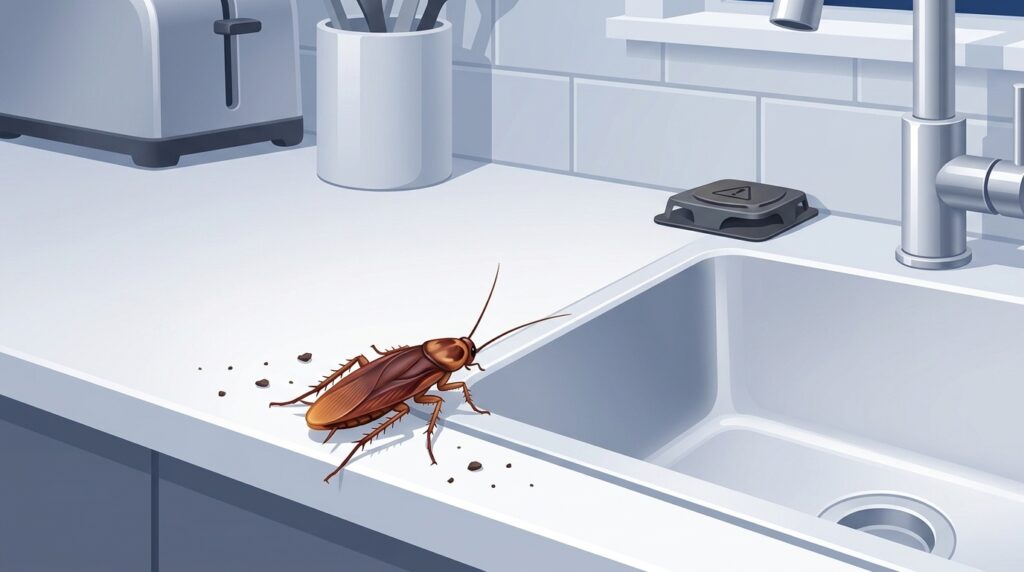
If you’ve spotted a roach skittering across your NYC kitchen at 2 a.m., you’re far from alone — and you’re not dirty. Roaches are one of the most common pests in New York City apartments, driven by aging infrastructure, shared walls, and dense urban living rather than any fault of yours. The good news is that even in a roach-prone building, you can dramatically reduce or eliminate them from your unit with the right approach. This guide gives you the specific, NYC-tested strategies that actually work — from professional-grade product protocols to knowing your legal rights as a tenant.
Cockroaches in your NYC kitchen?
26+ years treating NYC roaches. Gel baits and crack-and-crevice work that actually finishes the colony, no annual contracts, and a free inspection.
Why Are Roaches So Common in NYC Apartments?
NYC’s Perfect Storm for Roach Infestations
Dense multi-unit buildings with shared plumbing, walls, and garbage chutes create endless pathways for roaches to travel between apartments. Pre-war buildings are especially vulnerable, with deteriorated infrastructure, gaps behind walls, and cracks that are nearly impossible to fully seal — and according to cockroach data for NYC, first-floor units and older housing stock consistently report the highest infestation rates. Add proximity to restaurants, bodegas, and subway systems, and you’ve got a constant external source of roach populations feeding into residential buildings.
German Roaches vs. American Roaches — Know What You’re Fighting
This distinction matters more than most people realize. German cockroaches, as profiled by Rutgers, are small, light brown, and nest inside your apartment — they reproduce rapidly and are the species behind most persistent infestations. American cockroaches (often called “waterbugs”) are large, reddish-brown, and typically enter from basements and sewers rather than establishing colonies inside your unit.
Oriental cockroaches are another culprit, inhabiting moist, damp areas like basements and laundry rooms with significant disease risk. Misidentifying the species leads to using the wrong treatment entirely — German roaches need aggressive indoor baiting while American roaches need entry-point sealing and drain covers.
Seasonal Roach Behavior in NYC
Summer months (June–September) bring the worst surges as warmth and humidity accelerate reproduction and drive American roaches indoors. But winter doesn’t eliminate roaches — German cockroaches thrive year-round in heated NYC apartments. Optimal treatment timing is late spring (before peak season) and again in early fall to break the breeding cycle before roaches seek winter harborage. This is similar to the seasonal awareness needed for mosquito control in Ridgewood and other outer-borough neighborhoods where timing is everything.
What’s the Best Step-by-Step Method to Eliminate Roaches in a NYC Apartment?
Deep Cleaning and Sanitation as Your Foundation
Eliminate all food residue nightly — wipe counters, sweep floors, and never leave dishes in the sink. Even tiny crumbs sustain a colony. Store all food (including pet food) in airtight containers, and invest in a garbage can with a tight-fitting lid — it’s one of the most underrated prevention measures. As the New York State Department of Health advises, decluttering storage areas, especially under sinks and in closets, removes the harborage sites where roaches hide and breed.
Eliminating Moisture and Water Sources
Fix leaky faucets, pipes under sinks, and any condensation issues — roaches can survive weeks without food but only days without water. Dry sinks and bathtubs before bed each night, and use a dehumidifier in damp areas. Cover drains with mesh screens or stoppers at night to block American roaches from entering through the sewer system.
Systematic Inspection and Sealing Entry Points
Inspect behind appliances (refrigerator, stove, dishwasher), under sinks, around pipe penetrations, and along baseboards using a flashlight at night when roaches are active. Seal cracks and gaps with caulk — focus on where pipes enter walls, gaps around electrical outlets on shared walls, and spaces between baseboards and floors. Use steel wool or copper mesh for larger gaps before caulking over them, especially in pre-war buildings where wall voids are extensive.
What Professional-Grade Products Actually Work for NYC Roach Infestations?
The Three-Pronged Protocol: Bait + Spray + IGR
Professional exterminators don’t rely on a single product — they combine gel bait, a residual spray, and an insect growth regulator (IGR) for complete elimination. Recent research on cockroach baiting methods and effectiveness confirms that multi-product approaches outperform any single treatment. This protocol attacks roaches at every life stage: adults eat bait and die, spray kills on contact with residual protection, and IGR prevents nymphs from reproducing. Reapply gel bait every 2–3 weeks and IGR every 3 months until no roach activity is seen for at least 30 consecutive days.
Specific Product Recommendations and Application
- Gel baits: Advion and Vendetta gel — apply pea-sized dots in cracks, behind appliances, under sinks, and along shared walls (never in lines or large globs)
- Residual spray: Alpine WSG mixed according to label directions and sprayed along baseboards, behind appliances, and around entry points — it’s non-repellent so roaches walk through it unknowingly
- Insect Growth Regulators: Gentrol Point Source discs placed under sinks, behind refrigerators, and in cabinets act as “birth control” for roaches — this is the critical component most DIY guides skip entirely
- Dust: Boric acid or diatomaceous earth lightly applied inside wall voids through outlet covers and behind appliances for long-term residual control
Pet-Safe and Child-Safe Options for Small NYC Apartments
Gel baits applied inside cracks and behind appliances are largely inaccessible to children and pets when placed correctly using bait stations. Baking soda mixed with sugar is a low-toxicity DIY alternative — roaches eat it and the baking soda produces gas they cannot expel. Always read product labels for safety, and as the NYC guide to controlling pests safely advises, ventilate well after any spray application and keep pets off treated surfaces until dry.
What Are Your Rights as a NYC Tenant When Your Landlord Won’t Handle Roaches?
NYC Housing Code and Landlord Obligations
Under NYC’s warranty of habitability and Local Law 55, landlords are legally required to provide pest control and maintain roach-free conditions — roaches are a housing code violation. As outlined in the landlord and tenant pest management guide, tenants can file a complaint with HPD online or by calling 311 if a landlord fails to address an infestation. Document everything — photograph roach activity, save written requests to your landlord, and keep records of any exterminator visits and their outcomes.
When Building-Wide Treatment Is the Only Real Solution
Even a perfectly clean, well-sealed apartment can have roaches if neighbors are infested. An integrated pest management study on multi-unit buildings has shown that combining sanitation, sealing, and chemical treatment significantly reduces cockroach allergen levels and infestation rates. If you’re in a co-op or small building, coordinate with neighbors and the board to hire a licensed exterminator for all units simultaneously. NYC renters dealing with other building-wide pest challenges, like those described in our guide on getting rid of bed bugs in Queens, know that neighbor cooperation is often the deciding factor.
When to Hire a Professional Exterminator
If you’ve followed the three-pronged protocol for 4–6 weeks and still see live roaches regularly, you likely have a large colony in wall voids or a building-wide source that requires professional intervention. A licensed NYC exterminator can access wall voids, treat common areas, and apply commercial-grade products not available to consumers — that’s when cockroach control services can make the difference. Professionals who specialize in cockroach control in Brooklyn or cockroach control in the Bronx understand the building types and roach patterns specific to each borough, from brownstone walk-ups to high-rise towers.
Whether you’re in Queens dealing with a roach infestation or handling an issue on Staten Island, local knowledge makes a real difference in treatment strategy.
How Can You Prevent Roaches Before They Become a Problem — Even When Apartment Hunting?
Red Flags to Watch for When Apartment Hunting in NYC
Avoid first- and second-floor apartments, units above restaurants or grocery stores, and buildings with visible garbage management issues. Inspect the apartment during an evening showing if possible — check under sinks, behind the stove, and along baseboards for droppings (small black specks) or egg casings. Ask current tenants or the super how often the building is treated for pests; inconsistent or no pest control is a major red flag. Reviewing pest control in New York County options before you sign a lease can save months of frustration.
Ongoing Prevention Habits for NYC Renters
Maintain nightly kitchen cleanup routines and keep garbage in sealed containers — consistency matters more than perfection. Reapply gel bait and check IGR discs on a quarterly schedule even after roaches are gone, especially in multi-unit buildings. Inspect grocery bags, delivered packages, and secondhand furniture before bringing them inside — German roaches frequently hitchhike into apartments this way. As the NYC DOH pest information page emphasizes, keep bathroom and kitchen drains covered at night and address any plumbing leaks immediately.
Cockroaches in your NYC kitchen?
26+ years treating NYC roaches. Gel baits and crack-and-crevice work that actually finishes the colony, no annual contracts, and a free inspection.
Can You Really Get Rid of Roaches for Good in a NYC Apartment?
Complete, permanent elimination is achievable in your individual unit — even in an infested building — with consistent application of the three-pronged protocol and diligent sealing. The emotional toll of dealing with roaches is real and valid; many NYC transplants are deeply distressed by their first infestation, but as a multi-family housing pest control reference notes, this is a solvable problem with the right tools and persistence. Most renters who follow a disciplined bait + spray + IGR routine see dramatic results within 2–4 weeks and near-total elimination within 6–8 weeks.
Here’s your action plan starting tonight: Identify your roach species (German vs. American), deep clean your kitchen, and seal your garbage can — these three steps alone make an immediate difference. Order gel bait, Alpine WSG, and Gentrol IGR for a professional-grade DIY protocol, or reach out for cockroach control in Manhattan or cockroach control in New York County if you want professional help now. Know your rights — if your landlord isn’t acting, file an HPD complaint and document everything while you take control of your own unit’s treatment. You deserve a roach-free home in NYC, and with these strategies, you can make it happen.