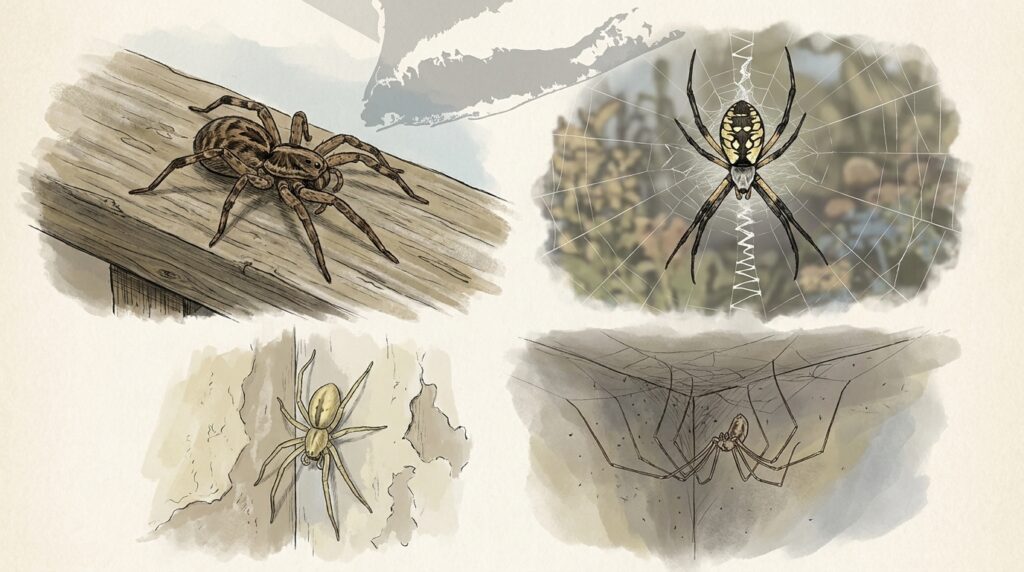
Found a spider in your basement, garage, or porch corner and wondering whether it’s the kind you can flick outside or the kind that warrants a call? You’re not alone — every fall, our phones light up with Long Island homeowners asking us to identify a spider that almost always turns out to be harmless. After more than 26 years of professional pest control on Long Island, our team has a clear picture of which spiders actually live here, which ones bite, and which ones are quietly doing you a favor.
This guide covers the 10 most common spiders we see across Nassau and Suffolk County, answers the venomous-vs-harmless question with real authority sources (not internet myths), and tells you when a sighting warrants a call versus a cup-and-paper relocation.
Spiders showing up around your home?
26+ years across NYC and Long Island. We reduce the prey insects spiders eat instead of just spraying webs, kid-friendly and pet-friendly methods, no annual contracts.
Which Spiders Are Most Common on Long Island?
Long Island’s mix of dense suburbs, wooded inland areas, and coastal shoreline creates habitat for dozens of spider species — but the same handful show up in 95% of the calls we field. Here are the ten you’re most likely to encounter, ranked by how often they turn up in our service reports across Nassau and Suffolk County.
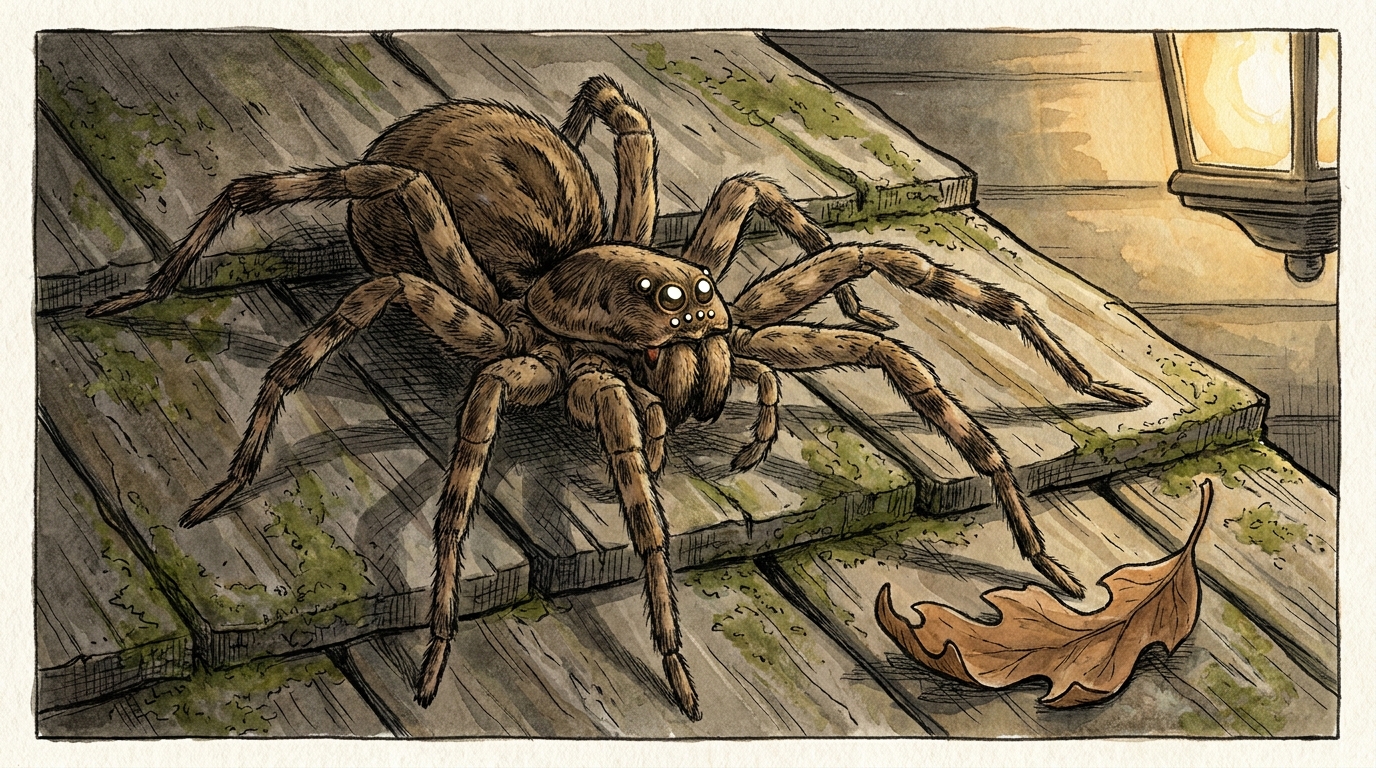
1. Wolf Spider (Lycosidae)
- Size: ½ to 1½ inches body, slightly furry with long sturdy legs
- ID: Brown or grey with darker patterns; eight eyes including two enlarged ones that reflect a silvery blue-green at night under a flashlight
- Indoor or outdoor: Outdoor hunters that wander into basements, garages, and crawl spaces — especially in fall
- Web type: None. Wolf spiders are active ground hunters that chase down prey
- Venomous? No. Bites are rare and feel like a wasp sting at worst
Wolf spiders are by far the most common “what is this giant scary spider” call we get from Long Island homeowners. They look intimidating, but they’re not aggressive — they’re wandering through your basement looking for the small insects that are already there.
2. Black & Yellow Garden Spider / Orb Weaver (Argiope aurantia)
- Size: Females can reach 1+ inch body length; males much smaller
- ID: Bold yellow-and-black markings with a distinctive zig-zag (stabilimentum) running down the center of the web
- Indoor or outdoor: Outdoor only — gardens, shrubs, fence lines, porch railings
- Web type: Large wheel-shaped orb webs, rebuilt nearly every night
- Venomous? No
This is the showstopper most LI homeowners notice in late August and September. The size is alarming, but garden spiders are completely harmless and act as a natural pest control system for your yard, eating grasshoppers, flies, and mosquitoes.
3. Cellar Spider — “Daddy Long-Legs” (Pholcidae)
- Size: Body 6-10mm with legs up to 5x body length
- ID: Pale, translucent body in two clear segments with extremely long, delicate legs
- Indoor or outdoor: Indoor specialist — basements, garages, corners near ceilings
- Web type: Loose, wispy, disorganized cobwebs
- Venomous? No. The viral claim that “they have the strongest venom but fangs too small to bite” is an urban legend
One quick distinction: the name “daddy long-legs” gets used for two completely different creatures. The cellar spider you see hanging in your basement corner is a true spider with a clearly two-segmented body. Harvestmen (Opiliones), which look similar but have a single round body segment, aren’t spiders at all. Both are harmless.
Cellar spiders are arguably the best free pest control you can have. They eat silverfish, mosquitoes, flies, and even other spiders.
4. American House Spider (Parasteatoda tepidariorum)
- Size: ¼ inch body, up to 1 inch with legs spread
- ID: Small, tan-to-brown round abdomen, banded legs, often hangs upside-down in its web
- Indoor or outdoor: Strongly indoor. The dusty cobwebs in your window corners and attic? Almost always this species
- Web type: Tangled, irregular cobwebs in undisturbed spots
- Venomous? No
The American house spider has biologically adapted over centuries to live alongside humans — many were born inside your home and would struggle to survive outside. They’re effective fly and gnat catchers and pose zero threat to children or pets.
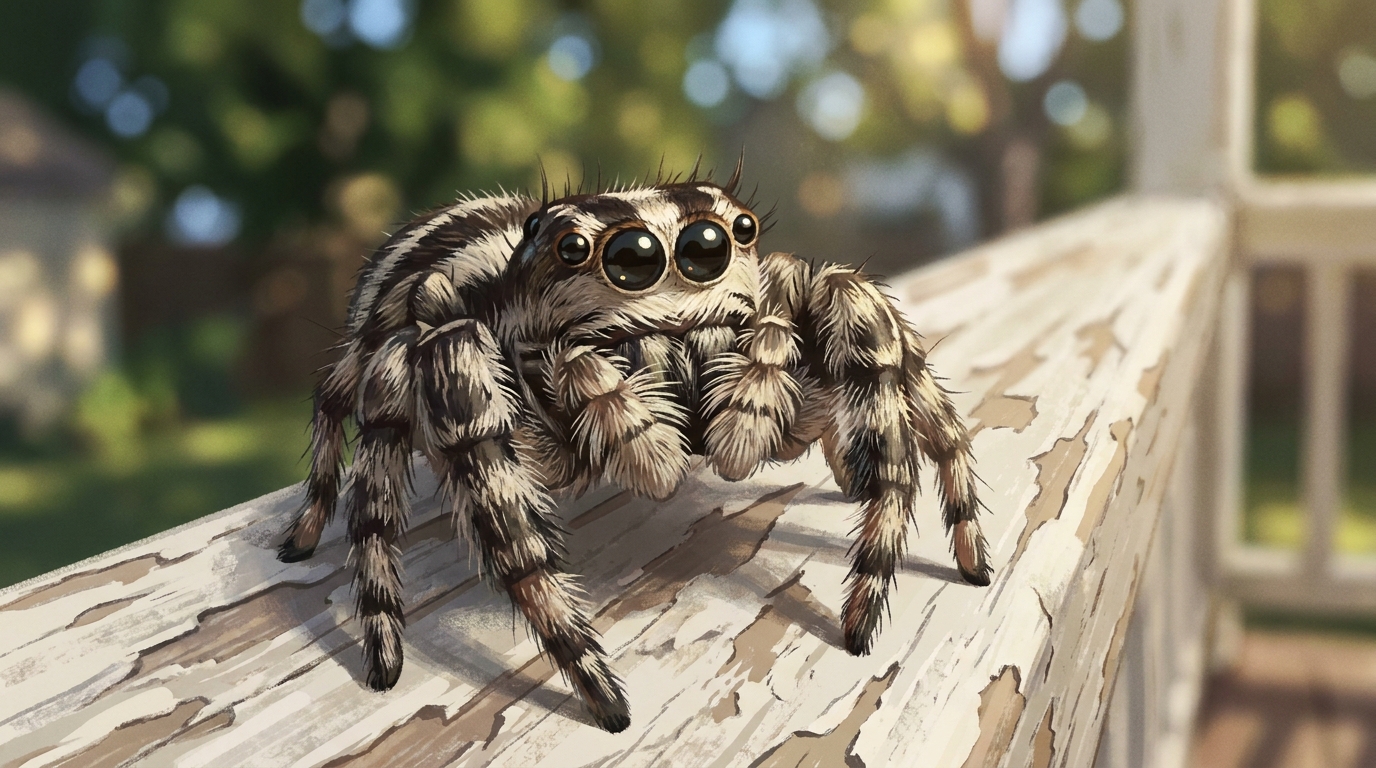
5. Bold Jumping Spider & Zebra Jumping Spider (Salticidae)
- Size: Tiny — usually under ½ inch
- ID: Stocky, hairy bodies with two enormous forward-facing eyes; bold jumpers (Phidippus audax) are black with white spots; zebra jumpers (Salticus scenicus) are striped black and white
- Indoor or outdoor: Both. We often see them on Long Island windowsills hunting flies during the day
- Web type: No capture web — they hunt by jumping on prey
- Venomous? No
If you’ve ever seen a tiny spider on your windowsill that turns to “look at” you, that’s a jumping spider. They’re the species most often photographed and posted to spider-ID forums by anxious LI residents — and the answer from the experts is always the same: harmless, intelligent, and weirdly charming. They’re also one of the few spiders that will reportedly chase a laser pointer dot.
6. Yellow Sac Spider (Cheiracanthium spp.)
- Size: ¼ to ⅜ inch body
- ID: Pale yellow or yellow-green with noticeably dark fangs and dark “feet”
- Indoor or outdoor: Both. Indoors they hide in upper wall corners, behind baseboards, and on ceilings at night
- Web type: No capture web — they spin small silk “sacs” used as resting retreats
- Venomous? Yes, mildly. According to the New York State DEC’s guide to common spiders, yellow sac spiders are the only species in New York that’s moderately venomous to humans
This is the most clinically relevant spider we deal with on Long Island. Bites can cause a slow-healing sore, mild swelling, and itchiness — comparable to a wasp sting. If you’re getting repeated yellow sac sightings in a Nassau County apartment or suburban Suffolk home, that’s a call worth making.
7. Funnel-Weaver / Grass Spider (Agelenopsis spp.)
- Size: ½ to ¾ inch body
- ID: Brown body with two prominent longitudinal stripes and visibly long spinnerets at the rear
- Indoor or outdoor: Outdoor primarily — lawns, hedges, foundation plantings; occasionally in basements
- Web type: Distinctive flat sheet web with a funnel-shaped retreat in one corner
- Venomous? No
Grass spiders are the source of those dewy white sheets you see across LI lawns in early morning. They’re frequently misidentified as wolf spiders. The easiest way to tell them apart: grass spiders have those very visible finger-like spinnerets sticking out the back; wolf spiders don’t.
8. Fishing Spider (Dolomedes)
- Size: Body up to 1 inch; leg span can reach 3+ inches
- ID: Large brown or grey spider, often with mottled patterns
- Indoor or outdoor: Outdoor near water — Suffolk County’s Peconic Estuary, Great South Bay shoreline, dock pilings, boathouses, and waterfront properties
- Web type: No capture web; nursery web for egg sacs
- Venomous? No
Fishing spiders genuinely walk on water and can dive to grab small minnows, tadpoles, and aquatic insects. They look terrifying because of their size, but they’re shy, harmless, and almost never enter homes more than a few feet from water.
9. Huntsman Spider
- Size: Up to 1 inch body, with a dramatic leg span
- ID: Brown, flattened body designed for slipping under bark and into wall voids; legs splayed crab-like to the sides
- Indoor or outdoor: Both. Often hitchhikes inside on firewood and outdoor furniture
- Web type: None — active hunter
- Venomous? No (the species we have on LI; tropical relatives are different)
Long Island’s huntsman sightings have ticked up in recent years. They’re alarming on first sight because of how fast they move, but our local huntsman species is harmless. We sometimes find them in older Long Island City and Hicksville garages where firewood is stored.
10. Northern Black Widow (Latrodectus variolus) — Rare but Present
- Size: Adult female ½ inch body, leg span up to 1½ inches
- ID: Glossy black “shiny marble on long black toothpicks” body with a red hourglass marking on the underside (sometimes broken into two triangles in the northern species)
- Indoor or outdoor: Outdoor. Woodpiles, stone walls, sheds, undisturbed crawl spaces — almost never inside the living areas of a home
- Web type: Messy, irregular cobweb with extremely strong silk
- Venomous? Yes — medically significant. This is the one to take seriously
Northern black widows are rare on Long Island but do exist, especially in undisturbed shoreline habitat. We’ve seen credible reports from the Deer Park area in Suffolk and from coastal communities. According to the NYC Department of Health’s spider page, a confirmed black widow bite warrants prompt medical attention. That said, deaths are extremely rare with modern treatment — for perspective, more Americans are killed each year by Christmas trees than by black widows.
Are Any Long Island Spiders Actually Dangerous?
Here’s the honest answer most pest companies won’t give you: out of the 10 spiders above, only two have bites of any medical concern, and only one is genuinely something to call your doctor about.
Yellow sac spider bites are the most common spider bites we see on Long Island. They’re uncomfortable — think a small ulcerating sore that takes a week or two to heal — but not dangerous to a healthy adult. Wash the area, keep it clean, and watch for signs of infection.
Northern black widow bites are the only true medical emergency on this list. Symptoms include intense localized pain, muscle cramping, sweating, and elevated blood pressure. If you suspect a widow bite, capture the spider if it’s safely possible (in a sealed jar) and head to an ER. Antivenom and supportive care work well.
Every other spider on this list is essentially harmless to humans. The “false widow” myth, in particular, leads to a lot of unnecessary panic on LI. False widows have similar dark coloring but no red hourglass and a much milder bite — comparable to a bee sting if it happens at all. Our team has never had a Long Island customer with a serious false-widow bite reaction.
Is the Brown Recluse Spider Found on Long Island?
This is the question we get most often, and the answer is unambiguous: no, brown recluse spiders are not established anywhere on Long Island or in New York State.
The native range of the brown recluse (Loxosceles reclusa) is the south-central United States — roughly Missouri, Arkansas, Oklahoma, Kansas, southern Illinois, Tennessee, and northern Texas. Cornell University’s entomologists, who authored the official New York DEC spider guide, are direct about this: “In New York, bites attributed to brown recluse spiders are almost certainly from yellow sac spiders.” Cornell’s Integrated Pest Management program echoes the same point and routinely fields misidentification questions from anxious residents.
A couple of practical clarifications we share with anxious homeowners:
- The violin marking on a brown recluse is on its head/cephalothorax, not its abdomen. Most “brown recluse” photos sent to us are spiders with abdominal patterns — which automatically rules out a recluse
- Brown recluses have only six eyes arranged in three pairs. Almost every other spider has eight
- Even where they ARE established, only about 5% of bitten people have any reaction at all, and there has never been a documented brown recluse death in the United States
If you find a small pale or yellow-brown spider in your Long Island home, it’s almost certainly a yellow sac, parson, or ghost spider. Snap a clear photo before assuming the worst.
Spiders showing up around your home?
26+ years across NYC and Long Island. We reduce the prey insects spiders eat instead of just spraying webs, kid-friendly and pet-friendly methods, no annual contracts.
Where Do Long Island Spiders Live — Indoors vs Outdoors?
The indoor-vs-outdoor split is one of the most useful framings we share, because it tells you whether a spider sighting indicates a localized issue or a broader pest problem.
True indoor spiders on Long Island include the cellar spider, American house spider, and yellow sac spider. These species have evolved to thrive inside human structures and would struggle to survive if you released them outside. Sightings are normal year-round and don’t necessarily mean anything is wrong.
Outdoor spiders that occasionally drift inside include wolf spiders, grass spiders, jumping spiders, and the rare huntsman. They wander in through gaps under doors, foundation cracks, garage entries, or attached firewood. Multiple sightings in a short window usually mean there’s a gap to seal.
Strictly outdoor spiders include orb weavers, garden spiders, fishing spiders, and northern black widows. If you see one of these inside, it’s almost always a one-off — they wandered in through an open door and won’t establish a population.
The indoor species are also the most worth tolerating. They eat the very pests — flies, gnats, silverfish, even small cockroaches — that you’d otherwise call about. If you can tolerate a cellar spider in your basement corner, our team has often seen it correlate with fewer secondary pest problems.
How Are Spider Patterns Different in Suffolk vs Nassau County?
One pattern we’ve consistently noticed across our LI service area: spider mix shifts noticeably between Nassau and Suffolk based on density, lot size, and proximity to water.
In Nassau County — denser suburbs from Hempstead through Hicksville and the surrounding suburbs — we field more indoor calls. American house spider, cellar spider, and yellow sac dominate, with periodic wolf spider intrusions in basements during fall. North Shore towns like the Roslyn area see more orb weavers and garden spiders thanks to mature trees and landscaped yards.
In Suffolk County — more wooded, more wetland, more shoreline — we see broader diversity. Fishing spiders show up around the Peconic estuary, Great South Bay docks, and Hamptons waterfront. Wolf spider populations are noticeably higher in pine-barrens and cedar-shake homes from Brookhaven east. The rare northern black widow reports we hear about cluster in Deer Park, Yaphank, and undisturbed coastal sheds.
Shoreline communities like Sands Point on the bay and Manhasset on the North Shore get the widest spider mix because their habitat blends suburban residential with mature tree canopy and water access.
When Should You Worry About a Spider on Long Island?
Most spider sightings don’t need a call. Here’s how we frame it for our customers:
Leave it alone if it’s:
- A cellar spider in your basement corner (it’s eating your pests)
- A jumping spider on your windowsill (it’s hunting flies)
- A house spider in your garage (it’s harmless and beneficial)
- An orb weaver in your garden (welcome guest)
- A single wolf spider that wandered in (relocate with cup-and-paper if you want)
Call a professional if you see:
- A suspected northern black widow anywhere on your property
- Recurring yellow sac sightings inside (suggests a population, not a stray)
- Heavy spider populations across multiple rooms (often signals an underlying pest issue providing food)
- Webs reappearing within days of being knocked down
- Anyone in the home has a known severe insect-bite allergy
The honest truth: if your home has a lot of spiders, you almost certainly have a lot of other insects too, because spiders eat what’s already there. Our spider control program always starts with identifying and treating the underlying prey insects — that’s how you actually fix the problem instead of chasing webs forever.
Why Do You Suddenly See More Spiders Inside in Fall?
Every September and October, we get a flurry of “we suddenly have spiders everywhere” calls from Long Island homeowners. There’s a clear biological reason.
Most male spiders mature in late summer and immediately start wandering in search of mates. They’re not “coming inside for warmth” — they’re looking for females, and your house is a convenient stop along the way. Wolf spiders, grass spiders, and parson spiders account for most of the dramatic fall sightings we see across Nassau County and the broader LI region.
Spring brings a different surge: spiderlings hatching and dispersing. You might notice tiny spiders on outdoor surfaces in May and June. They scatter quickly and most don’t survive to adulthood, so the spike resolves on its own.
Both surges are normal and don’t usually require treatment. If they coincide with a noticeable jump in flies, ants, or cockroaches inside, that’s the signal to call.
Spiders showing up around your home?
26+ years across NYC and Long Island. We reduce the prey insects spiders eat instead of just spraying webs, kid-friendly and pet-friendly methods, no annual contracts.
What Should You Do If a Spider Bites You on Long Island?
Spider bites are wildly over-reported in our experience — most “spider bites” turn out to be mosquito bites, flea bites, or skin reactions. Real spider bites generally happen when a spider is trapped against skin (in clothing left on the floor, in a glove, in bedding).
For a routine bite from a wolf spider, jumping spider, or unidentified small spider: wash with soap and water, apply a cool compress, take an antihistamine if it itches, and watch for unusual symptoms over 24-48 hours.
Seek medical attention if you’re certain it was a black widow (intense pain, cramping, sweating), if the bite develops expanding necrosis, or if there’s severe swelling or breathing difficulty. Children, the elderly, and immunocompromised individuals should always be evaluated. If possible, capture the spider or get a clear photo — it helps medical providers calibrate treatment.
How Can You Keep Spiders Out of Your Long Island Home?
Because spiders eat other pests, the most durable approach is to address the prey base — what we call integrated pest management. Killing spiders without addressing what they were eating just creates a vacuum that fills back up.
Practical steps that actually work in Nassau and Suffolk homes:
- Seal entry points. Door sweeps, window screens, foundation cracks, gaps around utility penetrations
- Reduce clutter in basements, garages, and crawl spaces — especially cardboard and stacked firewood
- Move outdoor lights away from doorways. Lights attract moths and gnats; spiders follow the food
- Knock down webs proactively — consistent removal discourages establishment
- Clean up yard debris within 10 feet of the foundation — woodpiles, brush, leaf litter
- Address other pest issues first. If you have a fly, gnat, or roach problem, your spider issue is downstream
Our team uses family and pet-friendly products on the perimeter and at entry points, with targeted indoor treatment only where needed. One professional perimeter treatment in early spring plus follow-up at the start of fall mating season keeps most LI homes ahead of the seasonal surges. For how spider species shift across the rest of the state, our broader New York spider identification guide covers upstate, NYC, and Adirondack-region species we don’t see often on Long Island.
What’s the Bottom Line on Spiders on Long Island?
Quick recap of what’s living in your basement, garage, and yard:
- Common and harmless: Wolf spider, garden orb weaver, cellar spider, American house spider, jumping spiders, grass spider, fishing spider, huntsman
- Mildly venomous: Yellow sac spider — uncomfortable bite, not dangerous
- Rare and medically significant: Northern black widow — outdoor only, take seriously
- Not found here: Brown recluse — full stop, despite what the internet says
Long Island is one of the safer places in the country when it comes to dangerous spiders. Most of what you’ll encounter is doing free pest control on your behalf. Learning three or four common species solves most of the anxiety — and when in doubt, a clear photo to a local expert beats guessing.
If you’re seeing spiders consistently, getting bitten, or worried about a sighting, our team has been identifying and treating Long Island spider issues since 1999. We’ll come out, identify what you actually have, address the underlying pest pressure, and tell you straight up whether you need a treatment plan or just a screen repair. Call us for a free estimate — we serve all of Nassau and Suffolk County with same-day service during business hours.