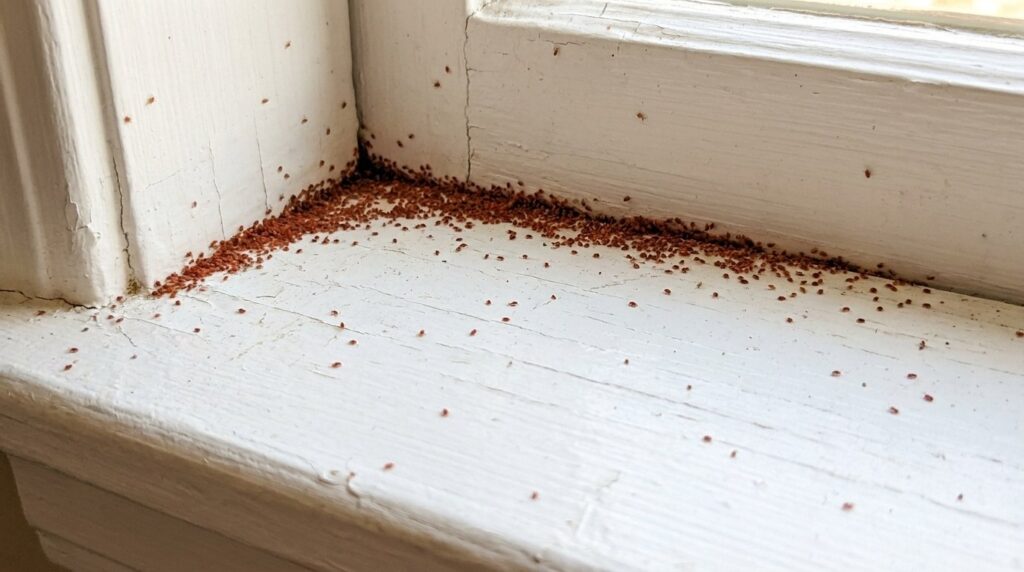
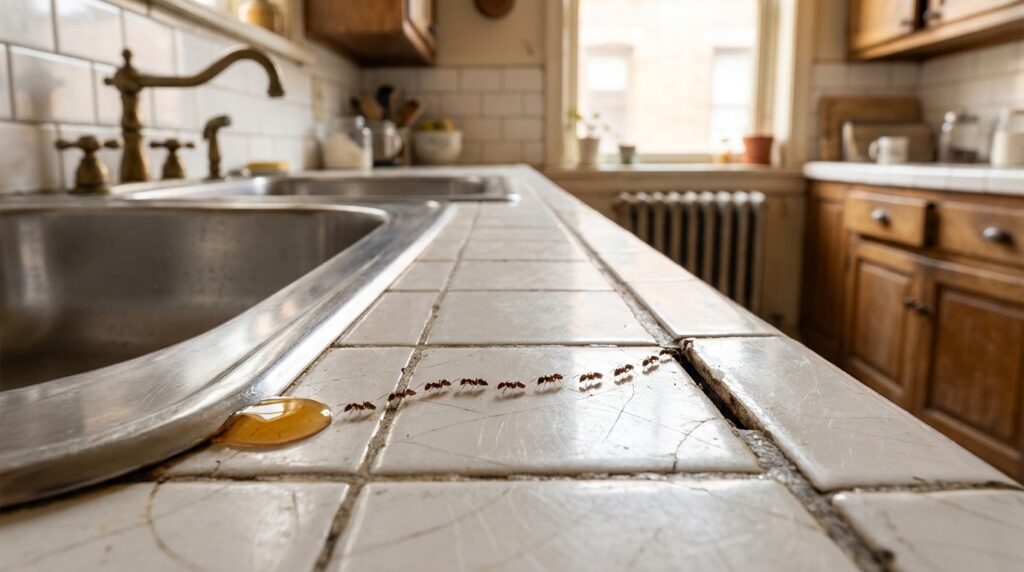
If you’ve found a thin trail of tiny dark ants marching across your NYC kitchen counter at 6 a.m., snaking from the sink edge to a sticky spot near the toaster, you’re almost certainly looking at sugar ants. After 26 years running ant calls across every NYC borough, our team has learned that “sugar ants” is the most common name New Yorkers use for what’s almost always one species: the odorous house ant (Tapinoma sessile). They’re tiny, they’re attracted to anything sweet, they smell like rotten coconut when crushed, and they’re the single most fixable ant problem in NYC if you bait them correctly — but they’re also the single most common ant problem people make worse with the wrong product.
This guide walks through what sugar ants actually are, where they hide in pre-war NYC kitchens, the bait-only method that finishes a colony in 7 to 14 days, why spraying them backfires, pet-friendly bait options for small NYC apartments, and when to skip the experiment and book professional NYC ant control for a free inspection. If the problem is already in 3+ rooms or has been active more than 60 days, Lisa or one of our front-office team can usually book a same-day inspection during business hours. But if you caught it early, you can almost certainly handle it yourself — read on.
Sugar ants in your NYC kitchen?
26+ years treating NYC ants. Sweet bait at the trail that finishes the colony in 7 to 14 days, not just the foragers you see, no annual contracts, and a free inspection that's waived when you book.
What Are Sugar Ants and Why Do You Have to Get Rid of Them in NYC Apartment Kitchens?
“Sugar ant” is technically a colloquial term, not a species name. In the US it’s used for any small ant attracted to sweets — acrobat ants, Argentine ants, pavement ants, ghost ants, little black ants, white-footed ants, and others can all earn the label. But in NYC, the ant you’re almost always looking at when you say “sugar ant” is the odorous house ant (Tapinoma sessile). According to Penn State Extension’s odorous house ant guide, this species is native across North America, ranges from 1/16 to 1/8 inch long, is uniformly dark brown to black, has a single (hidden) node between thorax and abdomen, and emits a distinctive rotten-coconut or blue-cheese smell when crushed. That smell test is the easiest free ID method any NYC tenant can run with a paper towel and one ant — no microscope needed.
The reason sugar ants love NYC apartment kitchens specifically comes down to four factors: moisture, sugar, warmth, and shared walls. Pre-war NYC walk-ups and brownstones have steam radiators, century-old plumbing, and plaster walls that hold humidity. Apartment kitchens concentrate sugar (counter spills, fruit, honey, sticky pet bowls, garbage disposal residue), warmth (oven, dishwasher, refrigerator compressor), and access (shared walls with neighbors, gaps where pipes enter from the slab, gaps under the baseboards). A single colony nesting in a wall void can forage into 3 to 5 adjacent apartments through plumbing risers and shared dumbwaiter shafts that were sealed loosely when buildings stopped using them in the 1960s.
Sugar ant colonies in NYC are also bigger than most homeowners realize. Per UWisconsin’s odorous house ant guide, a single Tapinoma sessile colony often has many queens and many thousands of workers spread across multiple interconnected nests. When you spray the visible workers, the colony’s “budding” response kicks in — a queen and a group of workers split off and establish a second nest a few feet away, which is exactly the opposite of what you want.
Where Do You Find Sugar Ants to Treat in a NYC Pre-War Kitchen?
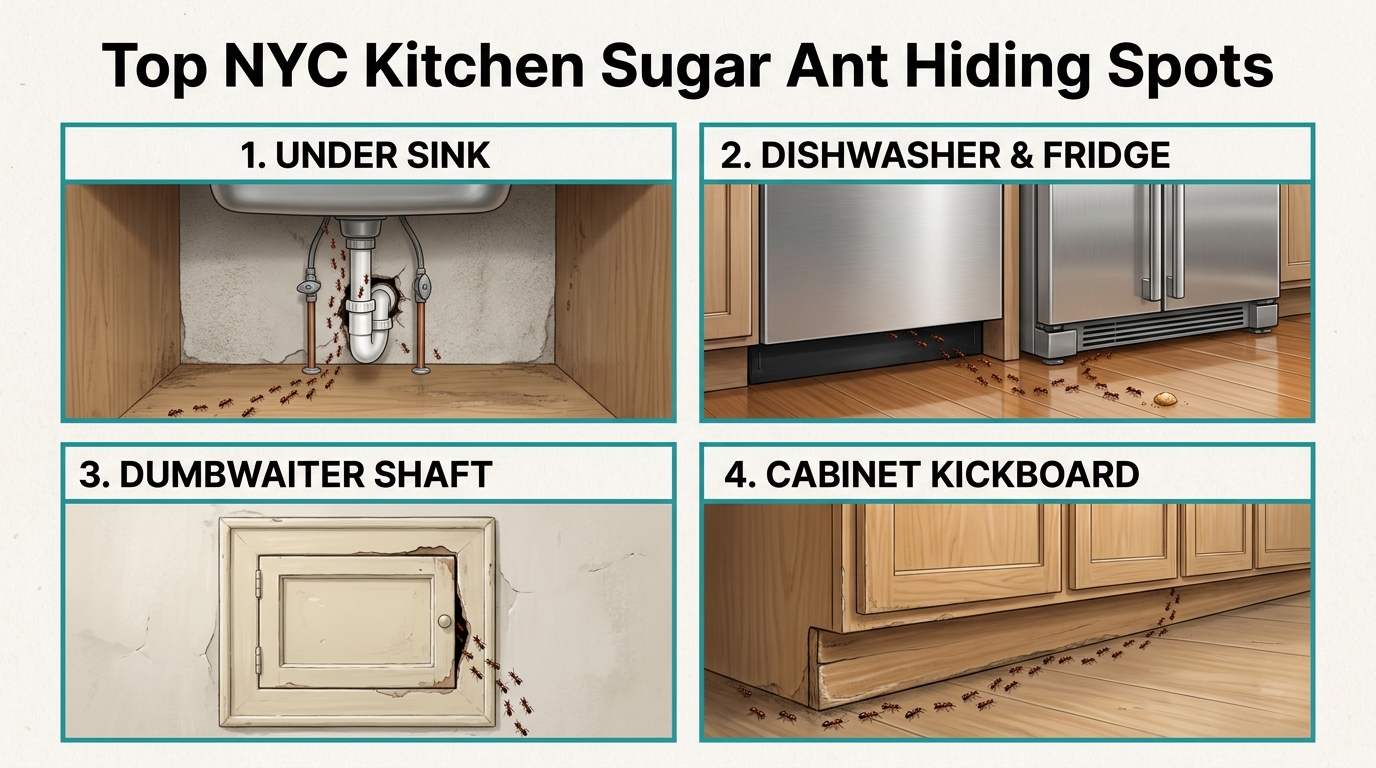
After thousands of NYC kitchen ant calls, here are the top 6 locations our techs check first in pre-war Brooklyn brownstones, Manhattan walk-ups, and Queens row-home kitchens:
- Under the kitchen sink, around the plumbing penetrations. The single most common NYC sugar ant nesting site we see. Open the cabinet door, get a flashlight, and look at the spot where the drain pipe and supply lines come through the wall from below. Any gap larger than 1/16 inch is enough. Sugar ants love this spot because it offers moisture from the drain trap, warmth from the dishwasher next door, and direct connection to the wall void.
- Behind the dishwasher and refrigerator. The toe-kick void under both appliances is consistently moist (from the dishwasher) and warm (from both compressors). Pull each appliance out and look for grease marks on the wall behind, or droppings, or visible foraging trails.
- Inside or around the dumbwaiter shaft (pre-war buildings only). Most NYC walk-ups built before 1960 had dumbwaiter shafts that got sealed when the building stopped using them. The seal is often a thin sheet of plywood or sheet metal with no insulation — perfect ant highway between floors. If you smell rotten coconut faintly near a closet wall in a kitchen-adjacent room, that’s often a dumbwaiter shaft with a nest inside.
- Behind kickboards at the base of cabinets. The 1 to 2 inch hollow space at the base of every wood kitchen cabinet is a textbook sugar ant runway. Get down on the floor and use a flashlight to look at the kickboard seam — droppings, frass-like debris, or visible workers signal nesting.
- Around the garbage disposal switch + electrical outlets. Wall penetrations for electrical wires through plaster create gaps. Sugar ants exploit these to enter the kitchen from the wall void.
- Inside the wall void behind the radiator. Steam radiators leak condensate over decades of use. The wall behind the radiator stays warmer and slightly damp. Sugar ants nest in the wall void and forage out into the room when foraging conditions are right.
One Reddit thread on r/CleaningTips we’ve seen mentions the pro tip of using a bulb duster to puff insecticidal dust into wall voids near these exact penetrations. It’s effective DIY when paired with surface baiting (more on that in the next section).
What’s the Bait-Only Method That Kills NYC Sugar Ant Colonies in 7-14 Days?
The single biggest fix New Yorkers can make on a sugar ant problem is to stop spraying and start baiting. Per UC IPM’s odorous house ant baiting guide, as few as 1% of a colony’s foraging workers feed the queen — which means killing the visible workers does essentially nothing to the colony. Bait works because workers carry slow-acting toxicant back to the nest, where it’s shared with the queen, larvae, and other workers across days. Done right, a NYC sugar ant colony dies in 7 to 14 days.
Here’s the protocol that’s worked for thousands of our customers:
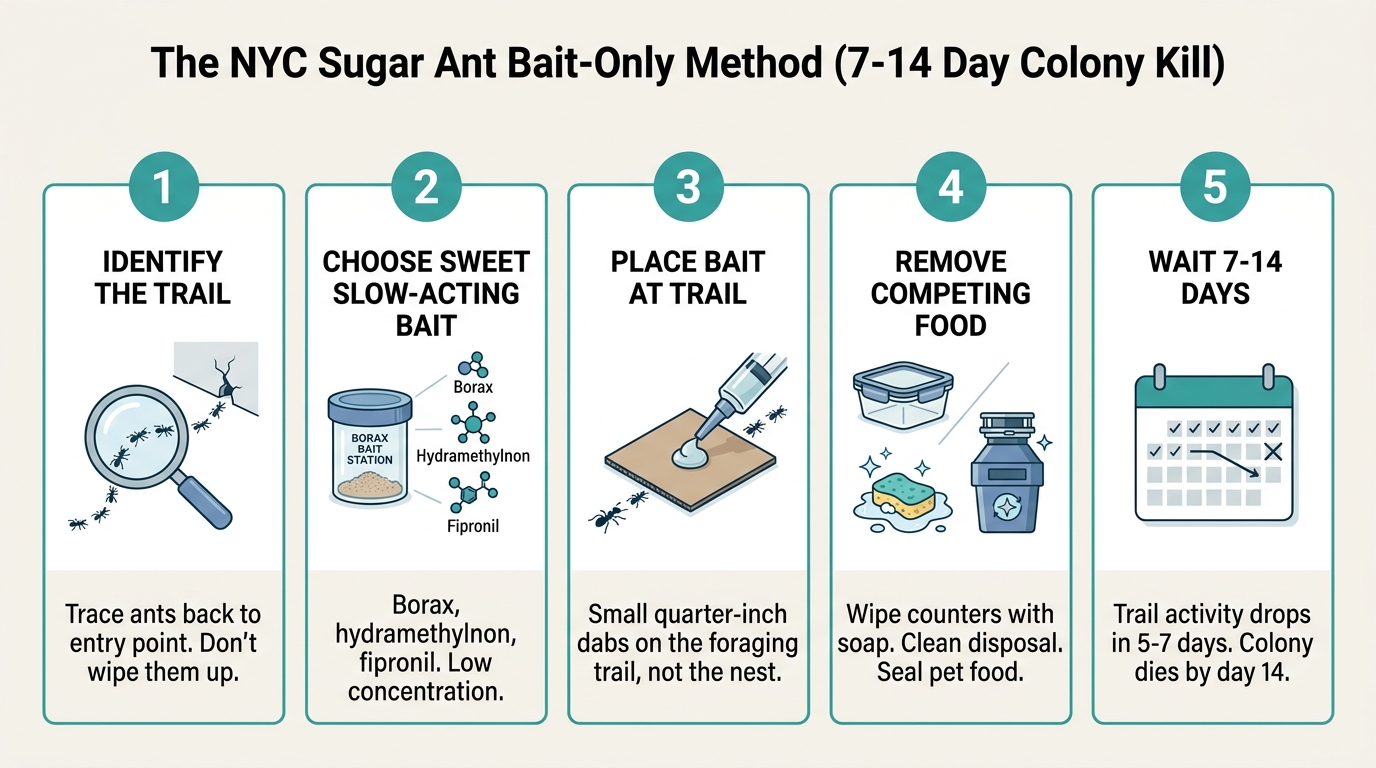
Step 1: Identify the trail without disrupting it. When you see sugar ants in your kitchen, DO NOT wipe them up immediately. Watch which direction they’re moving and trace the trail back to its entry point (under the sink, behind the dishwasher, along a baseboard). That’s where you’ll place bait.
Step 2: Choose a sweet liquid or gel bait with a slow-acting active. For sugar ants in NYC kitchens, the gold standard is borax-based bait (Terro Liquid Ant Baits use 5.4% sodium tetraborate decahydrate) or a sugar + boric acid DIY mix at low concentration (less than 1% boric acid). Other options: hydramethylnon or fipronil gel baits. AVOID baits with high-concentration knockdown actives — they kill foragers too fast, before they can carry the bait back.
Step 3: Place small bait portions at the trail, not the nest. Put a quarter-inch line of gel bait or 3 to 5 drops of liquid bait on a small piece of cardboard or aluminum foil placed directly on the foraging trail. Sugar ants will recruit aggressively to a productive food source — you’ll see a much bigger trail in the first 24 to 48 hours. THIS IS NORMAL AND GOOD. It means the bait is working.
Step 4: Eliminate competing food sources. While the bait is working, remove every other sugar source in the kitchen — wipe counters with soap and water (not vinegar, which destroys the pheromone trail), clean the garbage disposal with hot water + a tablespoon of bleach, store fruit in the fridge, rinse sticky takeout containers before tossing them, and don’t leave pet food bowls full overnight. The ants need to find your bait, not a competing crumb.
Step 5: Wait 7 to 14 days without disturbing the bait. Replace bait as needed (it dries out). Trail activity will drop dramatically in 5 to 7 days, and by day 14 the colony should be gone. Don’t spray. Don’t wipe ants away. Don’t kill the ants you see. Just let the bait work.
If your bait isn’t working after 14 days, the most common reasons (per multiple Reddit DIY threads we’ve reviewed) are: the bait concentration is too high (kills foragers too fast), you’ve got the wrong bait class (sugar ants prefer sweet but occasionally need protein), or there’s a competing food source you haven’t removed. Switch bait class, double-check for spills, and give it another week.
Why Does Spraying to Get Rid of NYC Sugar Ants Make the Problem Worse?
If we could change one DIY behavior across NYC, it would be the instinct to spray sugar ants the moment they appear. Spraying does three things, all bad:
1. It kills the foragers who would carry bait back to the queen. The visible ants on your counter are 1% to 2% of the colony. The other 98% are inside the nest. Spray kills the messengers; the queen keeps laying eggs.
2. It triggers colony budding. Per UWisconsin’s research, when a Tapinoma sessile colony detects a chemical threat, queens and worker groups split off to establish new nests a few feet away. We’ve seen NYC apartments where a single spray episode turned one colony into three within a month.
3. It contaminates the bait area. If you eventually do put down bait, residual spray nearby will repel the ants from approaching it. Per UC IPM, do NOT apply other insecticides near bait — it reduces effectiveness.
The one exception where contact spray IS appropriate is AFTER successful baiting, as a final perimeter pass to prevent re-entry. A pyrethroid spray (bifenthrin or permethrin) sprayed in a 2-foot band around your apartment’s perimeter (where the floor meets the wall behind appliances, around exterior door thresholds, in window sills) creates a residual barrier. But this comes AFTER 14 days of successful baiting, not before. The 70% rubbing alcohol trick that shows up in Reddit threads is the same logic — fine for a quick contact kill of one straggler, useless on the colony.
For a deeper look at the species-ID step that determines whether spraying is appropriate at all, our guide to signs of an ant infestation in your NYC apartment walks through how to confirm species before reaching for any product, and our comprehensive pavement ant DIY guide covers the outdoor counterpart that often shows up at the same time of year.
What Are the Best Pet-Friendly Sugar Ant Baits for NYC Apartments?
NYC apartments are small. Most have at least one cat or dog. Sugar ant baits typically contain insecticides at low concentrations, but you still don’t want a curious cat licking a gel bait off the counter or a dog finding a bait station. Here’s what we recommend for NYC apartment households with pets:
- Tamper-resistant prefilled bait stations. Products like Terro Liquid Ant Baits come in plastic stations that limit pet access. Place them in cabinet undersides, behind appliances, under sinks, in the cabinet kickboard cavity — locations a cat or dog can’t reach. The active ingredient (borax) is contained inside the station.
- Cabinet-mounted gel bait dabs. A small dab of gel bait inside a closed cabinet at the back, where the wall meets the floor of the cabinet, gives the ants access while keeping pets out. Don’t apply gel on open countertops in pet-accessible areas.
- Bait stations inside outlet covers. Some pros place small bait stations inside the cavity behind an electrical outlet cover plate (with power off). This puts bait directly where ants forage through wall voids while making it physically impossible for pets to reach.
- NO over-the-counter sprays in food-prep areas with pets. If you’re going to spray a perimeter post-baiting, use a low-toxicity pyrethroid and only apply behind appliances or under sinks where pets can’t lick treated surfaces. Per EPA IPM guidance, integrated pest management for households with children or pets prioritizes contained baits over spray applications.
- AVOID DIY borax + sugar mixes left in open dishes. The internet loves the borax + sugar + water cotton ball trick, but in a NYC apartment with a cat, leaving open dishes of insecticide-laced sugar is a vet visit waiting to happen. Use a sealed bait station instead.
Our standard pet-friendly approach for NYC apartments is “family and pet-friendly” product selection (we say friendly, not safe, because even low-toxicity products require correct placement). Lisa walks every pet-owning customer through bait placement specific to their apartment layout before any treatment.
Sugar ants in your NYC kitchen?
26+ years treating NYC ants. Sweet bait at the trail that finishes the colony in 7 to 14 days, not just the foragers you see, no annual contracts, and a free inspection that's waived when you book.
How Do You Stop Sugar Ants From Coming Back to Your Manhattan or Brooklyn Kitchen?
Killing the visible colony is half the job — the other half is preventing the next colony from re-establishing. Sugar ant pheromone trails on kitchen surfaces persist for days even after the colony is dead, and a new colony can rediscover your kitchen through the same entry point within weeks. Here’s the prevention checklist we walk through with every Manhattan customer and every Brooklyn ant control customer:
- Destroy the pheromone trail. Once the colony is eliminated, scrub all surfaces where ants were trailing with hot soapy water and a stiff brush. Wipe baseboards, cabinet edges, the area behind the toaster, the gap under the refrigerator. Vinegar 1:1 with water also works specifically because it disrupts the pheromone chemistry.
- Seal entry points permanently. Caulk the gaps where plumbing pipes come through the wall under the sink. Replace worn weatherstripping at exterior door thresholds. Foam-seal the gap behind the dishwasher and around the refrigerator water line. Pre-war NYC kitchens have dozens of these entry points — sealing them takes a weekend but pays off for years.
- Fix the moisture pull. Sugar ants are drawn to consistent moisture. Tighten the drain trap if there’s any leak, wrap pipes that show condensation, run the bathroom fan during showers, fix any radiator leaks. Manhattan apartment ant calls in pre-war buildings often trace back to a single small leak that’s been ignored for months.
- Clean the garbage disposal weekly. Pour a tablespoon of bleach + a cup of hot water down the disposal, run it for 30 seconds, then flush with cold water. This destroys food residue and the pheromone trail leading to it. Some of our customers add a quarter lemon every couple of weeks for the bonus citrus oil residue (sugar ants dislike it).
- Don’t leave ripe fruit on the counter from June through September. NYC sugar ant pressure peaks in summer. Store ripe bananas, peaches, plums in the fridge during peak season — the fruit lasts longer and you skip the ant attractant.
- DSNY-compliant trash storage. Per NYC’s 2024 DSNY containerization rules, residential trash now goes in sealed bins. Make sure your kitchen trash can has a tight lid, rinse sticky takeout containers before tossing, and don’t leave the lid open even briefly with sugary food on top.
For Brooklyn brownstone kitchens with a multi-year sugar ant history, our seasonal plan customers get this prevention work scheduled automatically with a spring baiting treatment in April + a follow-up in June. That cadence breaks the summer pressure cycle in most properties within 2 seasons.
When Should You Pay a Pro to Get Rid of NYC Sugar Ants vs DIY?
DIY sugar ant baiting works for the majority of NYC kitchen infestations caught early. DIY does NOT work in these specific NYC scenarios — call a pro instead:
- The infestation is in 3+ rooms, not just the kitchen. Sugar ants spread fast through shared wall voids. Multi-room presence means the colony is well-established and likely has multiple satellite nests.
- You’ve tried Terro or DIY borax bait for 14+ days with no improvement. Either you’ve got the wrong bait class, the colony is too deep for surface bait to reach, or you have a competing food source you haven’t identified. A licensed tech will sort all three in one visit.
- Multi-unit building with confirmed neighbor activity. If your downstairs or next-door neighbor also has sugar ants, you’re sharing one colony spread across the building. Building-wide baiting by a licensed pest control company is the only durable fix.
- You misidentified the species and sprayed. If you sprayed an ant problem before identifying it as sugar ants, the colony may have budded — split into multiple satellite colonies. Cleanup requires coordinated multi-point baiting that’s hard to DIY.
- Pharaoh ants confirmed (yellow-brown 1.5mm ants). Pharaoh ants are sometimes mistaken for sugar ants. They REQUIRE bait-only treatment because spraying causes catastrophic colony budding. Misidentification + DIY spray on pharaoh ants in a NYC high-rise can result in 5+ satellite colonies in a single month.
- Allergic individuals or sensitive pets in the household. Modern pro baits use tamper-resistant stations and low-toxicity actives placed in locations homeowners can’t easily access. Skip the DIY when there’s any pet/kid sensitivity concern.
A professional NYC sugar ant treatment looks like this: same-day inspection during business hours, species ID confirmation (don’t pay a pro who skips this step), placement of professional-grade tamper-resistant baits at trails and in wall voids, perimeter seal of major entry points, follow-up visit at 2 weeks to confirm colony elimination, and a written guarantee. Our team uses the bait actives mentioned in the Penn State Extension management guide at concentrations matched to colony size, plus wall-void dusting with Tempo Dust where the nest is structurally accessible.
Who Pays for NYC Sugar Ant Treatment — You or Your Landlord?
If you rent in NYC, your landlord almost certainly owes the cost of sugar ant treatment. Under New York’s Warranty of Habitability (Real Property Law §235-b) and the NYC Housing Maintenance Code, landlords are legally required to maintain rental apartments free from pest infestations and to remediate when they appear. Per the city’s pest and pesticide laws for landlords and tenants, this applies to nearly every NYC rental.
Under NYC HMC §27-2017.1 and Local Law 55 (2018), landlords of multi-unit dwellings must address pest infestations within a defined window after a tenant complaint, typically 30 days from the date HPD issues a violation. If your landlord drags their feet, call 311 to trigger an HPD inspection. Once HPD issues a violation, the landlord must remediate or face fines.
Two scenarios where the math is different:
- Owner-occupied co-ops and condos. In-unit treatment is the unit owner’s cost. Common-area treatment (lobby, basement, courtyard, building’s exterior perimeter) is on the building’s common-charge budget. For sugar ants specifically, in-unit DIY is usually enough — most co-op boards won’t fund building-wide ant treatment for a single-unit complaint.
- Cleanliness disputes. Some landlords try to argue sugar ants are “your fault” because of crumbs or open food. The warranty of habitability is non-waivable, but if you let the situation escalate by leaving honey jars open and counters sticky for weeks, the landlord may have a small leg to stand on. Document the situation early with photos, notify in writing within 7 days of first sighting, and you’re protected.
For NYCHA residents, pest control runs through NYCHA’s own pest management program — call the NYCHA Customer Contact Center rather than booking a private pest control company.
The Bottom Line: Your NYC Sugar Ant Action Plan
If you’ve spotted sugar ants in your NYC kitchen this week, here’s the order to act: (1) confirm species using the rotten-coconut smell test (crush one ant on a paper towel, sniff — Tapinoma sessile is unmistakable); (2) trace the foraging trail back to its entry point WITHOUT killing the ants; (3) place a quarter-inch dab of slow-acting sweet gel bait or 3 to 5 drops of liquid borax bait directly on the trail; (4) eliminate competing food sources by wiping counters with soap and water, cleaning the garbage disposal, and rinsing takeout containers; (5) wait 7 to 14 days without disturbing the bait — trail activity drops dramatically in 5 to 7 days; (6) once colony is dead, scrub all surfaces with hot soapy water to destroy the pheromone trail and seal entry points permanently.
For most NYC tenants and homeowners, the realistic budget for a real sugar ant fix looks like: $15 to $30 in DIY bait + sealing supplies if the problem is contained to one room and caught early, $250 to $400 for a single-visit professional treatment on a moderate multi-room kitchen infestation, $450 to $800 for a 2-visit program on a 3+ room or multi-month infestation, and $700 to $1,500+ for building-wide coordinated treatment for shared-wall buildings with confirmed neighbor activity. If you rent, your landlord almost certainly owes the cost — call 311 if they’re not responsive within 7 days.
We’ve been doing ant work across NYC since 1999, and the most common mistake we see with sugar ants is spraying first and baiting second — which kills the messengers, leaves the queen, triggers colony budding, and turns a $20 DIY win into a $400 multi-month problem. The second most common mistake is wiping the ants up as soon as they appear, which destroys the trail and forces the colony to find a new route into your kitchen. Both are reflexive, both backfire. If you’d rather skip the experiment and have it handled by a team that’s run thousands of NYC kitchen ant jobs, our front-office team offers free same-day inspections across all five NYC boroughs — Lisa or one of our front-office team can usually book a same-day inspection during business hours, with a 27-person team and 26 years of route experience across the brownstones, walk-ups, row homes, and apartment kitchens that make up our service area.