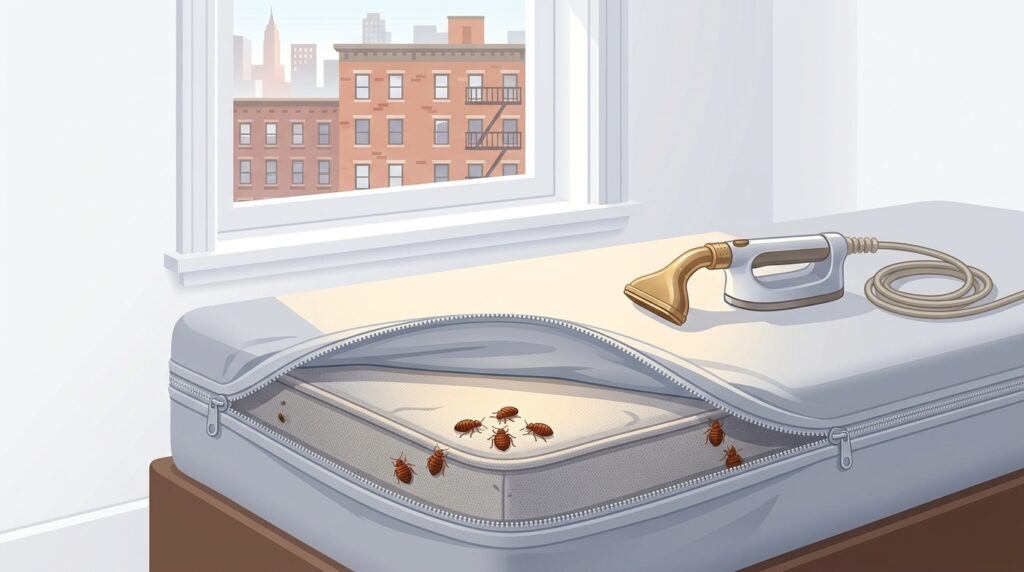
Waking up with mysterious bites in your Astoria apartment or finding “pepper spots” on your mattress in Flushing can trigger immediate panic. In the dense neighborhoods of Queens, bed bugs are more than a nuisance—they are a complex legal and psychological battle. The sheer density of our borough means that an infestation in one unit can quickly become a building-wide crisis, leaving residents feeling violated and exhausted.
This guide provides an authoritative roadmap for Queens residents to reclaim their homes, navigate NYC housing laws, and protect their mental well-being. Whether you are a long-time homeowner in Bayside or a new renter in Long Island City, understanding the specific landscape of NYC pest control is your first step toward a good night’s sleep. We will explore the logistics of eradication, the nuances of tenant rights, and how to handle the “bed bug PTSD” that often lingers long after the physical pests are gone.
Bed bugs in your NYC apartment?
26+ years treating NYC bed bugs. Crossfire residual where it counts, no annual contracts, and a free inspection that's waived when you book.
Why are Bed Bugs so Prevalent Across Queens Neighborhoods?
Local Infestation Trends by Neighborhood
Queens is a tapestry of diverse housing stocks, ranging from sprawling garden apartments to glass-walled high-rises. According to 311 complaint data, high-density hubs often see the highest concentration of reports. For instance, residents requiring bed bug treatment in Queens frequently deal with older, pre-war buildings where floorboards have shifted over decades, creating perfect highways for insects.
In contrast, the modern developments requiring bed bug treatment in Queens face challenges with shared ventilation systems and high resident turnover. Meanwhile, the mix of residential and commercial spaces needing bed bug treatment in Queens means pests can travel from retail environments directly into living quarters. These unique architectural features across the borough dictate how infestations migrate and how they must be treated.
The MTA Connection and Public Transit Risks
The 7 train, often called the “International Express,” is the lifeblood of Queens, but it is also a primary vector for pest movement. With thousands of passengers moving between Jamaica and Manhattan daily, the high volume of turnover on padded seats increases the risk of hitchhikers. Bed bugs are world-class travelers, clinging to backpacks, purses, and coat hems during the morning rush.
If you are commuting from neighborhoods like Rego Park, it is wise to perform a quick visual check of your bags after a long ride. Historically, NYC’s public infrastructure has struggled with pest resilience, as these insects can survive for weeks without a blood meal while hiding in the crevices of transit seating. While the MTA performs regular cleanings, the sheer volume of daily riders makes total prevention nearly impossible.
Building Density and Shared Walls
In the famous garden apartments of Western Queens, shared walls are more than just a source of noise; they are a vulnerability. When coordinating bed bug treatment in Queens, residents often find that bugs have traveled through electrical outlets or plumbing penetrations. This “neighbor effect” is a significant hurdle in multi-family dwellings.
Treating only one unit in a multi-family home, such as those found in Bayside or Forest Hills, often leads to frustrating re-infestations. If the source apartment isn’t addressed, the bugs will simply retreat into the walls and return once the chemical residuals fade. Effective management in Queens requires a coordinated effort between neighbors to ensure the entire building envelope is secure.
What Are Your Legal Rights as a Queens Tenant?
The Bed Bug Rider and Lease Transparency
Before you sign a lease in Queens, you have a legal right to know the building’s history. The NYC Bed Bug Disclosure Act requires landlords to provide a “Bed Bug Rider” that outlines any infestations in the building within the past year. This document is a critical tool for apartment hunters trying to avoid a pre-existing nightmare.
On local forums, there is often a debate about whether a “cleared” status on a lease is a guarantee of safety or a potential red flag. To be certain, you should use the bedbugs – HPD – NYC.gov map to verify a landlord’s disclosure history against official city records. This transparency allows you to see if a building has a recurring issue that might not be fully disclosed in the lease paperwork.
Landlord Responsibilities and NYC Health Code
In New York City, bed bugs are legally classified as a Class B violation, meaning they are considered hazardous. Under the “Warranty of Habitability,” your landlord is legally required to keep your apartment free of pests and is responsible for the costs of treatment. You should not be charged for bed bug treatment in Queens if you are a tenant in a multi-unit building.
Once you report a sighting in writing, the building manager is expected to respond within a reasonable timeframe, typically within 30 days to begin the remediation process. If you encounter resistance or a flat-out refusal to pay for treatment, you can seek assistance through the Met Council on Housing to understand your legal recourse. Remember to keep all communication in writing to build a paper trail for potential housing court actions.
Filing a 311 Complaint in Queens
If a landlord ignores your requests for help, your next step is to trigger an official inspection. You can use the bed bug prevention and control · NYC311 – NYC.gov portal to file a formal complaint regarding bed bugs in your rental unit. This often prompts an inspection from the Department of Housing Preservation and Development (HPD).
To prepare for an inspector’s visit, document everything by taking clear photos of bugs, blood spots, or shed skins. Keep a log of when and where you are being bitten to show the progression of the infestation. It is important to understand that while an HPD “Violation” forces the landlord’s hand, a “Recommendation” is less legally binding, so having physical evidence is key to a favorable outcome.
How Can You Effectively Identify and Monitor an Infestation?
Visual Signs and Early Detection Tactics
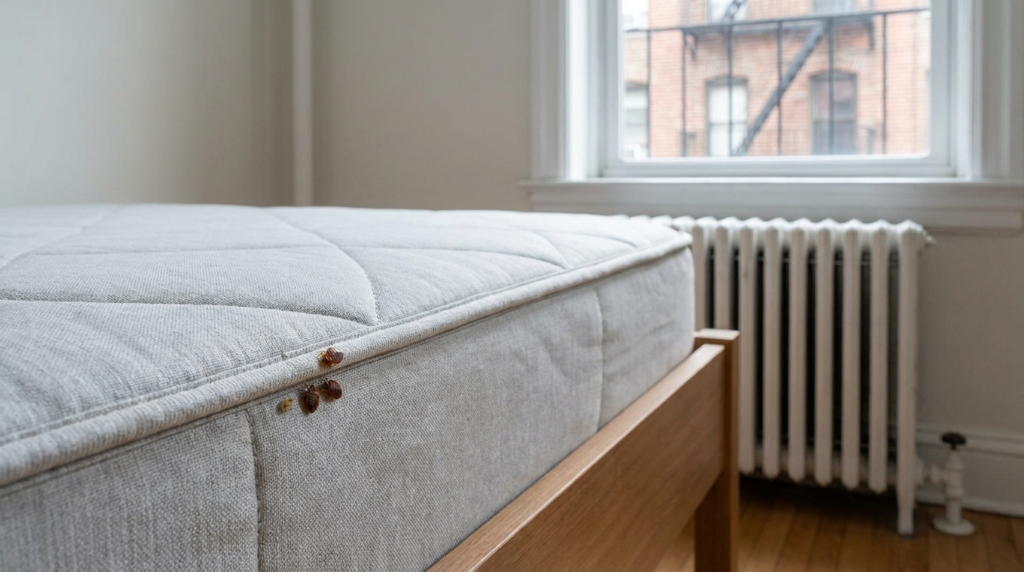
Early detection is the difference between a minor inconvenience and a full-scale catastrophe. Beyond the physical bites, which not everyone reacts to, you should look for fecal spotting—small black dots that look like ink stains. You might also find translucent skins shed by growing nymphs or small rust-colored stains on your sheets.
In Queens apartments, bed bugs love to hide in places you might not expect, such as behind crown molding or inside the metal covers of old radiators. Use a high-powered light to perform a “flashlight test” along your baseboards and bed frame. This is a standard part of managing pests and helps identify the specific harborages where the insects are congregating.
DIY Interceptor Traps and Monitoring Tools
While waiting for a professional, you can take proactive steps to monitor the situation. Passive interceptor traps, which are small plastic wells placed under the legs of your bed, can catch bugs as they attempt to climb up to find a meal. These are eco-friendly and provide clear physical proof of an active infestation.
There is a distinction between passive monitors and active lures that use CO2 or heat to attract bugs. While herbal repellents like lavender or peppermint oil are often cited as historical deterrents, they rarely solve an infestation and can sometimes cause bugs to scatter into deeper hiding spots. Stick to physical traps that allow you to count and identify the pests accurately.
Differentiating Bed Bugs from Other NYC Pests
Misdiagnosis is a common problem in NYC, where carpet beetles and spider beetles are also prevalent. Carpet beetle larvae have tiny hairs that can cause “creeping eruptions” on the skin that look remarkably like bed bug bites. A professional inspection is vital to avoid wasting hundreds of dollars on the wrong treatment protocols.
Large-scale infestations often carry a distinct “smell test”—a sweet, musty odor often compared to rotting raspberries or wet almonds. If you notice this scent in a bedroom or living area, the population is likely significant. Identifying the correct pest early ensures that the treatment applied is actually effective against the specific biology of the insect.
Which Treatment Methods Work Best for Queens Homes?
Professional Grade Chemicals vs. Hardware Store Brands
Many residents instinctively reach for “bug bombs” or foggers from the local hardware store, but these are largely ineffective. In fact, many experts suggest that these sprays often just push the bugs deeper into the walls, making the problem harder to solve. The “Reddit consensus” among pest survivors often points to professional-grade residuals like Crossfire as the gold standard.
If you are using DIY methods like Food-Grade Diatomaceous Earth (DE), application must be handled with extreme care. Applying too much can create a respiratory hazard for pets and children, and bed bugs will simply walk around large piles of the dust. In the complex layouts of Queens apartments, DIY sprays rarely reach the deep crevices where eggs are hidden.
Integrated Pest Management and Heat Treatments
The most effective approach is Integrated Pest Management (IPM), which combines several different tactics. Whole-room heat treatment, or thermal remediation, involves raising the temperature of the home to over 120°F, which kills all life stages of the bug instantly. This is often a preferred method because it requires fewer chemical applications.
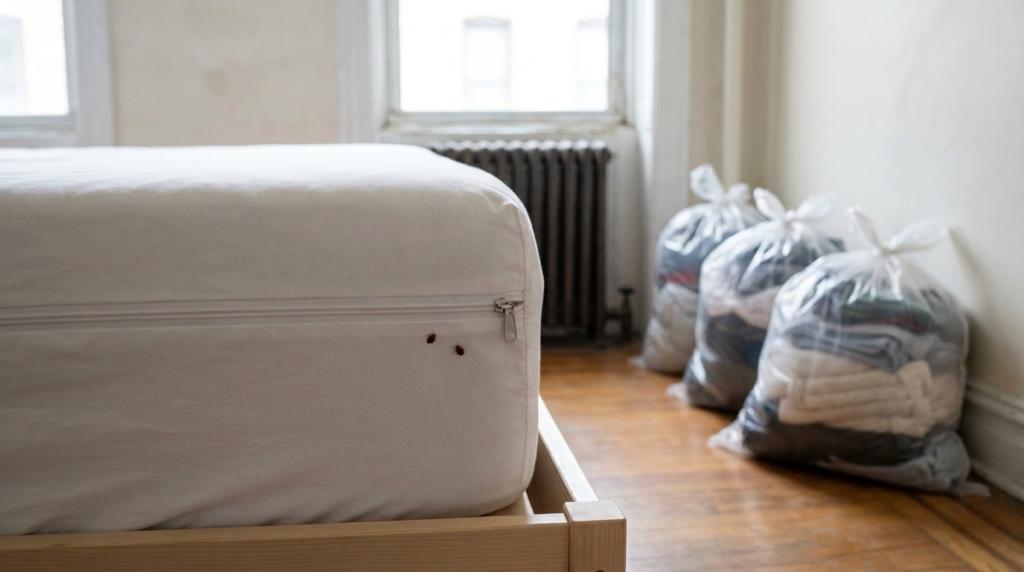
However, heat treatment requires a grueling preparation process, including bagging all clothing and removing heat-sensitive items. Most professionals will use a combination of high-heat steam, specialized vacuums, and long-lasting residual dusts in wall voids. This multi-pronged attack ensures that any bugs missed by the initial treatment are caught by the residual barriers.
Non-Toxic and Eco-Friendly Alternatives
For households with newborns, elderly residents, or sensitive pets, non-toxic options are increasingly popular. High-pressure steam is an excellent way to kill eggs and nymphs on contact without leaving any chemical footprint. It is particularly useful for delicate furniture or upholstered headboards that cannot be easily laundered.
Another “green” option is Cryonite, which uses CO2 snow to freeze pests to death instantly. While these methods are highly effective on contact, they lack the residual staying power of traditional treatments. When choosing between green and traditional methods, consider the cost-benefit ratio; green treatments may require more frequent follow-up visits to ensure total eradication.
Bed bugs in your NYC apartment?
26+ years treating NYC bed bugs. Crossfire residual where it counts, no annual contracts, and a free inspection that's waived when you book.
How Do You Recover from the Psychological Impact of Bed Bugs?
Managing Bed Bug PTSD and Paranoia
The mental toll of an infestation is often more difficult to treat than the bugs themselves. Many NYC residents report “phantom itches” and hyper-vigilance for months after their home has been declared clear. This psychological “sechele” is a documented phenomenon where the victim feels unsafe in their own bed.
Validation of this stress is important, as NYU Wagner research has highlighted the significant mental health burden placed on urban dwellers facing pest issues. Techniques like cognitive-behavioral strategies or simply talking to others who have survived the experience can help. Recognizing that your anxiety is a normal response to an abnormal situation is the first step toward recovery.
Safe Post-Bug Home Re-entry Protocols
Once the treatment is complete, the “Post-Treatment Decision Matrix” helps you decide when it is safe to unpack. Most experts recommend waiting at least two to three weeks after the final treatment before fully reintegrating your belongings. This waiting period ensures that any late-hatching eggs are exposed to the residual treatments.
Establishing a “Sanitation Station” near your front door can prevent future re-introductions. This might involve a dedicated space for shoes and a high-heat dryer for clothes worn in high-risk areas like theaters or airplanes. Maintaining a strict monitoring schedule for 6–12 months after the “all clear” provides the peace of mind needed to truly move on.
Community Support and Shared Experiences
There is a significant social stigma attached to bed bugs, but in a city as dense as New York, it is a common reality. Finding local Queens support groups or participating in online forums can help break the isolation. Sharing your story helps others realize that an infestation is not a reflection of personal cleanliness.
When talking to your neighbors, try to remain calm and informative rather than accusatory. A building-wide panic is counterproductive, but building-wide awareness is essential for long-term prevention. By working together, Queens residents can create a more resilient community that is better equipped to handle the realities of urban pest management.
Is Your Queens Home Finally Bed Bug Free?
Final Inspection and Verification Steps
The final confirmation of a successful treatment often involves a professional walkthrough. Some residents opt for “K9 Scent Detection,” where specially trained dogs sniff out the pheromones of live bugs or viable eggs. This is often the most accurate way to verify that the infestation is truly gone, especially in large homes with many hiding spots.
During your final walkthrough, pay special attention to high-risk areas like the interior of closets and behind heavy appliances. If you haven’t seen any new signs—such as fresh bites or new fecal spots—for 60 days, you can generally consider the infestation eradicated. Use this time to review your long-term prevention strategy, such as using mattress encasements and being cautious with second-hand furniture.
Summary of Tenant Rights and Resources
It is vital to remember that you are not alone in this process and that the city has resources to help. The bedbugs – NYC Health website provides extensive documentation on how to identify and manage pests safely. You can also find specific bedbugs: information for tenants and building owners – NYC Health through official city health portals. Always remember that your landlord has a non-negotiable duty to provide a habitable, pest-free environment.
Conquering the Queens Bed Bug Challenge
Navigating a bed bug infestation in Queens is undeniably stressful, but it is a challenge that can be overcome with the right information. By understanding your legal rights as a tenant, identifying the signs early, and choosing the most effective professional treatments, you can protect your home and your family. Stay vigilant, utilize the city’s resources, and remember that professional help is the most reliable path to a permanent solution. Queens is a tough borough, and with a methodical approach, you can defeat even its most persistent pests.