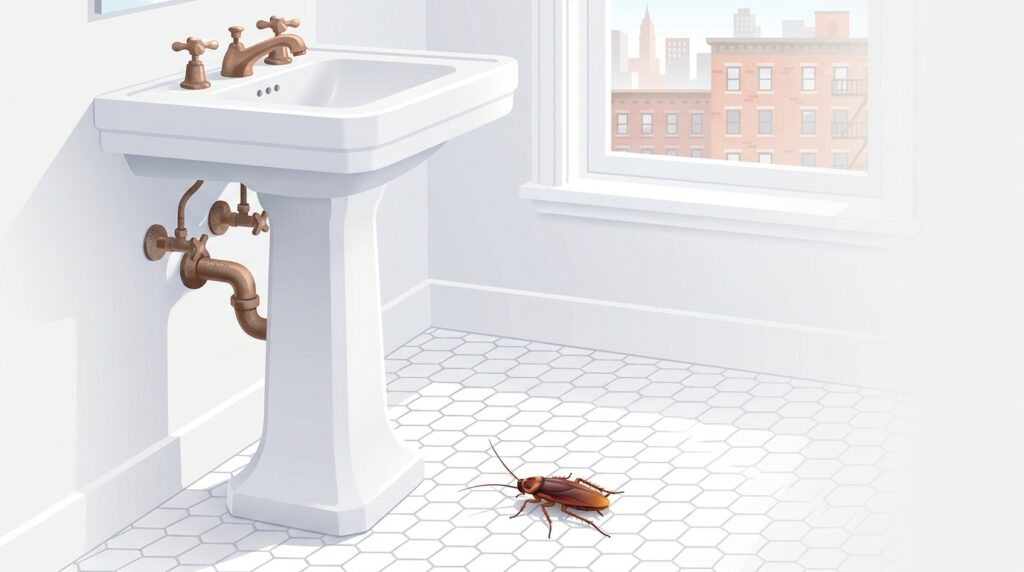
If you’ve ever flipped on your bathroom light at 2 a.m. and seen a massive, dark bug scurry across the tile, you’re not alone — and you’re probably calling it a “water bug.” For millions of NYC apartment renters, water bugs are an unwelcome roommate that no amount of rent covers. This guide breaks down exactly what these pests really are, why your pre-war Brooklyn walkup is a magnet for them, and what actually works to keep them out — with specific advice for renters who don’t own their buildings and can’t tear open walls.
Cockroaches in your NYC kitchen?
26+ years treating NYC roaches. Gel baits and crack-and-crevice work that actually finishes the colony, no annual contracts, and a free inspection.
What Exactly Are Water Bugs, and Are They the Same as Cockroaches?
The “Water Bug” Misnomer Most New Yorkers Believe
Most insects New Yorkers call “water bugs” are actually cockroaches — specifically the American cockroach or the smoky brown cockroach, not true aquatic water bugs. True water bugs (family Belostomatidae) live in ponds and streams and are rarely found indoors in NYC. The term “water bug” became a cultural euphemism in New York to make infestations sound less alarming — and honestly, who can blame us?
Smoky Brown Cockroach: The Real NYC “Water Bug”
The smoky brown cockroach is uniformly dark brown, lacks the lighter markings of the American cockroach, and is the species most commonly mislabeled as a “water bug” in NYC. Unlike American cockroaches, smoky browns are strong fliers — especially during summer heat waves — which is the detail that terrifies residents the most. Proper identification matters because treatment strategies differ between species, and Cornell’s IPM cockroach guide is worth bookmarking for reference.
Key NYC Cockroach Species at a Glance
- American cockroach: largest (up to 2 inches), reddish-brown with a yellowish figure-8 marking on the head, prefers basements and sewers
- Oriental cockroach: shiny black, slower-moving, strongly associated with damp environments and floor drains
- German cockroach: smaller, light brown, and the most common indoor cockroach — a different problem entirely from “water bugs”
How Do Water Bugs Get Into NYC Apartments?
Drains: The Most Underappreciated Entry Point
NYC’s aging sewer infrastructure connects directly to apartment drains, giving cockroaches a literal highway from the street into your bathroom and kitchen. Floor drains, shower drains, and even dishwasher connections without proper traps are primary entry points, and the city has outlined how building design contributes to the problem. Professional drain treatments and installing fine-mesh drain covers can block this route at the source.
Sneaky Entry Points Unique to Pre-War Buildings
Gaps around pipe penetrations (radiator pipes, under sinks), buzzer intercom systems, and spaces around window AC units are all confirmed entry points. Elevator shafts in larger buildings act as vertical highways for roaches moving between floors. Older buildings have settling cracks in walls and baseboards that create dozens of micro-entry points completely invisible to tenants — and if you live in a building that needs pest control in Brooklyn, you’ve likely seen this firsthand.
Weather-Driven Surges That Push Bugs Indoors
Flash floods — like Hurricane Ida — displace massive numbers of cockroaches from the sewer system into buildings at ground level. During peak summer, heat waves trigger flying behavior in smoky brown and American cockroaches, causing them to enter through open windows and rooftop vents. Heavy rain saturates soil and basements, driving Oriental cockroaches upward into living spaces.
Which NYC Buildings and Neighborhoods Have the Worst Water Bug Problems?
Building Age and Construction Type as Predictors
Pre-war buildings (pre-1940) with brick construction, plaster walls, and aging plumbing are significantly more prone to water bug infestations. Newer construction with sealed utility penetrations and concrete slab floors tends to have far fewer issues. Higher floors (above the 5th floor) generally see fewer water bugs, though elevator buildings can still transmit them vertically.
NYC Neighborhood Risk Factors
Neighborhoods near waterways, parks, or older sewer infrastructure — including parts of Queens, the Bronx, and Staten Island — report higher activity. Ground-floor and basement apartments in any borough face the highest risk regardless of building age. Tree-lined streets with heavy canopy provide harborage for smoky brown cockroaches, which then migrate indoors.
Seasonal Timeline of Water Bug Activity in NYC
- Spring (April–May): activity increases as temperatures rise; start early prevention now
- Summer (June–August): peak season driven by heat, humidity, and rain; flying cockroach sightings spike during heat waves
- Fall (September–November): bugs migrate indoors seeking warmth — a second surge that often catches renters off guard
What Actually Works to Get Rid of Water Bugs in a NYC Apartment?
Specific Product Recommendations That NYC Renters Swear By
- Advion cockroach gel bait: widely considered the most effective bait for large cockroach species; apply in pea-sized dots near entry points and behind appliances
- Gentrol IGR (insect growth regulator): disrupts cockroach reproduction and is strongly recommended by NYC Reddit communities — rarely mentioned in mainstream pest guides
- Sticky traps (glue boards): place along baseboards, under sinks, and near drains to monitor activity levels and identify hot spots
DIY Apartment-Level Prevention for Renters
Seal all gaps around pipes with steel wool and caulk, install door sweeps on apartment entry doors, and cover AC unit gaps with foam weatherstripping. Keep drains covered at night with fine-mesh screens or rubber stoppers, and pour enzyme-based drain cleaner monthly to remove organic buildup. Eliminate moisture sources: fix leaky faucets immediately, use a dehumidifier in bathrooms, and never leave standing water overnight.
When to Call a Professional Exterminator
If you’re seeing water bugs regularly — more than one per week — DIY methods alone are unlikely to resolve a building-level infestation. Professional pest control services can apply residual treatments in wall voids and utility chases that renters simply cannot access. Ask your exterminator specifically about drain treatments, as many standard services skip this critical step.
Cockroaches in your NYC kitchen?
26+ years treating NYC roaches. Gel baits and crack-and-crevice work that actually finishes the colony, no annual contracts, and a free inspection.
What Should You Do When a Neighbor Moves Out and Bugs Invade Your Unit?
Why Vacant Apartments Trigger Infestations Next Door
When a neighboring unit is vacated, cockroaches lose their food and water sources and actively migrate to occupied apartments through shared walls and plumbing. This was a widespread problem during COVID-era move-outs and remains common in buildings with high tenant turnover. The migration can happen within days of a neighbor leaving, so early action is essential.
Building-Wide Coordination Is Non-Negotiable
Individual apartment treatment is insufficient when the source is a building-wide problem, so coordinate with your landlord to schedule building-wide extermination. Self-managed co-ops face unique challenges — push for a standing pest control contract rather than reactive one-off treatments. Place sticky traps along shared walls immediately when you learn a neighbor is moving out.
NYC Tenant Rights and Landlord Obligations
Under NYC housing code, landlords are required to provide pest-free conditions, and water bug infestations are a valid HPD complaint. The New York State Department of Health also publishes guidance on getting rid of cockroaches, which can help tenants understand their options and document the problem. Tenants can file a 311 complaint if a landlord fails to address a recurring infestation after being notified in writing. NYC cockroach prevalence data can support your case and demonstrate the scope of the problem in your area.
How Do You Cope With the Fear and Stress of Water Bugs in Your Home?
The Emotional Toll Is Real — and Valid
Even longtime New Yorkers describe genuine terror, sleep disruption, and anxiety from water bug encounters — this is not an overreaction. The fear of flying cockroaches during heat waves is a distinct NYC summer phenomenon that compounds the psychological burden. You’re not weak for being disturbed by a large insect in your living space.
Practical Coping Strategies for Bug-Phobic Renters
Keep a flashlight and a long-handled tool (like a Swiffer) near your bed so you feel prepared rather than helpless during nighttime encounters. Cats are reported by many NYC residents as effective water bug hunters that provide both early detection and a sense of security — just ensure any pest products used are pet-safe. Systematic prevention — sealing entry points, covering drains, monitoring traps — reduces encounters dramatically, which in turn reduces anxiety over time. For those curious about cockroach biology and behavior, UMass Amherst maintains a detailed cockroach FAQ that can help demystify these pests.
Building Long-Term Peace of Mind
Consistent monthly maintenance — drain treatments, trap monitoring, and caulk checks — is more effective than reactive panic after a sighting. If your building is a chronic problem, a scheduled cockroach control program in Manhattan or wherever you’re located with regular follow-ups can provide the reliability you need. For residents in New York County, the density of pre-war housing makes this kind of proactive approach especially worthwhile.
Key Takeaways for NYC Renters
Water bugs in NYC are almost always cockroaches — and they’re a building and infrastructure problem, not a cleanliness problem. Seal entry points, cover your drains, use proven products like Advion gel bait and Gentrol IGR, and monitor with sticky traps. Brooklyn renters dealing with persistent issues may benefit from cockroach control in Brooklyn, and tenants in any borough should know their rights. Coordinate with your building, file 311 complaints when landlords won’t act, and remember: you deserve to feel safe in your own apartment.