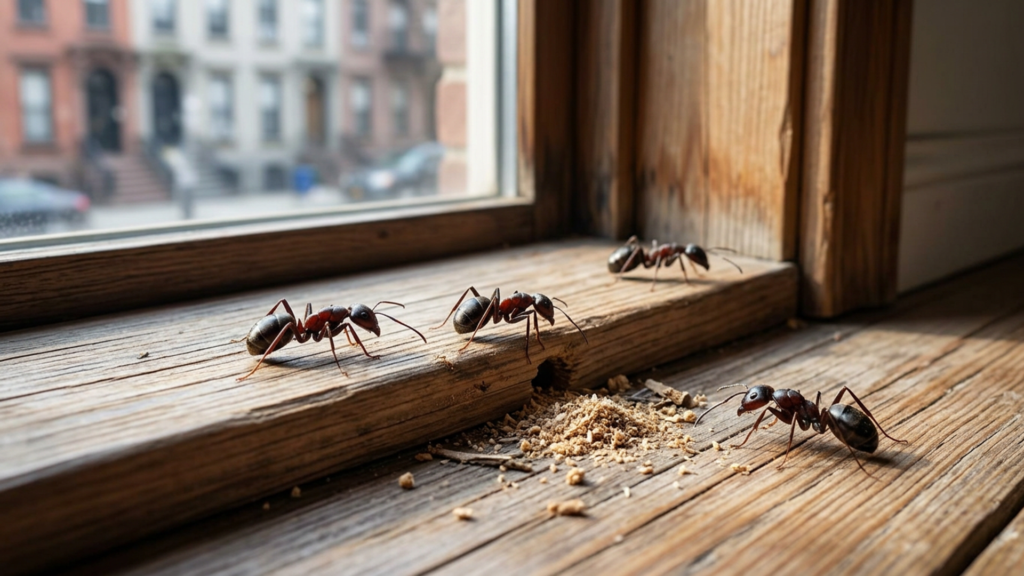
Carpenter ants are one of the most destructive — and misunderstood — pests in New York City. Whether you’re in a pre-war Brooklyn brownstone, a Queens row house, or a Manhattan high-rise, these wood-destroying insects exploit the aging infrastructure, chronic moisture problems, and shared walls that define NYC living. If you’ve already tried Terro traps from the bodega and watched the ants march right past them, you’re not alone — and this guide will explain exactly why that happened, what actually works in New York State (where many popular pesticides are restricted), and when it’s time to stop DIY-ing and call a professional.
Carpenter ants in your NYC walls?
26+ years on NYC carpenter ant work. Tempo Dust into wall voids, structural inspection, and exterior treatments that protect your woodwork, no annual contracts.
What Are Carpenter Ants and How Do You Identify Them in NYC?
Physical Characteristics That Set Them Apart
Carpenter ants are big — typically ¼ to ½ inch long — and significantly larger than the common pavement ants you see on every sidewalk or the recently identified “ManhattAnt” species that’s been spreading across the city. They’re usually black or dark-bodied with a single-node waist and an evenly rounded thorax, features that distinguish them from lookalikes. If you’re unsure what you’re dealing with, identifying household insect pests through university guides with side-by-side photo comparisons can help.
Winged reproductive “swarmers” appearing indoors in spring or early summer are a major red flag. Seeing these inside your apartment doesn’t mean they flew in through a window — it strongly suggests an established colony living within the structure itself.
Carpenter Ants vs. Termites — A Critical NYC Distinction
Here’s the key difference: carpenter ants excavate wood to nest but do not eat it. You’ll find small piles of sawdust-like frass rather than the mud tubes associated with termite infestations. NYC homeowners — especially those in older Manhattan brownstones and townhouses — sometimes confuse the two, leading to wrong treatments and wasted money. Both pests cause structural damage, but carpenter ant galleries are clean and smooth with a sandpapered appearance, while termite tunnels are rougher and packed with debris.
Understanding Colony Structure and Queen Behavior
A mature carpenter ant colony houses one queen and anywhere from 3,000 to 10,000+ workers. Satellite colonies can form in separate locations throughout a building — including your neighbor’s apartment on the other side of a shared wall. As Ohio State’s carpenter ant fact sheet explains, the queen can live 15 to 25 years, which explains why infestations recur season after season if she isn’t eliminated. Seasonal nuptial flights, typically May through July in the NYC area, produce new queens that establish entirely new colonies, making late spring your critical window for preventative action.
Why Do Carpenter Ants Thrive in New York City Buildings?
Moisture, Old Infrastructure, and Urban Density
NYC’s aging housing stock is practically a welcome mat for carpenter ants. Pre-war plumbing, original wood framing in brownstones, and poorly sealed basements create ideal nesting conditions, and Cornell’s IPM program on ants identifies moisture-damaged wood as the primary attractant. Proximity to major parks — Central Park, Prospect Park, Forest Park — means mature trees harbor parent colonies that send satellite colonies into adjacent buildings. Shared walls in row houses and apartment buildings allow a single colony to span multiple units, a problem unique to dense urban housing.
Heat Waves and Seasonal Triggers
Extreme summer heat drives carpenter ants from outdoor nests into climate-controlled buildings seeking stable temperatures and water. NYC’s urban heat island effect intensifies this pressure, making summer infestations more aggressive here than in suburban areas. Leaking AC units, condensation on pipes, and roof drainage issues during humid summers create exactly the moisture conditions carpenter ants need. Much like the borough-specific challenges outlined in our guide on dealing with bed bugs in Queens, pest behavior in NYC is shaped by the city’s unique building stock and density.
NYC-Specific Environmental Risk Factors
Basement and garden-level apartments in Brooklyn, the Bronx, and Queens face the highest risk due to ground contact and chronic dampness. A survey of ant species across NYC confirms that carpenter ants are well-established in these boroughs, and trash infrastructure and food waste in shared spaces attract scout ants, which then discover suitable nesting sites within the building itself.
What Are the Signs of a Carpenter Ant Infestation — And How Do You Find the Nest?
Telltale Signs Inside Your Home
Look for small piles of fine, sawdust-like frass near baseboards, window frames, or under cabinets — this is excavated nesting material, not food debris. Faint rustling or crinkling sounds inside walls at night are another giveaway, and carpenter ant warning signs include visible winged swarmers emerging indoors during spring. If you’re consistently seeing large black ants in kitchens or bathrooms — especially on upper floors — that strongly suggests a colony inside the structure rather than random foragers wandering in from outside.
How to Track Scout Ants to the Colony
Resist the urge to kill every ant you see. Scout ants lay invisible pheromone trails for nestmates to follow, and squashing them disrupts your ability to trace them back to the nest. Instead, follow ant trails at night with a flashlight — they typically travel along pipes, wires, and wall edges toward moisture sources. Tap along baseboards and window frames with a screwdriver; hollow-sounding or soft wood indicates active galleries inside.
Assessing Structural Damage
Carpenter ant damage accumulates slowly but can compromise structural wood over years, particularly in load-bearing beams and floor joists in older NYC buildings. Damage is often hidden behind walls and only discovered during renovations — by the time frass is visible, excavation may already be extensive.
What Actually Works to Get Rid of Carpenter Ants in NYC — And What Doesn’t?
Why Terro and Sugar Baits Fail for Carpenter Ants
Terro liquid bait is the most popular consumer ant product, but it targets sugar-feeding species. Carpenter ants primarily seek protein, making Terro largely ineffective — this is the single most common mistake NYC residents make. Test whether your ants prefer sugars or protein by setting out a dab of honey next to a piece of lunch meat. In most cases, Bayer Maxforce Carpenter Ant Bait Gel is the most consistently recommended consumer-accessible product, as ants consume it and transfer it to nestmates and the queen through trophallaxis.
DIY Methods Ranked by Effectiveness
- Maxforce gel bait (protein-based): Most effective DIY option. Place along active trails and expect 1–2 weeks for colony elimination. Continued ant activity during this period actually means the bait is working.
- Boric acid/borax bait stations: Moderately effective when mixed with protein attractants; the EPA’s guide to pesticide safety covers safe household use.
- Diatomaceous earth (food grade): Useful as a barrier in wall voids but won’t eliminate a colony alone.
- Essential oils and vinegar: May temporarily disrupt pheromone trails but have zero colony-level impact.
New York State Product Restrictions You Need to Know
Many professional-grade products recommended online — Suspend SC, Termidor, and various sprays — are restricted in New York State and unavailable to consumers. This is a critical constraint that most national pest control articles completely ignore. Products like Temprid FX, whose label outlines specific use requirements, are used by licensed professionals, including NYCHA exterminators, but require applicator certification — one key reason professional treatment outperforms DIY in New York.
Carpenter ants in your NYC walls?
26+ years on NYC carpenter ant work. Tempo Dust into wall voids, structural inspection, and exterior treatments that protect your woodwork, no annual contracts.
When Should You Call a Professional Exterminator vs. DIY in NYC?
A Decision Framework Based on Severity
DIY is reasonable if you’re seeing fewer than 5–10 ants per day near an obvious ground-floor entry point and you can address the moisture source. Call a professional if you see carpenter ants on upper floors, find frass in multiple rooms, or the infestation persists after 2–3 weeks of baiting. The community consensus from experienced NYC residents is clear: if you see carpenter ants inside regularly, you likely already have a structural colony.
What Professionals Do Differently
Licensed exterminators use restricted products combined with crack-and-crevice treatments, satellite colony identification, moisture source assessment, and targeted wall-void injection — none of which DIY methods can replicate. Quarterly preventative service is widely recommended for buildings with recurring issues, and ant control in the Bronx often requires this building-wide approach.
Cost Expectations and NYC Renter Rights
Professional carpenter ant treatment in NYC typically ranges from $300–$800 for initial treatment, with quarterly plans running $100–$200 per visit. NYC renters: your landlord is legally responsible for pest control under NYC Housing Maintenance Code. If they fail to act, file a complaint with HPD through 311 and document everything with photos and dates. In apartment buildings, push for building-wide treatment — unit-level treatment alone often fails because colonies span shared walls.
How Can You Prevent Carpenter Ants From Coming Back in NYC?
Moisture Control — The Single Most Important Step
Fix all leaks immediately — under sinks, around toilets, from AC units, and along roof lines. Carpenter ants cannot establish colonies in dry wood. Use dehumidifiers in basements and ground-floor apartments, especially during NYC’s humid summers from June through September. Clogged gutters and grading issues in brownstones and row houses are common culprits that homeowners overlook.
Sealing Entry Points and Reducing Attractants
Caulk gaps around pipes, wires, and utility entries where they penetrate walls — these are the highways carpenter ants use to move between outdoors and indoor nesting sites. Reviewing Cornell’s guidelines for managing home pests can help you choose appropriate perimeter products that are compliant in New York State. Trim tree branches and shrubs so they don’t contact the building, since carpenter ants use vegetation as bridges from parent colonies in nearby parks and street trees. Store food in sealed containers and manage trash diligently — while carpenter ants don’t eat wood, accessible food attracts the scouts that discover nesting opportunities.
Long-Term Monitoring and Seasonal Awareness
Inspect vulnerable areas monthly from April through October when carpenter ants are most active in the NYC region. The Beyond Pesticides ManageSafe database can help you evaluate lower-toxicity prevention strategies suited to ongoing monitoring. Watch for swarmers indoors in spring — this is the earliest warning of a mature colony and the best time to act. Consider quarterly professional ant control services as ongoing prevention, particularly for older buildings in Brooklyn, Queens, and Staten Island where wood-frame construction and park proximity create persistent risk.
Ready to Get Rid of Carpenter Ants in Your NYC Home for Good?
Identify the species correctly, ditch the Terro, and use protein-based baits — understanding whether ants are seeking sugar or protein is the first step most people skip. NYC’s restricted pesticide landscape and aging building stock make professional treatment more valuable here than almost anywhere else in the country. Set realistic expectations: effective treatment takes 1–2 weeks, and seeing ants during that period is actually a good sign that bait is reaching the colony.
Renters: Document the infestation, notify your landlord in writing, and file with HPD if they don’t respond — then explore professional ant control in Manhattan or your specific borough for a thorough assessment. Homeowners: Start with moisture remediation and protein-based baiting; if the problem persists beyond two weeks or involves multiple rooms, invest in professional treatment. Whether you’re in a New York County brownstone or an outer-borough row house, acting quickly is critical — carpenter ant colonies grow every season they go untreated, and the structural damage compounds silently behind your walls.