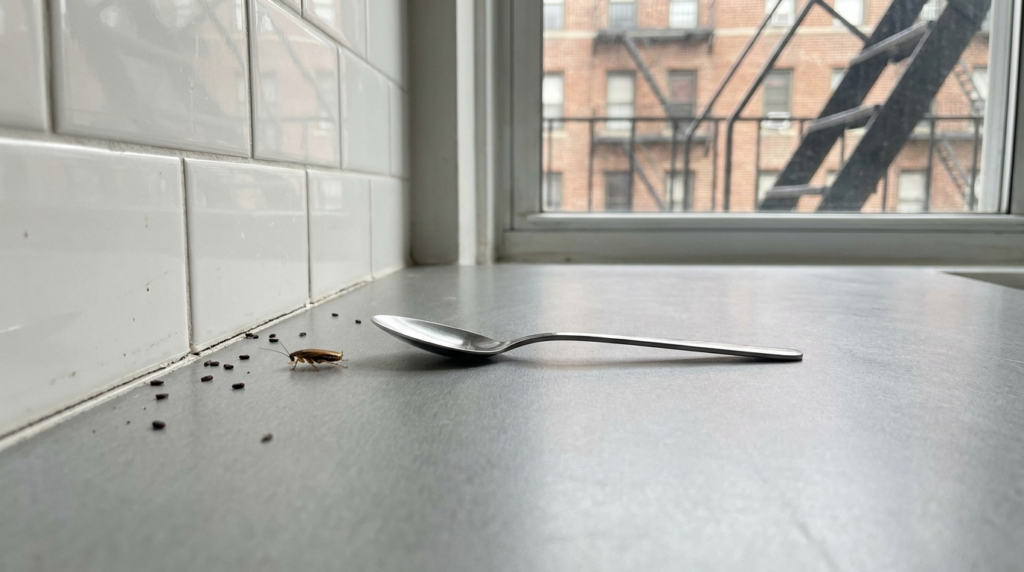
A cockroach allergy often looks like a year-round allergy: sneezing, a runny or stuffy nose, itchy or watery eyes, a cough, and sometimes an itchy skin rash. Those are among the common symptoms the Asthma and Allergy Foundation of America (AAFA) lists. Cockroach allergy is a common trigger of year-round allergy and asthma, and if you are allergic to roaches, they can trigger asthma attacks.
Reducing it is two jobs done together: getting rid of the roaches, and cleaning up after them. Avoiding cockroaches as much as possible is the most important step, and limiting your exposure will reduce your symptoms. If you already know roaches are the problem, our page on pest control in the Bronx is the place to start.
Whether roaches are behind your symptoms is a question for a doctor or allergist, and so is any treatment. Below, we cover what the allergy looks like, why Bronx apartments hold so much of it, the childhood asthma link, testing, the cleaning steps that help, why the allergen can outlast the roaches, and the city programs that can help a Bronx household.
Roach allergy signs in your Bronx apartment?
We treat roaches, and every technician is licensed by New York State.
What Does a Cockroach Allergy Look Like in the Bronx?
A roach allergy looks the same in the Bronx as it does anywhere else. What changes from place to place is how much exposure there is, and that is the next section. Here is the full list of common cockroach allergy symptoms:
- Sneezing, and a runny or stuffy nose
- Itchy, red or watery eyes
- An itchy nose, mouth or throat
- Postnasal drip, a flow of mucus from behind your nose into your throat
- A cough
- Itchy skin or a skin rash
- Ear infections and sinus infections
The pattern matters as much as the list. In many cases, cockroach allergy symptoms become chronic and last beyond typical seasonal allergies, as the American College of Allergy, Asthma and Immunology (ACAAI) notes. For example, a stuffy nose that hangs on all winter fits that pattern. It doesn’t prove roaches, though: people who live in certain areas and have symptoms year round are often found to have a cockroach allergy, among other possible indoor allergies. Testing, covered below, is how you find out which one you’re dealing with.
The rash on that list is an allergic reaction, not a bite. If bites are what you’re worried about, our guide to whether cockroaches bite in NYC takes that question on.
If you haven’t confirmed you have roaches yet, start with the first signs of roaches in a Bronx apartment. And if the allergy sets off asthma, the signs change; those are two sections down.
Why Do Bronx Apartments Hold So Much Cockroach Allergen?
Two reasons: a larger share of Bronx children live with roaches than children across the city as a whole, and an apartment gives roach allergen plenty of places to collect. On the city’s NYC Environment & Health Data Portal, the NYC KIDS Survey measure for 2023 shows 66.1 percent of Bronx children ages 1 to 13 living in a home that reported cockroaches in the past 90 days, against 45.8 percent across New York City.
More roaches means more allergen. A cockroach’s body parts, saliva, feces and waste are all allergens, so every roach living in a home adds to the load.
In an apartment, the problem concentrates in a few places. NYC Health’s booklet How to Control Pests Safely says problems are usually worst in the kitchen and bathroom, and that cockroaches can squeeze through cracks as small as 1/8 inch. The gaps the same NYC Health booklet tells you to look for are in walls, along baseboards and windows, and around pipes, wires and drains.
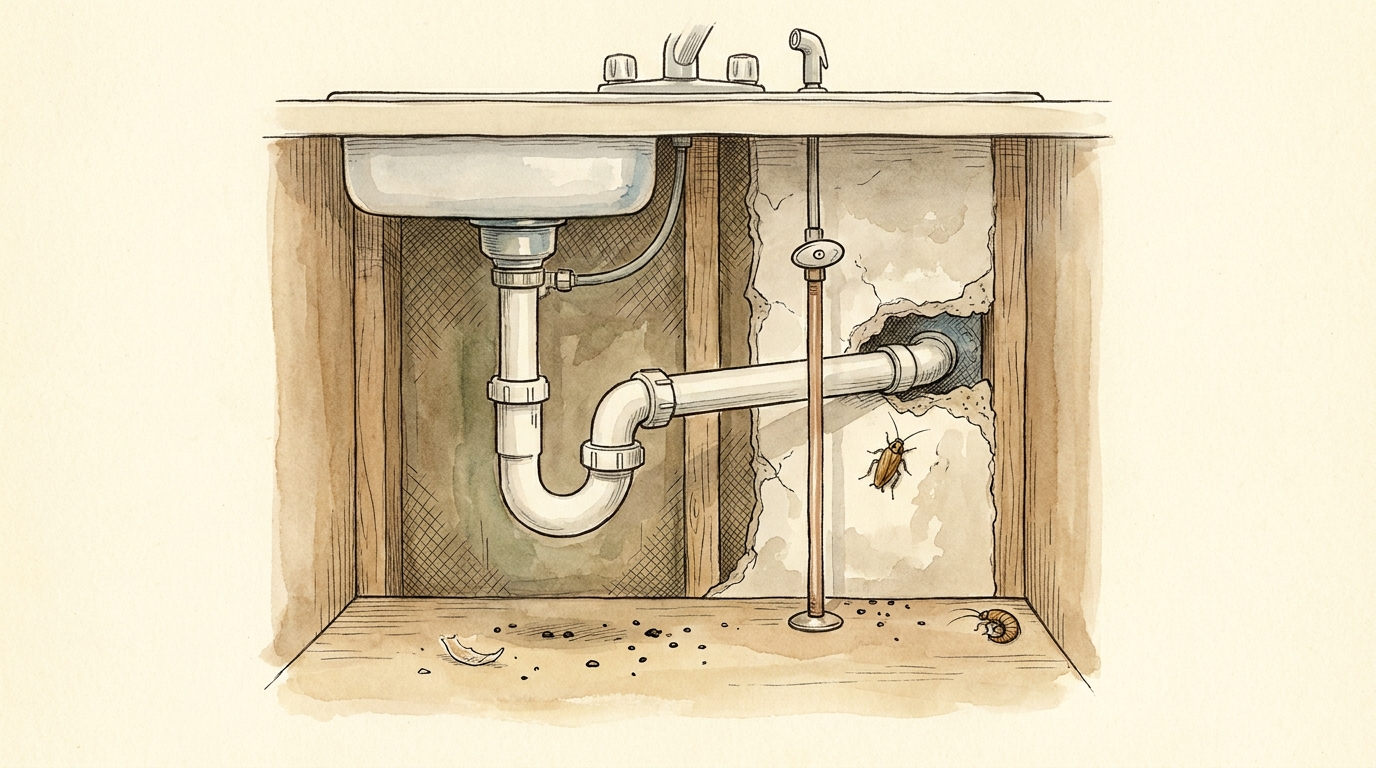
Building upkeep plays a part, too. NYC Health’s pest control page for building residents says cockroaches and mice are far too common in many NYC households, especially in low-income neighborhoods with poorly maintained housing.
Then the allergen moves around. Like dust mites, cockroach allergens aggravate symptoms when they are kicked up in the air. That matters for the cleaning steps later in this guide.
How Are Cockroach Allergy and Childhood Asthma Connected?
For a child who is allergic to roaches and lives with them, the link shows up in hospital visits. Children who are allergic to cockroaches, and are exposed to them, need to go to the hospital for asthma more often than other children with asthma, studies show. Both halves of that sentence count: the allergy and the exposure.
NYC Health’s Asthma Triggers fact sheet states the hopeful side of the same link: it says cockroaches and mice can trigger allergic reactions or asthma attacks, and that children with asthma living in pest-free homes have fewer symptom days, hospital stays and school absences than those living in homes with pests.
That matters in the Bronx. The same NYC data portal puts the 2023 rate of asthma emergency department visits at 239.8 for every 10,000 Bronx children ages 5 to 17, against 143.7 for every 10,000 children that age across New York City. The portal’s measure counts asthma visits from every cause; it doesn’t say how many involved roaches.
Know the warning signs. When a cockroach allergy triggers asthma, you may also have:
- Shortness of breath
- A cough
- Chest tightness or pain
- Wheezing, a whistling sound when you breathe
- Waking at night because of asthma symptoms
- A drop in your peak flow meter reading, if you use one
Any of these in a child is a reason to call the child’s doctor. An asthma plan is the doctor’s call, not ours.
How Do Doctors in the Bronx Test for a Cockroach Allergy?
The same way doctors test anywhere. Your doctor will start by taking your medical history and doing a physical exam, and if a cockroach allergy seems possible, may suggest a skin prick test or a specific IgE blood test.
- Skin prick test. If you suspect a cockroach allergy, see an allergist, who can do a skin test: a diluted allergen goes on the surface of your skin, and after about 15 minutes the allergist looks for a reaction such as a raised, red and itchy bump.
- Specific IgE blood test. A blood test can help when someone has a skin condition or takes medicines that interfere with skin testing, and it may also be used for children who may not tolerate skin testing.
A positive result isn’t the whole answer. A positive skin prick test to an allergen does not on its own mean you have an allergy; your allergy specialist compares the results with your history to see whether your symptoms match. That’s one more reason to tell the doctor what you’ve seen at home, roaches included.
If you don’t have a doctor, NYC Health’s Healthy Neighborhoods Program page says you can find one through NYC Health + Hospitals, or call 311 for more information. A diagnosis matters locally, too: each of the city programs covered below asks for an asthma diagnosis. What to do about the allergy itself, medicine included, is for your doctor or allergist to decide.
Roaches still showing up in your Bronx home?
Recurring-plan customers get a one-year guarantee with unlimited callbacks: if the pest comes back between visits, so do we.
Which Cleaning Steps Cut Cockroach Allergens for Bronx Families?
Cleaning works alongside getting rid of the roaches, not instead of it. For a household with asthma, the steps to follow are the ones in NYC Health’s Asthma Triggers fact sheet, the same sheet quoted above. Start with two of its cautions:
- Don’t sweep. NYC Health’s fact sheet says sweeping spreads dust around and can make asthma symptoms worse.
- Avoid strong-smelling chemicals. NYC Health’s fact sheet says to avoid chemicals with strong smells, such as cleaning products, paint, deodorizers or air fresheners. If you must use them, it says to use the smallest amount possible and open windows or use fans to get rid of odors.
Then the cleaning steps themselves, as the fact sheet lists them:
- Remove clutter and dust regularly. Mop, vacuum, and use microfiber or wet cloths to clean dust from surfaces.
- Keep food in sealed containers.
- Keep counters and sinks free from food waste and dirty dishes.
- Vacuum carpets and wet-clean hard floors at least weekly.
- Get rid of clutter, such as cardboard, newspapers and paper bags.
- Don’t leave pet food out overnight.
For example, a stack of paper bags under the sink is clutter. The same NYC Health sheet also covers garbage, reporting leaks, holes and pests to building staff, and what to do when other pest control is needed, and it’s worth reading whole. NYC Health’s booklet How to Control Pests Safely has a longer Clean Up section with its own safety steps; if you use it, follow it as written.
For Bronx families with a child who has asthma, there is help with the supplies. NYC Health’s Tremont Neighborhood Health Action Center page says that if a child in your home has asthma and you have a problem with roaches or mice, it may be able to help you get rid of them, and that pest prevention education and cleaning supplies are included. Who qualifies is in the city programs section below.
Why Does Killing the Roaches Not End a Bronx Allergy Problem Right Away?
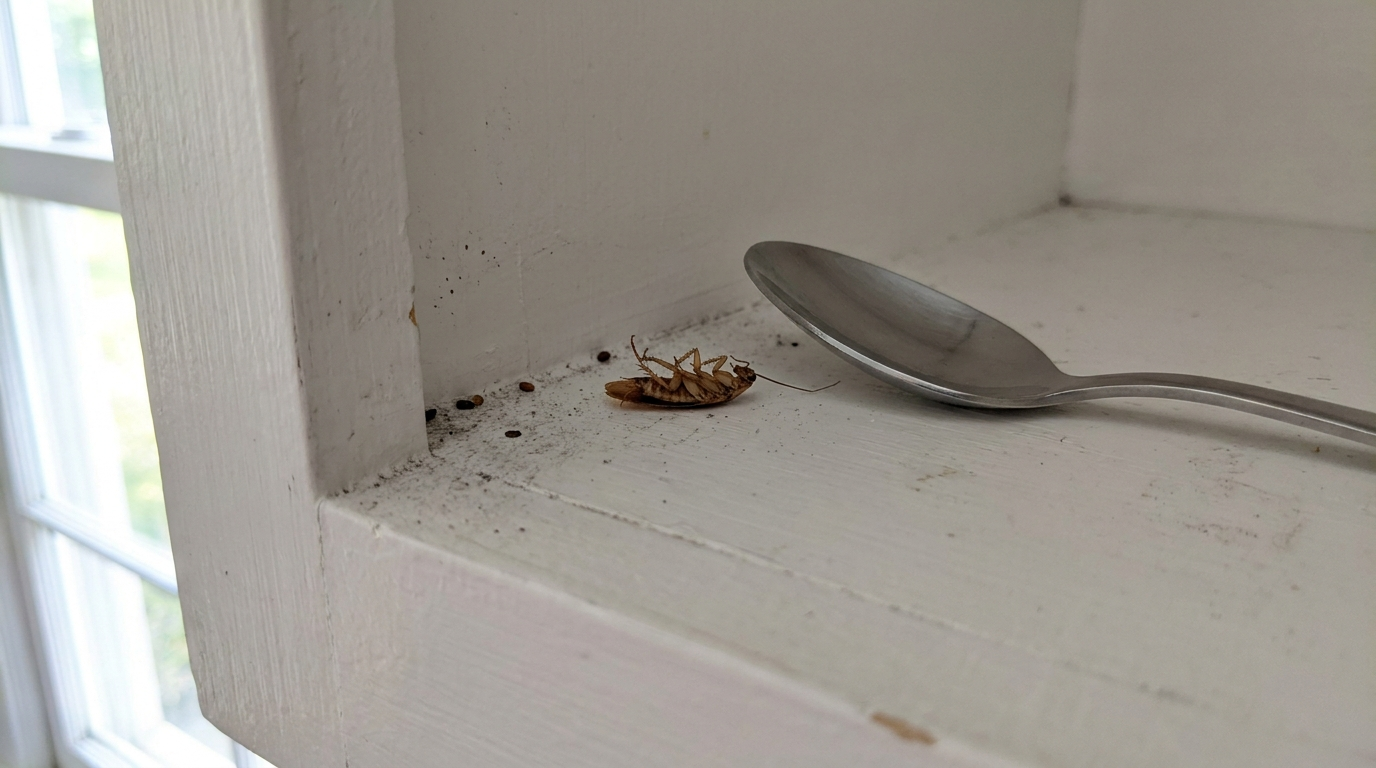
Because the allergen doesn’t leave when the roaches die. Even dead cockroaches can cause allergic reactions.
How thoroughly the roaches are gone matters, too: the size of the drop in cockroach allergen depends on how thorough and effective the effort to get rid of the cockroaches is. That was the finding of a 12-month trial in cockroach-infested homes in North Carolina, run by researchers at the National Institute of Environmental Health Sciences (NIEHS), part of the National Institutes of Health. A half-finished job leaves more of the allergen behind.
And in a rental building, part of the fix isn’t yours to make. NYC Health’s pest control page for building residents tells you to report pests and the conditions that attract them, such as leaks, cracks and holes in walls or floors, and clutter in common areas, to your building owner. If those conditions stay, the roaches can come back, and the allergen with them.
For the roaches themselves, a cockroach infestation in your home is a reason to consider a pest control professional. Our guide to getting rid of roaches in an NYC home covers the methods, and our cockroach control service is there if you’d rather hand the job off.
What City Programs Help Asthma Households With Roach Allergens in Bronx Homes?
Three no-cost programs can help a Bronx household, and one of them is only for the Bronx.
Free Pest Control for Bronx Children With Asthma
NYC Health’s Asthma page says the Tremont Neighborhood Health Action Center offers cost-free pest control services for eligible families, and lists three conditions to qualify:
- You must live in the Bronx.
- At least one child or youth age 17 or younger who has been diagnosed with asthma must live in your home.
- Your home must show signs of pests such as cockroaches and mice.
NYC Health’s sheet of no-cost home services for people with asthma describes the Bronx Integrated Pest Management Program, reached at the same email, ipm@health.nyc.gov. NYC Health’s sheet adds that the asthma diagnosis can be self-reported or confirmed by a provider, that the caregiver has to agree to let an IPM technician into the home, and that the program does not require consent from the building owner.
The Healthy Neighborhoods Program
NYC Health’s Healthy Neighborhoods Program offers a free home environmental inspection for children and adults with persistent asthma who have pests or mold at home, regardless of immigration status. Its page says you can only get one if a health care provider refers you, and that you’re eligible if you or your child has been diagnosed with persistent asthma, you live in the city in a rental home that has pests or mold (not counting mold on tile or grout), and you allow the program to work with the property owner.
The program’s inspector looks for pests and mold and the problems that lead to them, and if problems are found, orders the building owner to fix them. The Healthy Neighborhoods page says the owner then has 21 days to make repairs before an inspector returns to check, and that an owner who is making progress is given more time.
Doc AIM, After a Hospital Visit
NYC Health’s no-cost services sheet also lists Doctors for Asthma Integrated Pest Management (Doc AIM), which works with caregivers and pest control vendors on mouse and cockroach problems, and lists who qualifies:
- The person is 21 or younger and lives in NYC; the sheet says older people may be accepted case by case.
- The person lives in a home with mice or cockroaches.
- The person had a recent asthma visit to the hospital, such as an admission, an observation stay, or two emergency department or urgent care visits within the last 12 months with an asthma diagnosis.
- The person or a caregiver agrees to pest control services in the home.
NYC Health’s sheet says health care providers make the referral, and that it must come within three months of the last hospital visit.
Building owners’ duties on pests under Local Law 55 are a separate subject, covered in our guide to building-wide pest control for property managers.
What to Do Next
Start with whichever of these fits where you are today:
- If symptoms won’t let up, or a child’s asthma flares at home, see a doctor or allergist first. They can test for a roach allergy, and the city programs ask for an asthma diagnosis (the Bronx program accepts a self-reported one).
- If a child 17 or younger with diagnosed asthma lives with you in the Bronx and your home shows signs of roaches or mice, email the Bronx program at ipm@health.nyc.gov. If you rent and someone in your home has persistent asthma, ask the doctor about a Healthy Neighborhoods referral.
- Get the roaches gone, and gone thoroughly. We treat roaches, we cover all five boroughs, and our Bronx pest control page has the details.
- Keep cleaning the way NYC Health’s fact sheet sets out while the roach control does its work.