
Renters insurance usually won’t pay to get rid of bed bugs in a Brooklyn apartment. Lemonade, for example, says bed bug treatments “are not covered by most renters insurance, including Lemonade’s, as they’re likely not a ‘covered peril’ that your policy protects against.” In Brooklyn, that matters less than it sounds, because of the question people ask next: whose responsibility are bed bugs? NYC’s Housing Maintenance Code says “An owner of a dwelling shall keep the premises free from pests,” and its definition of a pest includes bedbugs, so getting rid of them is the building owner’s job (the code’s pest rules don’t apply to apartments NYCHA owns and operates).
That leaves a narrower insurance question for a Brooklyn renter: your own belongings, and any nights you spend away from home. That’s where we spend most of this guide. If you’re dealing with bed bugs right now, our page on bed bug treatment in Brooklyn is the place to start. None of this replaces your own policy’s wording, which is what your insurer goes by.
Bed bugs your Brooklyn renters policy may not cover?
Call us and a real person answers, and every technician is licensed by New York State.
Will Renters Insurance Pay for Bed Bug Treatment in a Brooklyn Apartment?
A standard renters policy most likely won’t pay for bed bug treatment, in Brooklyn or anywhere else. Standard renters policies “typically won’t offer coverage for bed bug infestations or any resulting damage,” as Progressive puts it, and the insurer quoted above says the same about treatment under its own policies.
It helps to know what a renters policy is for. New York’s Department of Financial Services (DFS), in its consumer guide Homeowners & Tenants Insurance: What Consumers Need to Know, describes tenants policies as policies that “insure against damage to the contents of a unit and for personal liability,” and it says a tenant generally doesn’t need to insure the building, “since that is typically the building owner’s responsibility.” An exterminator’s visit isn’t damage to your belongings, and it isn’t a liability claim, so there’s nothing at the core of the policy for it to land on.
That leaves the question that comes next: if the insurer won’t pay, who does? For renters in general, you or your landlord pay for the extermination. In Brooklyn, the city’s housing code settles it, and the section on NYC housing law below sets that out in a few sentences. For example, say you rent a floor-through in a Bed-Stuy brownstone and bed bugs show up in the bedroom. The treatment is the building owner’s job, and the costs your renters policy might be asked about are your own, such as a mattress you can’t keep or a few nights somewhere else.
If you’re not yet sure the bugs are bed bugs, start with our guide to identifying bed bugs and the signs they leave.
Why Do Renters Policies Exclude Bed Bugs and Other Insects?
Most renters policies leave bed bugs out because renters insurance is built for sudden, unexpected disasters, such as a fire or a hurricane. Dealing with bed bugs, mice or other vermin counts as home maintenance, and home maintenance isn’t covered by most policies.
You can see the “sudden” side of that line in what a renters policy typically covers: loss or damage caused by fire, smoke, theft, vandalism, windstorm or hail, lightning, explosion, falling objects, the weight of snow, ice or sleet, water from a plumbing or appliance failure, fire sprinklers or other accidental discharges, and electrical surges, as the DFS guide lists them. Each of those is an event you could put a date on. Insects aren’t on the list at all.
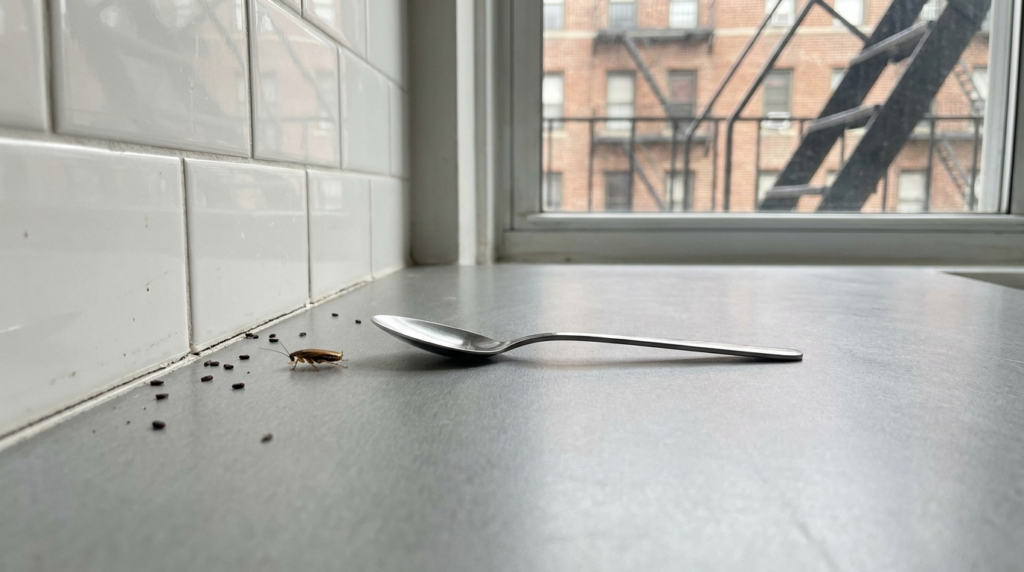
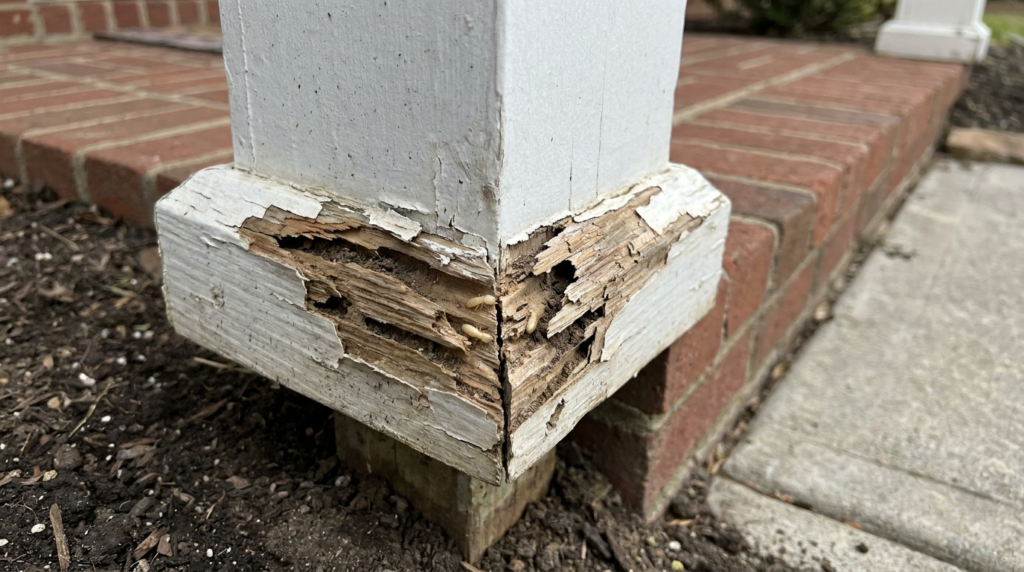
The same reasoning reaches past bed bugs: renters insurance typically won’t cover rodent infestations or damage from termites or cockroaches either. So whether the problem is bed bugs in the bedroom or roaches under the sink, a standard renters policy typically treats it the same way.
What your own policy says is what counts, so it pays to know which kind you have. Every policy is one of two kinds, as the National Association of Insurance Commissioners (NAIC) explains: a named-perils policy lists the types of losses it covers, and an all-risk policy lists the coverages it excludes. On a named-perils policy, read the list of covered losses; on an all-risk policy, read the exclusions section. In either one, look for words like insects, vermin or infestation.
There’s a local footnote to “home maintenance,” too. In most Brooklyn rentals, keeping the building free of pests is the owner’s legal duty under NYC’s housing code, which is the subject of the next section.
How Does NYC Housing Law Change the Bed Bug Insurance Question for Brooklyn Renters?
NYC housing law takes the exterminator off the renter’s plate, which leaves your own losses as the real insurance question. The city’s Housing Maintenance Code says, in §27-2017.1, “An owner of a dwelling shall keep the premises free from pests,” and §27-2017 lists bedbugs in its definition of a pest; the code’s pest article doesn’t apply to apartments owned and operated by NYCHA. When HPD determines that premises are infested by pests other than cockroaches, mice or rats, which takes in bed bugs, §27-2017.4(a) makes it a hazardous violation, and HPD’s Penalties and Fees page gives a hazardous (Class B) violation 30 days from the date of service to be corrected before civil penalties apply, if they’re sought in Housing Court. So in a Brooklyn rental outside NYCHA, the treatment is the building owner’s job, not your insurer’s and not yours.
Who pays in the edge cases, such as a lease clause, a co-op or condo, or a NYCHA apartment, is covered in our guide to what a bed bug exterminator costs in NYC. How to report bed bugs, and what HPD can do when an owner doesn’t act, is in our guide to bed bug signs and tenant rights in Brooklyn.
Can Brooklyn Renters Claim Belongings Ruined by Bed Bugs?
Under a standard renters policy, you most likely can’t claim belongings ruined by bed bugs. A mattress too infested to save, for example, usually isn’t something renters insurance will replace.

Before you count anything as lost, check whether it is. The NYC Health Department’s bedbugs page says you can wash clothes and, “in most cases, treat furniture to get rid of bedbugs,” and that “You should only throw away furniture if there are no acceptable treatments that can rid them of bedbugs, or if advised to do so by a pest management professional.” The cheapest claim is the one you don’t need to make, and our guide to preparing an NYC apartment for bed bug treatment covers getting your belongings ready.
Your landlord’s insurance doesn’t fill the gap either, with one exception. The DFS guide says a landlord doesn’t provide insurance for a tenant’s personal property, and it names one exception that “can occur”: if “the landlord was aware of a prior hazardous condition, failed to correct it in a reasonable time frame, and as a result your property was damaged.” Whether a bed bug infestation fits that description is a question for the landlord’s insurer and, if it comes to that, a lawyer. Your own renters policy doesn’t decide it.
When a claim for ruined belongings does apply, two things shrink what it pays. The DFS guide says contents coverage “is usually issued on an ‘actual cash basis'” in homeowners and tenants policies unless you buy replacement cost coverage for your contents, which means the insurer starts from what the item would cost to replace today and subtracts depreciation. Then your deductible comes off; the guide defines it as “the amount of loss that must be borne by you before you are eligible for an insurance payment.” For example, a couch you bought several years ago is worth less to an actual cash value policy than a new one costs.
Bed bugs in your Brooklyn apartment building?
Same-day service during business hours, and we have family and pet-friendly options.
Does Renters Insurance Cover a Hotel Stay During Bed Bug Treatment in Brooklyn?
A standard renters policy generally won’t pay for a hotel during bed bug treatment, because the part of the policy that pays for hotels (loss of use, also called additional living expenses) generally pays when a covered peril makes your home unlivable. The DFS guide says homeowner and tenant policies “will generally reimburse you for increases in living expenses you have when your company determines that your home is uninhabitable because of damage caused by one of the covered perils.”
Because bed bugs likely aren’t a covered peril, a renters policy’s loss of use coverage won’t help with the extra living costs if you leave your apartment for a while over bed bugs. For example, if you decide to sleep at a friend’s place or a hotel in Downtown Brooklyn while your apartment is being treated, a standard policy most likely leaves that cost with you.
A hotel stay can also raise the opposite worry, bed bugs coming home with you, and our guide to the signs you brought bed bugs home from a trip covers that.
Can a Policy Add-On Cover Bed Bugs for Renters in a Brooklyn Apartment?
A policy add-on can cover bed bugs, but only a few products offer one, and in Brooklyn what it pays for matters more than its name. As of early 2026, each of the few that do comes with limits on who can buy it. Jetty includes a Bedbugs Power-Up in all its renters policies, but sells its renters insurance only to people living in the company’s partner properties. Some eRenterPlan and ePremium policies may let you add bed bug coverage, depending on where you live, and eRenterPlan is sold only at participating apartment complexes. In select states, Assurant renters policies cover extermination and other bed bug costs. Whether any of them is sold in New York is a question for the insurer, so ask before you count on one.
Here’s why the wording matters in Brooklyn. Jetty’s Power-Up, for example, pays $300 toward the cost of getting rid of bed bugs. In most Brooklyn rentals the treatment is already the building owner’s job, as the housing law section above explains, so an add-on built around extermination pays toward a cost that usually isn’t yours. The costs a Brooklyn renter is more likely to carry are the ones in the two sections above, belongings and nights away, so before you pay for any bed bug add-on, check whether it covers those, what its limit is, and whether your deductible applies.
To see whether you already have bed bug coverage, start with your declarations page. The declarations page lists “the coverages, coverage limits, the premium and any discounts,” and coverage added outside the basic policy shows up in its endorsements section. If nothing there mentions bed bugs, insects or pests, treat yourself as uncovered until your insurer or agent tells you otherwise in writing.
What Should Brooklyn Tenants Document While Bed Bugs Are Being Treated?
Document your own losses and your insurer’s answers, starting before anything leaves the apartment. Even if your policy won’t pay, a written record costs nothing and keeps your options open: an add-on you didn’t know you had, the landlord-insurance exception covered above, or a question for a lawyer later. Keep these while the treatment runs:
- Your full policy and declarations page. Ask your insurer or agent for both if you don’t have them, so you’re reading the actual wording rather than a summary of it.
- A list and photos of anything that has to go, made before it goes. Any claim needs proof of the loss: photos or video of the damage, and a list of the damaged items for your adjuster with copies of receipts, as the Insurance Information Institute (Triple-I) advises renters. Note what each item is, roughly when you bought it and what you paid. Damaged items should stay until a claims adjuster has visited your home, so if you think a claim might apply, ask your insurer how it wants an item documented before it leaves, and follow the pest professional’s instructions for how it goes out.
- Any prep sheet you’re given. If the pest professional your landlord hires gives you written prep instructions, keep them. They show why something was bagged, laundered or thrown away.
- Receipts for what you pay. Laundry, a replacement mattress, a night somewhere else: keep each receipt. A receipt isn’t a promise that anyone will pay you back, but it’s the proof if someone does.
- Your insurer’s answers, in writing. If you think a loss might be covered, the DFS guide says “the first thing to do is to notify your insurance company or agent,” and then “Follow up with written notification and retain copies of all correspondence.” If an adjuster says your policy doesn’t cover something, DFS advises you to “ask to see the specific contract language,” and you can file a complaint with DFS if you feel an insurer treated you unfairly.

That file is about your own losses. If you do file a claim, the insurance guides linked above lay out the full steps. The record on the landlord side is a separate one, and our Brooklyn bed bug guide covers it.
The Bottom Line
Renters insurance is for your belongings and your liability, and a standard policy usually stops short of bed bugs: it typically won’t pay for the treatment or for belongings bed bugs ruin. In most Brooklyn rentals, NYC’s Housing Maintenance Code puts the treatment on the building’s owner, so the exterminator’s bill usually isn’t yours. A hotel stay generally isn’t covered either, because loss of use generally follows a covered peril. Check your declarations page for a bed bug add-on, and keep a record of your losses from the start.
If you want bed bugs treated, whether you rent or own the building, start with our bed bug treatment service. We cover all five boroughs, Nassau County and Suffolk County, and our page on pest control in Brooklyn covers other pests.