You heard the scratching at 2 a.m. — that telltale skittering inside the wall between your bedroom and the kitchen, the one that no white-noise machine can drown out once you know what it is. If you live in a Queens apartment and you’re starting to suspect mice, you’re not alone, and you almost certainly caught it earlier than most of your neighbors. After 26 years running mouse jobs across every Queens neighborhood from Astoria to Forest Hills, our team has learned that the difference between a $200 fix and a $1,000 building-wide nightmare comes down to how fast you correctly identify the signs and where in your apartment you check first.
This guide walks through the seven telltale signs of an active mouse infestation in a Queens apartment, the specific Queens neighborhoods and building types where we see the worst recurring mouse pressure, and what to check before you reach for traps (or a phone). If you’d rather skip the inspection and book professional pest control in Queens for a free walkthrough today, our front-office team can usually book a same-day inspection. But if you want to know exactly what you’re looking at before that conversation — read on.
Mice scratching in your Queens apartment walls?
26+ years treating Queens mice. Exclusion + bait colony elimination instead of one-and-done snap traps, no annual contracts, and a free inspection that's waived when you book.
What Do Mice Look Like When You Spot One in a Queens Apartment?
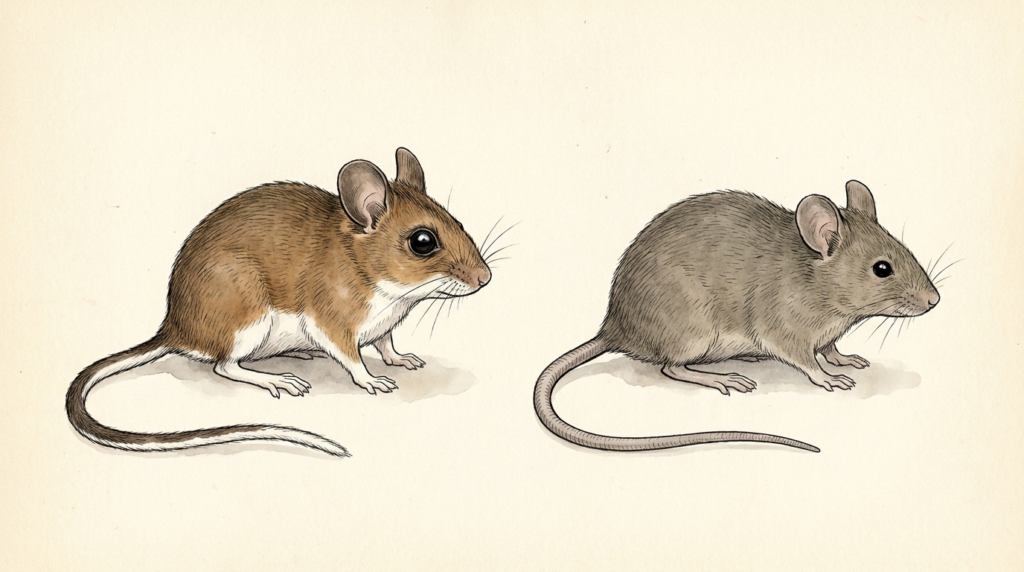
The first question most tenants ask when they call us is “are you sure it was a mouse?” House mice (Mus musculus) in Queens are about 2.5–3.5 inches long body (plus a tail roughly the same length), grayish-brown on top with a paler belly, with large round ears relative to their head and small dark eyes. Adult body weight is 12–30 grams — about the same as 2–3 nickels. If what you saw was bigger than your palm, had a thick tail, and looked more black-gray than light-brown, you’re probably looking at a rat — a completely different problem with completely different treatment. Our general NYC mouse identification guide goes deeper on the mouse vs rat distinction across all five boroughs.
What most Queens tenants actually see, though, isn’t the mouse itself — it’s the evidence the mouse leaves behind. Mice are nocturnal, cautious, and stay close to walls. A healthy adult mouse can squeeze through a hole the size of a dime (about 6mm), runs along the same memorized paths every night, and produces 40–100 droppings per day per mouse. By the time you’ve actually seen a live mouse in your kitchen — versus just heard or smelled one — the population in your apartment is usually well past one.
One critical Queens-specific note: if you live in an older Astoria or Sunnyside walk-up where you’ve been hearing scratching but it sounds too loud and too rhythmic for a mouse, you may actually be hearing rats in the wall void. Rats are heavier, their footsteps more deliberate, and the gnawing sounds louder. Queens has both — and the treatment protocols are completely different.
Which Hiding Spots Reveal Signs of Mice in a Queens Walk-Up vs Pre-War Building?
Queens has a wider range of building stock than almost any other borough — pre-war Astoria and Sunnyside walk-ups (1920s–1940s), post-war Forest Hills mid-rises (1950s–1970s), modern Long Island City glass towers (2010s onward), and detached single-family homes in Bayside, Whitestone, Floral Park, and beyond. Each building type has different mouse harborage patterns, and after thousands of Queens calls our techs check the same locations first depending on what kind of building you live in:
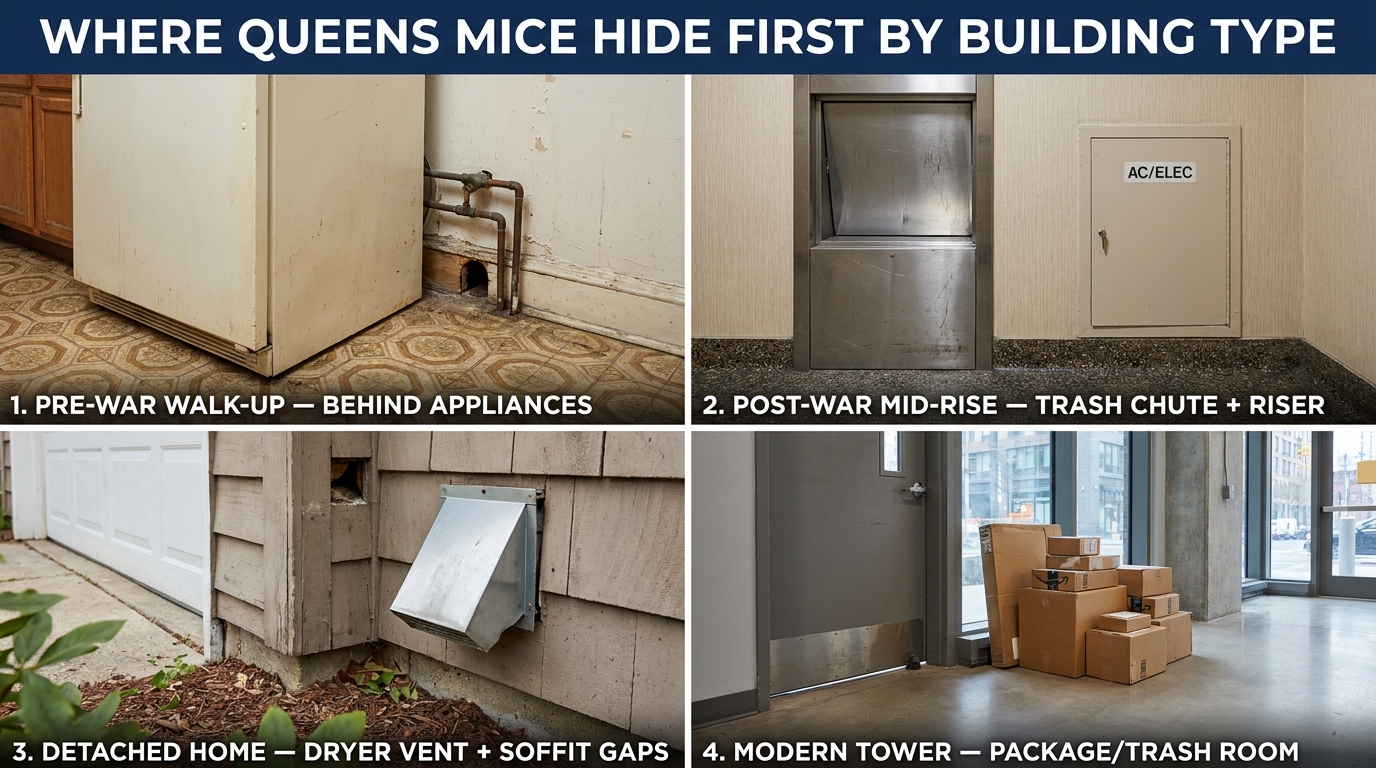
Pre-war walk-ups (Astoria, Sunnyside, Jackson Heights, Ridgewood, Woodside): Mice love the gap between floor joists and the original plaster ceilings below. They run along the tops of cabinet kickboards (a 1–2 inch hidden cavity at the base of every old wood cabinet), nest behind radiator covers, and travel between apartments through the dumbwaiter shafts that were never properly sealed when buildings stopped using them in the 1960s. First places we check: behind the stove, under the sink, behind radiator covers, under the bathtub claw foot or apron, behind the refrigerator.
Post-war and mid-century mid-rises (Forest Hills, Rego Park, Briarwood, Kew Gardens): These buildings have central trash chutes that are the single largest mouse-attractor in the borough. Mice nest in the trash room itself, then forage out into the lower-floor apartments through utility risers (the vertical chases that carry plumbing and electrical between floors). First places we check: the trash chute compartment in the hallway, the utility riser cabinet (sometimes labeled “AC” or “electrical”), inside the kitchen cabinet that backs onto the riser, and the gap behind the dishwasher.
Modern LIC glass towers (post-2010 construction): Counter-intuitively, modern buildings have fewer mouse problems because they’re built to tighter standards — but when mice do get in, they exploit construction gaps around package-delivery rooms, valet trash service rooms, and ground-floor amenity spaces (gyms, mailroom hallways). First places we check: the package room, the trash valet pickup area, and any restaurant or retail tenant space on the ground floor.
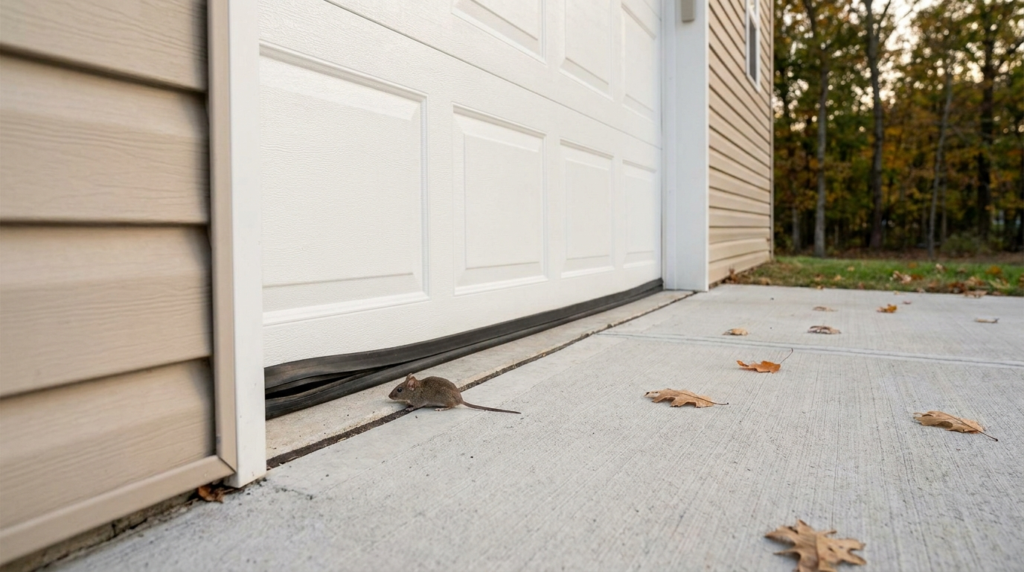
Detached single-family homes (Bayside, Whitestone, Floral Park, Howard Beach): Mice enter through gaps around dryer vents, soffit vents, garage door bottom seals, and the gap where the gas line enters through the foundation. First places we check: the attic insulation (look for nesting), the garage corners, the laundry room behind the dryer, and the basement utility room.
Knowing which building type you’re in tells us — and you — where the mouse came from before we even open a cabinet door. If you’ve called and described the wrong location pattern, the inspection is going to take 3x longer than it should.
Which Queens Neighborhoods Show the Worst Signs of Mouse Activity?
Queens 311 mouse complaint data (publicly searchable at NYC Open Data’s 311 Service Requests dataset) shows clear neighborhood clustering on rodent complaints. The neighborhoods that consistently rank highest for mouse complaints per resident in our service area:
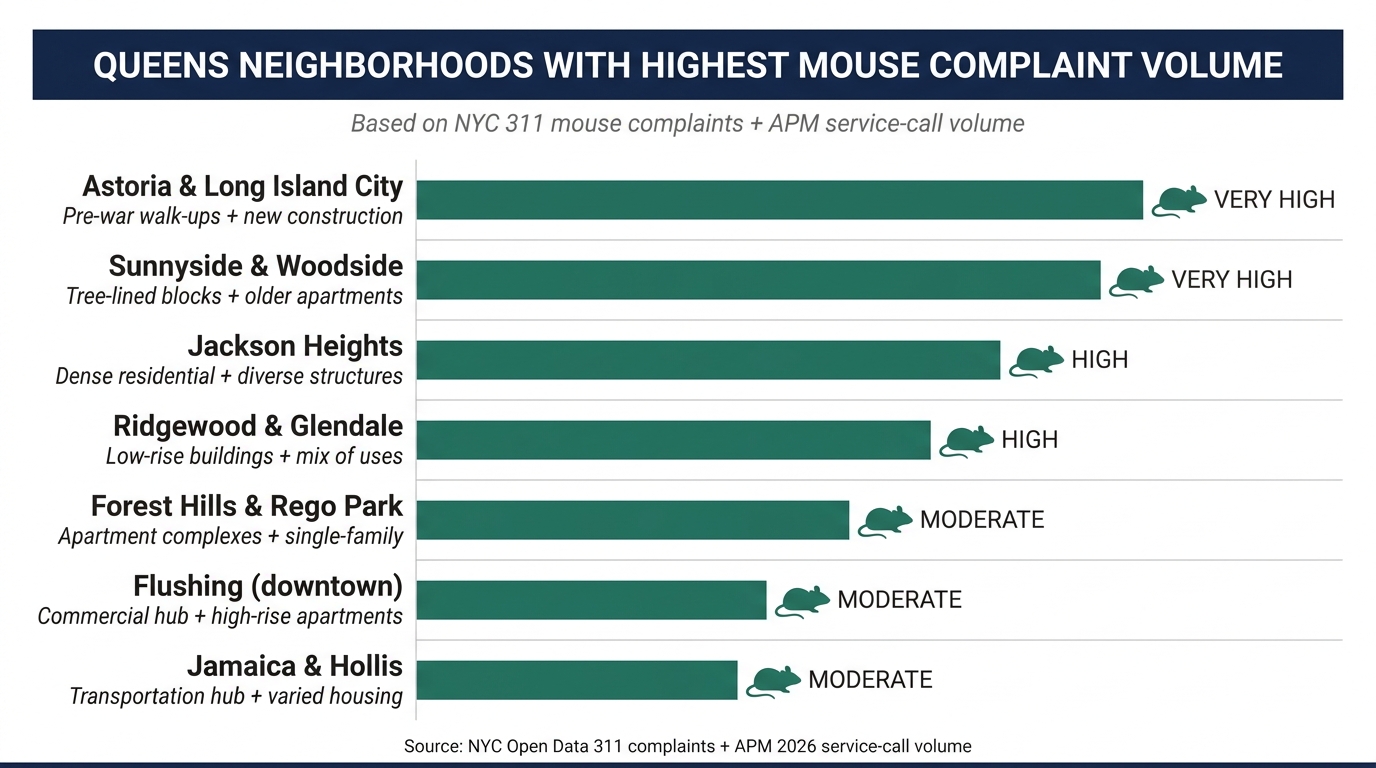
- Astoria & Long Island City: High density of pre-war walk-ups + new construction sites continuously disturbing established rat/mouse populations. Astoria’s older blocks (closer to Steinway and Ditmars) have heavier mouse pressure than the newer waterfront LIC towers.
- Sunnyside & Woodside: Mature tree-lined blocks and older small apartment buildings = stable nesting habitat for mice in wall voids. The 7-train corridor restaurant density doesn’t help.
- Jackson Heights: Dense pre-war apartment buildings with shared service alleys = mice transmit easily between buildings.
- Ridgewood & Glendale: Older wood-frame attached row homes are textbook mouse harborage — soffit gaps, attic spaces, shared walls between attached homes.
- Forest Hills & Rego Park: The mid-rise apartment stock with central trash chutes creates predictable mouse pressure on lower floors.
- Flushing (downtown): Restaurant density along Main Street + older building stock = heavy mouse pressure in the residential blocks adjacent to commercial corridors.
- Jamaica & Hollis: Mix of older apartment buildings + commercial-adjacent residential = recurring mouse pressure.
If you live in any of these neighborhoods and you’re just starting to notice mouse evidence, you’re not unlucky — you’re on a typical timeline. Many Queens mouse calls we run come from buildings where the same apartment has had mouse activity in 3+ prior tenancies. The building structure invites them; tenant turnover just changes who notices.
What Are the 7 Telltale Signs of an Active Mouse Infestation in a Queens Apartment?
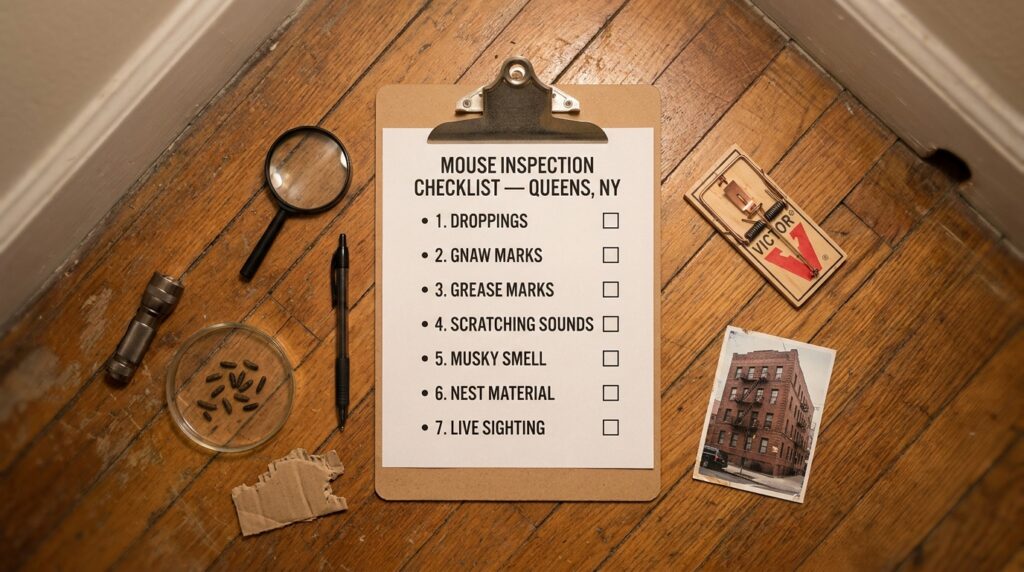
If you suspect mice in your Queens apartment, here’s the diagnostic checklist our techs walk every property through. If you find 3 or more of these signs, you have an active infestation that needs treatment — not just monitoring.
- Droppings. Mouse droppings look like small black grains of rice — 3–6mm long, pointed at both ends, scattered along walls and in cabinets. Fresh droppings are dark and slightly shiny; old droppings are gray and crumbly. Find a fresh dropping = active mouse in the last 24–48 hours. Concentrated droppings (10+ in one spot) = nesting area nearby.
- Gnaw marks. Mice gnaw constantly — their incisors grow continuously and need to be filed down. Look for small chewed edges on cardboard boxes, food packaging (especially anything with grain — cereal, pet food, flour), wood baseboards, and electrical wires. Fresh gnaw marks are light-colored; old marks are darker.
- Grease marks (rub marks). Mice run along the same paths every night and leave dark greasy smudges where their oily fur rubs against walls, baseboards, and pipes. Look along the bottom 2 inches of walls in any room where you’ve found other evidence. Persistent grease marks = a well-established mouse highway.
- Scratching sounds at night. Mice are nocturnal — peak activity is 9 p.m. to 4 a.m. If you’re hearing scratching or skittering inside walls, ceilings, or above drop ceilings during these hours, mice are the most common cause. (Squirrels in the attic are louder and active during the day; rats are slower and heavier.)
- Smell. An active mouse infestation has a distinctive musky, ammonia-like smell — concentrated near nesting areas (behind appliances, in cabinet bases, in closets where you’ve stored dry food). Most tenants describe it as “stale” or “off.” If you walk into your apartment after being away for a few days and notice the smell, the population is established.
- Nests. Mouse nests look like small balls of shredded soft material — paper, fabric scraps, insulation, dryer lint — usually 4–8 inches across, tucked into a dark protected corner (under the kitchen sink, behind the dishwasher, inside the bottom of a rarely-used drawer, in stored cardboard boxes). Finding a nest means you have a breeding population.
- Live or dead mouse sightings. The most obvious sign, and unfortunately the latest. Mice are cautious — if you’ve actually seen one (especially during the day, which signals overpopulation or stress), the infestation is well past one mouse. A single dead mouse you find in a trap or under furniture also tells you there’s an active population (mice don’t usually die for no reason).
Other supplementary signs worth checking: pet behavior changes (cats fixating on a wall or cabinet, dogs sniffing intensely at one spot), small pawprints in dust on baseboards or behind appliances, and food packaging in your pantry with small chewed corners you hadn’t noticed before.
Why Do Signs of Mice Show Up in Queens Apartments More Than Manhattan High-Rises?
This is the most common question we get from new Queens customers who used to live in Manhattan and are surprised by their first mouse encounter. The answer comes down to building age, building height, and shared infrastructure:
Manhattan high-rises (especially post-1990 construction) are typically built to tighter envelopes, with sealed concrete floor decks between units, mechanical ventilation rather than gravity ducts, and fewer of the construction-era gaps that mice exploit. The mouse pressure in a 40-story Midtown tower is mostly concentrated on the ground floor and basement (loading dock, package room, restaurant tenants) — once you’re above the 5th or 6th floor, you’re usually mouse-free unless the building has a chronic trash-chute problem.
Queens, by contrast, has a much higher concentration of pre-war wood-frame and brick walk-ups (2–6 stories), which are exactly the building type mice find easiest to colonize. Wood-frame construction has wall voids mice can run through; pre-war brick walk-ups have floor joist gaps and shared dumbwaiter shafts that connect apartments vertically. And in detached homes (Bayside, Whitestone, Floral Park), mice have soffit vents, garage gaps, and basement utility-line penetrations to choose from.
Add restaurant density along the major commercial corridors (Steinway in Astoria, Main Street in Flushing, Queens Boulevard in Forest Hills, Liberty Avenue in Richmond Hill), and you have the perfect mouse ecosystem: cheap food source + abundant nesting habitat. Manhattan’s same-density restaurant corridors are usually adjacent to newer construction or commercial zoning; Queens’ are adjacent to dense residential. The same number of restaurants per acre creates very different mouse pressure depending on what’s next door.
Mice scratching in your Queens apartment walls?
26+ years treating Queens mice. Exclusion + bait colony elimination instead of one-and-done snap traps, no annual contracts, and a free inspection that's waived when you book.
What Should You Check First If You Suspect a Mouse Problem in Your Queens Apartment?
If you’re working through this guide and you’ve already found 1 or 2 signs from the checklist above, here’s what to do — in order — before you spend a dollar on traps:
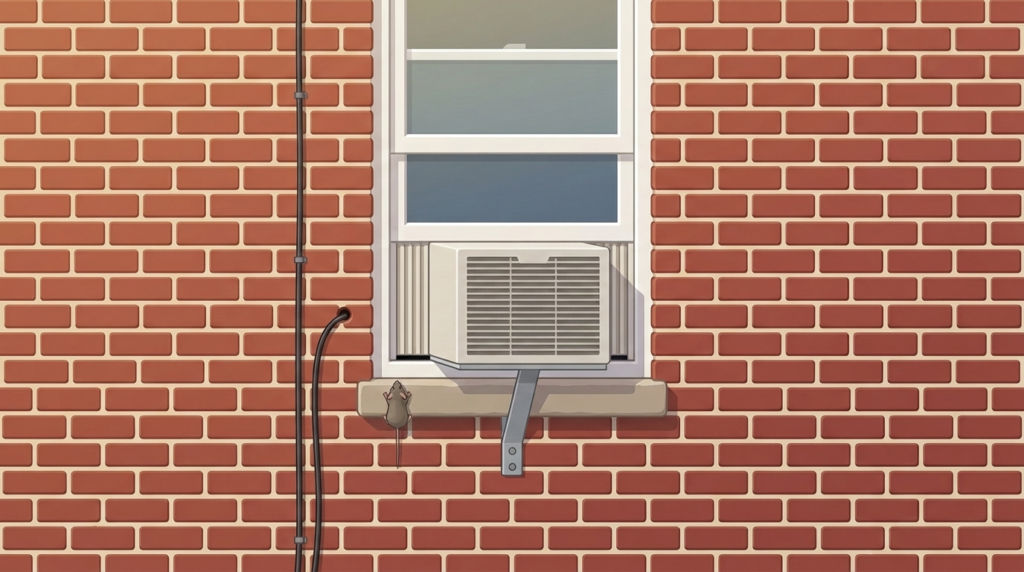
- Pull the stove and refrigerator away from the wall. Mouse activity behind heat-producing appliances is the most common Queens apartment pattern. Look for droppings, grease marks on the wall behind, gnawed food packaging, and any visible entry holes (typically around the gas line or water line where it enters the wall). This single check finds 60–70% of Queens apartment mouse infestations.
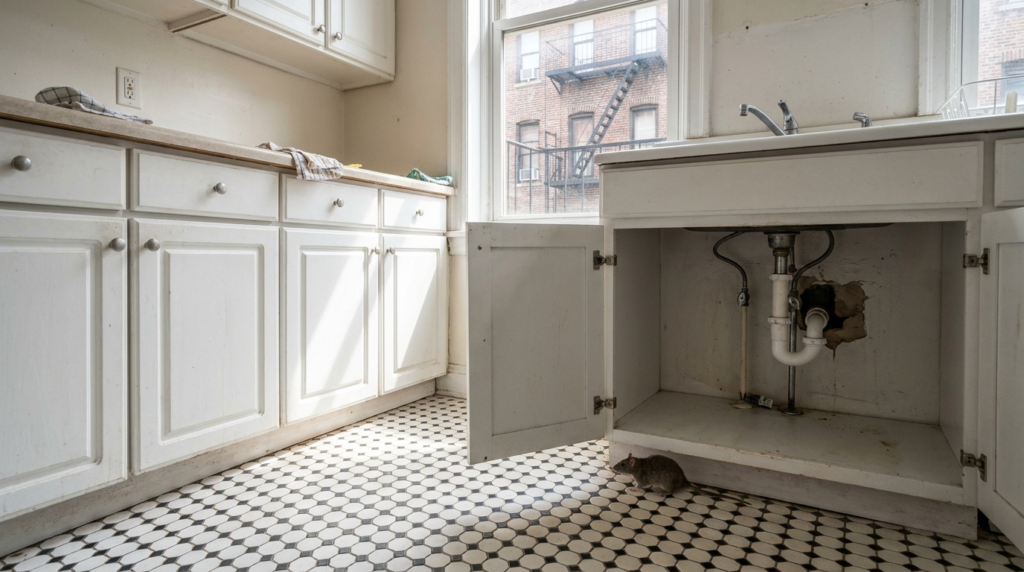
- Open the cabinet under the kitchen sink and look up. Mice love the cavity around plumbing penetrations. Look at the gap where the pipes enter the wall — a hole the size of a quarter is more than enough for a mouse to enter. Droppings on the cabinet floor or shelf above are common.
- Check behind the radiator cover or convector. Pre-war Queens walk-ups have radiator nooks that mice nest behind. Carefully lift the radiator cover and look at the wall behind for droppings or nesting material.
- Check the bottom shelf of any food pantry or closet where you store dry food. Cereal boxes, rice bags, pet food, bird seed, dog treats — these are mouse magnets. Look at the bottom shelf for droppings and check every package for small chewed corners.
- Check the gap between your apartment door and the threshold. Worn weather stripping at the bottom of an apartment door is a major Queens mouse entry point — especially in walk-up buildings where the hallway connects to the basement or street level. A 3/8 inch gap is enough.
- Listen at the wall behind your bed at 11 p.m. If you’re not sure whether the noise you’ve been hearing is in your apartment or a neighbor’s, putting your ear directly against an interior wall (not exterior) around peak mouse activity time will tell you definitively.
- Call your super (if you rent). Most Queens apartment buildings have building-wide pest contracts — your super can confirm whether other tenants on your line have reported mice, which dramatically changes the treatment math. (More on landlord obligations below.)
If 3 or more of these steps surface evidence, you have an active infestation and DIY snap traps alone won’t fix it — you need exclusion (sealing entry points) plus a structured treatment program. Our How to get rid of mice in NYC guide covers the DIY-first protocols that work for early-stage infestations, and our guide to what attracts mice walks through the prevention side. But for established infestations in a Queens building with structural risk, professional exclusion is what actually closes the problem.
When Are Signs of Mice in a Queens Apartment Bad Enough to Call a Pro vs DIY?
Honest answer: DIY can work for a single-mouse early-stage problem caught within a week of first evidence, in a non-shared-wall building (detached home or top-floor apartment with no immediate neighbors). The Bucket-of-Doom snap trap setup, properly placed along wall-edge runways with peanut butter or chocolate hazelnut spread as bait, will solve a 1–2 mouse problem in 7–14 days for under $40 in supplies.
DIY does NOT work in these Queens-specific scenarios — call a pro instead:
- Shared-wall building with confirmed neighbor activity. If the building has mice (super confirmed, or 311 history shows complaints), treating only your apartment is fighting upstream — the mice will come back from the neighbor’s wall void within weeks.
- Multiple sign clusters in different rooms. Droppings in both the kitchen and the bedroom = breeding population, not a single visitor. DIY traps can’t catch a colony fast enough to outpace reproduction.
- Detached home with attic activity. Mice in the attic insulation are notoriously hard to DIY-treat because you can’t see them, can’t trap them effectively (snap traps in insulation get buried), and the exclusion work (sealing soffit gaps, dryer vents, foundation penetrations) requires equipment and experience.
- Pet or child in the home. Modern rodenticides require careful placement to avoid pet poisoning. We use tamper-resistant bait stations that work without putting pets at risk; DIY tray-style bait does not.
- Recurring problem after prior DIY treatment. If you trapped 3 mice last fall and you’re seeing droppings again now, the colony was never eliminated — just trimmed. A professional exclusion job (sealing every entry point) is what stops the recurrence.
A real professional Queens mouse program is exclusion-focused — sealing the entry points so new mice can’t get in, then trapping/baiting the existing population to elimination. Quick spray treatments don’t work for mice (they’re mammals, not insects). If a quote you’re getting doesn’t mention entry-point sealing or exclusion, it’s not going to actually solve your problem.
Who Pays to Treat Signs of Mice in a Queens Apartment — You or Your Landlord?
If you rent in NYC (which includes Queens), this is by far the most important question on this page, and the answer is almost always: your landlord pays, not you. Under New York’s Warranty of Habitability (Real Property Law §235-b) and the NYC Housing Maintenance Code, landlords are legally required to maintain rental apartments free from pest infestations — including mice — and to remediate them when they occur.
Under NYC HMC §27-2017.1, landlords of multi-unit dwellings must address pest infestations within a defined window after a tenant complaint, typically 30 days from the date HPD issues a violation. If your landlord drags their feet, you can call 311 to trigger an HPD inspection. Once HPD issues a violation, the landlord must remediate or face fines. You can verify your building’s pest violation history at the HPD Online portal before you sign a lease — and you should, especially if you’re moving into a pre-war Queens walk-up where mice are essentially the default condition.
One specific Queens trap to watch for: small landlords (the owner of a 3-family or 4-family Queens row home who lives in one of the units) sometimes try to push the cost back on tenants with the “you brought them” framing. This is rarely legally provable for mice (unlike, say, bed bugs from a contaminated piece of furniture), and our team coaches anxious tenants through the 311 complaint process so they don’t end up paying out of pocket for what’s structurally a building-level problem. Mice in a Queens walk-up apartment are coming from the basement, the wall void shared with the next-door unit, the dumbwaiter shaft, or the gap around the gas line — none of which are the tenant’s responsibility.
For NYCHA residents, pest control runs through NYCHA’s own program — call the NYCHA Customer Contact Center rather than booking a private exterminator. For owner-occupied co-ops and condos, the cost typically falls on the building’s common-charge budget for common-area treatment and on the unit owner for in-unit work. If you own a detached Queens home (Bayside, Whitestone, Floral Park), the cost is yours — but exclusion work (sealing entry points) is a one-time investment that prevents repeat problems for years.
The Bottom Line: What to Do Right Now
If you’ve worked through this guide and you’ve found 3 or more signs of an active mouse infestation in your Queens apartment, here’s the order to act in: (1) call your super and ask whether other tenants on your line have reported mice — this changes the treatment math, (2) document the evidence with photos before the super or building management visits, (3) if the building doesn’t respond within a week, call 311 to file an HPD complaint and start the clock on landlord obligations, and (4) call a licensed Queens pest control company for a free inspection — even if the landlord will ultimately pay, getting an expert opinion in writing strengthens your position.
Most early-stage Queens mouse problems we see are 2–4 mice that have been active for less than 60 days — a $300–$500 professional exclusion + trapping program that runs over 2–3 visits and ends the problem. Wait 6 months and that same problem becomes a $1,200–$2,000 multi-room job because the mice have bred, expanded territory, and likely brought a second colony in through a shared wall.
If you’re staring at fresh droppings under your kitchen sink in Astoria, Sunnyside, Forest Hills, or anywhere else in Queens right now, our team offers free same-day mouse inspections across all five boroughs — a 27-person team, 26 years of route experience across pre-war walk-ups, post-war mid-rises, and detached homes, and an exclusion-first approach that actually closes the problem rather than just trapping a few visible mice. Lisa or one of our front-office team can usually book a same-day inspection, and the quote you get will itemize the exclusion work, trap and bait protocol, and follow-up schedule so you can compare it apples-to-apples against anyone else.