—
New York City consistently ranks among the most bed-bug-infested cities in the United States — and no hotel, from budget to luxury, is immune. If you’re planning a trip to NYC, knowing how to inspect your hotel room quickly and systematically can save you from bringing an infestation home. This guide, informed by professional NYC pest inspectors and seasoned travelers, walks you through everything from pre-trip prevention to a post-stay decontamination protocol so you can enjoy your visit with confidence instead of anxiety.
Bed bugs in your NYC apartment?
26+ years treating NYC bed bugs. Crossfire residual where it counts, no annual contracts, and a free inspection that's waived when you book.
How Bad Is the Bed Bug Problem in NYC Hotels?
NYC Bed Bug Statistics and Why No Hotel Is Safe
NYC consistently appears in the top three cities for bed bug complaints nationally, with thousands of reports filed each year through the NYC 311 complaint system. Luxury properties and budget hostels alike have reported infestations — price is simply not a reliable indicator of safety, as bed bug facts and statistics confirm these pests are true equal-opportunity invaders. Hotel employees will tell you that infestations happen even in the cleanest properties; standard protocol involves pulling affected rooms offline and treating adjacent rooms with outside specialists.
Why NYC Hotels Have Unique Hiding Spots
Because hotel sheets are changed daily, bed bugs migrate to deeper hiding spots than they would in a home — think behind wall-mounted lamps, headboards bolted to walls, and electrical outlet covers. NYC’s high room turnover and dense urban environment mean bugs can be introduced by any guest at any time, making ongoing vigilance essential. Older buildings with more crevices and shared wall cavities can facilitate spread between rooms, a factor the NYC Health Department’s bedbug page addresses directly.
Managing Bed Bug Anxiety Without Ruining Your Trip
Many travelers report that simply learning about bed bugs creates anxiety that overshadows their NYC experience. Research on how tourists frame NYC’s bed bug crisis shows that online discussion can amplify this worry well beyond the actual risk level. The solution isn’t obsessive vigilance — it’s developing a quick, systematic five-minute inspection routine that becomes second nature. Knowing you have a plan empowers you to enjoy your trip, and that’s exactly what this guide provides.
What Should You Do Before You Even Book an NYC Hotel?
Researching Hotels for Bed Bug History
Start by checking New York hotels with reported infestations for your prospective property. Filter TripAdvisor and Google reviews for keywords like “bed bugs,” “bites,” and “insects,” focusing on reviews from the past six months. You can also search HPD’s bedbug resources and 311 complaint data for the hotel’s address to see if complaints have been filed with the city.
Choosing Lower-Risk NYC Properties
Newer hotels — recently opened properties in FiDi or Hudson Yards, for example — may carry lower risk simply because bed bugs haven’t had time to establish. Ask hotels directly about their prevention protocols: Do they use mattress encasements? Conduct regular inspections? Employ canine detection services? Hotels that have undergone recent full renovations also tend to be safer bets, as the process typically eliminates existing infestations.
Pre-Trip Prevention: Packing and Treating Your Luggage
Treat luggage and clothing with Permethrin spray before your trip — it repels and kills bed bugs on contact, though it’s toxic to cats, so handle with care, as Northeast IPM’s travel guidance explains. Pack clothing in sealable plastic bags or compression bags to create barriers between your belongings and any potential bugs. Bring a small flashlight and consider packing large trash bags for isolating your suitcase during inspection.
How Do You Inspect an NYC Hotel Room for Bed Bugs in 5 Minutes?
The First 60 Seconds: Before You Unpack
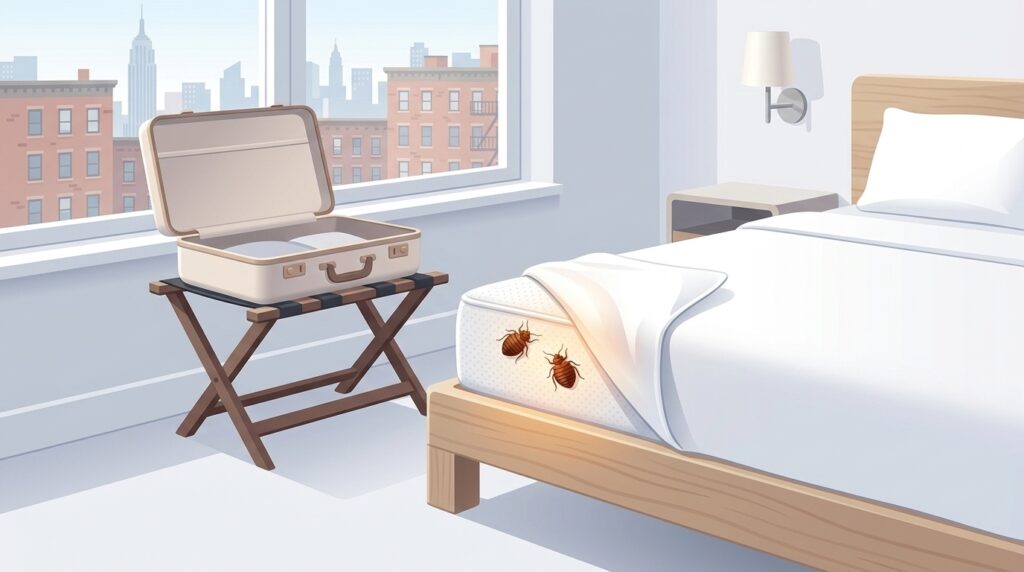
Leave all luggage in the hallway, in the bathroom on tile, or on a hard non-upholstered surface — never place bags on the bed, carpet, or upholstered furniture. Turn off the room lights and use your flashlight, since bed bugs are photophobic and far easier to spot in darkness against light-colored sheets. As Consumer Reports’ hotel inspection guide notes, you’re looking for specific evidence, not conducting a forensic investigation.
Inspecting the Mattress, Bedding, and Box Spring
Pull back all sheets, blankets, and mattress pads. Inspect the mattress seams, piping, and corners with your flashlight for live bugs, shed skins, tiny white eggs, or dark reddish-brown fecal spots. Lift the mattress and check the box spring — especially the fabric folds and stapled edges underneath, which serve as a primary harborage area. Run a credit card along seams to dislodge any hidden bugs, a technique recommended by the New York State Health Department.
Checking Headboards, Furniture, and NYC-Specific Hiding Spots
In NYC hotels, headboards are often bolted to the wall — pull the bed away if possible and inspect behind it, as this is where professional inspectors find the majority of hotel bed bugs. Check behind wall-mounted lamps, picture frames, and electrical outlet covers near the bed. Inspect nightstand drawers, upholstered chairs, curtain folds, and luggage racks thoroughly.
What Should You Do If You Find Bed Bugs in Your NYC Hotel Room?
Immediate Crisis Response: Document and Escalate
Photograph and video all evidence with timestamps — this documentation is critical for refund requests and complaints. Notify hotel management immediately and request a full refund, not just a room change, since bed bugs can be present in adjacent rooms. Do not move your luggage through the hotel without sealing it in plastic bags first.
Know Your Rights as a Guest in NYC
NYC has no law requiring hotels to proactively disclose bed bug history, but the city’s housing and health codes do address infestations in occupied spaces. File a complaint with NYC 311 to create a public record that may trigger a health department inspection. If you develop bites, seek medical attention and keep all records to support any future claims.
Protecting Your Belongings and Preventing Spread
Seal all clothing and soft items in plastic bags immediately. If possible, request the hotel launder your clothing on high heat — above 120°F — or locate a nearby laundromat with commercial dryers. Contact a bed bug control service if you suspect bugs may have entered your luggage, because early intervention is far easier than treating a home infestation.
Bed bugs in your NYC apartment?
26+ years treating NYC bed bugs. Crossfire residual where it counts, no annual contracts, and a free inspection that's waived when you book.
How Do You Make Sure You Don’t Bring Bed Bugs Home From NYC?
The Departure Inspection Most Travelers Skip
Before checking out, inspect your sheets and pillowcases for new blood spots or fecal stains that weren’t there on arrival. Check the seams and zippers of your luggage with a flashlight before leaving. This departure check is the single most overlooked step and can be the difference between catching a problem early and discovering an infestation weeks later.
Post-Trip Decontamination Protocol
Upon arriving home, unpack directly into the washing machine or into sealed plastic bags — do not bring luggage into bedrooms or closets. Wash all clothing on the hottest setting and dry on high heat for at least 30 minutes, since as Ohio State’s CFAES warns, temperatures above 120°F kill all life stages of bed bugs. Vacuum your suitcase thoroughly, then dispose of the vacuum bag in a sealed outdoor trash container. If you have any doubt about exposure, professional inspection services are available across all five boroughs, including bed bug control in Manhattan, Brooklyn, Queens, bed bug removal in the Bronx, and Staten Island bed bug control.
When to Call a Professional NYC Bed Bug Exterminator
If you discover bites appearing in a line or cluster in the days after returning home, schedule a professional inspection immediately — early detection prevents full-blown infestations. NYC-based pest control professionals understand the unique challenges of city apartments and can deploy targeted treatments including heat treatment, which is the most effective single-session solution, as our guide on removing bed bugs in Queens explains in detail. Don’t attempt DIY treatment with store-bought sprays — bed bugs in NYC have developed significant pesticide resistance, and improper treatment can scatter them further into walls and adjacent units. Professionals serving areas from Forest Hills to Muttontown and throughout New York County are equipped to handle these resistant populations effectively.
Can You Enjoy NYC Hotels Without Worrying About Bed Bugs?
Building a Quick Routine That Becomes Second Nature
The entire inspection process takes less than five minutes and, with practice, becomes as automatic as locking the door or checking the Wi-Fi password. Thousands of travelers stay in NYC hotels every night without incident — bed bugs are a manageable risk, not an inevitability. By combining pre-trip research, a systematic arrival inspection, and a departure decontamination routine, you dramatically reduce your risk while freeing yourself to enjoy everything New York City has to offer.
Your NYC Bed Bug Inspection Checklist at a Glance
- Before booking: Check the Bed Bug Registry, filter reviews, research hotel age and renovation history
- Before packing: Treat luggage with Permethrin, pack sealable bags, bring a flashlight
- On arrival: Leave luggage outside, darken the room, inspect mattress → headboard → furniture → walls in five minutes
- If found: Document everything, demand a refund, seal belongings, file a 311 complaint, contact a bed bug control service
- On departure: Check sheets for new evidence, inspect luggage seams
- At home: Launder everything on high heat, vacuum luggage, monitor for bites, and call a professional if needed