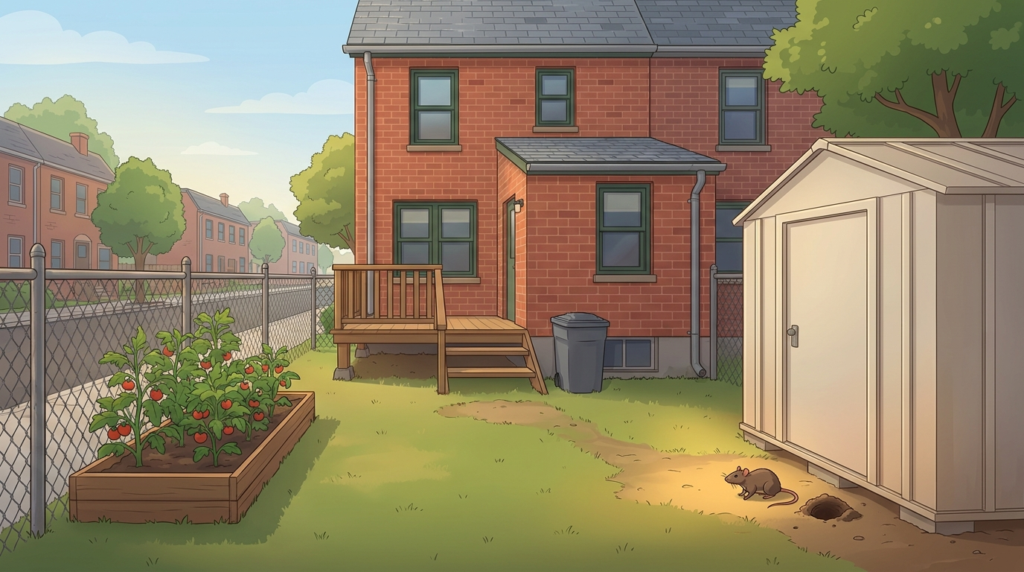
A hole at the base of the back fence. A path worn through the grass along the side of the house. A rat crossing the yard after dark and vanishing under the shed. If that’s your Queens backyard, the rats have found what they need to live there, and getting rid of them means taking it away in the right order.
Below, we cover each piece for a Queens house with a yard: what feeds them, where they hide, when a burrow gets treated or filled, how bait stations fit a yard with kids and pets, what the city’s rat portal and 311 can do for a homeowner, and when it’s time for professional rat removal.
Rats burrowing in your Queens backyard?
We are NY State certified in Category 7A (structural and rodent), and every technician is licensed by New York State.
How Do You Get Rid of Rats From a Queens Backyard for Good?
The NYC Health Department’s guide Preventing Rats on Your Property puts the whole job in one line: to control rats, you have to remove everything they need to survive, which it lists as food, water, shelter and ways to get around. For a yard, the order this post follows is: food, water and clutter first, then the rats already living there, then the gaps into the house, garage and shed, and last the burrows, once they go quiet. The same guide says rats will ignore bait if their normal food supply is available, so the cleanup comes before the traps and bait.
First, confirm what you’re dealing with. Cornell’s Integrated Pest Management program, on its page on mouse and rat biology and behavior, lists the Norway rat among New York’s common pest rodents, says roof rats are generally not found in the state, and notes that Norway rats prefer to burrow in soil. In a yard, that means holes. The Health Department’s guide says rats are most active at night, so watch after sunset to see where they go, then look in daylight for gnaw marks on wood and plastic, droppings about the size of a raisin, runways and track marks along grass and walls, and burrows, which it describes as 1- to 4-inch holes in dirt or concrete with smooth edges, often with an entrance and an exit, and often under bushes, plants, clutter or garbage.
“For good” also depends on the yards around yours. The Health Department’s page on rat inspection terms and practices says rats rarely exist on a single property and that getting rid of them often requires a neighborhood response, which is why the city’s tools belong in the plan.
What Should You Remove From a Yard to Stop Feeding Rats in Queens?
Everything a rat can eat or drink. The Health Department’s Preventing Rats on Your Property guide says rats only need 1 ounce of water and 1 ounce of food each day, so a yard that looks mostly clean can still feed them. The guide’s fixes for food and water:
- Use hard plastic or metal garbage cans with tight-fitting lids and no cracks or holes, and set garbage out as close to pickup time as possible.
- Avoid storing food, including pet food, outside.
- Don’t put food out for stray cats or birds.
- Remove any pooled water.
In a yard, the rule on feeding birds covers the bird feeder, and pooled or standing water means pet bowls left out overnight, birdbaths and kiddie pools. Garden produce and pet waste count as food too: Cornell’s biology page says rodents feed on the food we grow and names fresh produce, and even pet waste, among the nearby food sources people provide by accident. Pick up windfall fruit, harvest on time and scoop the yard.
Compost needs a rat-resistant setup. The Department of Sanitation’s Outdoor Composting Guide says simple holding units shouldn’t take food scraps because they lack adequate protection against rodents, and where rats are a problem it adds screens over gaps, a screen under a bin that sits on soil, regular turning to prevent nesting and, in tough cases, a vertical screen 6 to 8 inches into the ground around the bin. On trash night, the Department of Sanitation’s page on residential waste containerization says that as of June 2026, properties with 1-9 residential units must use official NYC Bins for trash set out, with full enforcement from September 8, 2026.
How Do You Eliminate Rat Shelter Around Queens Homes, Sheds and Decks?
Take away anything a rat can live under or behind; close off the ground beneath the structures they dig under only once no rats are left under them to be sealed in. The Health Department’s Preventing Rats on Your Property guide says clutter gives rats places to hide, sleep, nest and reproduce, and it tells owners to clean out the yard and to store items away from walls and off the ground.
Start with the wood pile. The New York State Department of Health’s page Controlling the Rat says to pile wood and other stored items at least 18 inches above the ground and away from the walls, and to clean out the area behind wooden steps, especially steps leading into the house. Dense plantings are shelter too, but plant choice and garden upkeep are their own subject; our post on garden and landscaping upkeep that keeps rats out covers that side.
Sheds and decks are harder when they sit on the ground without a foundation, because rats dig underneath. Cornell’s page on pest exclusion says hardware cloth is often used to keep animals from going under the parts of buildings that lack foundations: it is attached to the bottom of the structure and buried, and that barrier, often called a rat wall, should generally be buried one foot deep with a six-inch horizontal shelf at the bottom to help stop animals from digging under it. The same page says to be certain that animals will not be trapped inside before closing animal entry sites in a building, so the barrier goes in only after trapping or baiting has removed the rats living underneath.
Close the gaps into the house, garage and shed on the same condition: only once trapping or baiting has removed the rats living inside, so none are sealed in. The Health Department’s guide says rats can squeeze through cracks and holes as small as one-half inch, and its “Keep Rats Out” section sets out the materials for each kind of gap; where hardware cloth goes into a large hole, it says the mesh must be heavy-duty, 16-gauge galvanized steel with a one-half-inch mesh size, and never chicken wire, because rats can squeeze through its openings.
When Should You Treat or Fill a Backyard Rat Burrow?
Treat a burrow while rats are using it; fill it only after it has gone inactive. The Health Department’s Preventing Rats on Your Property guide says inactive burrows will often have leaves, cobwebs or other debris around the entrance. An active one looks used, with the smooth edges described above and a clear entrance.
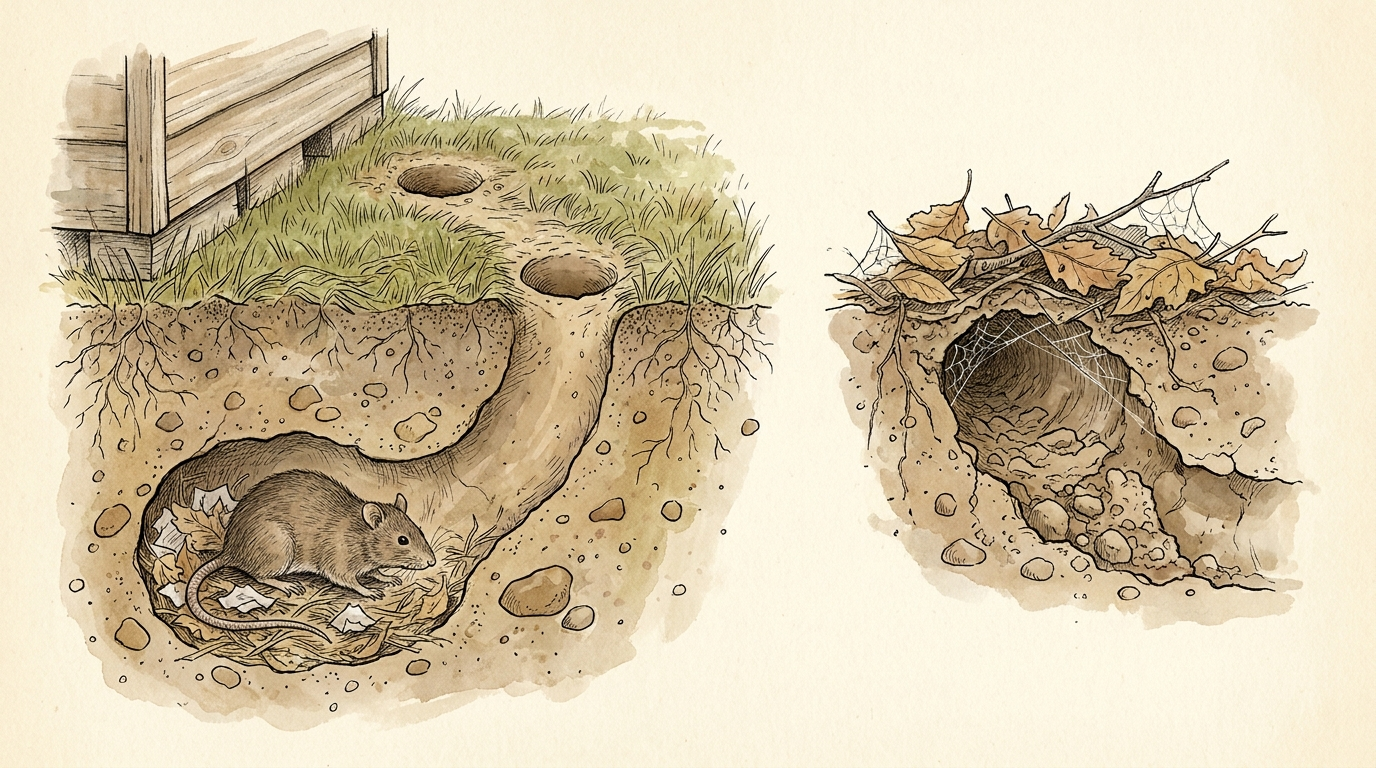
Treating an Active Burrow
Treating a burrow with bait falls to professional products: the EPA’s page on restrictions on rodenticide products says baiting burrows outdoors is permitted only for pelleted baits placed at least six inches down active rat burrows, and that pelleted baits are no longer permitted in rodenticide products sold to consumers. Whatever the method, the Health Department’s page of rat information for tenants and property owners says not to put broken glass or chemicals into a burrow, and that covering a burrow entrance with wood, cinder blocks or rocks will not keep rats out.
Filling an Inactive Burrow
Once a burrow shows the inactive signs, close it, since the Health Department’s guide says inactive burrows will attract rats and other pests over time. Wear gloves and wash your hands afterward, as the guide advises for work in the garden, then use its method for the surface the burrow is in:
- In soil: fill the burrow with sand or gravel and tamp it down firmly with a shovel or by stepping on it, or collapse it with a shovel.
- In a cracked or broken sidewalk: fill it with stainless steel rodent-proofing mesh fabric, then cover it with well-mixed cement.
A filled burrow that gets dug back open is active again, and it goes back to the treatment side.
Kids and pets in a Queens yard with rats?
We have family and pet-friendly options, and after the visit you get a service report and a warranty call.
How Do Bait Stations Control Rats in a Queens Yard With Kids and Pets?
A bait station is a closed box of rodenticide that a rat can feed from. The EPA’s rodenticide restrictions page says most rodenticides used today are anticoagulants, and that deaths typically occur between four days and two weeks after rodents begin to feed on the bait. With kids and pets in the yard, two questions decide whether a station belongs there: who places it, and which station it is.
Who places it. The Health Department’s Preventing Rats on Your Property guide says that if you live in your own home without tenants, you can place rodent bait yourself, and that if you own a commercial or multiunit property, it is illegal to place rodent bait yourself and you must hire a pest professional; the Department’s page for tenants and property owners recommends leaving even the own-home job to the professionals. If your Queens house has a rental apartment, read that line twice.
Which station. The EPA’s page on choosing a bait station product for household use sorts ready-to-use stations into tiers. Tier 1 stations have been shown to resist tampering by young children and by dogs and are considered weather-resistant, and the EPA says only they may be used outdoors, and then only within 50 feet of buildings.
The Health Department’s guide lists what a correct setup looks like, as the checklist it asks pest control companies to follow:
- Read and follow the manufacturer’s label, and use the smallest effective amount of bait.
- Wear disposable gloves to handle bait, and wash your hands after.
- Store and place bait stations where children and pets cannot get to them.
- Put secured bait blocks or sachets in the feeding chamber of a sturdy, EPA-approved tamper-resistant station, not its runway or entryways. Don’t scatter bait or use packets or loose bait, and never bag bait or put bagged bait in burrows or stations, because rats can push or carry it out to where children or pets can get to it.
- Anchor the station to the ground or a fence with cement, caulk or wire, and lock or fasten the lid shut.
- Place stations on the paths rats normally travel, and clean up trash and other food sources.
- For burrows, use a funnel to place loose pellet bait deep, so rats cannot push it out; bait blocks and soft bait sachets cannot be placed into the ground.
- Never use a product that does not have an EPA registration number.
- Replace eaten or damaged bait, and leave stations and bait in place for at least two weeks after all rat activity has stopped, then monitor monthly.
- Use tracking powder only where people or animals will not be exposed to it.
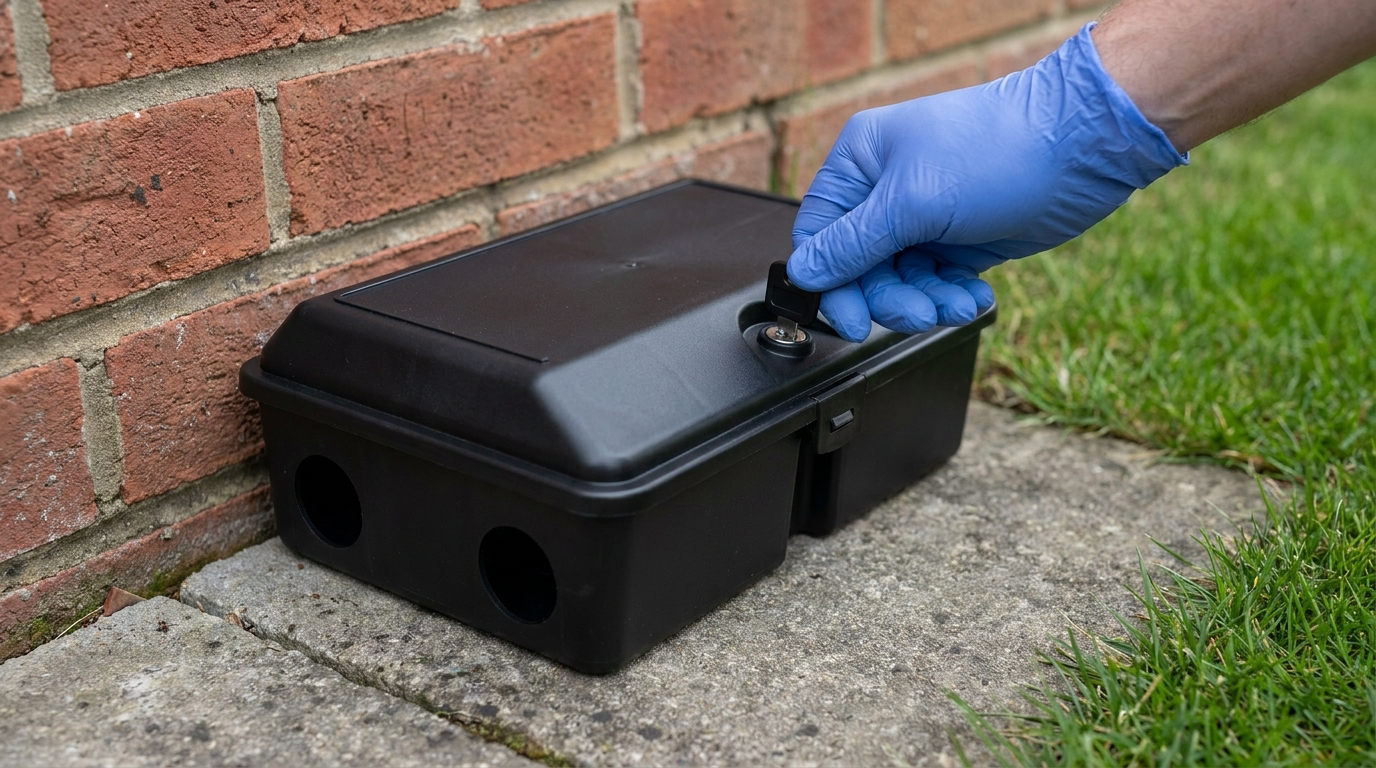
If you, someone else or a pet is exposed to rat bait, the Health Department’s Preventing Rats on Your Property guide says to call the NYC Poison Center.
Snap Traps in a Secured Box
Snap traps are the other tool. The New York State Department of Health’s Controlling the Rat page says traps are less of a hazard to children and pets than poison, and it tells you to be sure the traps are out of their reach. The EPA’s training module on managing mice and rats in and around child care says to set traps near outdoor burrows inside secured rat bait boxes, placed along a wall or foundation with the entrance where you see rat runways, and to use traps made for rats; because rats are cautious of new objects, it says to pre-bait, leaving the traps baited but unset until rats start eating the bait, which it says might take a week or two. The Health Department’s guide adds that traps should be monitored daily.
Don’t pick up a dead rat, or the trap holding one, with bare hands. The Department of Sanitation’s Harmful Products Guide for NYC residents says that when emptying or throwing away a trap, you should wear rubber gloves or pick it up with a broom and dust pan. Whether a trap or bait leaves the dead rat, the EPA’s page on how to use rodent bait products says to promptly remove and dispose of dead rodents, so that a pet that might eat a dead animal is not poisoned; NYC311’s page on dead animals on private property explains how to bag one for trash pickup.
Can the City’s Rat Portal and 311 Help Control Yard Rats in Queens?
Yes, mostly by showing you which properties around you have had rat problems and by making a neglected property’s owner act. Neither tool treats your own yard for free, because the city’s process runs through the property owner; the Health Department’s Preventing Rats on Your Property guide says property owners must keep their properties free of rats by law.
The Health Department’s Rat Information Portal maps its rat inspection results and follow-up actions, searchable by address, by borough, block and lot (BBL) number, or by neighborhood. The portal’s FAQ explains the colors: pink means rat activity at the last inspection, and purple means the property failed for another reason, such as exposed garbage or harborage like clutter or overgrown vegetation. For a Queens backyard, look up the houses that share your fence lines and the lot behind yours.
311 brings an inspector. NYC311’s page on rat or mouse complaints says you can report rodent conditions in outdoor areas of a residential property, including yards and alleys, to the NYC Health Department, and that you must provide your contact information. The Health Department’s main page on rats says that for an area closed to the public, such as a backyard, your contact information lets the inspector schedule the inspection for when you’re there to grant access.
The Health Department’s handout What Happens to Your 311 Rat Complaint? says to check the address on the portal before you file, since a complaint submitted soon after an inspection is treated as a duplicate and will not bring another inspection, and to say where on the property you saw the rat activity. If the inspector finds signs of rats or conditions rats favor, it says the property owner gets a Commissioner’s Order to Abate, then a compliance inspection, and a summons if the property fails that one; it adds that the Health Department may bait or clean up the property itself and bill an owner who doesn’t act.
So the order goes to the property owner. If the burrow is in your own yard, a 311 complaint brings an inspection of your property and, if it fails, an order addressed to you. Use 311 for a neighbor’s yard or a neglected lot, and handle your own with the steps above. Renters who share a yard are in a different spot; our post on garden-apartment and NYCHA yard exposure covers the tenant side.
When Should Queens Homeowners Call a Pro to Eliminate Yard Rats?
Call a pro when the yard has outgrown cleanup and a few traps, or when the rules put the job in a professional’s hands:
- There’s a rental apartment in the house, so the own-home baiting permission above doesn’t apply.
- A burrow is active and needs the professional treatment described above.
- Burrows keep coming back after you fill them, or new ones keep appearing along the fence or the foundation.
- Rats are getting inside the house, the garage or the shed.
- You’ve received a Commissioner’s Order. The Health Department’s Preventing Rats on Your Property guide tells owners who have rats on their property, or who have received a Commissioner’s Order, to follow the guide and hire a pest control company.
- Kids and pets use the yard every day and you’d rather not handle bait.
The Health Department’s page of rat prevention information for pest management professionals sets the bar — inspect before offering a quote and base the quote on the findings — and says most moderate-to-severe rat infestations require five to seven visits before the rats are controlled to levels low enough for service to drop to a monthly or bi-weekly schedule. The Department’s owner guide also suggests working with your neighbors to hire the same pest control company.
When you’re ready for help, we treat rats, and we do professional pest-proofing and rodent-proofing. Every technician is licensed by New York State, and we offer same-day service during business hours; an emergency means within 24 hours. Start with our page on rodent control in Queens, and for what rat work costs, see our NYC rat exterminator cost guide.
Quick Recap
- Work in order: food, water and clutter first, then the rats already living there, then the gaps into the house, garage and shed, and last the burrows, once they go quiet.
- Starve them out: use lidded cans, avoid storing pet food outside, put no food out for birds, pick up fallen fruit and pet waste, remove standing water and keep the compost rat-resistant.
- Stack wood and stored items off the ground and away from the walls, and under a shed or deck without a foundation, bury a hardware-cloth barrier only after the rats living underneath are gone.
- Treat a burrow while it’s active, with professional products under the EPA’s rules, and fill it only once it’s inactive.
- The EPA says only Tier 1 household bait stations may be used outdoors, and then only within 50 feet of buildings.
- The Health Department’s guide says you can place bait yourself if you live in your own home without tenants, and that the owner of a commercial or multiunit property must hire a pest professional to place it.
- Check the neighbors on the Rat Information Portal; a 311 inspection that finds signs of rats or conditions rats favor leads to an order to the property owner, which may be you.
- Call a pro for a rental apartment in the house, an active burrow, burrows that keep coming back, rats getting inside, or a Commissioner’s Order.