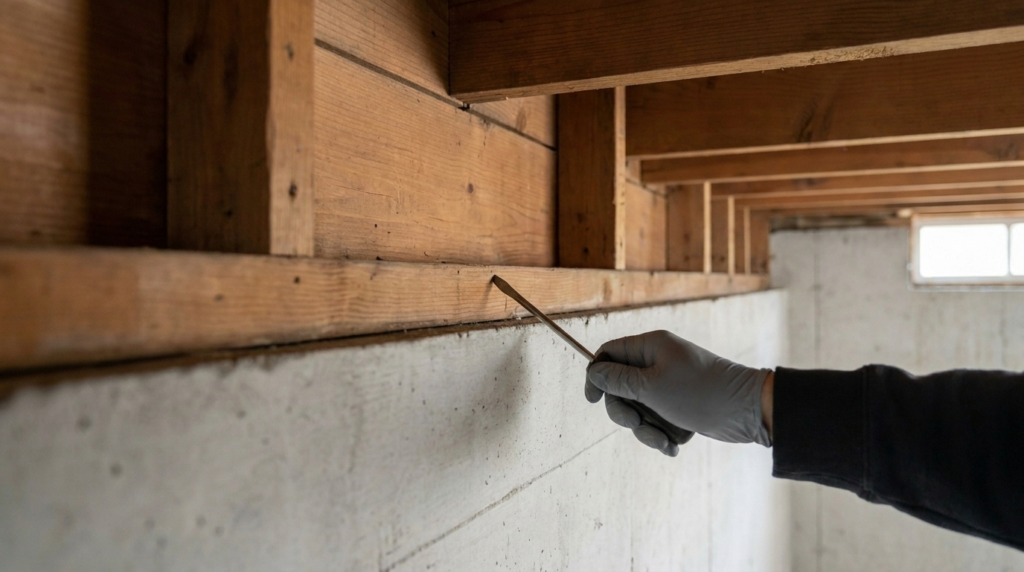
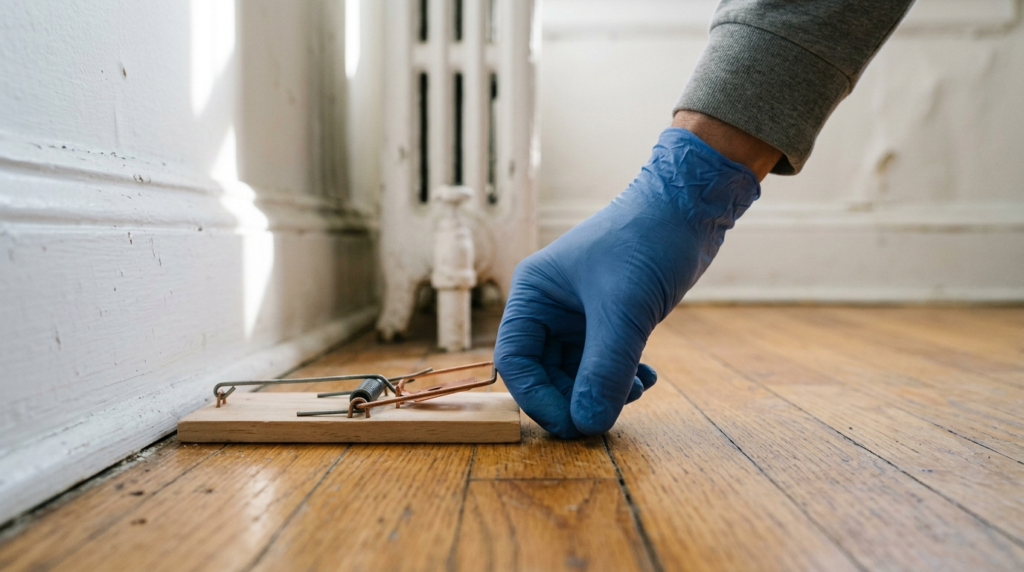
A mouse runs along the back of the stove in the middle of the night, and two questions arrive right behind it. How do you get it out, and what is that going to cost? Search for the price in New York and you get national cost guides that average jobs from all over the country. Those averages were not built for a pre-war walk-up with steam risers running floor to floor, or for a one-family house with a basement door that won’t quite shut.
So here is what a mouse exterminator in NYC costs in 2026, on our own price list. A first mouse treatment is $250 plus tax for an apartment and $275 plus tax for a one-family house. After that, monthly visits for an apartment run $65 to $75, and our seasonal plan is $700 a year for four visits. The other dollar figures below are national benchmarks, named where they appear. They are not our prices.
Mice in your NYC apartment or house?
We do professional pest-proofing and rodent-proofing, and we waive the inspection fee when you have the work done.
What Does a First Mouse Treatment Cost in an NYC Apartment or House?
A first mouse treatment from us costs $250 plus tax for an apartment and $275 plus tax for a one-family house. Here are our 2026 prices in one place.
| Service | Our 2026 price |
|---|---|
| First treatment, apartment | $250 plus tax |
| First treatment, one-family house | $275 plus tax |
| Monthly visits, apartment | $65 to $75 a month |
| Seasonal plan | $700 a year for four visits |
Four things about that table. The first two rows are first visits, not whole jobs. The monthly figure is for apartments, so a free estimate from us is the way to price monthly visits at a house. And when a visit is a one-time service, it carries a 30-day guarantee. How much sealing a first treatment takes depends on the home, so that is the line to have spelled out in your estimate.
Two things come with a visit from us. Our technicians show up in uniform and put booties on before they come through your door. After the visit you get a service report and a warranty call.
Why does a house cost more than an apartment? A house has something an apartment doesn’t: an outside. The foundation, the basement door and the places where gas and cable lines pass through the wall are all possible ways in. The two national cost guides we use as benchmarks make the general point. This Old House’s guide says larger homes take more time, labor and materials, and HomeGuide’s says older, larger homes have more openings and need more sealing work. If you live in a pre-war walk-up or an old row house, the age half of that applies to you too.
Why Are Mouse Prices Higher in New York Than the National Average?
Ours aren’t, for a first visit. HomeGuide’s national cost guide, dated September 2, 2025 and based on its research and on project costs its members report, puts the average mouse job at $350 and the typical range at $150 to $550. Our first visit, at $250 plus tax for an apartment and $275 plus tax for a one-family house, sits inside that range and under that average.
The catch is that the two numbers measure different things. The national average is for a whole job, and ours is for a first visit. On our prices, two monthly visits at $65 to $75 on top of a $250 first visit put an apartment job past HomeGuide’s $350 average before tax. Two more things can add to a New York bill.
- City costs. This Old House’s guide says prices in urban areas may run higher because of demand or the cost of living.
- Sales tax. Our first-visit prices are quoted plus tax. The NYC Department of Finance lists the total sales and use tax in the city at 8.875 percent.
For roach and bed bug work, our guide to what pest control costs in NYC gives market-wide ranges rather than our own price list. Rats are a different job with a different bill, and our NYC rat exterminator cost guide explains why they cost more than mice.
How Much Does a Bigger Mouse Colony Add to an NYC Quote?
If a bigger colony means more months of follow-up, each extra month of our monthly visits for an apartment is $65 to $75. National figures show how far the total can climb. On HomeGuide’s numbers, a medium infestation starts where a small one tops out, and a large one starts where a medium one tops out.
| Infestation size | HomeGuide’s national total | What HomeGuide says it includes |
|---|---|---|
| Small | $100 to $500 | Sealing one entrance, minimal cleaning |
| Medium | $500 to $1,000 | Minor sealing work, minimal cleaning |
| Large | $1,000 to $7,000 or more | Repairs and full sanitizing |
Those are national benchmarks, not our prices, and the right-hand column is the one to read. It counts work, not mice: more entrances to seal, more cleaning and, at the top, repairs. HomeGuide says removing one mouse may take only one or two visits, while jobs that need several months of trap monitoring and every entrance sealed cost more.
When is a professional worth the money at all? The NYC Health Department’s booklet on getting rid of roaches and mice draws its line at a severe mouse problem: at that point, it says, you need a pest control professional. For a lighter one, our comparison of DIY and professional pest control in NYC walks through the choice.
Why Does Sealing Entry Gaps Cost More Than Trapping the Mice?
What the two national cost guides we use as benchmarks say is narrower than the question: sealing adds to the cost of a mouse job. HomeGuide’s says exclusion, the steps after removal that use exclusion doors and sealants to keep mice from getting back in, will add to the overall cost. This Old House’s says exclusion services, which include sealing cracks and holes around the home, add to the upfront cost and can save you money and stress in the long run.
The NYC Health booklet says a mouse can get through a hole as small as 1/4 inch, and it calls the sealing repairs easy to do and the materials inexpensive. Our own reading, and it is a reading rather than a figure from a source, is that the cost of sealing sits in the ground to cover more than in the materials.
HPD’s page on indoor allergen hazards lists the sealing that Local Law 55 of 2018 requires when the owner of a building with three or more apartments deals with a pest infestation: holes, gaps and cracks in walls, ceilings, floors, molding and baseboards, around pipes and conduits, and around and within cabinets. That list is the whole apartment, the insides of the cabinets included.
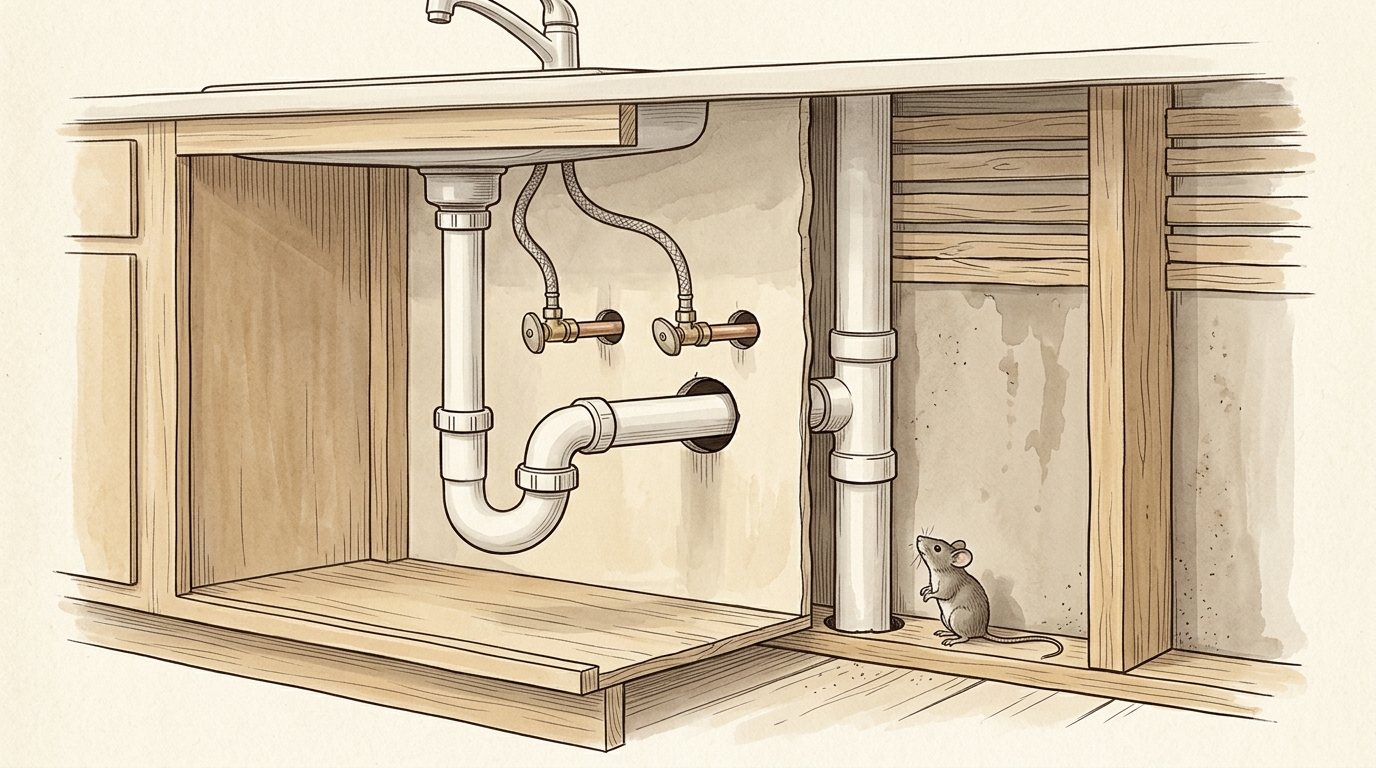
By method, HomeGuide puts a professional trap setup at $150 to $475, bait stations with monitoring at $300 to $550, and fumigating a 2,000-square-foot house, which it says is usually done only when nothing else works, at $2,000 to $5,000. Sealing is not a method in HomeGuide’s by-method table. It appears in its table by infestation size, shown in the section above: sealing one entrance on a small job and minor sealing work on a medium one.
HomeGuide’s guide also says new mice from outside can arrive later if the places where the mice came in are not all sealed off. The NYC Health Department’s guide to selecting and working with a pest professional, written for building owners and managers, says sealing should be the first line of defense. The same NYC Health guide adds a detail that matters on a quote: a pest professional may seal small gaps and holes, while larger holes and the repairs that go with them are typically the building staff’s job.
We do professional pest-proofing and rodent-proofing. The method itself, what goes into which gap, is in our step-by-step guide to getting rid of mice in an NYC home.
Weighing a mouse plan for your New York home?
Every technician is licensed by New York State, and we offer same-day service during business hours.
Is a Seasonal Mouse Plan Worth More Than Monthly Visits in New York?
It depends on where your mice spend the year. An apartment in a multi-unit building points to monthly visits. A one-family house with a backyard points to the seasonal plan. Here is how the two compare on our prices.
| What you get | Monthly visits, apartment | Seasonal plan |
|---|---|---|
| Price | $65 to $75 a month | $700 a year |
| Scheduled visits in a year | Twelve | Four |
| What stands behind it | If the pest comes back between visits, so do we | A one-year guarantee with unlimited callbacks for covered pests |
Twelve monthly visits at $65 to $75 add up to more than the seasonal plan’s $700, so over a full year the seasonal plan is the cheaper one. It also has four scheduled visits against twelve. The question is which you need more: eyes on the problem every month, or a guarantee behind four visits.
Cornell Integrated Pest Management’s page on mouse and rat biology says the house mouse can live its entire life indoors, while white-footed mice and deer mice, two other common pest rodents in New York, spend most of their time outdoors and enter structures from fall through spring. That difference is a useful way to decide.
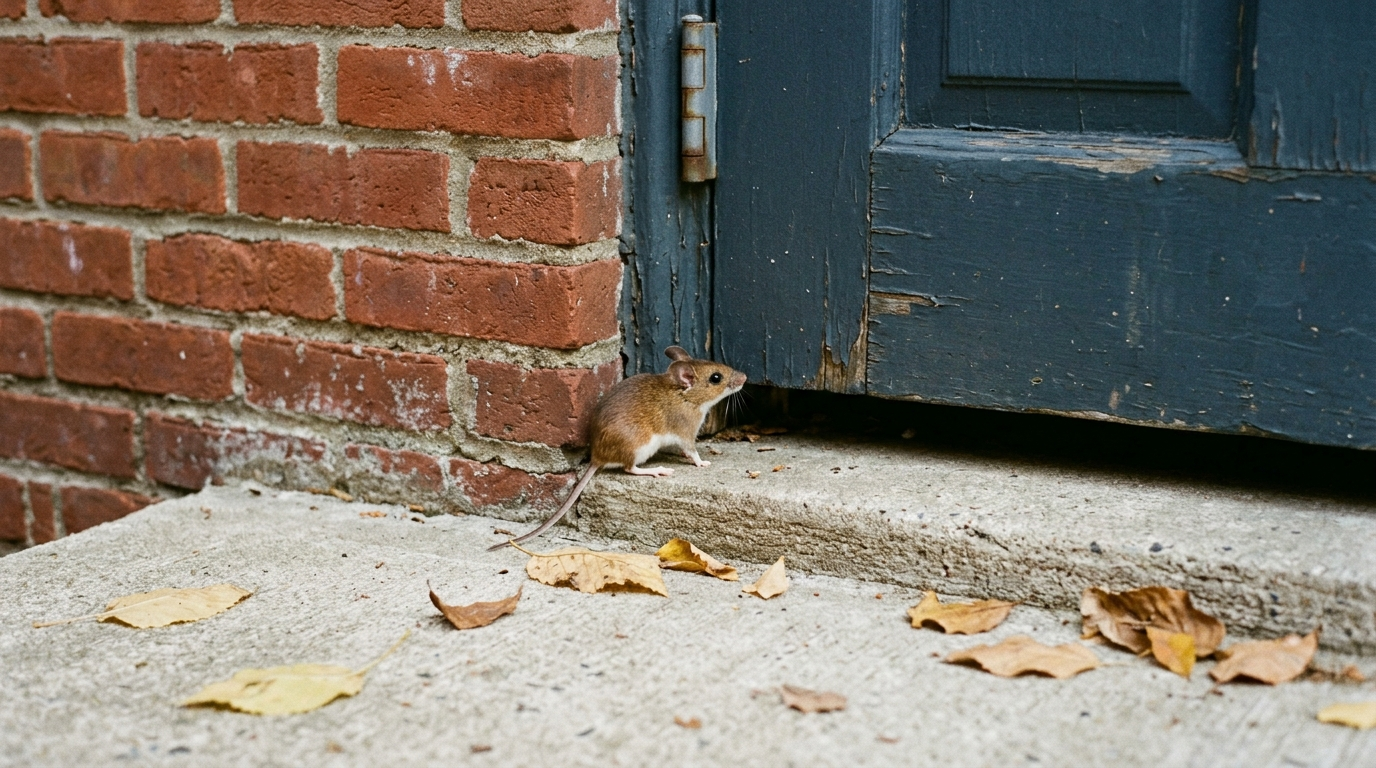
An apartment in a multi-unit building points to the first kind of problem. Mice that live indoors all year have no season to wait out, and new ones can arrive from the rest of the building. Monthly visits match that.
A one-family house with a backyard can have the second kind. If your mice come in from outside when the weather turns, the pressure has a season, and four visits with a one-year guarantee and unlimited callbacks for covered pests match that pattern. Either way, the work falls under our rodent control service. And if this is the first mouse you have seen, a one-time service with its 30-day guarantee is the smaller commitment.
When Should NYC Renters Pay for Their Own Mouse Exterminator?
After the owner has been told and the building’s service has had its turn, and only for a problem inside your own apartment. The order matters because of who owes what. HPD’s page on indoor allergen hazards says Local Law 55 of 2018 requires owners of buildings with three or more apartments to keep their tenants’ apartments free of pests, and the sealing described above is part of that duty. How to report mice, and what happens if the owner does nothing, is covered in the tenant-rights section of our renter’s guide to mice in an NYC home. Who pays is not ours to decide. That is between you, your lease and the city’s rules.
Renters still end up paying, and two threads on r/AskNYC show how. One Midtown renter wrote that exterminators had come several times and sealed holes, that the mice kept coming, and that they had paid a private company out of pocket after the landlord refused to. A second renter described a building with a monthly exterminator and a sign-up sheet. They had not signed up, a repair worker’s glue traps had caught nothing, and the landlord offered a choice: pay a fee to bring the exterminator early, or wait until the end of the month and pay nothing. One commenter in that thread answered that they would probably hire their own exterminator, so that they, and not the landlord, were the customer.
What a Private Visit Costs, and What It Can Fix
That last point is the real case for paying: a private exterminator answers to you. A private first visit from us is $250 plus tax, and as a one-time service it carries a 30-day guarantee. If you keep us on, monthly visits for an apartment run $65 to $75. What that buys stops at your door. A private exterminator can treat your unit and seal the gaps inside it. The basement, the garbage room and the apartments around you stay as they are.
So a private visit earns its price when three things are true. The owner knows about the mice and the building’s service has already been through. The mice are getting in through gaps inside your own unit, such as the space around a pipe under the sink. And the wait for the next building visit is one you are not willing to sit through. If the mice are coming from the building itself, the money is better kept. That fix belongs to the owner, and a visit to one apartment can’t reach it.
Which Line Items Should a Mouse Quote List for NYC Homeowners?
A mouse quote should list eight things: the inspection, the first treatment, the sealing, the follow-up visits, dead-mouse pickup, the guarantee, the after-hours fee, and the license and insurance behind the work. The first five come from the NYC Health guide for building owners and managers, which asks for a written inspection report before a final price is quoted and for an estimate that spells out the methods for each pest, the sealing and who does it, a service schedule, and pickup and disposal of dead rodents. That list works just as well for the owner of a one-family house.
- Inspection and written findings. What was found and where, in writing, before the final price. A professional may charge a fee for this first inspection. On our quotes, we waive the inspection fee when you have the work done.
- The first treatment, by method. Traps, bait or both, and where each one goes. The NYC Health guide says rodenticide comes only after exclusion, sanitation and trapping have not worked, and then only in tamper-resistant bait stations or deep in rat burrows. We have family and pet-friendly options.
- Sealing, as its own line. Which gaps get sealed, with what, and who handles anything bigger than a gap.
- Follow-up visits. How many, how far apart and what each one costs.
- Dead-mouse pickup. Who collects what the traps catch, and what it costs if a mouse has died inside a wall.
- The guarantee. How long it runs and what brings the technician back. Our one-time services carry a 30-day guarantee, and the terms on our plans are in the comparison above.
- The after-hours fee. HomeGuide puts urgent weekend, holiday and after-hours calls at $100 to $200 extra, nationally. We offer same-day service during business hours, and an emergency means within 24 hours.
- License and insurance. The NYC Health booklet says a pest professional should be certified by the New York State Department of Environmental Conservation, and that you can ask for a copy of the certification or look it up. DEC’s Bureau of Pesticides Management portal lets you verify an applicator’s or technician’s certification and search for registered pesticide businesses. Every technician is licensed by New York State, and we are licensed and insured.
The Bottom Line
- A first mouse treatment from us is $250 plus tax for an apartment and $275 plus tax for a one-family house.
- HomeGuide’s national average is $350 for a whole job, in a typical range of $150 to $550. On our prices, an apartment job is past that average once two monthly visits at $65 to $75 are added to a $250 first visit.
- A bigger colony adds work around it: more entrances to seal, more cleaning and, at the top of HomeGuide’s ladder, repairs.
- HomeGuide says exclusion will add to the overall cost of a mouse job, and This Old House says it adds to the upfront cost and can save you money and stress in the long run. NYC Health’s guide for building owners and managers says sealing should be the first line of defense.
- Our monthly visits for an apartment run $65 to $75. Our seasonal plan is $700 a year for four visits, with a one-year guarantee and unlimited callbacks for covered pests.
- HPD says Local Law 55 of 2018 requires owners of buildings with three or more apartments to keep their tenants’ apartments free of pests. A private visit is for a problem inside your own apartment, after the owner has been told and the building’s service has had its turn.
- A mouse quote should list eight things, from the inspection to the license and insurance.
If you want the mouse exterminator cost for your own NYC home rather than an average, ask us for a free estimate. We cover all five boroughs, whether that means rodent control in Manhattan for a walk-up or rodent control in Queens for a one-family house.