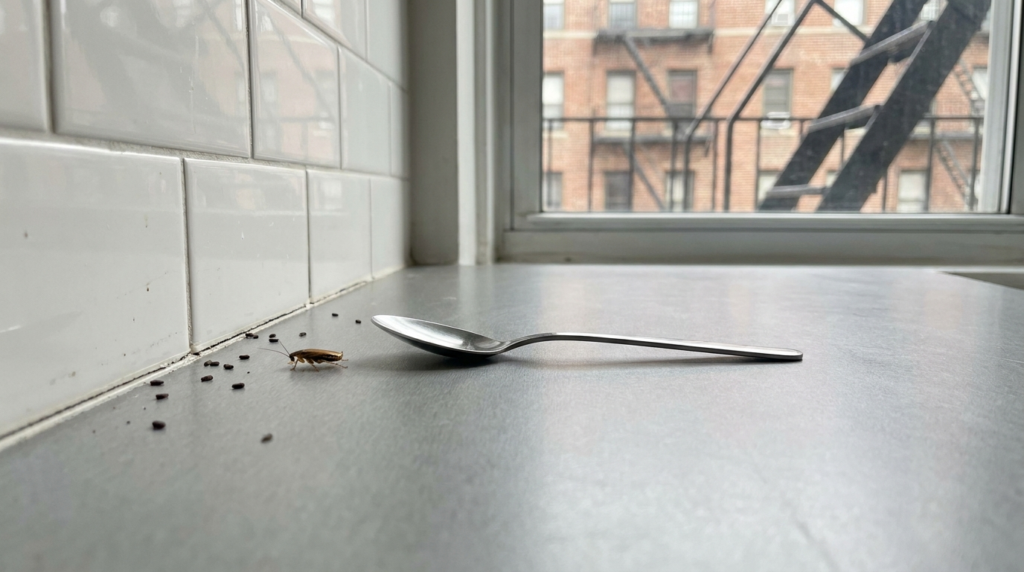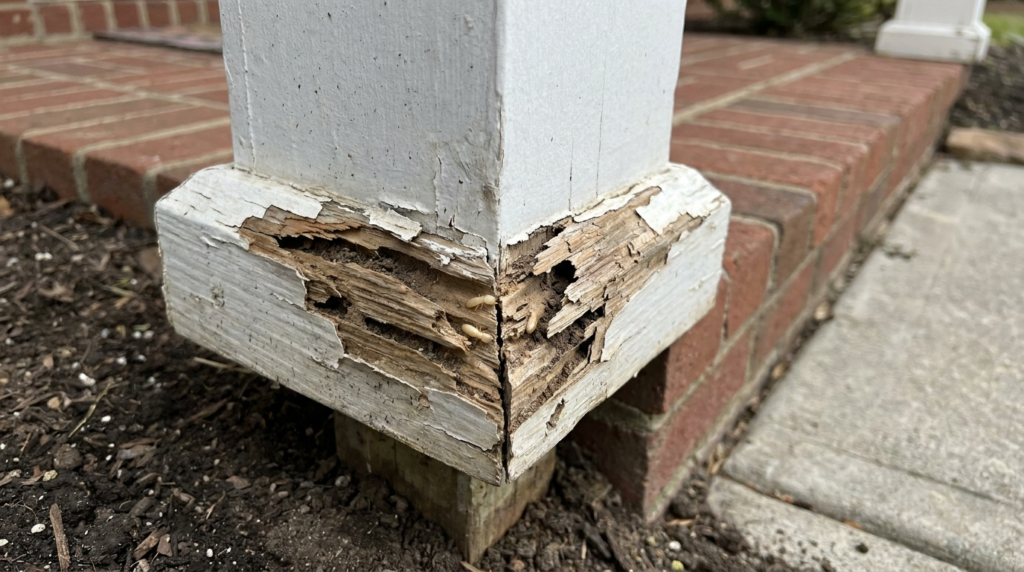
Managing an apartment building in Brooklyn means a pest problem is never one apartment’s problem. A complaint from 4R lands on your desk, the porter says the compactor room has been bad since the heat came on, and the owner wants to know what the vendor is for. The buildings that stay quiet are not the ones spraying hardest; they are the ones running an actual program.
A vendor comes when you call. A property management pest control program is the standing set of inspections, treatments, repairs and records that keeps the call from happening. We have serviced New York City apartment buildings since 1999, many of them Brooklyn’s prewar walk-ups and brownstones, and the difference shows up in the complaint log within a season.
This guide is written for the owner and manager side: program scope, unit access, what the City requires of you, and what you have to show HPD. The case for treating a whole building at once rather than one apartment at a time is already made in our guide to whole building roach treatment in Brooklyn, so this one does not re-argue it.
Managing a Brooklyn Building With a Pest Problem?
We have serviced NYC apartment buildings since 1999, including the garbage chute fogging and dusting most vendors skip. Free inspection.
What Should a Brooklyn Building Wide Pest Control Program Include?
Ask three vendors what they would do for your building and you get three visit schedules. A schedule is not a program. A program is a cycle — inspect, treat, then monitor to confirm it held — the same loop New York State lays out in its landlord and tenant guide to pest management. A building wide program in Brooklyn covers six things:
- Scheduled service on a fixed cadence, with the cellar, compactor room and refuse areas worked every visit and apartments on a rotation, not only on complaint.
- A documented inspection of every unit at least once a year, which is also the legal floor in New York City.
- Monitoring in the common spaces where activity turns up first: compactor room, boiler room, cellar, bulk storage, mail room.
- Exclusion and repair work — sealing pipe penetrations, door sweeps on doors to hallways and basements, and fixing the leaks that keep an apartment attractive whatever gets applied in it.
- Treatment at unit turnover, the piece almost every building skips and the one that changes the most.
- A written record of all of it, dated, per unit and per common area.
Notice how little of that list is spraying. The City requires owners to address an infestation with integrated pest management rather than a standing chemical schedule, and the named practices are mostly physical: HEPA vacuuming nests and waste, sealing cracks, cutting off water, fitting door sweeps, pesticides sparingly and only through a licensed applicator. A monthly spray with none of that around it is the most common failed program we get called in to replace.
Pricing stays out of this guide on purpose; it turns on unit count, age and condition, and we break it out in our breakdown of what commercial pest control costs across NYC. Mixed use and non residential properties run the same model through our commercial pest control services.
How Do Brooklyn Property Managers Coordinate Access to Treat Every Unit?
Access has nothing to do with pests and decides whether the program works. A sweep that reaches half the doors is a partial treatment you pay for twice. What works on the Brooklyn buildings we service:
- Notice people actually read. Lobby, elevator, under every door, and through whatever portal the building already uses. Give the notice your lease and house rules require, and then some.
- Two passes, not one. Schedule the sweep, then rebook the missed units for a second date the same week, offering a morning or afternoon window. Night shift workers and dog owners are most of the no access list.
- A named escort. The super or a porter walking the floors with the technician opens more doors than any notice, and somebody from the building sees what we see.
- The access protocol in writing. Who holds keys, who authorizes entry, what the rules allow. In a co-op the board sets those house rules and the managing agent works inside them. What entry your lease permits is a question for your counsel.
- The languages the building reads. A notice only in English, in a building where half the tenancy reads something else, produces exactly the no access list you would expect.
One constraint matters before anyone improvises. In New York, pesticide applications for hire must be made by employees of a business registered with the state DEC, and the State is explicit that contractors or consultants cannot make or supervise them. Its landlord guide adds the other half: an application in an occupied apartment is not work for an unlicensed landlord, manager or superintendent. The handyman cannot cover a missed unit with a can from the hardware store.
We track how many units we got into on every sweep and report that number back. Buildings that reach nearly every apartment on the first pass stop having the same three problem units.
What Does a Brooklyn Landlord Have to Do to Control Pests by Law?
The disclaimer first: we run pest programs, we are not attorneys, and nothing here is legal advice. What follows is what the City and the State publish, with the source on each claim; your counsel applies it to your building.
Ask who is responsible for pest control on a national landlord forum and the answer comes back as whatever the lease says, which in Florida or North Carolina is a reasonable starting point. In New York City it is not, because the duty is written into the housing code and read into the lease by statute rather than negotiated inside it.
Local Law 55 of 2018. HPD states it plainly: Local Law 55 requires owners of buildings with three or more apartments to keep their tenants’ apartments free of mold and pests. The duties HPD lists under it include:
- Annually inspect units for indoor allergen hazards such as mice, cockroaches, rats and mold, and respond to complaints from tenants or from HPD.
- Remediate infestations using integrated pest management, following the work practices in Section 27-2017.9 of Local Law 55 and 28 RCNY 54-04: HEPA vacuum removal of nests and waste, sealing holes and cracks, eliminating water sources, and door sweeps on doors to hallways, basements or outside.
- Use pesticides sparingly, and only through a pest professional licensed by the New York State Department of Environmental Conservation, per Administrative Code section 27-2017.8 as HPD cites it.
- Make sure vacant apartments are cleaned and free of pests and mold before a new tenant moves in.
- Provide the Local Law 55 fact sheet and a notice with each tenant’s lease.
The warranty of habitability. Separately from the housing code, New York Real Property Law section 235-b deems every written or oral residential lease to carry a warranty that the premises, and the areas used in common with other tenants, are fit for human habitation. The statute also carries a carve-out: where a condition has been caused by the misconduct of the tenant or of persons under the tenant’s direction, it “shall not constitute a breach” of that warranty. That carve-out is real and it is not yours to apply — whether an infestation meets the bar is decided by a court, on evidence, long after the complaint. The practical answer for a manager is to treat first and sort out cause with counsel second.
What none of it decides is service cadence. The annual inspection in Local Law 55 is a legal floor, not a treatment schedule. Our own recurring apartment programs run monthly, which is a judgment about how buildings behave, not a citywide standard or a number the code sets.
How Do Brooklyn Property Managers Prevent Roaches in Garbage Chutes?
The garbage chute is the hardest working surface in the building and the one nobody has looked inside in years. Every day it takes wet food waste down a warm column, and some of it stays behind — on the barrel wall, the hopper door frames, and the seam where the chute discharges into the compactor. In prewar Brooklyn buildings the barrel is often a former incinerator chute whose rough masonry holds residue in a way smooth steel never does.
Chute and compactor work is a specialty of ours, and it is more than spraying the room out. What actually gets treated:
- The full length of the chute barrel, fogged from the top so the material carries the whole column, not just the section a wand reaches.
- Every hopper door on every floor — the door, the frame, the hinge side, and the void behind it, where the German cockroach population sits.
- The discharge and the compactor: the bottom of the chute, the compactor base and rails, and the gap underneath that never gets swept.
- The compactor room floor, drain and wall junction, with a residual band of Suspend where the floor meets the wall, plus a door sweep into the corridor.
- Bulk and recycling storage, often the same room or the one next door.
Two things separate a chute treatment that holds from one that does not. Sequence: a chute has to be cleaned before it is treated, because product over a greased surface goes nowhere, so the porter’s wash down and the pest visit belong in the same week, in that order. Cadence: chute and compactor work rides on the recurring schedule instead of being ordered as a one off after a complaint, and steps up in summer when the room runs warm.
The compactor room is also the building’s best early warning system for rodents. We run tamper resistant stations there with First Strike soft bait, placed and mapped, not dropped in a corner, and never leave loose bait in a room your staff works in. When the stations take hits you know weeks before anyone in an apartment sees anything, and what early rat activity looks like in a Brooklyn building covers the signs your porters should report. If roach pressure is already into the apartments, cockroach control built for multi unit buildings takes over from a general service visit.
How Should Brooklyn Property Managers Treat a Vacant Apartment Between Tenants?
This section starts with the law, because most owners do not realize this is a requirement rather than good housekeeping. Among the duties HPD lists for owners under Local Law 55 is this one, word for word: “Make sure vacant apartments are thoroughly cleaned and free of pests and mold before a new tenant moves in.” That is the vacant apartment condition the City spells out, not a nice to have that gets skipped when the paint schedule slips.
Now the operational half, which is a separate argument. The City wrote that rule as a health and habitability measure. What it lines up with is the best moment in the life of an apartment to do real pest work: the moment nobody is living in it.
Almost everything that makes in-unit treatment hard is a person. An occupied apartment means a prep negotiation, furniture in the way, a resident asking when the kids can come back, and a re-entry window. An empty one has none of that. For a few days between leases you can pull the range, drop the dishwasher panel, take the cover plates off, open the wall voids at the plumbing chases, and treat the parts of an apartment that are otherwise out of reach.
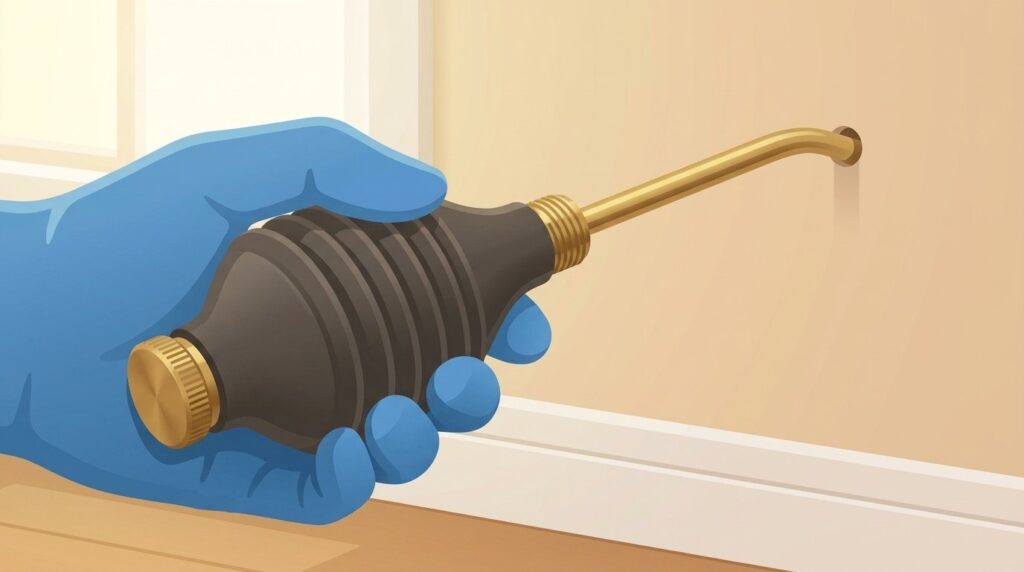
That is the work we are there to do. Wall void drilling and dusting is our differentiator on multi unit buildings: small holes at the kitchen and bath chases, tracking powder and Tempo Dust worked into the voids where German cockroaches and mice genuinely live, then patched closed behind us. Material placed inside a void stays where it was put, instead of being wiped off a baseboard by the second week of a new tenancy.
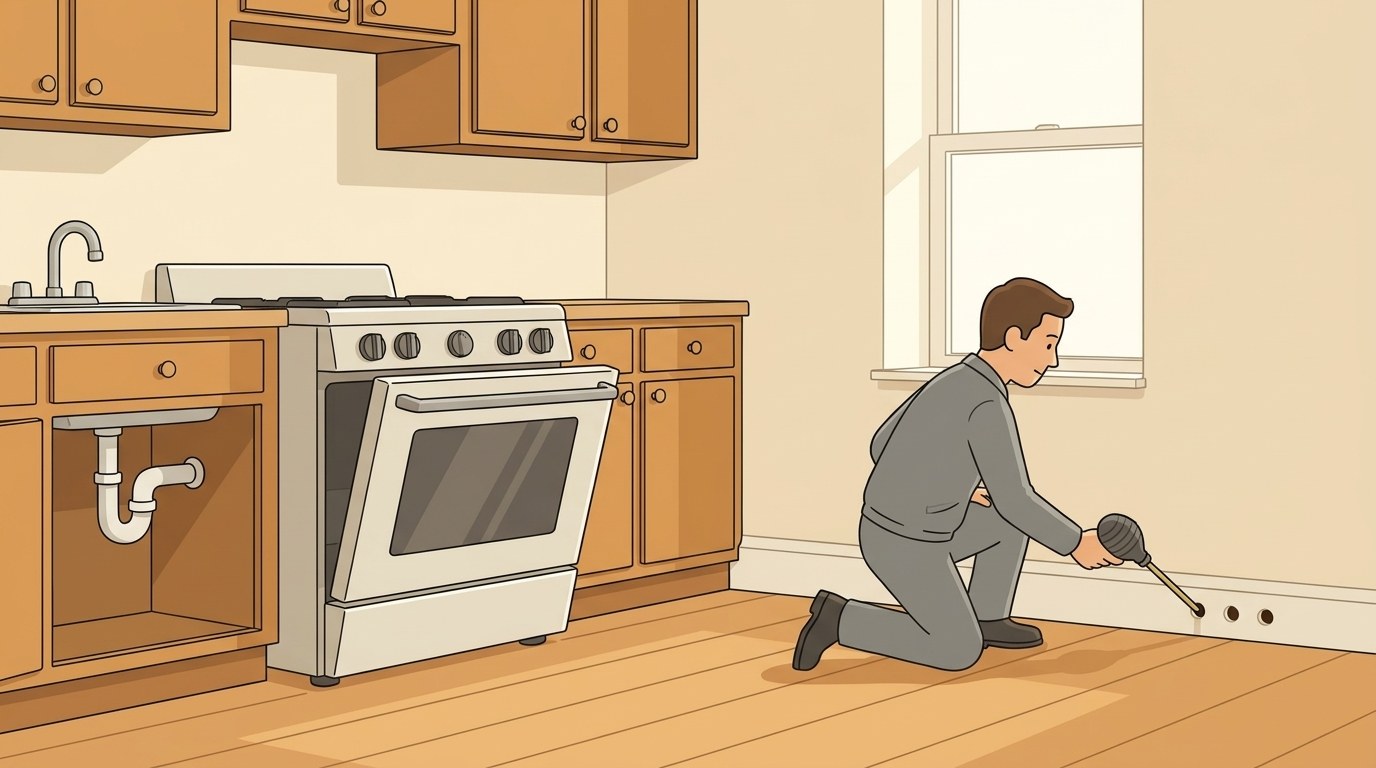
A turnover visit that earns its place looks like this:
- Inspect before the trades arrive. Pull the range and refrigerator, drop the dishwasher kick panel, open the sink base, check the hinge side of every cabinet door, look behind loose baseboard and at the outlet plates. What turns up tells you what the last tenancy lived with, which is rarely what the complaint log recorded.
- Treat while the walls are still open. Sequence matters more than anything else here: pest work belongs after demolition and plumbing, while penetrations are exposed, and before the walls are closed and painted. A building that runs it the other way pays to open the same voids twice.
- Close the apartment up. Seal the pipe penetrations under the sink and behind the toilet, the gap where the tub meets the wall, and the open cabinet corners, then fit a door sweep. Exclusion in an empty unit takes a fraction of the labor it takes around furniture.
- Document it. Date, unit, what was found, what was applied and where, and a photo set before the walls close. That record is what lets you state the apartment’s condition at move in, and it feeds the HPD-facing file below.
Do not let the two halves blur together. The vacant unit rule was written as a habitability requirement, not as an efficiency argument for owners, and we are not claiming the City had turnover economics in mind. Both are true at once: it is an obligation, and it is the highest leverage visit in the program. In our experience, buildings that use every turnover this way stop appearing on the same problem unit list quarter after quarter; the ones that treat turnover as a paint job keep buying the same treatment every season.
Turning Over a Unit in Your Brooklyn Building?
We have worked NYC apartment buildings since 1999, drilling and dusting wall voids while the apartment is still empty. Free inspection.
How Do Brooklyn Managers Get Tenants to Prepare for Pest Treatment?
Every treatment plan in a multi unit building runs into the same wall: a technician can only work with the apartment as it is presented. Cornell’s StopPests in Housing program frames it well — its project coordinator, Susannah Reese, describes the aim as “a team approach where everybody has a role to play.” In a Brooklyn building that team is you, the super, the porters, the residents and us — and the residents have the least incentive.
What buys cooperation:
- A prep sheet that fits on one page, in the languages your building reads, written for somebody skimming it in a hallway.
- Ask for less prep. The bag everything, empty every cabinet, move every stick of furniture routine belongs to an era of spraying baseboards; bait and void led work needs far less. An unreasonable prep list is the surest way to turn an apartment into a no access.
- Be exact about time. Residents want to know when they can come back in with a child or a pet. That sits on the product label; put it on the sheet.
- Do the building’s half first. If the work order shows a leaking trap or a gap at a pipe chase, close it before the visit. Nothing costs cooperation faster than a resident who prepped and watched the same problem come back.
Two situations need different handling. Clutter at hoarding levels is not a prep problem and no prep sheet will fix it; that is a social services and legal conversation before it is a pest visit. A resident who refuses entry outright goes onto the no access log with the date and the notice attached, which makes it a documentation question. And one habit beats all of it: tell the building what was found and what happens next, because cooperation on the second sweep tracks almost exactly with whether anybody heard a word after the first.
What Pest Control Records Should a Brooklyn Building Keep for HPD?
Records are not administrative overhead in a New York City building; they are what lets you close a violation. HPD treats mice, rats and cockroaches in a dwelling unit or common area as immediately hazardous, and its schedule gives a Class C violation 21 days from the date of service to correct. Twenty-one days is not long to go looking for a file.
It matters who holds that file. HPD’s rules state that only an owner, a managing agent, an officer of the corporation that owns the property, or the party otherwise responsible listed on the property registration may certify a violation corrected. If you are the managing agent, that certification is yours to sign, so the evidence behind it has to be something you can reach on the day. What we keep on every building:
- A dated service report for every visit, per unit and per common area, showing what was found, what was applied, where, and by whom.
- The annual inspection record for each apartment, which is the Local Law 55 duty in paper form.
- The no access log — unit, date attempted, the notice given, and the date of the second attempt.
- Work orders for the physical corrections: sealing, door sweeps, leaks, with completion dates. Integrated pest management is mostly repairs, so the repair record is a pest record.
- Turnover records: what was found in the vacant apartment, what was treated, and the photographs taken before the walls closed.
- Proof the Local Law 55 notice and fact sheet went out with leases, and your vendor’s licensing kept current in the same file.
Keep it per apartment, not only per building: HPD’s own violation language points at a dwelling unit or a common area, and that is the level a certification speaks to. How long to retain the file is a question for your counsel.
The Bottom Line for Brooklyn Property Managers
Controlling pests building wide is less about what gets applied than whether the same handful of things happen every month. The program covers the whole property, not only the apartments that complain. Access is the hard part, and it is logistics rather than pest control. The City’s floor is an annual inspection of every unit, integrated pest management instead of a standing spray schedule, and a licensed applicator on any product — with your counsel telling you how that reads against your building.
The chute and the compactor room are the engine room; treat them on a schedule rather than after a complaint. And the vacancy between tenants is where a building gets ahead, because it is the one window when the walls open without a negotiation and the City already expects the apartment turned over free of pests.
We cover pest control across every Brooklyn neighborhood, from walk-ups in Bay Ridge to brownstones in Bed-Stuy and the garden apartment complexes further east, mostly apartment buildings, co-ops and mixed use properties. If your building is on its third vendor in five years, the problem is usually the program and not the product.