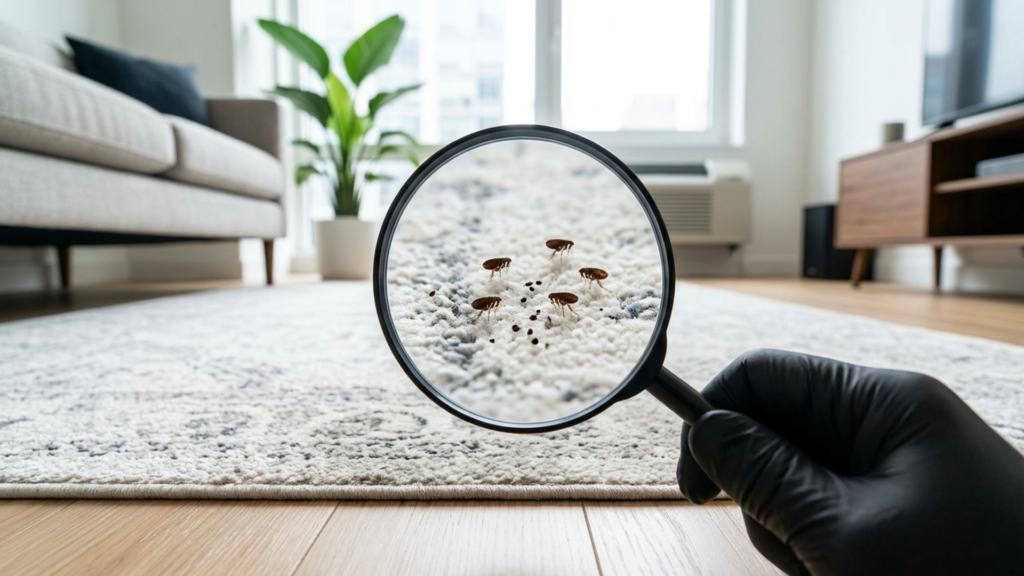
Think you need a pet to get fleas in New York City? Think again. Thousands of NYC renters discover flea infestations every year—often in apartments where no animal has lived for months. Whether you’re waking up with mysterious bites on your ankles, spotting tiny dark specks on your couch cushions, or your dog won’t stop scratching after a walk in Prospect Park, this guide will help you identify the signs of fleas in NYC, understand what you’re dealing with, and take the right steps to reclaim your apartment.
Fleas in your NYC home?
26+ years on NYC flea work. Targeted yard and indoor treatments that break the egg-to-adult cycle, kid-friendly and pet-friendly products, no annual contracts.
What Do Fleas Look Like and How Do You Identify Them in a NYC Apartment?
Identifying Adult Fleas by Sight
Adult fleas are reddish-brown, wingless, and roughly 1–3mm long—about the size of a sesame seed. Their bodies are laterally flattened, which makes them perfectly built for slipping through fur and fabric fibers.
What makes them tricky to identify is their ability to jump up to 13 inches, which means you’ll often catch just a flash of movement before they disappear. To confirm what you’re seeing, place a white sheet of paper near a suspected area and use a magnifying glass. A resource from the University of Maryland on identifying common household insect pests can help you distinguish fleas from other tiny invaders commonly found in NYC homes.
Recognizing Flea Dirt (Flea Feces)
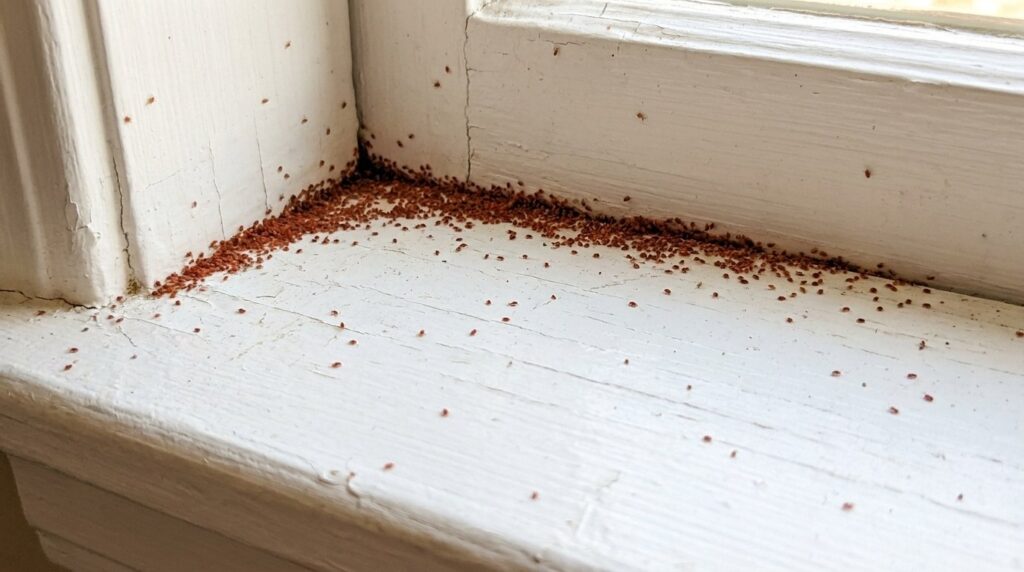
Flea dirt looks like tiny black pepper flakes, and you’ll typically find it on pet bedding, upholstered furniture, carpet edges, and along baseboards. It’s often the very first visible sign of an infestation—sometimes appearing weeks before you spot a single live flea.
Here’s the definitive test: place the suspicious specks on a damp white paper towel. If they dissolve into reddish-brown streaks, you’re looking at digested blood—confirmed flea dirt. Regular debris won’t change color.
Spotting Flea Eggs and Larvae in Your Home
Flea eggs are oval, white, and nearly microscopic at about 0.5mm. They fall off pets or hosts and settle into carpet fibers, couch cushions, and the cracks in hardwood floors that are so common in NYC apartments.
Larvae are translucent, worm-like, and light-averse—meaning you’ll need to search dark, undisturbed areas like under furniture, along baseboards, and beneath area rugs. Here’s the alarming math: a single female flea lays up to 50 eggs per day, so even a handful of adult fleas can produce thousands of eggs hidden throughout your apartment within weeks.
Are Those Flea Bites or Bed Bug Bites on Your Skin?
How to Identify Flea Bites on Humans
Flea bites typically appear as small, red, itchy bumps surrounded by a slight halo, often grouped in clusters of three or four. Pest professionals sometimes call this the “breakfast, lunch, and dinner” pattern.
The key giveaway is location: bites concentrate on the lower body—ankles, feet, and lower legs—because fleas jump from floor level. The University of Rochester Medical Center provides clinical descriptions of flea and mite bites that can help you determine when to seek medical attention.
NYC-Specific Guide: Flea Bites vs. Bed Bug Bites
This distinction is critical for NYC renters who frequently encounter both pests. Bed bug bites tend to appear on the upper body, arms, neck, and face in linear rows, while flea bites cluster on the lower extremities.
Bed bugs also leave larger, flatter welts that may take days to appear. Flea bites are smaller, more immediately itchy, and often have a visible puncture point at the center. If you’re unsure, inspect your mattress seams for bed bugs and your carpet and furniture for flea dirt—misidentification leads to wasted money on the wrong treatment. If bed bugs seem more likely, our guide on getting rid of bed bugs in Queens walks through identification and treatment steps that apply across the city.
Health Risks and Allergic Reactions from Flea Bites
Flea bites can trigger flea allergy dermatitis (FAD) in both humans and pets, leading to intense itching, secondary skin infections from scratching, and hair loss in animals. The AVMA’s overview of external parasites in pets covers how fleas and related pests affect animals, and some people barely react while others develop severe welts from a single bite.
Fleas are also known vectors for murine typhus and tapeworms—especially concerning for pets and young children. While serious disease transmission is rare in NYC, individuals with compromised immune systems or small children should consult a healthcare provider if bites become infected or symptoms worsen.
How Do NYC Apartments Get Fleas Without Any Pets?
Fleas from Previous Tenants and Dormant Pupae
This is the scenario that catches most NYC renters completely off guard. Flea pupae—cocoons—can remain dormant in empty apartments for six months or longer, protected inside a sticky, nearly indestructible silk casing that resists vacuuming and chemical sprays.
When new occupants move in, the vibrations, warmth, and carbon dioxide from their bodies trigger a mass emergence. That’s why so many renters discover fleas within days of moving into a seemingly spotless apartment. Before signing a lease, inspect carpets, closets, and baseboards carefully, and request a professional flea treatment from the landlord if the previous tenant had pets.
Wildlife and Neighboring Units as Flea Sources
NYC buildings often harbor mice, rats, raccoons, squirrels, and feral cats in crawl spaces, basements, walls, and alleyways—all of which carry fleas that can migrate into your living space. In multi-unit buildings, fleas can travel from a neighboring apartment through shared walls, hallways, and even ventilation systems.
Ground-floor and basement apartments in older NYC buildings—especially pre-war walk-ups—are at the highest risk due to proximity to wildlife entry points and soil-level access. Suburban yards carry the same risk from deer, rabbits, and stray cats, which is why we field steady requests for flea control on Long Island across Nassau and Suffolk. Your neighbor’s pet problem can absolutely become your problem, even if you’ve never owned an animal.
NYC-Specific Flea Seasonality and Urban Risk Factors
Flea season in NYC typically peaks from late spring through early fall (May–October), though heated apartments can sustain flea populations year-round. The city’s urban density, high tenant turnover, and abundance of shared-wall living create ideal conditions for flea transmission between units—even in buildings with strict no-pet policies.
Climate trends toward warmer, more humid summers in the Northeast are also extending flea season and increasing urban flea activity. This isn’t a problem that’s going away on its own.
Fleas in your NYC home?
26+ years on NYC flea work. Targeted yard and indoor treatments that break the egg-to-adult cycle, kid-friendly and pet-friendly products, no annual contracts.
How Do You Confirm a Flea Infestation and Gauge How Bad It Is in Your NYC Apartment?
Before you spend a dollar on treatment, confirm you are actually dealing with fleas and get an honest read on how far they have spread. Two free tests do most of the work.
The white-sock test. Pull on a pair of tall white socks and shuffle slowly across your carpets and rugs, especially near where a pet sleeps or where you have felt bites. Fleas are drawn to the movement and warmth and jump onto the light fabric, where their dark bodies are easy to spot. A couple of hitchhikers means a light problem; a sock speckled within a minute means a heavy one.
The flea-dirt check. Run a damp white paper towel along baseboards, pet bedding, and carpet edges. Flea dirt looks like coarse black pepper, but because it is digested blood it smears rust-red on the wet towel, while ordinary dirt stays black. Rust-red specks confirm fleas are breeding nearby, not just passing through on a visitor.
While you are down there, check the classic harborage zones: the seams of upholstered furniture, the carpet along the walls, gaps in hardwood, and anywhere a pet rests. Adult fleas are only the tip of the iceberg. For every one you see, dozens of eggs, larvae, and cocooned pupae are tucked into the fibers around it, which is why a light problem becomes a heavy one so quickly in a warm apartment.
Once you have confirmed fleas and know which rooms are hot, the full removal sequence, treating your pet, the apartment, and the flea life cycle at the same time on the right eight-to-twelve-week timeline, is laid out step by step in our guide to getting rid of fleas in a NYC apartment.
What Are Your Rights as a NYC Tenant When Your Landlord Won’t Address Fleas?
NYC Landlord Obligations for Pest Control
Under NYC Housing Maintenance Code, landlords are required to maintain apartments free of pests and vermin. Fleas generally fall under this obligation, especially when the infestation predates your tenancy or originates from building conditions like wildlife or neighboring units.
If fleas are present when you move in or result from building-wide issues, the landlord is typically responsible for professional extermination—not just a single spray, but effective follow-up treatment. Residents across the city can access flea control services to address infestations professionally, whether they’re arranging treatment themselves or coordinating with a landlord.
Documenting the Infestation and Filing Complaints
Photograph everything: flea bites on your body, flea dirt on surfaces, live fleas captured on tape, and any correspondence with your landlord. Submit a formal written complaint via email or certified letter to create a paper trail.
If your landlord refuses to act or sends ineffective treatment, file a complaint through NYC 311’s pest complaint portal. This creates an official record and can trigger an HPD inspection that compels your landlord to act. Residents dealing with persistent issues in specific boroughs can also look into flea treatment in Brooklyn, flea control in the Bronx, flea control in Queens, or flea control on Staten Island for localized help.
When to Hire a Professional Exterminator Yourself
If your landlord remains unresponsive after documented requests and a 311 complaint, you may need to hire a licensed pest control professional and potentially deduct the cost from rent—but consult a tenant rights organization before taking that step.
Professional exterminators use IGR (insect growth regulators) combined with adulticides that target all flea life stages, which is far more effective than any single DIY method. Harvard Health’s guide on removing fleas and protecting your home outlines what to expect from professional treatment, and residents in lower Manhattan can explore flea control in New York County for local options.
How Can You Prevent Fleas from Coming Back to Your NYC Apartment?
Ongoing Home Maintenance and Cleaning Habits
Vacuum high-risk areas—carpets, rugs, upholstered furniture, baseboards—at least twice per week as a preventative measure, especially during peak flea season from May through October. Consistency is what separates people who beat fleas from those who get reinfested.
Wash pet bedding and throw blankets weekly in hot water, and consider these housekeeping tips for preventing fleas for a comprehensive cleaning routine. Seal cracks in baseboards, around pipes, and near windows to reduce entry points for fleas carried by mice or other wildlife in your building.
Pet Protection Strategies for NYC Pet Owners
Keep pets on year-round flea prevention medication as recommended by your veterinarian—NYC’s heated apartments mean fleas can survive indoors even in January. Cornell University’s guide to flea and tick prevention provides evidence-based recommendations for choosing the right product.
Understand that preventative medications kill fleas after they bite your pet but don’t create a force field—you may still see fleas on treated pets during heavy exposure, which is normal. After walks in NYC parks, grassy areas, or community gardens, check your pet’s belly, inner thighs, and neck for fleas before entering your apartment. Residents concerned about related parasites should also be aware that tick control in New York County can address overlapping pest issues.
Building-Level Prevention for Multi-Unit NYC Living
Communicate with neighbors and building management about flea sightings—effective flea control in apartment buildings often requires coordinated treatment across multiple units. Beyond Pesticides’ ManageSafe™ resource on flea management outlines least-toxic approaches that work well in shared living environments. A single untreated apartment can reinfest an entire floor.
Request that building management address wildlife entry points like rodent holes, gaps in basement walls, and unsealed crawl spaces, as these are ongoing flea sources. If you’re moving into a new NYC apartment—especially one where previous tenants had pets—request a professional flea treatment before move-in day and vacuum thoroughly upon arrival to trigger any dormant pupae. For Manhattan residents, flea control in Manhattan can handle pre-move-in treatments, and those worried about misidentifying their pest problem may also want to consider bed bug control in Manhattan to rule out other culprits.
Ready to Take Back Your NYC Apartment from Fleas?
You don’t need a pet to get fleas in NYC—previous tenants, neighbors, and building wildlife are common sources, and dormant pupae can survive in empty apartments for over six months. Proper identification is everything: confirm you’re dealing with fleas (not bed bugs), look for flea dirt, check lower-body bite patterns, and inspect carpets and furniture thoroughly.
Elimination takes 2–3 months of consistent effort across all flea life stages. There are no overnight fixes, but a disciplined approach absolutely works. Start with the 48-hour emergency response plan: vacuum everything, wash all fabrics in hot water, and treat pets immediately.
Document everything and know your NYC tenant rights—your landlord has legal obligations to address pest infestations, and NYC 311 is your resource when they don’t. For persistent or severe infestations, professional flea control is the most reliable path to elimination across all five boroughs. You didn’t invite these pests in, and with the right plan, you can make sure they don’t stay.