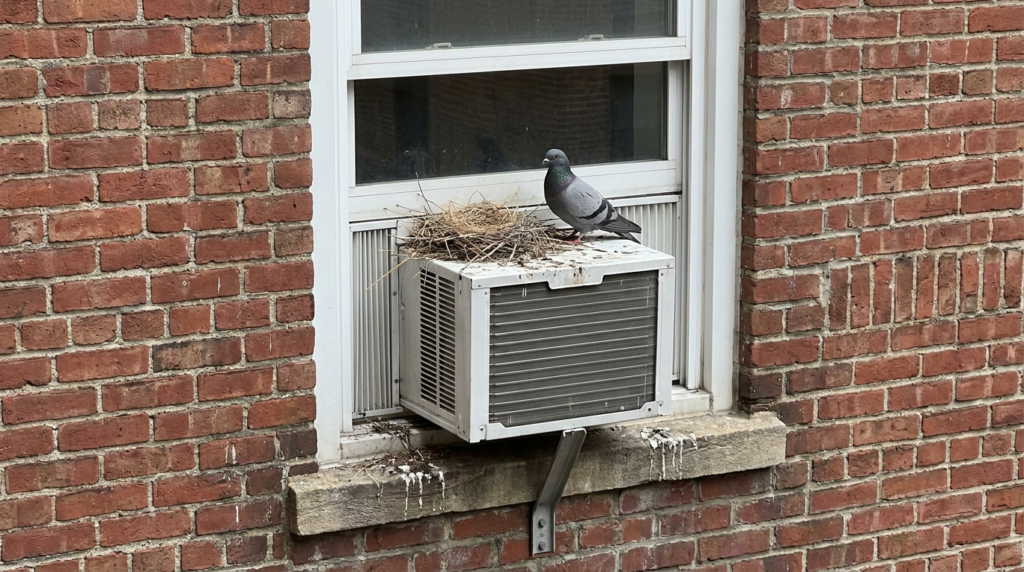
You wake up with new itchy bumps. For weeks, pigeons have been cooing and shuffling on top of your window AC unit. A friend says bed bugs. A thread online says bird mites. Before you strip the bed or throw anything out, find out which one you’re dealing with.
The short answer: bird mites can be what’s biting you in a Manhattan apartment, and if pigeons have been at your window, that is the first place to look, though not the only one. Bird mites are parasites of birds, and the evidence that points to them sits outside the glass as much as on your skin. Below, the clues come in order: what the bites can tell you, where the mites come from on a window unit, how they differ from bed bugs and rat mites, when renters spot them, whether they move into beds, and why the nest comes first.
Two things up front. If the trail ends at bed bugs, mice or rats instead, those are pests we treat as part of our pest control in Manhattan. And if you keep feeling bitten but no mite or bug is ever found, Penn State Extension’s advice, covered in the first section below, is to see a doctor.
Mystery bites in your Manhattan apartment?
We treat bed bugs, mice and rats, and we waive the inspection fee when you have the work done.
How Can You Tell Bird Mites Are Biting You in a Manhattan Apartment?
Not from the bites alone. You tell by finding the mites and finding the birds. The bites are the reason to start looking, not the answer.
Here is what the bites usually look like. Washington State University’s Pestsense fact sheet on bird mites says the bites usually occur at night and leave small, irritating, itchy or painful pimple-like bumps. That description fits a lot of other biters too, which is the problem.
The bite on your arm can’t settle it. The U.S. Environmental Protection Agency’s page on how to find bed bugs says bites on the skin are a poor indicator of a bed bug infestation, and that bed bug bites can look like bites from other insects, like rashes, or even like hives. EPA is talking about bed bugs, but the logic runs both ways: a bite that can’t prove bed bugs can’t prove bird mites either.
What does point to bird mites is three clues showing up together:
- A nest near where you sleep or sit. On top of or under the window AC unit, in the opening around a through-wall unit, on the window ledge, or on a ledge in the air shaft.
- Timing. Bites that start around the time young birds leave that nest.
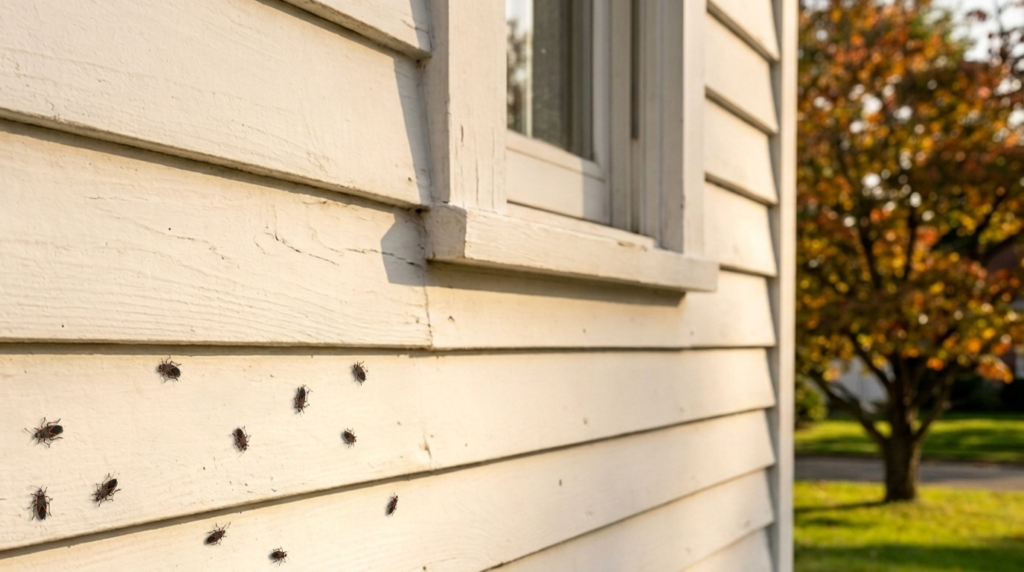
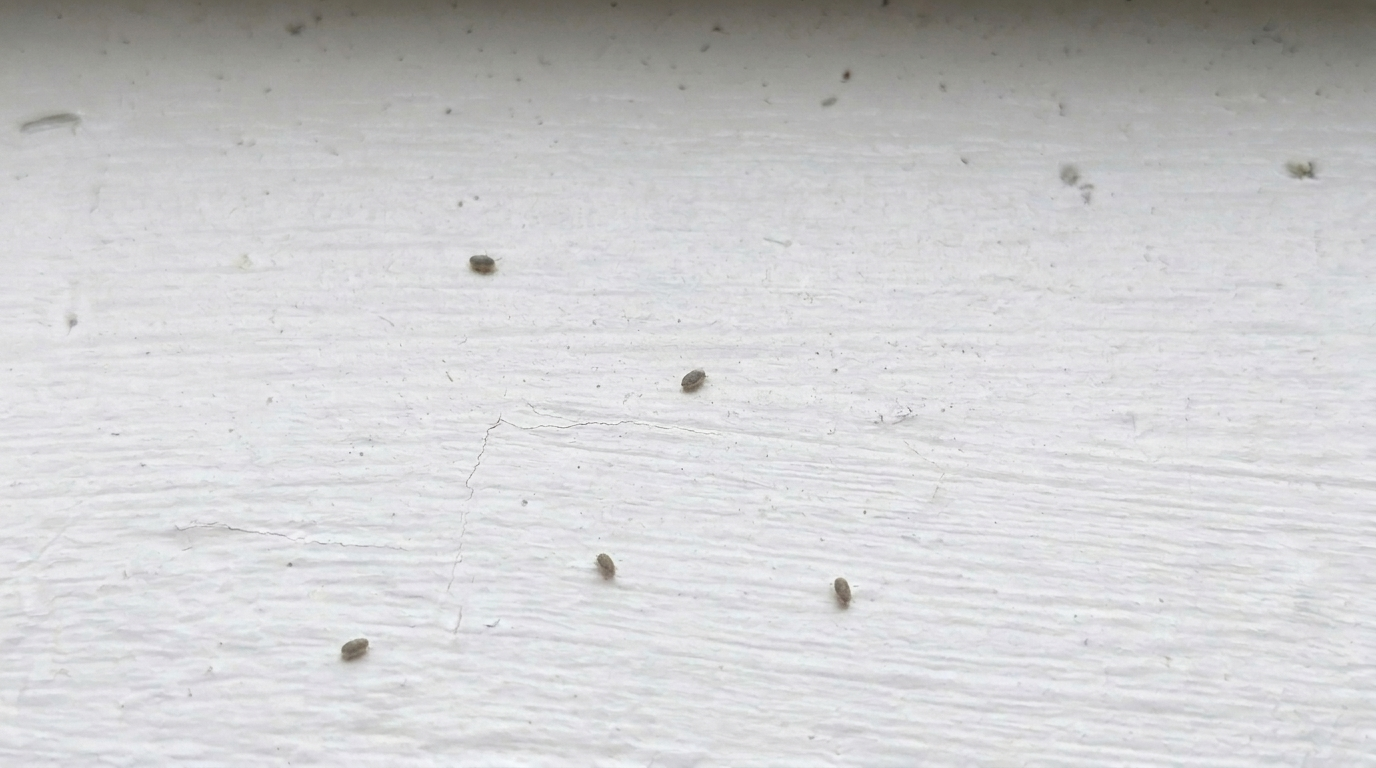
- Specks that move. Tiny crawling dots on the windowsill, on the wall under the window, or on the bedding closest to it.
One r/AskNYC thread shows what that looks like in practice. A renter with pigeons nesting on the window sill found mites all through that one room — on clothes, in the dresser, in the closet — while the rest of the apartment seemed clear.
Then there is the part that belongs to a doctor. Penn State Extension’s fact sheet Is Something Biting Me? notes that many people feel as though tiny creatures are biting or crawling on them, and that frequently the cause is unknown and “no tiny creature can be captured for analysis.” For people in that spot, its advice is to contact a family physician or dermatologist, describe the sensations, and bring a sample of what you think is biting you if possible. Nothing in this post replaces that visit.
The same fact sheet marks one rule as very important: “Until you have determined what is causing the condition, do not apply insecticides or repellents to household items, pets, or yourself.” Penn State says that doing so with no physical evidence of a specific arthropod “could worsen rather than improve your condition.”
Where Do Bird Mites Come From on Manhattan Window AC Units?
From a nest on or beside the unit. In the New York threads where renters describe a nest on their air conditioner, the bird is usually a pigeon, and to a pigeon a window unit is a ready-made ledge.
Cornell Lab of Ornithology’s All About Birds guide to the rock pigeon says pigeons nest on a nook, cranny or ledge on cliffs or buildings, often beneath eaves or an overhang, and that they reuse their nests many times without carrying away their nestlings’ droppings, so a flimsy platform of sticks grows into a sturdy mound over time. A unit that has hosted pigeons before may be holding an old, well-used nest, not just a new one.
The setup comes up again and again in r/nyc, r/AskNYC and r/NYCapartments threads. One poster came home after time away to find a pigeon nest with eggs on top of the window unit. Another poster’s property manager came to replace a through-wall unit and found young pigeons tucked in right beside it. Someone with a wall unit hears pigeons on or under its hood most days but can’t see or reach the outside of the building. Several of those threads raise bird mites before anyone mentions a single bite.
How the mites get from that nest to you is the part the University of Maryland Extension’s page on bird mites spells out: problems typically occur when nestlings leave the nest, the hungry mites leave in search of more birds, and from an outside nest they usually come down the wall and enter through window frames or other openings in the exterior wall.
A window AC unit sits in exactly that kind of opening. The edges of the accordion panels on either side, the seam where the lower sash rests on top of the unit, and any gap around a through-wall sleeve are all openings in the window frame or the exterior wall, right next to the nest. The same goes for any sheltered ledge near your window: the one over the next window, a cornice, a ledge in the air shaft of a pre-war walk-up.
How Do You Identify Bird Mites Versus Bed Bugs and Rat Mites?
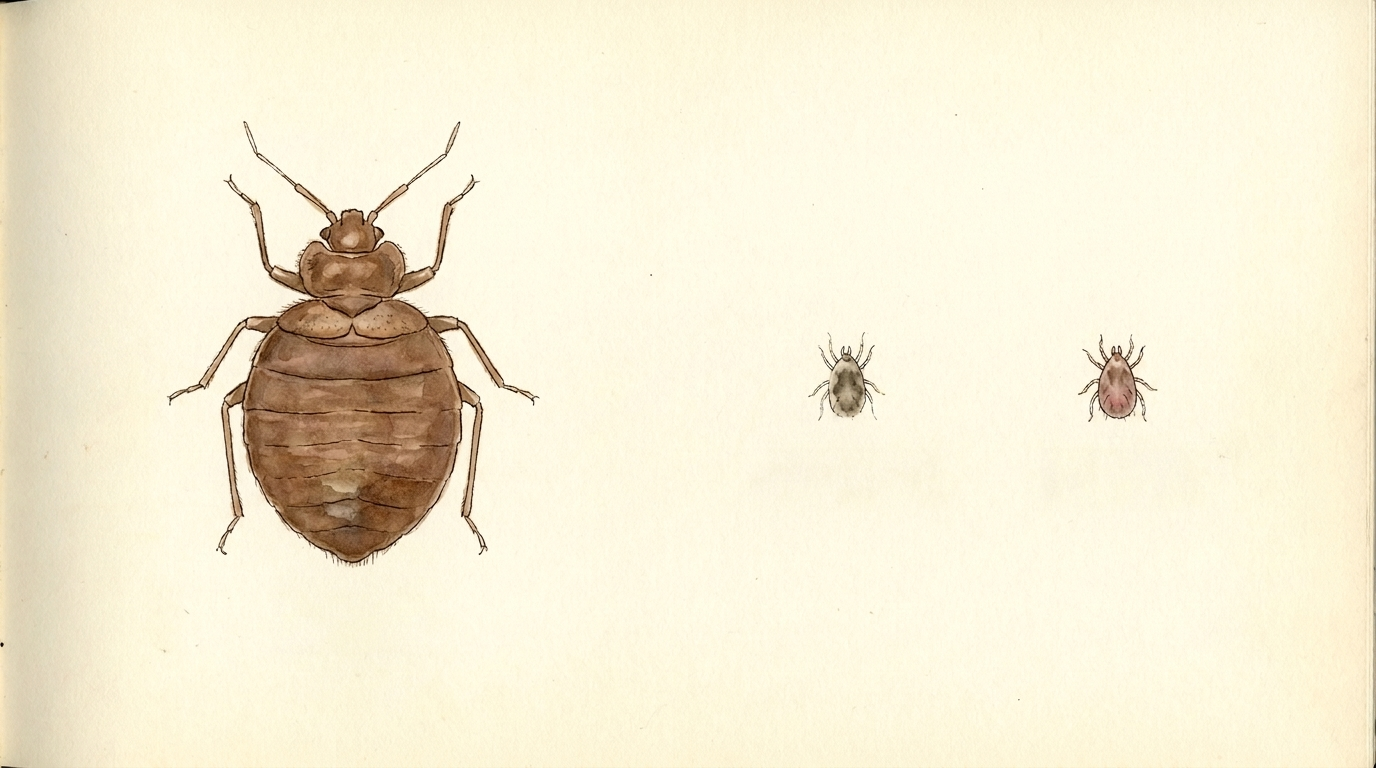
Size separates a bed bug from a mite. Context separates a bird mite from a rat mite. A specimen settles all three.
Bird Mites
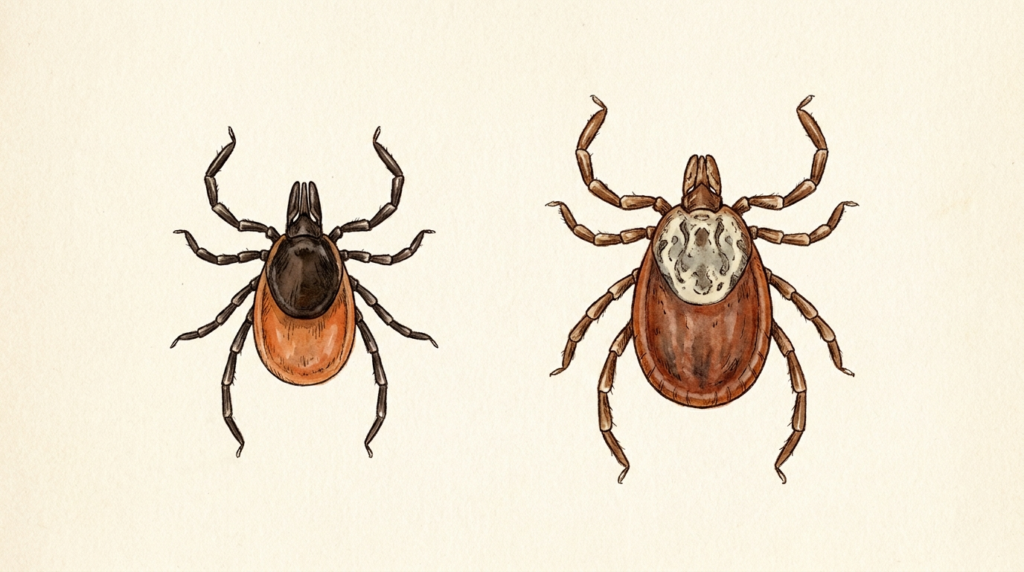
University of Minnesota Extension describes bird mites as parasites of birds that include pigeons, starlings and sparrows, and says they are very small, about 1/32 inch long, but visible to the naked eye, generally brownish or grayish, darker after feeding, and associated with bird nests on or in buildings. The context clue is the nest: birds on your unit, your ledge or the air shaft, and bites that began around the time the young birds left.
Bed Bugs
Bed bugs are the suspect many people jump to, and they are much bigger. Penn State Extension’s fact sheet describes them as oval, chestnut brown insects flattened from top to bottom, with adults about 1/4 inch long. That is big enough to see as a bug rather than a speck. The other signs to check for are covered in the post on signs of bed bugs in a Manhattan apartment. If the specimen is a bed bug, that is one of the pests we treat, and here is how our bed bug treatment works.
Rat Mites
Rat mites are the look-alike, and your eyes won’t help much. University of Minnesota Extension notes that bird mites and other mites found in homes can be difficult to tell apart without close examination and that correct identification is necessary for effective control; it suggests contacting a specialist for help identifying them. So the clue is the animal, not the mite.
Washington State University’s Pestsense fact sheet on tropical rat mites says that when their normal hosts are killed, the mites often travel long distances along pipes and wires in walls, and that they can continue to be a problem for up to two months after the rats are removed. In a Manhattan building, the pattern to watch for is a recent rat or mouse problem, or a recent round of rodent control, with no birds near your window. How rat mite bites get mistaken for bed bug bites is covered in this look at rat mite bites that pass for bed bug bites.
Fleas are their own question, and the post on signs of fleas in NYC apartments covers telling flea bites from bed bug bites. For all three suspects here, the practical takeaway is the same. A mite or bug you have actually caught is something a pest professional or a doctor can work with; a bite alone cannot tell you which pest it was.
When Are Bird Mites Easiest to Spot for Manhattan Renters?
Right after young birds leave a nest, on light-colored surfaces near the window they nested at. That is when the mites are on the move and out in the open.
Penn State Extension’s fact sheet says bird and rodent mites can become problems in buildings for short periods of time, particularly in the early summer when birds nest in holes of buildings or after infested rats have been removed, and that although small, these mites can be seen without magnification, especially when they walk across a light-colored surface.
So look where a white surface does the work for you: the windowsill, the wall under the window, the top of the radiator cover below it, the frame around the AC unit, and the pillowcase or sheet nearest the window. Moving specks against white paint or white cotton are the giveaway. Dust doesn’t walk.
If you can see the nest, you can also roughly read the clock. Going by the Maryland Extension’s account, the trouble typically starts when the nestlings leave, so a nest that has just gone quiet deserves a closer look at the sill than one with eggs still in it.
Still getting bitten in your Manhattan bed?
Call us and a real person answers, with same-day service during business hours.
Can Bird Mites Hide in a Manhattan Bed Once the Birds Are Gone?
They can wander into it, since that is where you are at night. What they can’t do is set up a breeding population on you.
University of Minnesota Extension is direct about it: bird mites can bite people but cannot reproduce on human blood, so they cannot create an ongoing infestation in a home, and northern fowl mites can live in the environment without a host for two to three weeks before they die without a bird-blood meal.
That figure is for the northern fowl mite, not every bird mite. Washington State University’s Pestsense fact sheet gives northern fowl mite adults up to three weeks off their host birds, but says chicken mites may survive up to eight months without a host. So a few weeks is a reasonable expectation for the northern fowl mite, not a promise for every bird mite, and bites that outlast it are a reason to get the mite identified.
That lingering is what the same r/AskNYC poster ran into: with the nest removed and the room sprayed, a few stragglers still showed up around the bed posts and the dresser.
For the stragglers, University of Minnesota Extension calls physical removal the most effective control when bird mites are found in homes: vacuum them or wipe them up with a moist cloth, and because vacuuming does not kill the mites, freeze or discard the vacuum cleaner bag to keep them from getting back in.
If bites keep coming after the nest is gone, get the bed checked for bed bugs, but keep bird mites on the list: going by WSU’s chicken mite figure above, a few weeks does not rule them out. Bed bugs are one of the pests we treat, and bed bug treatment in Manhattan is part of that. And if you keep feeling bitten but no mite or bug is ever found, Penn State Extension’s advice from the first section stands: see a family physician or dermatologist.
Why Should You Find the Nest Before Treating Bird Mites in Manhattan?
Because spraying an apartment won’t end a problem that is still being fed from outside. A University of California Agriculture and Natural Resources article written for pest professionals makes the point plainly — insecticides will not solve a biting mite problem if the primary hosts are still present — and adds that in multi-unit housing, the source of wandering mites may be in adjacent units, the hallway, stairwells or utility areas.
That second point is the Manhattan one. The nest may not be yours. It could be on the window unit one floor up, on a ledge in the shared air shaft, or on the cornice over your window. If your own unit is clean, look up and sideways before you look under the bed.
Iowa State University Extension calls finding and removing bird nests on or in a building, once they are no longer in use, the first step in bird mite control. In an apartment, that first step belongs to the building. The nest sits on the outside of it, so tell your landlord, super or managing agent what you have found and where, and ask for it to be removed once it is no longer in use. Leaning out of a Manhattan window to pull a nest off an air conditioner is not a renter’s job.
The city’s rules speak to the mess pigeons leave behind. NYC311’s page on pigeon droppings says property owners are required to clean up unsanitary pigeon conditions on or originating from their property, and it takes reports of unsanitary conditions caused by pigeons on window ledges, as long as you can give the property owner’s name and full address. If you plan to wipe droppings off your own sill in the meantime, read the precautions on NYC Health’s pigeon-related diseases page first.
Where we come in is what the nest can’t explain. If the specimen turns out to be a bed bug, or the bites trace back to rats or mice in the walls, those are pests we treat.
Your Next Step
Start at the window, without ruling out the bed. Until you know what is causing the bites, Penn State Extension’s rule from the first section applies: no insecticides or repellents on household items, pets or yourself.
- From inside, without leaning out, look at the outside of your window — on top of and under the AC unit, the ledge, the air shaft — for a nest or steady pigeon traffic.
- Look for moving specks on the sill and the wall under the window, and catch one if you can.
- Tell your landlord, super or managing agent about the nest, and report unsanitary pigeon conditions on window ledges through 311 if they aren’t dealt with.
- If you keep feeling bitten and no mite or bug is found, see a family physician or dermatologist as Penn State Extension advises.
- If the specimen is a bed bug, or the trail leads to rats or mice, call us.
Call us and a real person answers. We offer same-day service during business hours, and our technicians show up in uniform and put booties on before they come through your door.