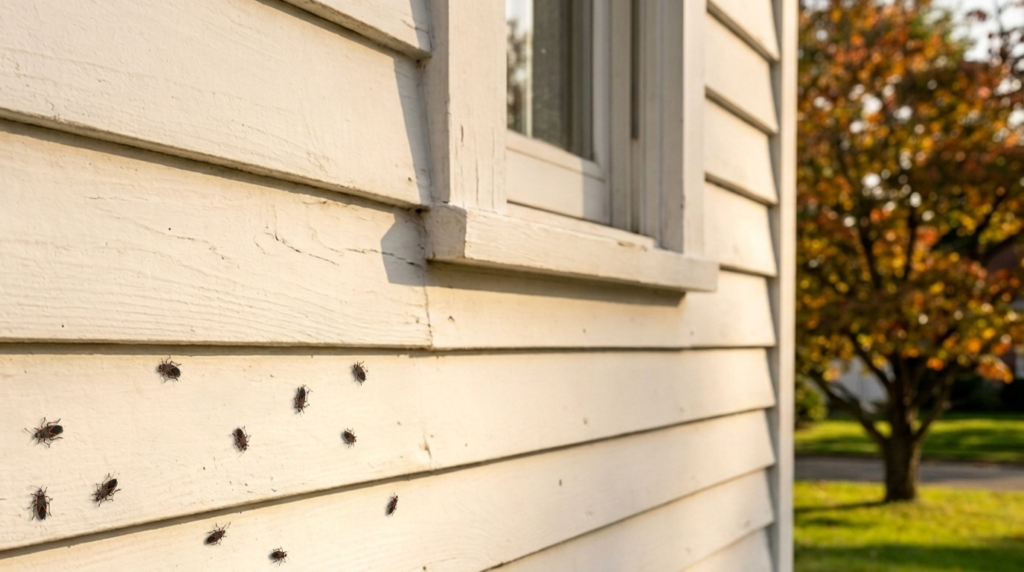
Black bugs with red markings crowding the sunny side of a Long Island house in the fall fit the boxelder bug picture. New York State’s Department of Environmental Conservation says on its boxelder bug page that they are “generally not noticed during summer,” but often can become an issue “when they try to move into homes during fall as they search for overwintering sites.” In other words, they are looking for a place to spend the winter, and a house will do.
The National Pesticide Information Center (NPIC) at Oregon State University calls boxelder bugs nuisance pests: they do not sting or transmit disease, they are generally not known to bite (it notes rare reports of defensive biting), and they are not known to cause damage to homes or significant damage to plants.
This post sticks to identification, biology and risk. We cover Nassau County and Suffolk County, and our pest control in Nassau County page is the place to start for the pests we treat. Getting rid of boxelder bugs is a separate job, and our guide to getting rid of stink bugs on Long Island covers the removal side of the fall-invader season.
Not sure which bug is on your Long Island siding?
Call us and a real person answers, and we cover Nassau County and Suffolk County.
How Do You Identify a Boxelder Bug on a Long Island House?
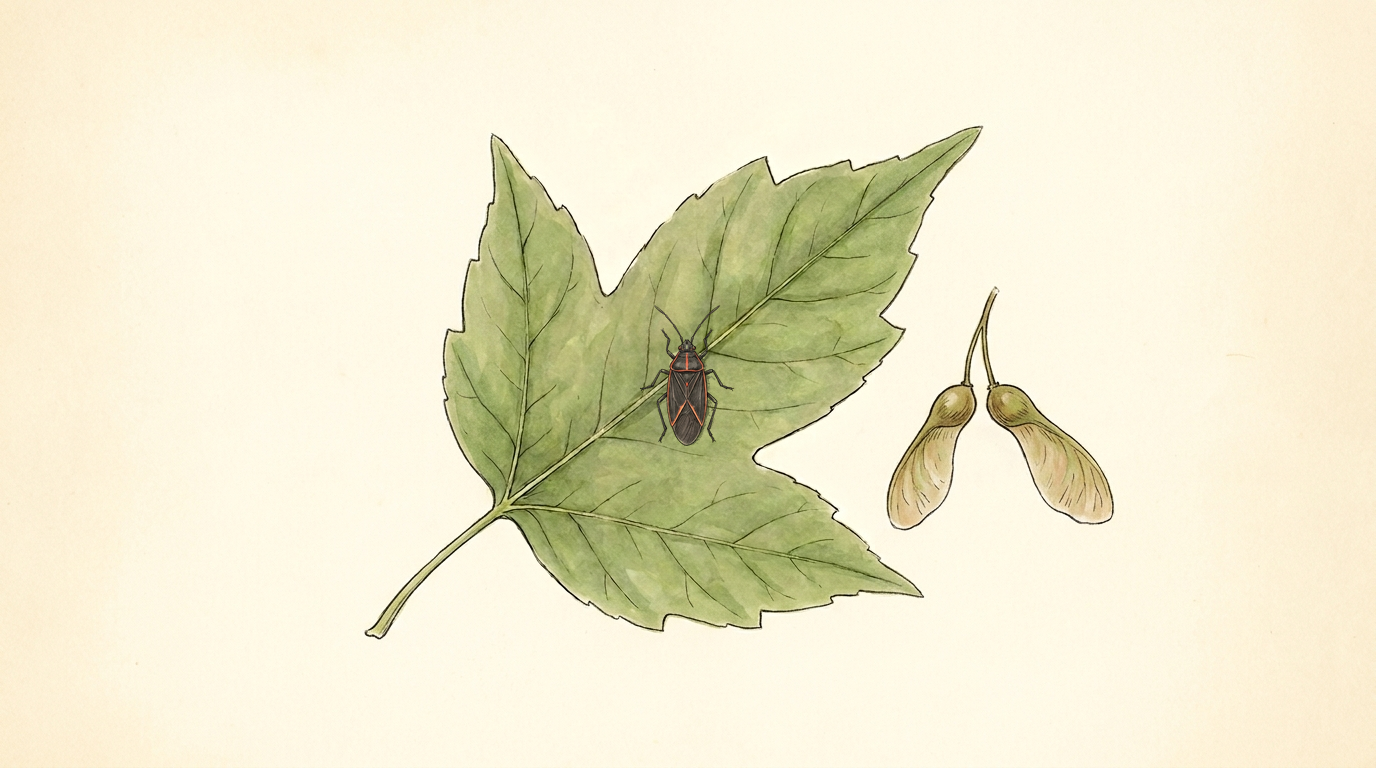
By the three red lines behind its head. New York State’s DEC describes adult boxelder bugs as about 1/2 inch long and black with orange or red markings, including three stripes on the area right behind the head, and says their wings lie flat over the body and overlap to form an X.
Cornell’s Integrated Pest Management program adds a few details on its boxelder bug page: the adults are narrow, the underside of the abdomen is red with some black markings, and boxelder bugs are often confused with squash bugs and milkweed bugs. The tell it gives for sorting them out is those three red lines on the pronotum, the plate between the head and the body.
On a Long Island house, the setting is part of the identification. Cornell’s same page puts it plainly: “many only notice them when they congregate on houses in the fall.” A Long Island poster on Reddit’s r/whatisthisbug described that moment one October: a couple of bugs flying around the back door, then crawling under the siding. The poster asked for a name and got two words back: “Boxelder bug.”
If you want a name you can trust before you decide anything, NPIC suggests contacting your Cooperative Extension Service for proper identification, since boxelder bugs can sometimes be confused with similar-looking insects. Both Long Island counties have one. Cornell Cooperative Extension of Nassau County’s diagnostic lab at East Meadow Farm offers “identification or diagnosis of one garden, plant, lawn or home pest problem,” and Cornell Cooperative Extension of Suffolk County’s Horticulture Diagnostic Labs, in Riverhead and at Bayard Cutting Arboretum in Great River, identify insect specimens.
How Can You Tell Boxelder Bugs From Stink Bugs and Other Fall Invaders?
Mostly by outline and color. A boxelder bug is narrow and black with red lines. The brown marmorated stink bug is a different shape altogether: Cornell’s IPM program, on its brown marmorated stink bug page, describes the adults as shield-shaped, 1/2 to 5/8 inch long and marbled brown, with light banding on the antennae, abdomen and legs.
One more fall bug adds to the confusion. When a Long Island poster on r/bugidentification asked what a bug was, the first reply said stink bug and was later edited to admit it was wrong; the answer underneath named a western conifer seed bug. Cornell’s IPM program, on its western conifer-seed bug page, gives that one as 3/4 inch long and mottled dark brown, with flared hind legs, and says it is often confused with the brown marmorated stink bug but is longer and narrower.
Side by side, using the descriptions on the New York State DEC and Cornell IPM pages linked above:
| What to check | Boxelder bug (NYS DEC, Cornell IPM) | Brown marmorated stink bug (Cornell IPM) | Western conifer seed bug (Cornell IPM) |
|---|---|---|---|
| Outline | Narrow | Shield-shaped | Longer and narrower than the stink bug |
| Color | Black with orange or red markings | Marbled brown | Mottled dark brown |
| Size | About 1/2 inch | 1/2 to 5/8 inch | 3/4 inch |
| The tell | Three red lines behind the head | Light banding on the antennae, abdomen and legs | Flared hind legs |
Two other possibilities sit outside this lineup altogether. If the crowd on your wall is made of beetles with the ladybug look rather than narrow black bugs, the post you want is our guide to identifying Asian lady beetles on Long Island. If it is flies collecting at a sunny window, they are a different insect with a different story, told in our post on why cluster flies keep coming back in Long Island homes.
What Do Red Boxelder Bug Nymphs Look Like Around Long Island Yards?
The young ones are the bright red bugs. New York State’s DEC puts boxelder bug nymphs at 1/16 inch long and bright red when they first hatch, turning red and black as they grow, and says you can potentially see all stages at any given time during the summer.
Penn State Extension fills in the stages between: first-stage nymphs are wingless, with black wing pads, black legs and antennae and bright red abdomens, and they become darker red as they mature through five nymphal stages. Between the two descriptions, a red-and-black bug smaller than the adults is most likely an older nymph.
The boxelder bug fact sheet that Cornell Cooperative Extension of Suffolk County (CCE Suffolk) posts among its horticulture fact sheets describes the nymphs as bright red with the head end darker and says they are found on the trees. It adds that nymphs resemble the adults but do not have fully developed wings and are not able to reproduce.
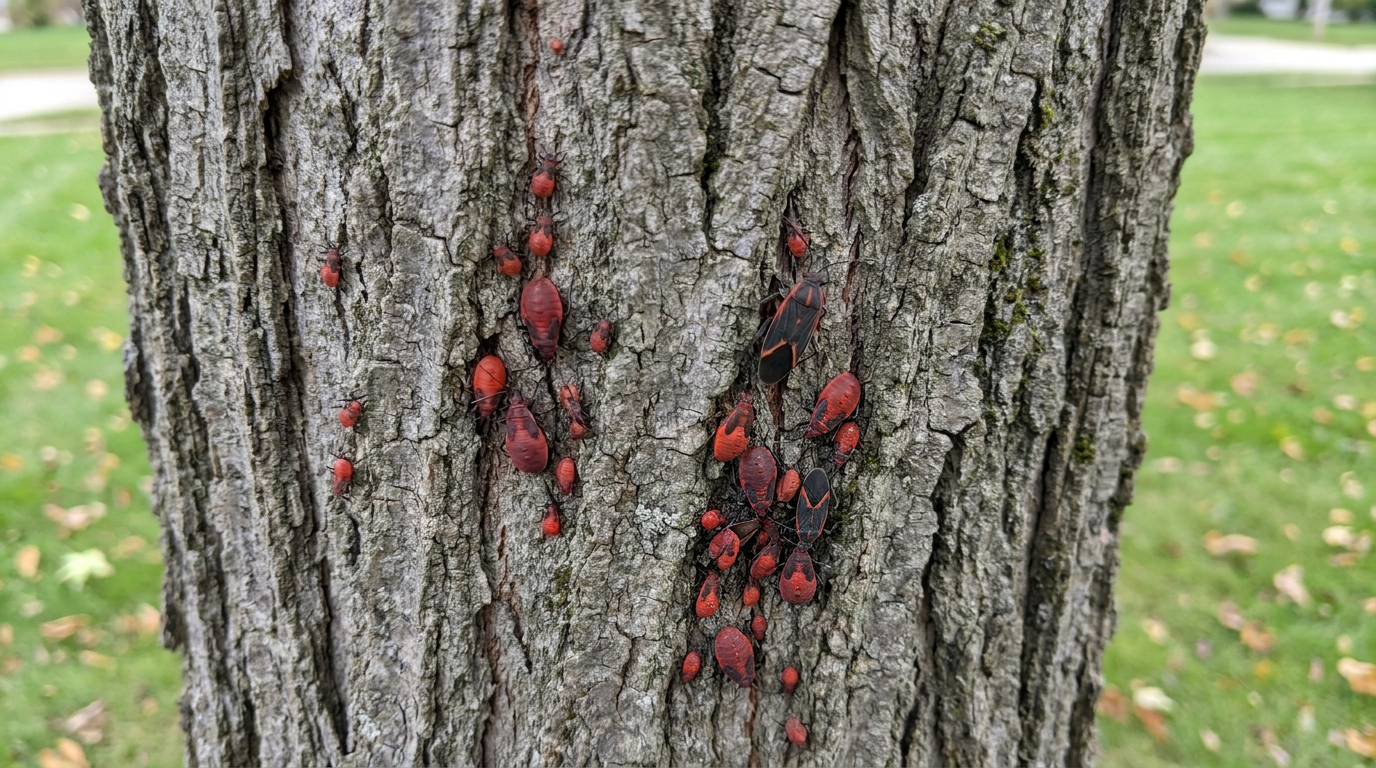
A cluster on a tree trunk in a Long Island yard can be a mix of red and black, and Cornell’s IPM program explains why: the nymphs develop quickly and a second generation follows in the summer, “so there are often both adults and nymphs found in large migrating groups.”
Not every red speck is a boxelder nymph, though. On r/longisland, a poster from Nassau’s south shore asked one May what the tiny red bugs “all over my house” were. The first reply named mites, not bugs: “clover mites or spider mites or predatory mites.” Very small red specks moving on a sunny sill or wall are worth checking against our clover mite guide for Long Island homes, and a lone red nymph you cannot place is exactly the kind of specimen the extension labs above are for.
Which Trees Signal Boxelder Bugs Are Breeding Near Your Nassau or Suffolk Home?
A female boxelder tree, first and foremost. The National Pesticide Information Center says boxelder bugs feed and reproduce on female (seed-bearing) box elder trees during the spring and summer, and that they may occasionally feed on male box elder, maple, ash and some fruit trees.
Boxelder is itself a maple. The New York Flora Atlas gives its common names as box elder and ash-leaved maple, and the CCE Suffolk fact sheet pictures its compound leaves next to the typical maple samara, the winged seed. NPIC describes the male trees as non-seed bearing, so a boxelder carrying winged seeds is the kind that feeds them.
The tree is no stranger here, either. The same atlas, which maps the state’s plants from vouchered specimens, lists boxelder records from both Nassau and Suffolk counties. It describes boxelder as a weedy tree, now widespread in New York, whose habitats include floodplain forests, riverbanks, weedy successional woods, and disturbed and urban areas. On Long Island that can mean a stream bank, the scrubby edge of a lot or a roadside strip as easily as someone’s backyard.
What signals breeding is the bugs on the tree. In spring, Cornell’s IPM program says, overwintered females lay yellow eggs in crevices of box elder bark, and the eggs turn red before the nymphs hatch. Because the nymphs cannot fly yet, a crowd of red nymphs on the trunk, branches or seeds of a boxelder in your yard is a good sign that the tree is the one feeding them.
A boxelder in your own yard is not a requirement, though. The DEC says adult boxelder bugs typically can fly several blocks, and in some cases as far as two miles, so the tree behind a cluster on your siding can stand on a property several streets away.
Other pests around your Nassau or Suffolk home?
We treat ants, termites, mosquitoes and ticks, and every technician is licensed by New York State.
Why Do Boxelder Bugs Gather Where Long Island Walls Get the Most Sun?
For the warmth. University of Minnesota Extension says on its boxelder bug page that the bugs like warm areas and are attracted to buildings with a large southern or western exposure.
On a Long Island lot, that points to the south- and west-facing walls that hold the sun from midday into the late afternoon. The CCE Suffolk fact sheet says they begin to aggregate in warm spots in the fall and that, besides the base of the host tree, they pick nearby overwintering sites, usually on south-facing sides, including rock walls, log or firewood piles, and under the siding of houses or buildings. So a stone wall along the driveway or a woodpile by the garage can hold them as well as the house itself.
Sun is not the only thing that sorts one house from the next. The University of Minnesota page adds that buildings standing taller than the structures around them, or standing alone on flat ground, can also attract large numbers of boxelder bugs. That can be one reason two houses on the same street have very different afternoons in October.
What Signs of Damage Do Boxelder Bugs Leave in Long Island Homes?
Stains and a smell, and no structural damage. Penn State Extension says that although boxelder bugs cause no direct damage to the structure, contents or the occupants, their presence is a nuisance.
The marks they do leave come from their droppings and from being crushed. Cornell’s IPM program says boxelder bug excrement can cause spotting on fabrics and painted walls, and that the bugs emit a strong scent when crushed. In a house, that spotting shows up where the bugs collect: on fabric such as curtains, and on painted walls near the windows they wander toward.
Whether to crush one in the first place is a question we answer in the squishing section of our stink bug guide. For identification, it is enough to know that a strong smell is what a crushed boxelder bug leaves behind.
The other sign is the bugs themselves, and not all of them alive. The same Cornell page closes its answer on whether to worry with three words: “Most die indoors.” A scatter of dead boxelder bugs on a sill in late winter is part of the same story.
Add the National Pesticide Information Center’s verdict from the top of this post (no sting, no disease, and only rare reports of defensive biting), and the damage list for a Long Island home is short: spots on fabric and paint, a smell if one gets crushed, and the dead ones by the window.
Where Do Boxelder Bugs Hide Indoors Over a Long Island Winter?
In the shell of the house. The CCE Suffolk fact sheet says the bugs overwinter in protected dry places, often in wall voids or attics.
Their winter rest has interruptions. University of Minnesota Extension says boxelder bugs are generally inactive in winter, but on mild, sunny days they become mobile, follow the warmth from walls or attics into the home’s living areas, and move toward windows and other sunny areas. That is how a sunny February afternoon can put a few on the glass of a south-facing room.
Penn State Extension’s boxelder bug page describes where they come out: they typically emerge from cracks under or behind baseboards, around window and door trim, and around exhaust fans or lights in ceilings.
What you are looking at is not a colony. University of Minnesota Extension says boxelder bugs do not reproduce in homes, and that all the boxelder bugs seen inside during winter and spring entered buildings the previous fall. The bugs on a windowsill in March came in last fall.
They are also short-lived once they are up and about. University of Minnesota Extension, describing the boxelder bugs that become active indoors in winter and early spring, says individuals live only a few days up to a week, though you may still see large numbers of them.
Spring brings the last round. The same page says that by spring, all the surviving boxelder bugs that overwintered inside buildings become active and try to move outdoors, but many remain trapped inside.
The Final Word
Boxelder bugs on a Long Island house in the fall are looking for a winter shelter, and the sunny wall is where they gather first. The short version of everything above:
- Adults are narrow and black with orange or red markings, including three red lines right behind the head, and their wings lie flat and overlap to form an X; the nymphs are bright red when they first hatch.
- A brown marmorated stink bug is shield-shaped and marbled brown; a western conifer seed bug, often confused with it, is mottled dark brown with flared hind legs.
- Female, seed-bearing boxelder trees are the main host, with maples and ash occasionally, and the adults can fly well beyond your own yard.
- They neither sting nor transmit disease, are generally not known to bite (with rare reports of defensive biting), and cause no direct damage to the structure; what they leave is spotting from their droppings and a strong smell when crushed.
- Indoors they overwinter in protected dry places, often wall voids or attics, wake on mild sunny days, are not breeding in the house, and are short-lived once active.
If you still are not sure what is on the wall, the extension labs in East Meadow, Riverhead and Great River can put a name on a specimen, and the stink bug guide linked at the top covers the removal side. We cover Nassau County and Suffolk County, and we treat roaches, mice, rats, bed bugs, ants, termites, bees and wasps, mosquitoes and ticks. For those, our Long Island pest control page is the place to begin, and pest control across Suffolk County has its own page.