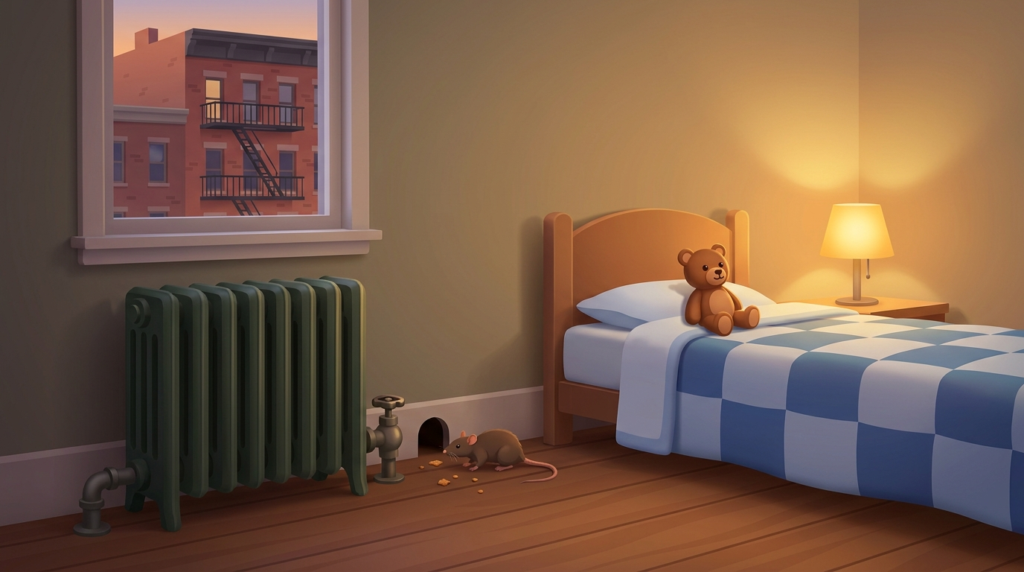
See a rat dart out of the trash bags on a Bronx curb, or hear one scratching behind the radiator after the lights go out, and one question comes fast: do rats bite in the Bronx, and what happens if one bites you? Yes, rats can bite people, inside apartments as well as outside them. One infection to know about after a bite is rat-bite fever, which the CDC describes as rare in the United States but says must be treated quickly, or it can cause severe illness and possibly death.
Below, we walk through where rat bites happen, why a rat would bite instead of running, the symptoms that matter afterward, what to do right after a bite and how renters can keep rats away from beds, kids and pets. If someone has just been bitten, go straight to the section on what to do right after a bite. If rats are already living in your building, start with rodent control in the Bronx; this guide stays on the bite question.
Rats in your Bronx apartment?
We treat rats, and we cover all five boroughs. Every technician is licensed by New York State.
Do Rats Actually Bite People in Bronx Apartments?
Yes. Rats bite people, and an apartment is one of the places it happens. The EPA’s training module on managing mice and rats in and around child care puts it plainly on a slide about mice and rats that live in homes and buildings: “Rats will bite children and can cause injury.”
In the Bronx, the question isn’t hypothetical. In 2018, ABC7’s Eyewitness News reported on a family in the Claremont section who said a rat bit their daughter on the toe while she slept in her own bed, a few days after her younger brother was bitten on the finger. One family’s story is not a rate, and we won’t present it as one. It is the kind of bite most of this guide is about: the one that happens at home.
It helps to split the question in two, because the bites New Yorkers worry about happen in two different places:
- On the street. A sidewalk at night, a curbside pile of trash bags, a bin in a building’s trash area. In three accounts posted on r/nyc and r/AskNYC, one bite and two near misses, the rat was stepped on, ran over a person’s foot, or scurried up toward someone who had just opened a trash bin.
- At home. An apartment with rats inside and a household asleep. The Claremont family’s story happened here, and so does most of what follows.
Why Would a Bronx Rat Bite Someone Instead of Running?
Three accounts on r/nyc and r/AskNYC describe what a street encounter can look like. They are three stories, not a count of how bites happen. On r/nyc, one poster who was bitten on the foot at night wrote afterward that it happened near a trash can and that they had stepped on the rat. Two others describe near misses: on r/nyc, a rat that ran for its burrow across the sidewalk on garbage night and over the poster’s foot (“Our paths intersected”), and on r/AskNYC, a rat that scurried up toward the tenant who had just opened a lidded trash bin.

Cornell IPM’s guide to managing mice and rats says, in its inspection advice, that rats and mice prefer to be active in dark, protected places, especially when no one is around, and, in its trapping advice, that rats show neophobia, a “fear of new.” The guide does not discuss bites.
The Internet Center for Wildlife Damage Management does address bites on its Norway rat damage page. The center’s page says rats are normally nocturnal and wary of humans, and that rats may bite infants and adults who are unable to defend themselves in areas with high numbers of rats. Bites, the center’s page adds, typically occur where there are odors from food, such as on the hands and mouth.
All three stories involve trash: a can on the sidewalk, bags on garbage night, a bin out back. Picture a Bronx block the night before collection, bags lined up along the curb, and you have the setting. Indoors, the picture is different: it involves food, and people who are asleep.
Can Rats Bite You in Your Sleep in the Bronx?
Yes, and this is the version of the question that matters most inside an apartment. Cornell IPM’s page on why mice and rats are worth worrying about says Norway rats “have also been known to bite the young, elderly, or individuals with limited mobility, who might have food residue on their bodies during sleep.” That is the rat to plan around in the Bronx: on Cornell’s page on mouse and rat biology and behavior, the Norway rat is the only rat on its list of common pest rodents in New York, and the same page says roof rats are generally not found in the state.
Cornell’s bite sentence names both who and why. The who is the young, the elderly and people with limited mobility, which in a family apartment can mean a baby in a crib, a young child or a grandparent. The why is food residue on the body. The National Pesticide Information Center (NPIC) at Oregon State University supplies the timing: it says rats are active at night, when they explore and learn about their surroundings. A rat foraging after dark and a person asleep share the same apartment at the same hours.
The Claremont family’s account fits that picture. By the family’s telling, their daughter was asleep in her bed when the rat bit her, and ABC7 reported that her mother had seen rats in the baby’s crib. A sighting alone can take the sleep out of a night, too: on r/AskNYC, a poster who spotted a rat crossing the living room in the middle of the night in a top-floor walk-up wrote that they couldn’t sleep there and spent the night elsewhere.
Food residue, at least, is something a household can change, and the last section of this guide starts there.
What Does a Rat Bite Look Like, and Which Symptoms Matter?
By the time it matters, the bite may not look like much at all. The CDC’s About Rat Bite Fever page, dated July 9, 2024, says symptoms usually begin 3 to 10 days after contact with rodents and can appear up to 21 days after, and that by then the bite or scratch should be healed, which might make it hard to remember being bitten. So the symptoms below matter more than the look of the bite, and NYC Health’s instruction in the next section applies to any rat bite, however small it looks.
For infections picked up from rodents in North America, here is what the CDC describes:
- Early signs that can be like the flu: the CDC says symptoms usually include fever, vomiting, headache and muscle pain.
- A rash: the CDC says 3 in 4 develop one, and that within 2 to 4 days after the fever begins it may appear on the hands and feet as flat, reddened areas with small bumps.
- Joint trouble: the CDC says about half of people also have joint pain or swelling, and that one or more joints may then become swollen, red or painful.
If any of those appear and you’ve had recent contact with a rat, the CDC’s instruction is to see a healthcare provider immediately. It also says to make sure the provider knows about the rodent contact, which is easy to leave out when the bite has already healed.
Itchy bites with no rat in sight are a separate question; our guide to the signs of rats covers rat-mite bites.
Rats near your kids' beds in the Bronx?
Same-day service during business hours. An emergency means within 24 hours. We have family and pet-friendly options.
What Should You Do Right After a Rat Bites You in the Bronx?
Between them, the NYC Health Department, NYC311 and the CDC cover the first few weeks after a bite:
- Call for treatment advice. NYC Health’s poison-prevention page on bites and stings tells anyone bitten by a rat to call the NYC Poison Control Center, 212-POISONS (212-764-7667), for treatment advice. This guide leaves wound care to that call rather than guessing at it. The Health Department’s rabies page also asks New Yorkers to tell their health care provider about any injury from an animal.
- Ask about rabies, and know the city’s answer. That rabies page says small rodents, rats and mice among them, are not normally found to be infected with rabies and have not been tied to any human rabies case, and that their bites are usually not considered a rabies risk unless the animal was showing signs of rabies. Whether you need anything more is your provider’s call.
- Report the bite. NYC Health’s online animal-bite report form opens with “You must report any type of animal bite within 24 hours of the event,” and it lists rat among its species and the Bronx among its boroughs. NYC311’s Animal Bite page has a section for rat and mouse bites; its online link goes to that same NYC Health form, and for help by phone it says to call 311.
- Keep watch. The CDC says rat-bite fever symptoms can appear up to 21 days after contact with rodents. If any of the symptoms above show up, see a healthcare provider immediately and mention the rat.
If the rat came from inside your building, reporting the rats themselves to 311 and your landlord’s legal duty to deal with them are topics of their own, and our walkthrough of 311 rat complaints and landlord obligations covers both.
How Serious Is Rat-Bite Fever for Bronx Families?
Serious, but uncommon. The CDC’s page says both: rat-bite fever is rare in the United States, and it must be treated quickly, or it can cause severe illness and possibly death. The complications it lists include pockets of infected fluid in the body and infections of major organs, the heart and brain among them. The CDC says these complications are rare but can be very serious and even deadly.
Anyone can get it, the CDC says, but having pet rodents may increase your risk. For a Bronx family with a pet rat, mouse, gerbil or guinea pig, that’s worth knowing: the CDC lists all four among the rodents that carry rat-bite fever, and it notes that a rodent carrying the bacteria doesn’t show signs of illness, so you can’t tell by looking.
A bite isn’t the only route, either. The CDC says rat-bite fever can spread through scratches, bites, or contact with a rodent’s saliva or pee, and also through contaminated materials such as rat bedding and cages, kissing pet rats, or eating or drinking contaminated food or drinks. One piece of good news for a household: the CDC says it cannot spread between people, so one sick child can’t pass it to a brother or sister.
If anyone in the family develops the symptoms described above after contact with a rodent, the CDC’s advice stays the same: see a healthcare provider immediately. Rat-bite fever isn’t the only illness tied to rats: NYC Health says leptospirosis is caused by bacteria in the urine of infected animals and that rats are its most common cause in the city, and our rat vs. mouse guide for NYC renters covers that wider disease list.
How Do Bronx Renters Keep Rats From Biting Kids and Pets?
The CDC’s prevention advice for rat-bite fever says you can lower your risk by avoiding contact with rodents, places with rodent infestations, or other areas where rodents may be present. It adds that, although the disease is rare, it is important to take precautions and practice good hygiene when handling or coming into contact with rodents or potentially contaminated materials, and it points people with pet rodents to its small mammal guidance. In a Bronx apartment, the aim is to keep rats away from where your family sleeps and eats, and to keep kids and pets away from rats. A few indoor habits work toward that:
- Clean up before bed. Cornell’s warning is about food residue on sleeping bodies, so the bedtime routine is where to start: washed hands and faces, no snacks in bed, and no food left in a crib or on the bedding.
- Seal the food. NPIC’s rat page says to store unrefrigerated food, pet food and birdseed in jars, tin boxes or durable plastic packaging, because rats have teeth made for gnawing.
- Cut down the water. NPIC notes that, unlike mice, rats need a source of water as well as food, and it lists fixing leaking faucets among its control tips. In a rental, that means reporting the drip to your super.
- Clear the clutter. Gloves go on first. NYC Health’s leptospirosis page says to protect yourself from contact with rat urine by wearing rubber gloves, especially if you have cuts or sores on your hands or arms, and to wash your hands with soap and warm water after any contact with areas where rats may live. The same page has its own directions for cleaning areas where rats have been. With gloves on, follow NPIC’s advice to reduce clutter and remove materials rats may use for nesting or shelter, including cardboard boxes and newspapers. A stack of boxes under a bed counts.
- Keep pets away from rats. The CDC says that, although it’s rare, some animals, such as dogs, cats, ferrets and rabbits, can be infected by contact with infected rodents and then pass the infection on to people. A dog or cat that chases or catches a rat brings that contact home, and anyone in the household who then develops rat-bite fever symptoms should see a healthcare provider immediately, as the CDC advises.
- Teach kids to leave rats alone. No touching, cornering or chasing, alive or dead. That’s the CDC’s avoid-contact advice in a form a child can follow.
- Tell your landlord or super as soon as you see signs. None of the habits above removes rats that already live in the walls.

For rats that are already inside, the next step is professional rat removal. We treat rats, and we do professional pest-proofing and rodent-proofing. If roaches or mice are part of the same problem, start with our page on pest control in the Bronx.
The Takeaway
- Rats can bite people, at home as well as on the street. The EPA’s child-care training module says it plainly: “Rats will bite children and can cause injury.”
- On the street, three accounts posted on r/nyc and r/AskNYC, one bite and two near misses, involve trash and a rat that was stepped on, ran over someone’s foot or scurried up toward someone; they are three stories, not a count of how bites happen.
- At home, Cornell IPM says Norway rats have been known to bite the young, the elderly and people with limited mobility who might have food residue on their bodies during sleep.
- After a bite, NYC Health says to call the NYC Poison Control Center for treatment advice, and its bite-report form says you must report any type of animal bite within 24 hours of the event.
- NYC Health says the bites of rats and mice are usually not considered a rabies risk unless the animal was showing signs of rabies; whether you need anything more is your provider’s call.
- The CDC says rat-bite fever symptoms usually begin 3 to 10 days after contact and can appear up to 21 days after; if they do, see a healthcare provider immediately and mention the rat.
- Rat-bite fever is rare in the United States, the CDC says, but it must be treated quickly, or it can cause severe illness and possibly death.
- Indoors, the habits that matter for kids and pets are no food residue at bedtime, sealed food and pet food, less water and clutter for rats, keeping kids and pets away from rats, and telling your landlord or super as soon as you see signs.