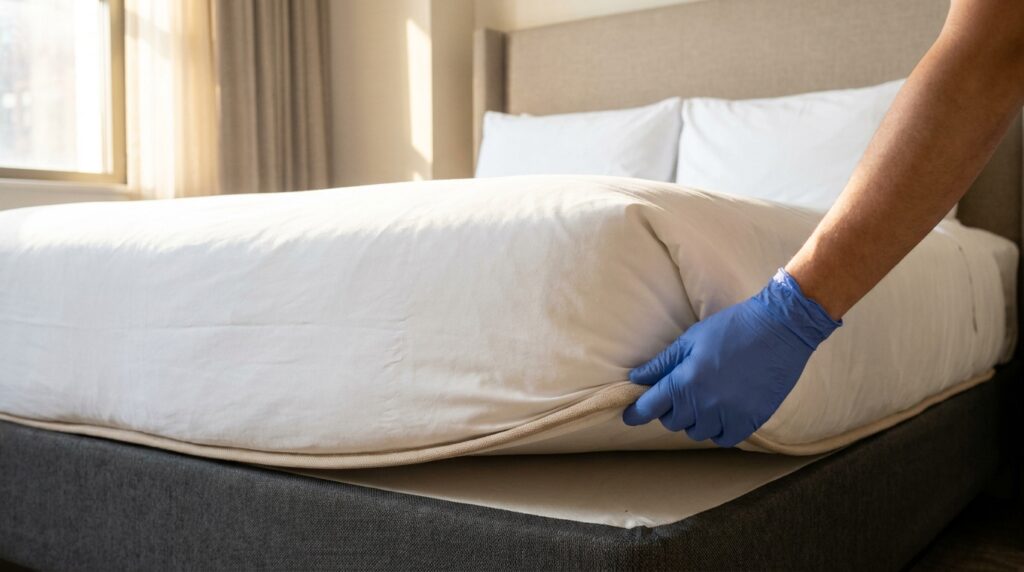
Every hotel in Manhattan has a pest control vendor. Far fewer have a pest control program, and the difference shows up on the worst possible day: when a guest posts a photo of a mattress seam, or when a health inspector walks into your kitchen unannounced. A vendor comes when you call. A program is the standing set of inspections, treatments, staff protocols and records that keeps the call from happening in the first place.
We have spent more than two decades servicing commercial accounts across New York City, and hospitality is its own discipline. A hotel pest control program in Manhattan has to work around occupied rooms, a 24-hour kitchen, a loading dock that opens to the street, and a housekeeping team that turns over hundreds of rooms a week. Nothing about that resembles treating a house.
This guide is written for the people who run the building: general managers, directors of engineering, housekeeping leads and facilities teams. If you are a traveler wanting to check your own room, we wrote a separate guide to inspecting an NYC hotel room for bed bugs instead. Everything below is the operator’s side of the same problem.
Running a Manhattan Hotel and Need a Real Program?
We have serviced NYC commercial accounts since 1999, from guest rooms to loading docks, with wall void dusting and monitoring most vendors skip. Free inspection.
What Does a Manhattan Hotel Pest Control Program Actually Include?
The single biggest difference between hotels that have chronic pest problems and hotels that do not is whether the program is proactive or reactive. A reactive program treats rooms after complaints. A proactive one treats the building on a schedule and treats complaints as exceptions.
A real program covers the whole property, not just the guest floors. In our experience the back of house is where problems start and the guest rooms are where they get noticed. That means the scope has to include the kitchen and dish areas, dry storage, the laundry, refuse and compactor rooms, the loading dock, staff locker rooms, mechanical spaces, and the vertical shafts and wall voids that connect all of them.
Concretely, a program we would put on a Manhattan hotel has five moving parts:
- Scheduled service visits on a fixed cadence, with back of house treated more often than guest floors.
- A monitoring device network that tells you where activity is before anyone sees a pest. Placement matters more than quantity, and each device gets mapped.
- A room inspection rotation so guest rooms are checked proactively rather than only after a complaint.
- Staff protocol and training, because housekeeping finds problems long before management does.
- A service log that records every visit, every finding and every corrective action.
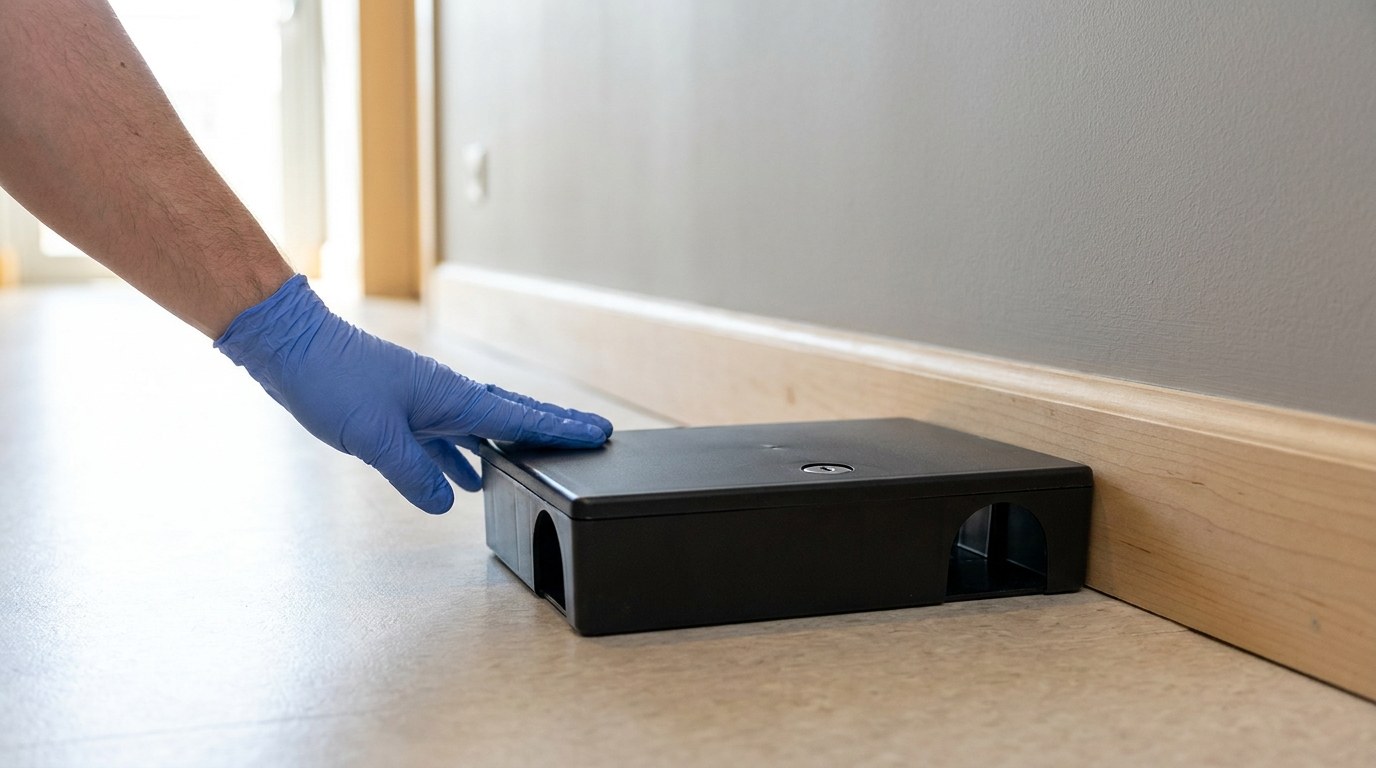
That last item is the one we most often see treated as paperwork. It is not. When something goes wrong, the service log is the difference between demonstrating a maintained program and having nothing to show, and that distinction carries real liability weight. We come back to records at the end of this guide.
Which Pests Do Manhattan Hotels Have to Control Year Round?
Manhattan hotels deal with a fairly predictable roster, and the building stock shapes it. A lot of Manhattan hospitality sits in pre-war structures with shared walls, old risers and voids that were never sealed. Pests move through those pathways between floors and between neighboring buildings, which is why treating a single room in isolation so often fails.
The pests that need standing attention:
- German cockroach. The defining commercial kitchen pest. It breeds fast, lives in warm equipment voids, and travels into the building in deliveries and cardboard. Kitchens and staff break areas are the reservoir.
- Bed bugs. Reintroduced continuously by guests, which is why every hotel gets them eventually and prevention is a detection problem, not a cleanliness problem.
- Mice and rats. Manhattan’s street-level pressure is relentless, and hotels have doors opening to the sidewalk all night. Our rodent work on commercial properties is usually as much exclusion as it is baiting.
- Drain flies and small flies. They breed in the organic film inside floor drains and around grease traps. Spraying the air does nothing; the drain is the problem.
- Ants and stored product pests in dry goods, particularly where deliveries are held before they are broken down.
Seasonality shifts the emphasis but does not remove anything from the list. Rodent pressure rises as the weather turns and the street population looks for warmth. Fly pressure rises in summer. Bed bugs track occupancy, which in Manhattan means they never really quiet down.
How Should Manhattan Hotel Housekeeping Prevent Bed Bugs Room by Room?
Housekeeping is the most valuable detection system a hotel owns. Your room attendants touch every bed in the building on a rotation no inspector can match. The programs that work are the ones that train them to look in the right four places and, just as importantly, make it easy to report what they find.
One hotel employee described the same instinct: stripping and remaking a bed is the moment you are close enough to read a seam properly, and no scheduled inspection matches that frequency.
The inspection points, in the order we teach them:
- The mattress seam. Run the piping on all four sides, paying attention to the head end. Look for dark speckling rather than for insects.
- The box spring. Lift it and check the underside and the fabric edge. This is where activity persists after a surface treatment.
- The headboard. In most hotels it is wall-mounted, and the back of it is the single most reliable harborage in the room.
- The seam of upholstered furniture nearest the bed, plus the nightstand joint.
Two protocol points matter as much as the looking. First, linens from a suspect room should be bagged in the room and not carried loose down a corridor or dropped into a shared cart, because a cart is an excellent way to move an isolated problem into ten other rooms. Second, a room attendant who reports a suspicion that turns out to be lint has done their job correctly. If reporting is punished, reporting stops, and you lose the detection system entirely.
Train the team to escalate rather than to treat. A room attendant with a can of anything is a liability, not a solution.
How Do Manhattan Hotels Treat a Bed Bug Report Without Closing Floors?
This is the question that matters most in practice, and the honest answer is that a single guest report almost never requires closing a floor. It requires taking a small number of rooms out of inventory for a short window.
The sequence we work to:
- Move the guest, and move them well away rather than next door. Bag and handle their belongings carefully, because the goal is not to relocate the problem with them.
- Take the room out of order immediately. Do not resell it while you are waiting on an inspection.
- Inspect the neighbors. Bed bugs move through shared walls and along wiring and plumbing penetrations, so the rooms either side, above and below get inspected as a matter of course.
- Treat the confirmed room and the adjacent rooms together. In our experience, treating only the reported room is the most common reason the same problem resurfaces weeks later.
- Follow up and verify before the rooms go back into inventory.
That sequence is not just ours. In industry discussions where hotel staff describe their own protocols, the same shape comes up again and again: move the guest, put the room out of order, get the adjoining rooms inspected, and let a third party confirm before anything goes back on the market. The highest-voted answer in one such discussion compressed the whole thing into a line: “Room move, comp the night, and have the exterminator inspect both rooms.” One post from a 600-plus-room property described the same steps in the same order.
For occupied commercial buildings we lean on targeted materials rather than broad application, including products like Crossfire for bed bug work, along with wall void drilling and dusting where the harborage is structural rather than on the surface. Our commercial bed bug treatment for occupied buildings is built around keeping the rest of the property selling while a contained area is handled.
Handled this way, a report costs you a handful of room nights. Handled by treating one room and hoping, it eventually costs you a floor.
One Guest Report Should Not Cost You a Floor
Our team treats confirmed and adjacent rooms together, with follow up verification before rooms go back into inventory. Call for a free inspection of your property.
Why Do Manhattan Hotel Kitchens and Loading Docks Need Roach Control?
If a hotel has a chronic German cockroach problem, the kitchen is almost always the source and the guest rooms are the symptom. Warmth, moisture, food residue and endless cardboard make a commercial kitchen close to ideal habitat.
The pressure points are consistent across properties. Motor housings and equipment voids hold heat and are rarely cleaned into. The grease trap and the floor drains around it grow the organic film that drain flies breed in, which is why fly problems come back within days of a surface clean if the drain itself is never addressed. Dish areas stay wet. Dry storage gives stored product pests somewhere quiet to establish.

The loading dock deserves separate attention because it is the front door for almost everything that arrives. Deliveries come in on cardboard pallets that have been sitting in another warehouse, and cardboard is both a harborage and a transport medium for cockroach egg cases. Docks also tend to sit open, which is an open invitation at street level in Manhattan. Breaking down deliveries at the dock rather than in dry storage, and getting cardboard out of the building quickly, removes a surprising amount of pressure at no cost.
There is also a compliance dimension here that guest floors do not carry. Any food service operation inside your hotel, whether that is a restaurant, a bar or a banquet kitchen, is a permitted food service establishment in its own right. The City’s guidance to operators is blunt about pests: control them, and if pests are found you will get a summons and a fine. We apply the same standards here that we bring to our restaurant and commercial kitchen accounts, and we have written separately about how DOH pest inspections play out in NYC restaurants.
How Often Should a Manhattan Hotel Schedule Pest Control Inspections?
There is no single legally mandated frequency for a hotel’s overall pest program in New York City, so cadence is a risk decision rather than a compliance one. What we would put on a full-service Manhattan property looks like this:
| Area | Typical cadence | Why |
|---|---|---|
| Kitchen, dish, refuse and compactor | Weekly or twice monthly | Highest pressure, fastest breeding, and where a food service inspection will land |
| Loading dock and receiving | Weekly or twice monthly | Primary entry point for both deliveries and street-level rodents |
| Back of house and staff areas | Monthly | Secondary reservoirs that feed the guest floors |
| Guest rooms | Rotating proactive inspection | Finds activity before a guest does, rather than waiting on complaints |
| Monitoring device check | Every service visit | Devices only work if someone reads and records them |
Limited-service properties without a full kitchen can generally step the back-of-house frequency down. What should not be stepped down is the guest room rotation, because that is the only part of the schedule that catches bed bug activity while it is still contained to one room.
One caution on vendor selection: a quote that covers only guest rooms, or only common areas, is not a program. We are happy to walk a property and scope it honestly, and if you want a sense of what commercial work costs across the city before you talk to anyone, we have laid out what NYC businesses actually pay for commercial pest control.
What Does New York City Require of a Manhattan Hotel Pest Control Program?
This is where most hospitality advice goes wrong, so it is worth being precise. There is no single “hotel pest control law” in New York City. The obligations that reach a Manhattan hotel come from three different directions, and one widely cited rule does not reach you at all.
A bed bug report in your hotel gets inspected by HPD. The City’s guidance is explicit that if someone reports bed bugs in a residential building, a hotel or an SRO, the Department of Housing Preservation and Development will conduct an inspection, and a guest can file naming a room number. Worth knowing: that inspector does not look only at bed bugs. The published inspection checklist also covers mice, cockroaches and rats, along with items like mold and smoke and carbon monoxide detectors. A single bed bug complaint can therefore open a much broader look at the building than the complaint itself suggested.
Your food service operation carries its own obligations. As covered above, a restaurant, bar or cafeteria inside the hotel needs a Health Department permit, receives an unscheduled inspection each year, and is told plainly that finding pests means a summons and a fine.
Whoever applies pesticide in your building has to be properly registered. This is the requirement we most often see go unchecked, and it is easy to verify. New York State requires that a business register with the Department of Environmental Conservation in order to offer, advertise or make pesticide applications for hire. A registered business must employ certified applicators, carry commercial general liability insurance of at least $1,000,000 per occurrence, and, notably, the applications must be made by employees of that business. Contractors and consultants cannot make or supervise them. If a vendor is sending someone you cannot account for, that is a real exposure sitting inside your building.
And one rule that does not apply to you the way people assume. New York State’s bed bug notification duty is written for residential tenancies. Under Real Property Law section 235-j, a landlord who learns of an infestation must give written notice within seventy-two hours, but the duty runs from “the landlord or lessor of a residential rental premises” to “tenants and lessees who reside in units” on that premises. A transient hotel guest is neither a tenant nor a lessee residing in a unit. Much of the “New York bed bug law” material a hotel operator will find by searching is residential guidance, and it does not transfer cleanly to nightly occupancy.
We are a pest control company and not your lawyers, so treat the above as the starting point for a conversation with counsel rather than as legal advice. The practical takeaway is unchanged either way: the City can end up inside your building on the strength of one complaint, and what protects you at that moment is a maintained program and the records behind it.
What Records Should Manhattan Hotels Keep to Prove Pest Control Work?
Assume that at some point you will have to demonstrate that your program existed and was actually running. That demonstration is only as good as your documentation, and documentation assembled after the fact is worth very little.
What a hotel should be able to produce on request:
- The service log. Every visit, dated, with the areas serviced, what was found, what was applied and where. This is the backbone of the file.
- A device map. Where every monitoring device and bait station sits, with readings recorded over time so trends are visible rather than anecdotal.
- Product records. What was used, in what location, by whom, along with the applicator’s certification and the vendor’s DEC business registration.
- Corrective action records. What was found, what was done about it, and confirmation that it was verified afterwards. An open finding with no closure is worse than no finding at all.
- Complaint and response records. Guest reports, rooms taken out of order, treatment dates and the date the room returned to inventory.
- Staff training records showing that housekeeping was actually trained on the protocol you say you run.
Keep it in one place, keep it current, and make sure someone on property can produce it without calling the vendor. A file that lives only in your contractor’s system is a file you do not control. Good vendors leave a written service report after every visit for exactly this reason, and we do it on every commercial account we run across the Manhattan properties we service.
The Bottom Line on Manhattan Hotel Pest Control
A hotel pest control program is not a treatment schedule with a logo on it. It is a proactive scope that covers back of house as seriously as guest floors, a housekeeping team trained to detect and encouraged to report, a bed bug response that takes rooms out of order rather than closing floors, real attention to the kitchen and the loading dock, and a documentation trail that holds up when someone asks.
The regulatory picture is narrower than the internet suggests, and sharper where it does apply. The residential bed bug rules people cite largely do not bind you; a single guest complaint bringing an HPD inspector into your building absolutely does, and so does the summons your food service operation collects if pests turn up during its annual inspection.
We have been doing this in New York City since 1999, we are members of the New York Pest Management Association and the National Pest Management Association, and 60 to 65 percent of our work is commercial. If you would like us to walk your property and tell you honestly where the gaps are, we are glad to take a look and give you a free inspection.