
You wiped down the counter, took out the trash, and set out a little cup of apple cider vinegar like every website told you to. Three days later, the tiny flies are still cruising your NYC kitchen like they pay rent. Sound familiar? Here is the part almost nobody explains: the little flies swarming a New York apartment kitchen are usually not all the same bug. Fruit flies, fungus gnats, and drain flies look nearly identical from across the room, but they breed in completely different places and shrug off completely different treatments. Set the wrong trap for the wrong fly and you can fight the same swarm for weeks.
We’re Advanced Pest Management, your NYC pest control team, and after 26+ years working kitchens from pre-war walk-ups in Queens to high-rises in Manhattan, we have learned that winning this fight starts with a two-second identification, not a trap. Once you know which fly you actually have, getting rid of it gets a lot simpler. This guide walks through how to tell the three tiny kitchen flies apart, then exactly how to get rid of each one, using the same source-first approach we bring to a service call. One honest note up front: no real pro promises to wipe out 100% of anything that flies, but removing the breeding source reliably collapses the population and keeps it down.
Tiny flies taking over your NYC kitchen?
26+ years clearing NYC kitchens of gnats and flies. We track down the breeding source instead of just knocking down the flies you can see, with family and pet-friendly options, no annual contracts, and a free estimate (inspection fee waived when you book).
How Do NYC Renters Tell Fruit Flies, Fungus Gnats, and Drain Flies Apart Before Treating Them?
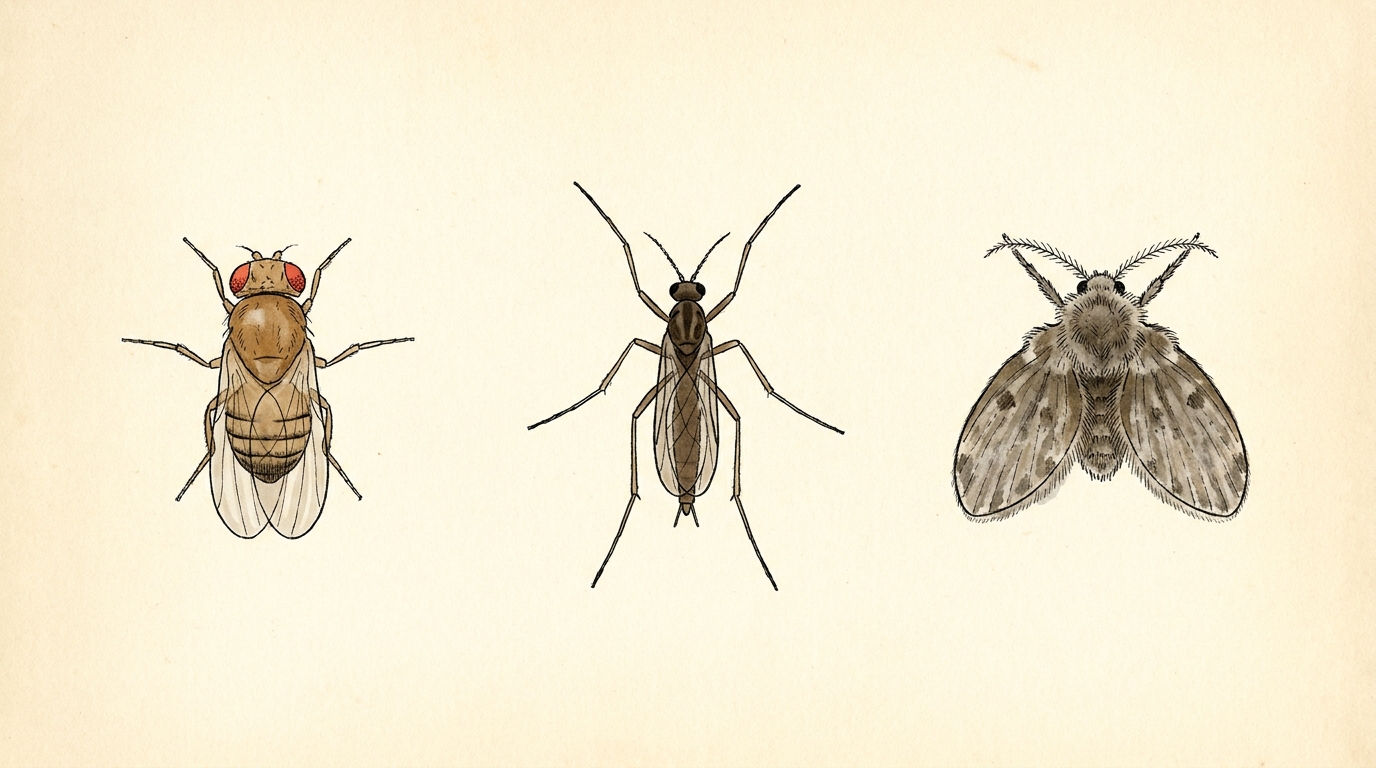
In our trade there is an old saying: flies tell a story. Each kind of tiny fly is drawn to one specific condition, so the fly you are seeing is basically pointing at the mess it came from. Figure out the fly and you have already found the source. Get it wrong and you will treat your drains for weeks while the real problem sits in a flowerpot three feet away.
Here is the quick version of what we look for, backed up by Cornell IPM’s guide to non-biting flies:
| Tiny fly | Where it actually breeds | How to spot it | The fix in one line |
|---|---|---|---|
| Fruit fly | Fermenting fruit, trash, recycling, and food gunk in the garbage disposal | Tiny (about 1/16 inch), tan body, often with red eyes; hovers around the fruit bowl, sink, and trash can | Remove the fermenting food source, then trap the stragglers with vinegar and dish soap |
| Fungus gnat | Wet potting soil, where the larvae eat fungus and plant roots | Dark, skinny, and mosquito-like; runs across the soil surface, drifts up when you water, and is drawn to screens and your face | Let the soil dry out, kill the larvae in the soil, and catch the adults on sticky traps |
| Drain fly | The gelatinous gunk (biofilm) lining the inside of drains and pipes | Fuzzy, moth-like wings held roof-like over the body; a clumsy flier that rests on the wall in an upside-down heart shape | Scrub and enzyme-treat the drain itself, not the fruit or the plants |
The single most useful test costs you nothing. Set out a cup of apple cider vinegar with a drop of dish soap and wait a day. Fruit flies pile into it almost immediately. If the flies completely ignore your vinegar cup, you are almost certainly dealing with fungus gnats from a plant or drain flies from a pipe, because neither of those is drawn to a fruit-scented trap. That one observation saves most people a week of treating the wrong thing.
Fungus gnats give themselves away another way, too: they tend to hang around your potted plants and windowsills and famously buzz right up into your face near a laptop or TV screen, because the light attracts them. Fruit flies stay married to the kitchen. Drain flies sit still on the wall by the sink or tub and barely fly at all. If the flies turn out to be drain flies, the fix is the drain itself, not the fruit bowl or the plants. Our complete guide to getting rid of drain flies in NYC covers the enzyme treatments, the overflow holes they hide in, and your rights as a tenant when the problem lives in shared building plumbing. In a small New York apartment where the fruit bowl, the trash, the houseplants, and the sink are all within a few feet of each other, you may honestly have two or even all three at once, which is exactly why a single trap never seems to finish the job.
How Do You Get Rid of Fruit Flies in Your NYC Kitchen?
Fruit flies are the classic summer kitchen swarm, and in the city they seem to go from zero to a hundred over a single humid weekend. They breed in anything fermenting: an overripe banana, a forgotten tomato, juice residue in the recycling, a splash of wine or seltzer in a can by the sink, or the film of food inside your garbage disposal. A female can lay hundreds of eggs in a very short window, so a couple of flies today becomes a cloud in a few days.
Step one is always the source, not the trap. Walk your kitchen and be honest about it. Toss or refrigerate any overripe produce. Rinse every bottle, can, and takeout container before it goes in the recycling, because a rinsed can is worthless to a fruit fly. Empty the trash and any DSNY compost or organics bin, and start taking them out daily during warm months rather than letting them sit. If you skip this step, no trap on earth will win, because you are catching a few adults while a fresh generation hatches behind you.
Step two is trapping the flies that remain. The classic apple cider vinegar trap works, and it is exactly what the City of Charleston recommends in its kitchen fruit fly guide. Here is the version we tell customers to make:
- Pour a couple of inches of apple cider vinegar (or balsamic, which works even better) into a small jar or glass.
- Add two or three drops of dish soap. The soap breaks the surface tension so the flies sink and drown instead of skating across the top.
- Cover the jar with plastic wrap, secure it with a rubber band, and poke a few small holes with a toothpick. The flies wander in and cannot find their way out.
- Set it right where you see the most activity, usually next to the fruit bowl or the sink, and refresh it every day or two until the flies are gone.
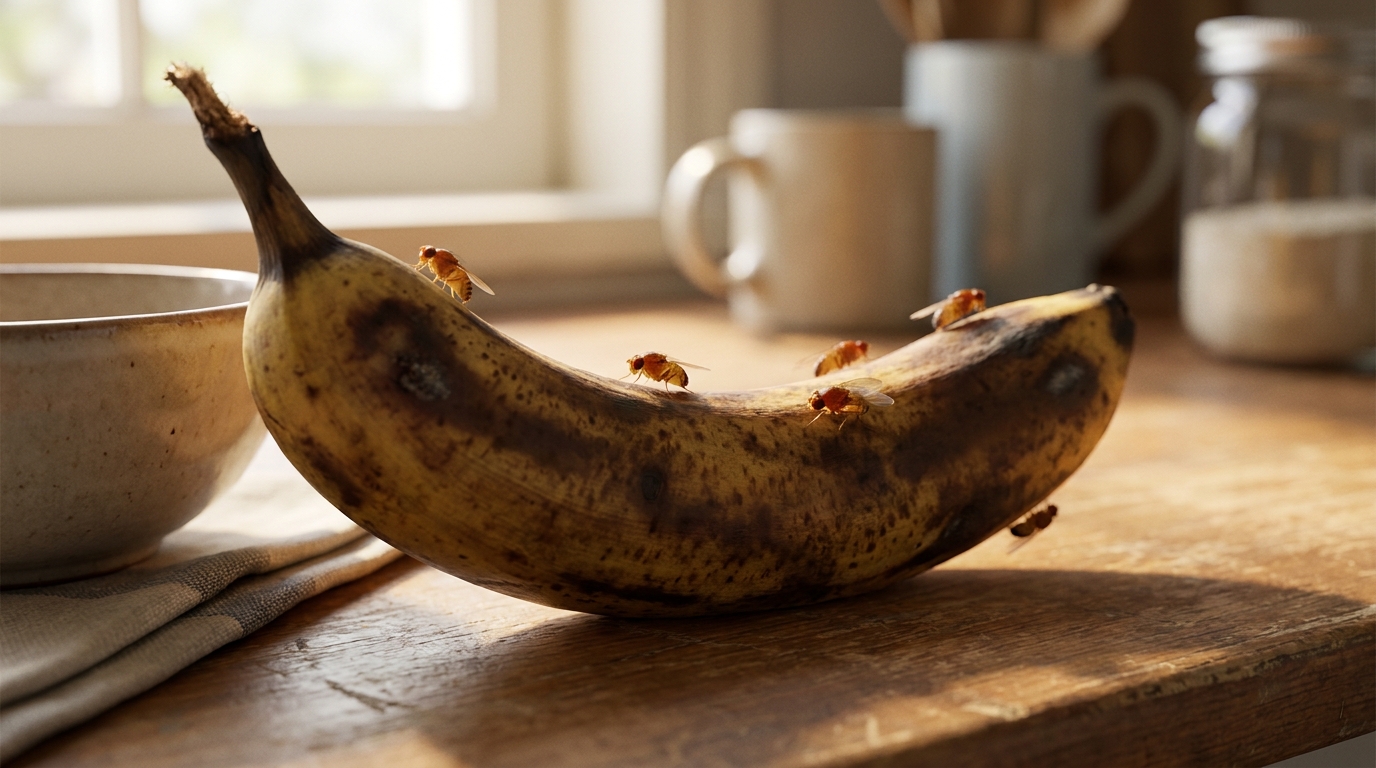
Do not forget the garbage disposal. It is one of the most overlooked fruit fly nurseries in a New York kitchen, because food residue cakes onto the underside of the splash guard and the grind chamber. Pour a half cup of baking soda followed by a cup of vinegar down the drain, let it fizz for a few minutes, then flush with boiling water. Running the disposal often and rinsing it out keeps it from turning back into a breeding site. If you set your vinegar traps, kill the disposal residue, and still have a swarm a week later, that is your cue that the flies are coming from something other than fruit, and it is time to check your plants and drains.
How Do You Get Rid of Fungus Gnats on Houseplants in an NYC Apartment?
If the little flies are dark, drift up out of your potted plants when you water, and completely ignore your vinegar trap, you have fungus gnats, not fruit flies. This is the misdiagnosis we see most often in plant-filled apartments. Fungus gnats do not care about your fruit bowl at all. Their larvae live in the top inch or two of damp potting soil, where they feed on fungus and organic matter and nibble at tender roots, according to the University of California IPM program. Overwatering is what turns a healthy houseplant into a gnat factory.
The winning approach is two-pronged, because you have to hit the larvae in the soil and the adults in the air at the same time. Do only one and the cycle just restarts.
Dry them out. Let the top inch or two of soil dry completely between waterings. Gnat larvae need constant moisture, so a dry soil surface denies them the one thing they cannot live without. Watering from the bottom, so the surface stays drier, helps even more. If a plant is badly infested and the soil smells sour, repotting it into fresh, well-draining mix resets the whole problem.
Kill the larvae in the soil. The go-to product is a granular form of Bti (Bacillus thuringiensis israelensis), sold as Mosquito Bits, which UC IPM notes is toxic only to fly larvae and nothing else in your home. Sprinkle it on the soil or steep it in your watering can, and repeat every few days because it does not linger. Beneficial nematodes, tiny organisms you water into the soil, are the other proven option and tend to keep working longer. Both are family and pet-friendly choices for an apartment with kids or a curious cat, which matters a lot in a small space.
Catch the adults. Stick yellow sticky traps in every single affected pot, not just one or two. The flying adults are drawn to the yellow, get stuck, and stop laying the next round of eggs. Skipping even a couple of plants is the most common reason people say the gnats never fully went away.
Still swatting gnats and fruit flies weeks later?
Our NYC team has spent 26+ years finding the sources other people miss, from the fruit bowl to the potting soil to the drain. Same-day service during business hours, family and pet-friendly options, no annual contracts, and a free estimate with the inspection fee waived when you book.
How Do You Stop Gnats and Fruit Flies From Returning to Your NYC Kitchen?
Once you have knocked the swarm down, the goal is to make your kitchen a place these flies cannot breed. The good news is that most of these tiny flies live less than a month, so if you deny them a breeding site long enough, the population simply ages out and collapses. The trick is that New York kitchens hide a few breeding spots most guides never mention.
- Behind and under the appliances. A slow leak behind the dishwasher or under the refrigerator puddles just enough moisture on the cabinet floor to become a hidden nursery. Fungus gnats and fruit flies are astonishingly good at finding it. If your flies keep coming back with no visible source, pull the appliances out and check for dampness.
- The recycling and the trash room. That stack of “rinsed enough” cans and bottles is a buffet. Give them a real rinse, keep a lid on the trash, and in a multi-unit building, remember that the shared trash and recycling room down the hall can reseed your apartment no matter how clean you keep it.
- The produce you just carried home. Fruit flies often ride in as eggs on the skin of fruit from the store or greenmarket. Washing or briefly dunking produce when you get home rinses those eggs off before they hatch. Pineapple crowns are a notorious summer culprit, so rinse them well and bin the crown promptly rather than letting it sit on the counter.
- Storage habits. Keep ripe produce in the fridge or in a covered bowl, don’t let scraps sit in the sink, and empty the compost bin every day or two in warm weather.
These same habits protect against other NYC kitchen invaders, too. If you are already sealing up food and rinsing containers, you are most of the way to preventing the pantry moths that turn up in NYC kitchens as well, so it is worth building the routine once and keeping it.
When Should NYC Residents Call a Pro to Get Rid of Gnats and Fruit Flies?
Most fruit fly and fungus gnat problems really are a DIY job once you have correctly identified the fly and found the source. But there are a few situations where it makes sense to bring in help, and after 26+ years in NYC and Long Island kitchens, these are the ones we see.
Call a professional when the swarm has held on for several weeks despite doing everything right, which usually means there are multiple sources feeding it at once or a hidden one you cannot reach. Call when you live in a multi-unit building and the flies are clearly coming from shared plumbing or a common trash and recycling room, because that is a building-wide fix, not a single-apartment one. And call when the “gnats” turn out to be sharing your kitchen drains with something bigger, like the roaches that often breed in those same drains, since the two problems are best treated together.
When you do call us, you get a team of about 20 technicians who treat the actual breeding source rather than fogging the room, family and pet-friendly product options for apartments with kids and animals, same-day service during business hours, and no annual contracts locking you in. We have held a 4.8-star rating across 300+ reviews doing exactly this kind of unglamorous, source-first work since 1999.
The Bottom Line: Which Tiny Fly Is in Your NYC Kitchen?
Every one of these tiny flies comes down to the same three-step chain: identify it, find its breeding source, and match the fix to that source. Flies hovering over the fruit bowl and diving into your vinegar cup are fruit flies, so clear the fermenting food and trap the rest. Dark flies drifting out of your plants and ignoring the vinegar are fungus gnats, so dry the soil, kill the larvae, and hang sticky traps. Fuzzy, moth-like flies parked on the wall by the sink are drain flies, so scrub the pipe and reach for our drain fly guide. Treat all three the same and you will be swatting forever. Treat each one at its source, and your NYC kitchen goes quiet, usually within a couple of weeks.