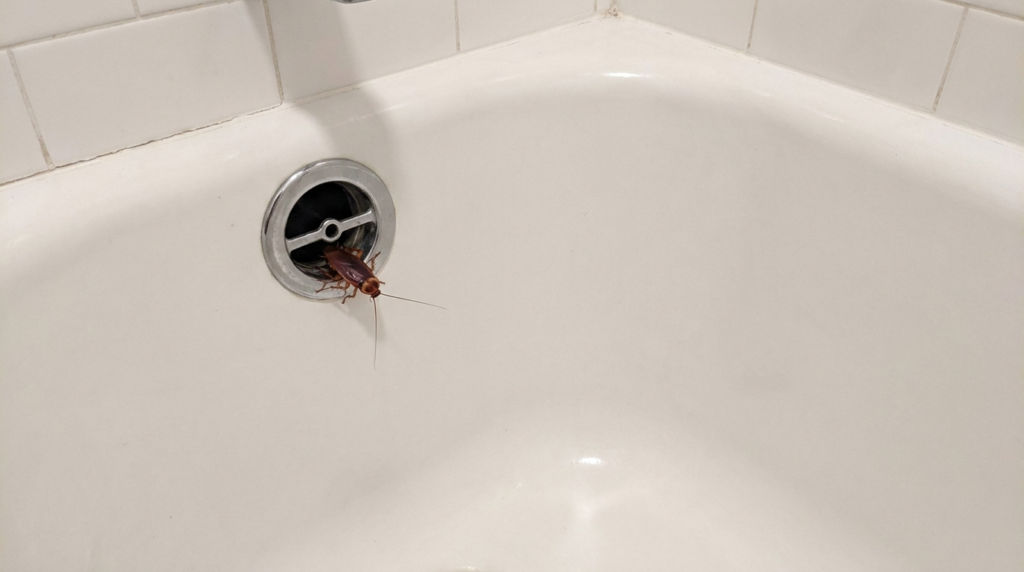
A roach climbing out of your tub, shower or sink drain is most likely a big American or oriental cockroach. These roaches live in sewers and drain lines. They get in when a drain’s trap runs dry, when a pipe is damaged, or through a gap around the outside of a pipe. So a big roach at the drain says more about the plumbing than about how clean you keep your place.
The fixes are mostly water and caulk. Keep water in every trap, cover drains you aren’t using, and seal the gaps where pipes come through walls and floors. Some of that is yours to do, and some of it is the building owner’s job. If roaches keep coming after that, it’s time for professional NYC cockroach control.
Roaches coming up your NYC drains?
Every technician is licensed by New York State. We cover all five boroughs, Nassau County and Suffolk County.
What Brings Roaches Up the Drains in NYC Apartments?
A dry trap. Every sink, tub and shower drain has a trap, a U-shaped bend in the pipe that holds water. That water seals your apartment off from the drain line below. Each time you run the faucet, fresh water refills the trap. When a drain sits unused, the water slowly evaporates, and a dry trap is an open pipe.
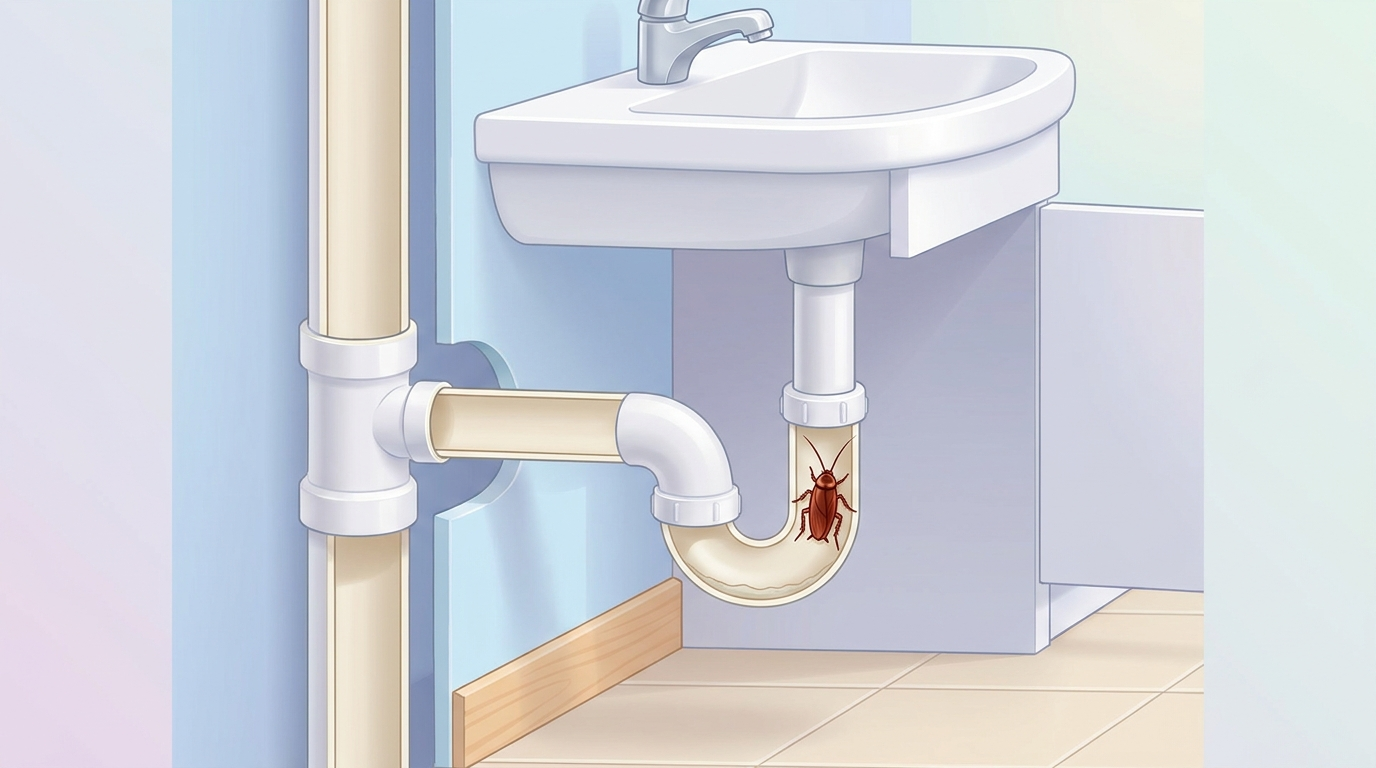
Think of a guest bathroom, a second sink, a floor drain, or every drain in an apartment that sat empty for a while. For example, Cornell’s New York State IPM Program looked into American cockroaches turning up in a multi-story office building. The likely source on one floor was an unused bathroom whose water had been shut off during a renovation. It was an office, but a trap works the same way in an apartment. A full trap isn’t a perfect wall, since roaches can crawl through a small amount of water. Still, a drain in regular use is unlikely to harbor them.
Drains tied to the sewer. Tub, shower, sink and floor drains all empty into the building’s drain lines, which lead to the sewer. American and oriental roaches live in sewers and drain systems, and they can travel up those pipes into kitchens and bathrooms. A damaged pipe gives them one more way out.
Gaps around the pipes. The pipes under your sink and behind your tub pass through holes in the wall or floor. If a hole isn’t sealed, roaches can walk in along the outside of the pipe and never touch the trap. Roaches can squeeze through a crack as small as 1/8 inch, according to NYC Health’s pest control guide. Gaps around pipes, wires and drains are on its list of problems to look for.
Gunk in the drain line. Drain and sewer lines give these roaches water and decaying organic matter to feed on. A drain clogged with debris can also keep the trap from holding its seal.
Leaks. Roaches need water. A dripping faucet, a leaky pipe under the sink or a leak inside the wall gives it to them. Cutting off that water is one of the basics of roach control.
Which Roaches Crawl Up Through New York City Drains?
Mainly the big ones: American and oriental cockroaches. The American roach is reddish brown, with a pale yellow band around the shield behind its head. It gathers in floor drains, pipe chases, boiler rooms and sewers. The oriental roach is shiny black or dark brown and slow-moving. It usually stays at ground level, and it very often comes up out of floor drains.
Oriental roaches can’t climb smooth surfaces. One that falls into a tub or porcelain sink, or climbs up a damaged drain pipe, can end up stuck there. That can be the roach you find in the tub in the morning.
Both kinds get called water bugs. The nickname gets used loosely, and our guide to water bugs in NYC sorts out what people mean by it.
German roaches are the small ones: light brown, with two dark stripes behind the head. Their young are darker, with a tan stripe down the back. German roaches don’t live outdoors. They live and breed indoors, in warm, humid spots close to food and water. That puts them in kitchens and bathrooms, hiding in cracks under sinks and toilets. So a German roach near your drain is more likely living in your apartment or its walls than coming up from the sewer.
Can Roaches Move Between NYC Apartments Through Shared Pipes?
Yes, they can. Roaches can travel from neighboring apartments to yours through holes and cracks, according to Purdue Extension’s guide to cockroach control in multi-family housing. German roaches, the indoor kind, often move between adjoining apartments through walls, ceilings, pipes and wires.
Inside a drain, a full trap is in the way. Around the outside of a pipe, nothing is, unless someone sealed the hole where the pipe goes through the wall or floor. An open hole around a pipe leads into the hollow space inside the wall, where roaches are hard to reach. From there, they can move on to neighboring apartments.
That matters in a city where most homes share walls with neighbors. In 2023, 73 percent of NYC housing units were in buildings with three or more units, according to HPD’s Housing and Vacancy Survey. So if a neighbor has roaches, the gaps around your pipes matter as much as the water in your traps.
Does One Roach From the Drain Mean Your NYC Apartment Is Infested?
Not by itself. American and oriental roaches are outdoor species that can wander indoors for a while, per the University of California’s Statewide IPM Program. The same program reserves indoor pesticide treatment for an established population, not an incidental intruder or two. It also notes that German roaches breed faster than any other common pest roach.
Taken together, one big roach at the drain, seen once, looks more like a visitor from the pipes than roaches living in your walls. If you keep a clean place and still see roaches, our post on roaches in a clean NYC home covers why.
A small roach usually means roaches are living close by. An adult German roach is about 1/2 inch, and the American is the largest roach common in homes, per the University of Kentucky’s entomology department. Its fact sheet also notes that young roaches live in the same places as the adults.
So a small roach is likely a young one from a population breeding nearby, or a German roach.
Repeat visits from big roaches point to a way in that’s still open, or roaches gathering close by, in a floor drain or pipe chase.
Check for droppings and egg cases too, especially under the sink and around the tub. NYC Health describes roach droppings as dark smudges with dark dots, and egg cases as yellowish, ribbed and about as big as a small fingernail. Either one near the drain points to roaches spending time there.
To find out what you’re dealing with, set out sticky traps where roaches travel: along edges, in corners and under sinks. Put one close to the drain where you saw the roach, too. Keep them out of reach of children and pets. NYC Health says to replace sticky traps every two weeks, or sooner if they fill up. What you catch, and where, shows which roach you have and where they’re coming from.
Don’t sit on it for long. Roaches can contaminate food and worsen allergies and asthma, and a severe roach problem needs a pest control professional, according to NYC Health.
Still finding roaches in your NYC tub?
Our technicians turn up in uniform and put booties on before they come through your door. General pest plans run month to month.
Will Boiling Water or Bleach Kill Roaches in an NYC Drain?
Neither one fixes why roaches are coming up, and neither does vinegar. Whatever it does to the roaches it reaches, the dry trap, damaged pipe or open gap is still there afterward. If the trap had dried out, the part that helps is the water itself, and plain tap water refills a trap just as well.
NYC Health’s pest guide recommends bleach only for washing hard surfaces. It also warns never to mix bleach with ammonia or other cleaning products. So don’t follow one drain product with another.
Some drain lines are PVC plastic. Westlake Pipe and Fittings, a PVC pipe maker, lists the maximum operating temperature of PVC pipe as 140°F. Boiling water is far hotter than that. It’s a reason to skip the kettle, not proof that one pot will damage a pipe.
Spraying insecticide down the drain has the same problem. Sprays can knock roaches down for a while, but they don’t give long-term control. NYC Health tells tenants never to use foggers or bombs at all. Against the small German roaches that live indoors, baits work better than sprays. Our guide to getting rid of roaches in an NYC home covers baiting.
How Do You Keep Roaches From Coming Up Your Drains in NYC?
The steps below take time to work: NYC Health says getting rid of pests and keeping them out can take a few weeks.
Keep water in every trap. Run water down any drain that doesn’t get daily use, so the trap stays full. Make it part of cleaning the bathroom: the tub nobody uses, the second sink, any floor drain. Clear debris out of the drain at the same time, so water can reach the trap. If a drain pipe has been cut and is no longer used, it should be capped for a permanent seal, a job for the owner.
Cover drains you aren’t using. NYC Health suggests closing off shower, tub and sink drains when not in use, with a cheap rubber drain cover or a metal drain screen. Roaches are more active at night, so a cover matters most overnight.
Ask about a trap primer. For a floor drain or a trap that keeps drying out, a plumber can add a trap primer, a valve that feeds it water. New York City’s plumbing code lists a primer valve as one way to protect trap seals that are subject to evaporation. In a rental, that’s a request for the owner or super, since it’s plumbing work.
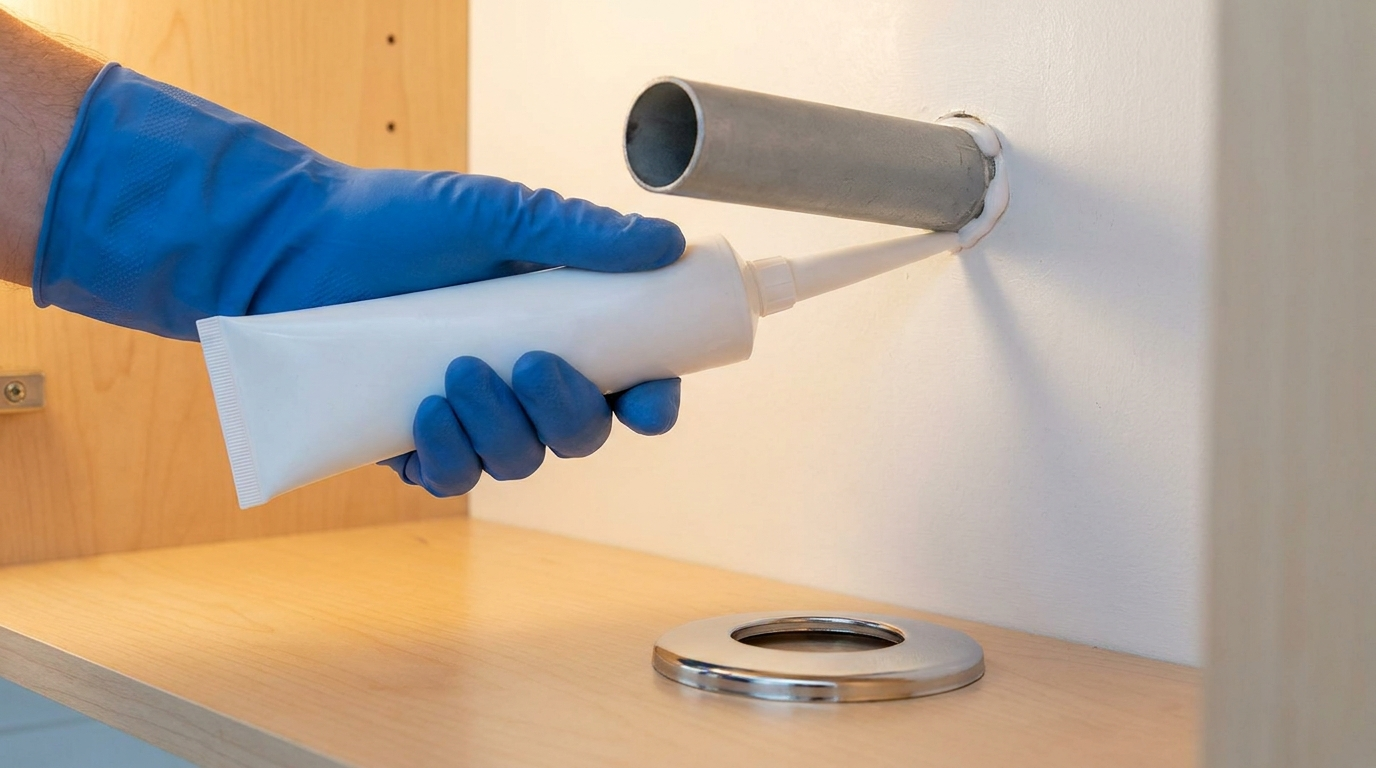
Seal around the pipes. Put on rubber gloves and follow the package directions on every product you use. NYC Health recommends 100% silicone caulk for narrow gaps around the tub, shower and sink. For holes wider than 1/2 inch, NYC Health says to stuff in stainless steel wool or copper mesh before filling with spackle or joint compound. Fill a little at a time and let each layer dry. Seal the gaps where pipes come through walls or floors, then fit escutcheon plates, the flat cover plates that ring a pipe at the wall. If you can’t or would rather not do it, ask the owner or super.
Get the owner to fix the rest. Owners must keep apartments free of pests under NYC law, including fixing the leaks, cracks and holes that can cause them, according to NYC Health. That duty covers roaches by any name, water bugs included. In buildings with three or more apartments, Local Law 55 of 2018 also requires owners to inspect units annually for pests like cockroaches, per HPD. Under that law, getting rid of an infestation includes sealing holes and gaps around pipes and repairing drains and faucets that leak or collect water. Report leaks, cracks and holes to the owner right away, and call 311 if they aren’t fixed. If you own or manage the building, start with pest control for property managers.
Call a professional when it keeps happening. With American roaches, lasting relief means finding and treating the places where they gather. In a building, those can be a basement, a pipe chase or the drain lines, well away from your apartment. A good professional finds the conditions behind the problem and makes a plan to get rid of it. NYC Health says to check that they’re certified by the state Department of Environmental Conservation. Ask for the least hazardous pesticide that will work, and tell them if you have children or pets.
We treat roaches, mice, rats, bed bugs, ants, termites, bees and wasps, mosquitoes and ticks. Brooklyn readers can go straight to cockroach control in Brooklyn.
The Bottom Line on Drain Roaches in NYC Apartments
A roach at the drain is a plumbing problem before it’s a pest problem. Tonight, run water down every drain and cover the ones you won’t use. Next, check where your pipes meet the walls, caulk what you can, and tell the owner about any leak or open hole. Then let a few sticky traps show you whether you had a visitor or roaches living close by.
If the traps turn up small roaches, or big ones keep coming after the trap and the gaps are handled, bring in a pro. Call us and a real person answers.