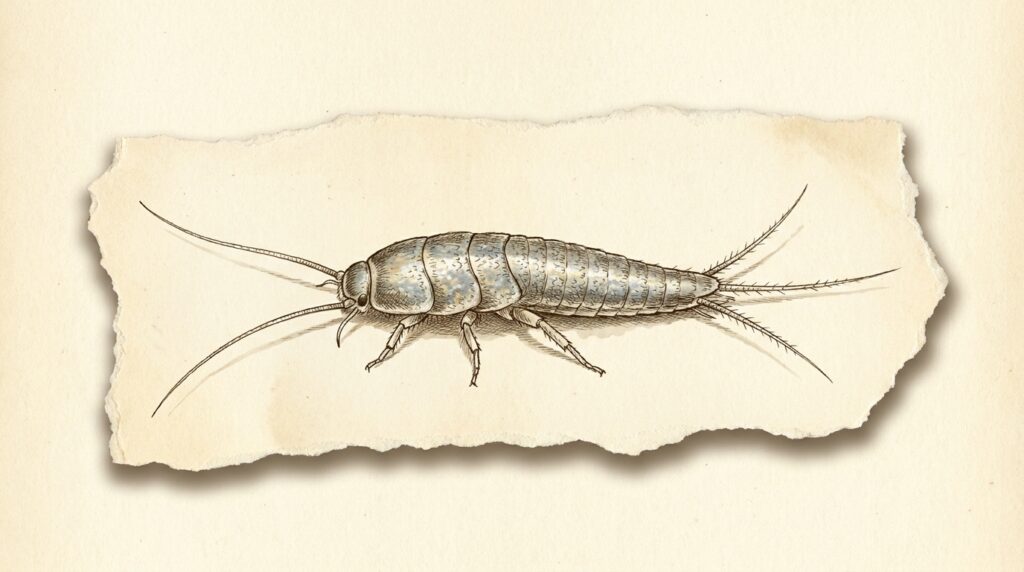
You reach for a towel at midnight, flip on the bathroom light, and something silvery streaks across the tile and vanishes under the baseboard before you can even react. If you live in a pre-war NYC building, you already know this scene. Silverfish thrive in exactly the conditions our older housing stock provides in abundance: damp bathrooms, leaky under-sink cabinets, musty basements, and decades-old plumbing chases that never quite dry out. We’ve treated this problem in walk-ups from Washington Heights to Bay Ridge, and the pattern is always the same — the bugs are a symptom, and moisture is the disease.
The good news is that silverfish are genuinely one of the more manageable pests in an NYC apartment, once you understand what they actually need to survive. This guide walks through why they’re drawn to your specific unit, the harborage spots they favor in a pre-war building, and the step-by-step process — drying out the source, clearing their food supply, trapping and dusting the right way, and treating harborage directly — that gets rid of them for good. If the population feels bigger than a DIY fix can handle, our NYC pest control team has spent 26-plus years chasing moisture-driven pests out of exactly this kind of building.
Silverfish taking over your bathroom?
We've cleared silverfish from countless damp pre-war NYC apartments by treating the moisture source, not just the bugs, with family and pet-friendly methods and a free estimate when you book.
How Do You Get Rid of Silverfish Hiding in a Pre-War NYC Bathroom?
Getting rid of silverfish in a pre-war NYC apartment is less about killing the bugs you see and more about eliminating the conditions that let a colony establish itself in the first place. Silverfish are nocturnal, they don’t fly, and they can squeeze through gaps thinner than a credit card — which means the ones darting across your bathroom floor at night represent a much larger population living quietly behind the tile, under the tub, or inside the wall void around your plumbing stack.
The full removal process has four parts that work together: dry out the moisture that’s keeping them alive, remove the starchy materials they feed on, deploy sticky traps and a diatomaceous-earth-style dust to knock down the visible population, and treat the harborage itself — the cracks, gaps, and voids where they’re actually breeding. Skip any one of these steps and you’ll knock the population back temporarily, only to see it rebound within a few weeks. We walk you through each piece below, in the order that actually moves the needle fastest.
Buildings across Brooklyn brownstones, Manhattan pre-war walk-ups, and Queens and Bronx multi-family housing all share the same bones: old cast-iron and copper plumbing, plaster walls with hidden voids, and bathrooms that were never built with modern exhaust ventilation in mind. If you want the backstory on how these infestations typically start, we’ve also written up the early signs of silverfish so you can catch a problem before it’s a full colony.
What Draws Silverfish to Damp NYC Apartments, and How Can You Deter Them?
Silverfish need two things to survive and reproduce: high humidity and a starch source to eat. New York City apartments — especially units in buildings put up before 1940 — deliver both in spades, which is exactly why this pest is so common here compared to newer construction with tighter building envelopes and modern ventilation.
On the moisture side, silverfish need consistently high humidity to thrive long-term, a level that’s easy to hit in a bathroom with no exhaust fan, a kitchen with a leaky sink trap, or a basement storage unit with no dehumidification at all. According to the University of California’s IPM pest note on silverfish and firebrats, these insects can survive for months without food as long as humidity stays high, which is part of why a moisture-only apartment can sustain a colony even when there’s nothing obvious for them to eat.
On the food side, silverfish are voracious feeders on starches and cellulose: book bindings, wallpaper paste, cardboard, cereal boxes, dried pasta, photo album glue, even the sizing in some fabrics. A closet stacked with cardboard moving boxes next to a damp exterior wall is close to a perfect silverfish habitat. Deterring them long-term means attacking both halves of that equation at once — you can’t dehumidify your way out of a cardboard problem, and you can’t declutter your way out of a humidity problem.
How Do You Dry Out an NYC Bathroom to Control Silverfish for Good?
Moisture control is the single highest-leverage step in this entire process, and it’s the one most NYC renters skip because it feels less satisfying than spraying something. Start with the bathroom, since it’s almost always the epicenter of a silverfish problem in an apartment.
- Run the exhaust fan during and for at least 20 minutes after every shower — if your unit doesn’t have one, crack a window and use a small portable fan instead.
- Wipe down the tub, sink basin, and tile grout after use instead of letting them air-dry, since standing water on grout is a direct humidity source.
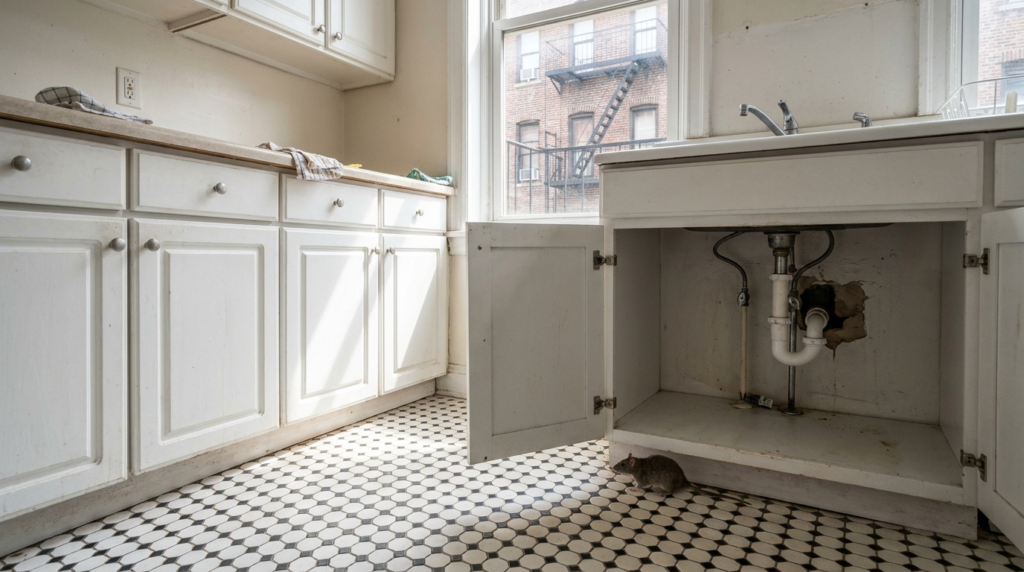
- Check under the sink for a slow leak at the P-trap or supply lines — even a drip too small to notice on the floor can keep the cabinet interior at silverfish-friendly humidity around the clock.
- Add a small plug-in dehumidifier to a bathroom or basement that stays consistently damp, and aim to keep the room under 50 percent relative humidity.
- Re-caulk around the tub and sink if the seal has cracked, since gaps there let moisture seep into the wall cavity behind the tile.
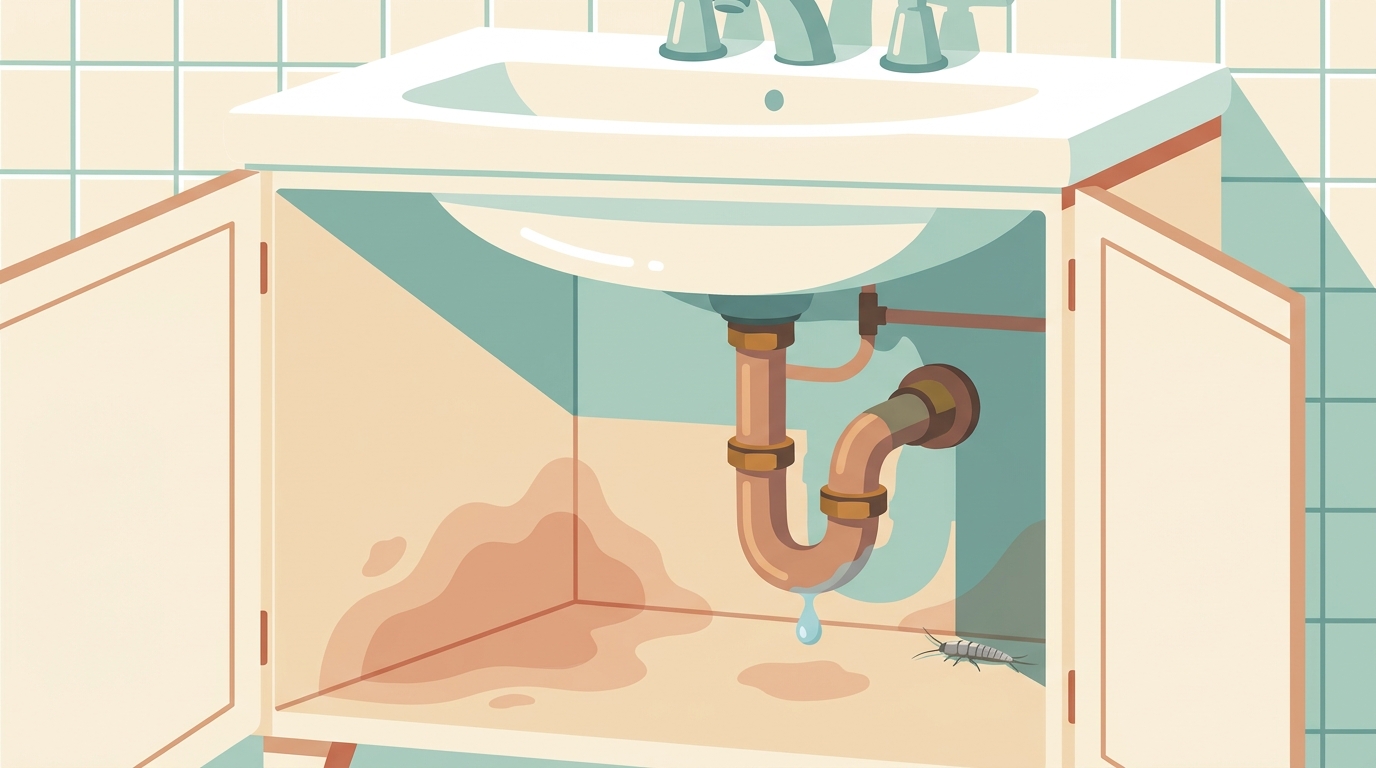
Fixing a leak or adding a dehumidifier won’t clear an established colony overnight, but it changes the math entirely. A dry apartment can’t sustain a breeding population no matter how many cardboard boxes are sitting in the closet, which is why moisture control has to come first, not last.
Should You Remove Cardboard and Starchy Clutter to Stop Silverfish in an NYC Apartment?
Yes — and this step matters more in NYC than almost anywhere else, because apartment living means storage space is tight and cardboard boxes tend to accumulate in closets, under beds, and in basement storage cages for years at a time. Every one of those boxes is a potential food source and a hiding spot silverfish can travel through undetected.
Swap cardboard for sealed plastic storage bins, especially for anything you’re keeping long-term: off-season clothing, books, tax documents, photo albums. If you’re storing books directly on shelves against an exterior wall, check the spines periodically for the tiny surface etching or yellow staining that signals feeding damage, since book bindings are a favorite starch source. In the kitchen, move flour, cereal, pasta, and other dry starches into airtight containers rather than leaving them in their original cardboard packaging.
Old wallpaper is another overlooked food source in pre-war units — the paste behind it is pure starch, and silverfish will tunnel behind loose or peeling sections to feed. If you’ve got peeling wallpaper in a damp room, that combination of moisture plus paste is practically an open door for silverfish. Removing it, or at minimum sealing the edges, closes off a food source you might not have considered a pest issue at all.
Do Sticky Traps and Diatomaceous Earth Actually Kill NYC Silverfish?
Yes, and they’re the right tool for this specific pest — but only as part of the broader plan above, not as a standalone fix. Silverfish don’t respond to baited traps the way ants or roaches do, since they’re not foraging for a specific food source in the way social insects are. What actually works is passive control: sticky traps placed along baseboards, inside closets, and under the sink will catch silverfish as they travel their normal nighttime routes, and they double as a monitoring tool that tells you whether the population is shrinking or holding steady.
A food-grade, diatomaceous-earth-style dust applied in a thin layer along baseboard cracks, behind the toilet, and around pipe entry points works differently — it damages the waxy coating on the silverfish’s exoskeleton, which causes them to dehydrate and die over the following days. It needs to stay dry to keep working, so it’s a better fit for basements, closets, and crawl spaces than for a shower stall that gets wet daily. When a DIY dusting isn’t enough, our technicians apply professional crack-and-crevice dusts the same way — a thin, out-of-sight layer worked deep into the voids where silverfish actually shelter.
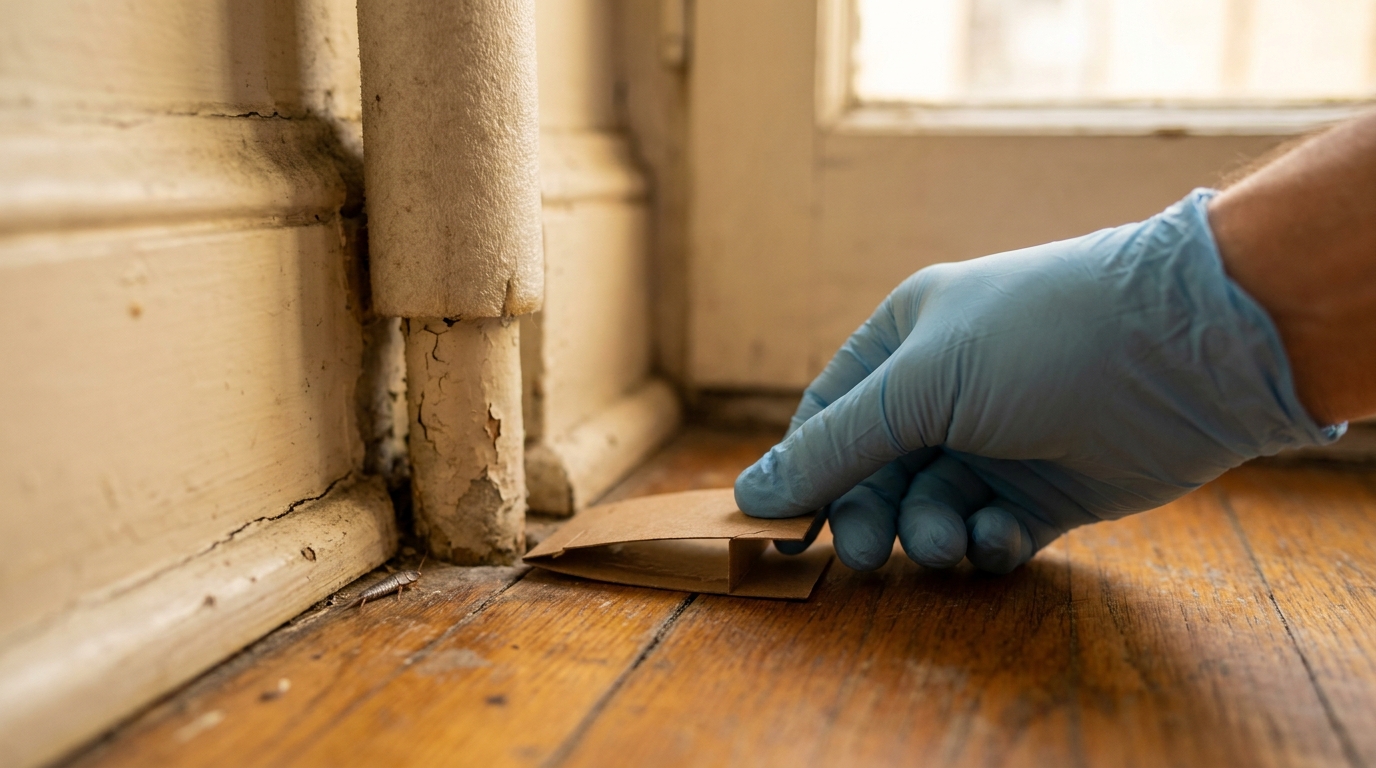
Set expectations correctly here: traps and dust will thin out the visible, actively moving population within a week or two, but they don’t reach silverfish breeding deep inside a wall void. That’s what the next step is for.
Ready to treat the harborage, not just the bugs?
Our team targets silverfish hiding spots under sinks, behind baseboards, and near old plumbing across NYC and Long Island, with no annual contracts and a free estimate to start.
How Do You Treat Silverfish Harborage in an NYC Apartment, Under Sinks and Behind Baseboards?
Harborage treatment is the step that separates a temporary knockdown from actually resolving the problem, and it’s the piece most DIY approaches skip entirely. Silverfish spend the vast majority of their life cycle hidden in cracks, wall voids, and gaps around plumbing penetrations — the areas you can’t easily reach with a spray bottle or a store-bought trap.
Professional harborage treatment focuses on the specific entry and breeding points in your unit: the gap around the pipe where it enters the wall under your sink, the seam where the tub meets the tile, the void behind a radiator cover, and baseboard cracks throughout the apartment. We apply a targeted residual product like Suspend into these cracks and crevices, which keeps working on contact for weeks after application rather than just knocking down what’s visible on the day of service. In a multi-unit pre-war building, this matters even more, since silverfish travel freely through shared pipe chases and wall cavities between apartments — treating your unit alone can be a losing battle if the building’s basement or a neighboring unit is harboring the source colony.
If you’re in a building with recurring moisture issues — old plumbing, chronic condensation, a history of leaks — this is also the point where it’s worth having a professional assess whether the humidity problem itself needs attention beyond what a dehumidifier can solve. Renters dealing with recurring silverfish alongside other damp-loving pests often find the same root cause behind both; our guide on moisture-loving water bugs in NYC covers a related pest that shares almost identical harborage preferences.
Can You Prevent Silverfish From Coming Back in an NYC Apartment?
Yes, and prevention here is really just an extension of the moisture and food-source work from earlier in this guide, maintained on an ongoing basis rather than treated as a one-time fix. Silverfish reproduce slowly compared to something like a roach, so a genuinely dry, decluttered apartment tends to stay clear for a long time once the initial population is knocked down.
Use this checklist as a recurring monthly walkthrough, especially heading into NYC’s humid summer stretch from June through September when silverfish activity peaks:
| Harborage or Moisture Source | Why It Attracts Silverfish | What to Do |
|---|---|---|
| Under-sink cabinet (bathroom or kitchen) | Slow leaks keep humidity high even without visible water | Check monthly for drips at the P-trap and supply lines; dry the cabinet floor |
| Bathroom tile and grout | Standing moisture after showers, poor ventilation | Run the exhaust fan or a window fan for 20+ minutes after every shower |
| Basement or storage cage | Little airflow, no dehumidification, cardboard storage | Swap cardboard for sealed bins; add a small dehumidifier if it’s yours to manage |
| Closets on exterior walls | Cooler surface temperatures encourage condensation behind stored items | Leave a few inches of clearance between boxes and the wall for airflow |
| Peeling wallpaper or loose baseboards | Starchy paste plus hidden crevices for egg-laying | Reseal or remove loose sections; caulk visible gaps |
| Bookshelves and paper storage | Book bindings and paper are a direct food source | Keep shelves a few inches off damp exterior walls; check spines periodically |
Building-wide conditions matter too. If your apartment stays dry and clutter-free but a neighboring unit or the basement is chronically damp, silverfish can keep migrating in through shared walls and pipe chases. Documenting recurring sightings and flagging persistent moisture to your landlord or management company is worth doing — under NYC’s Housing Maintenance Code, landlords are generally responsible for pest conditions tied to building-wide maintenance issues.
When Should You Call an NYC Pro to Eliminate a Silverfish Infestation?
DIY moisture control, decluttering, traps, and dust handle the majority of silverfish situations in NYC apartments, especially when you start early. It’s time to bring in professional help when any of the following apply: you’re still seeing silverfish daily after four to six weeks of consistent DIY effort, the sightings are spreading to multiple rooms rather than staying contained to the bathroom, you’re finding feeding damage on books, documents, or fabric faster than you can address the moisture source, or the humidity issue traces back to a plumbing problem beyond a simple caulk-and-fan fix.
A professional visit typically starts with an inspection to confirm the harborage locations and moisture sources driving the population — that inspection runs $150 to $200 and is often waived once you move forward with treatment. A standard NYC apartment treatment starts around $250 plus tax and combines crack-and-crevice dust application, targeted harborage treatment, and specific guidance on the moisture fixes that will keep the problem from returning. If you’re in an older building where silverfish, water bugs, and general dampness tend to travel together, pest control for Brooklyn brownstones and pre-war Manhattan apartment pest control both call for the same building-aware approach — assessing shared walls and basement conditions, not just the unit where the bugs were spotted.
You can schedule a consultation any time; we offer same-day service during business hours across all five boroughs and Nassau and Suffolk County, and we don’t lock clients into annual contracts for a pest that, once the moisture source is addressed, usually doesn’t come back.
The Bottom Line on Silverfish in Your NYC Apartment
Silverfish are one of the least dangerous pests you’ll deal with in an NYC apartment — they don’t bite, they don’t sting, and according to the National Pest Management Association’s silverfish infestation guide, they aren’t known to spread disease. What they will do is quietly destroy books, documents, photos, and fabric if the conditions that support them go unaddressed, and in a pre-war NYC building, those conditions — old plumbing, poor bathroom ventilation, cardboard storage — are baked into the architecture.
The fix is straightforward even if it takes a few weeks of follow-through: dry out the moisture, remove the starchy clutter, use traps and dust to knock back the visible population, and treat the harborage directly rather than just what you can see. The NYC Integrated Pest Management Toolkit recommends this same combination of sanitation, moisture control, and targeted treatment for exactly this reason — it’s the approach that actually holds up over time in a shared, older building rather than just resetting the population for a few weeks. If you’ve worked through the DIY steps and the silverfish are still winning, we’re happy to take it from there.