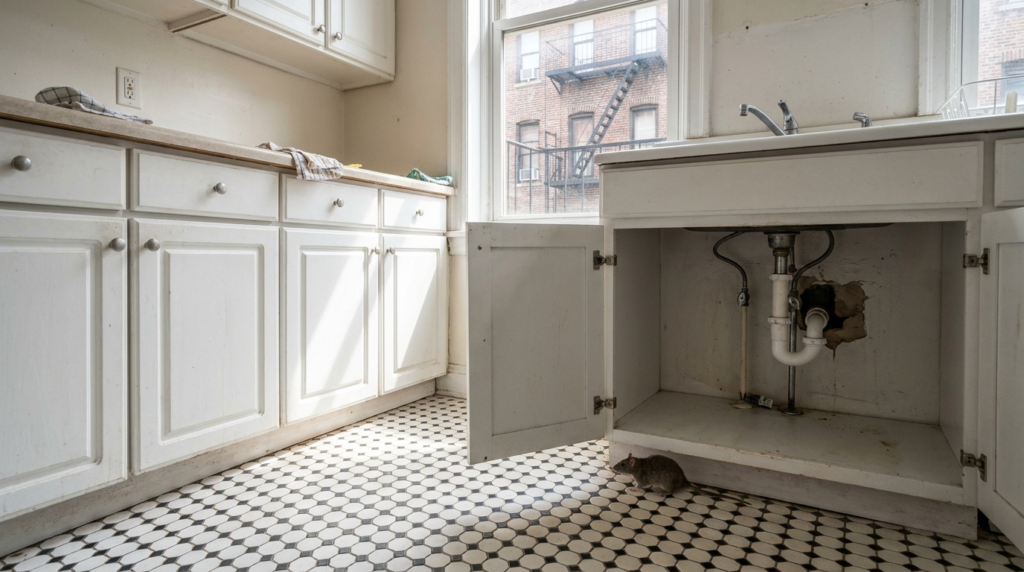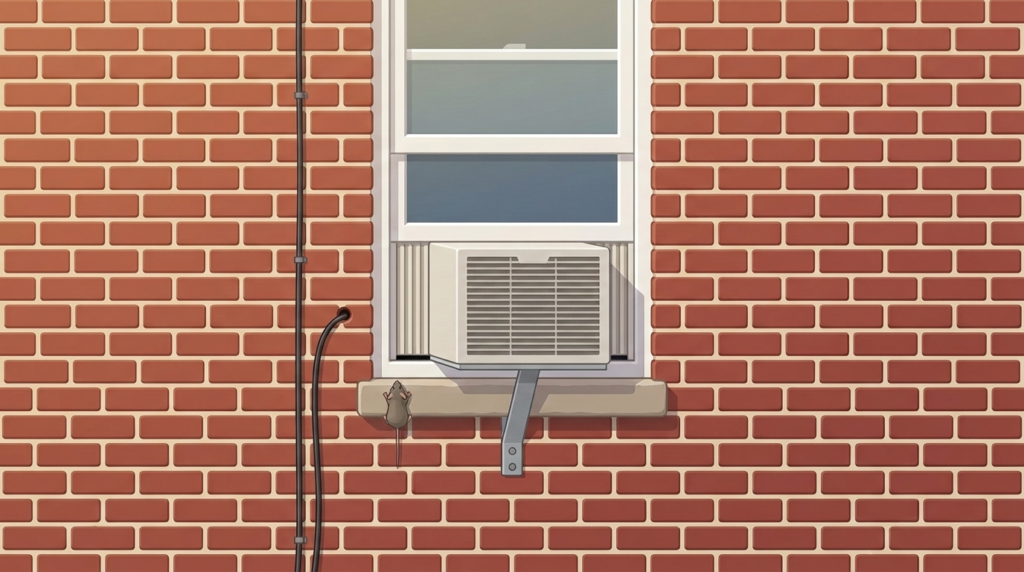
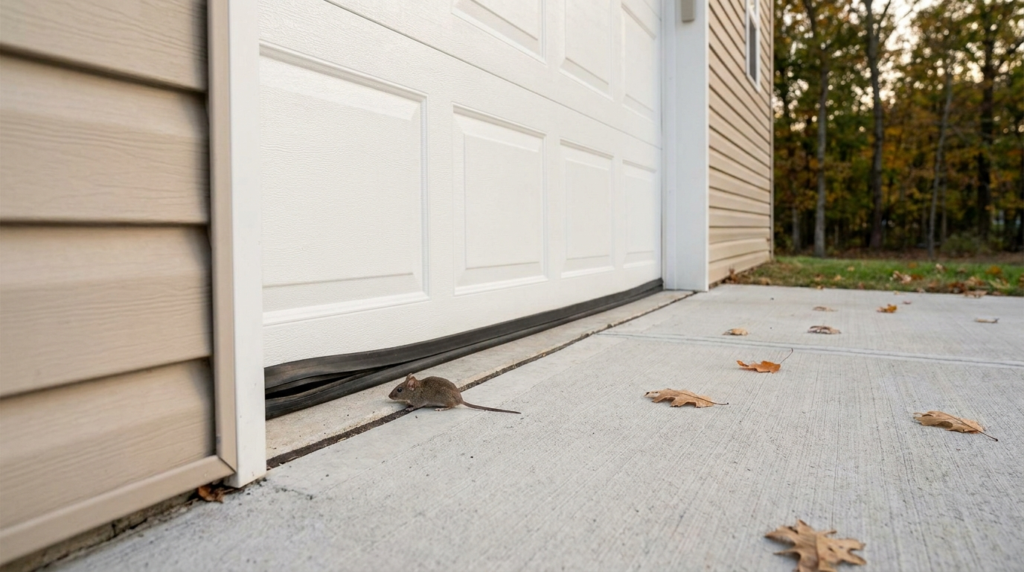
To keep mice out of a Staten Island garage this fall, make it a poor place to eat and nest, get rid of any mice already living in it, and only then close the gaps they use, starting with the bottom of the garage door. Cornell Integrated Pest Management (Cornell IPM) sets the rule for that last step on its pest exclusion page: before you close an entry, be certain no animals will be trapped inside, and any already living in the building usually have to come out first. And the door has to close tight, because the University of California’s house mouse Pest Note says house mice can squeeze under gaps ¼ inch tall.
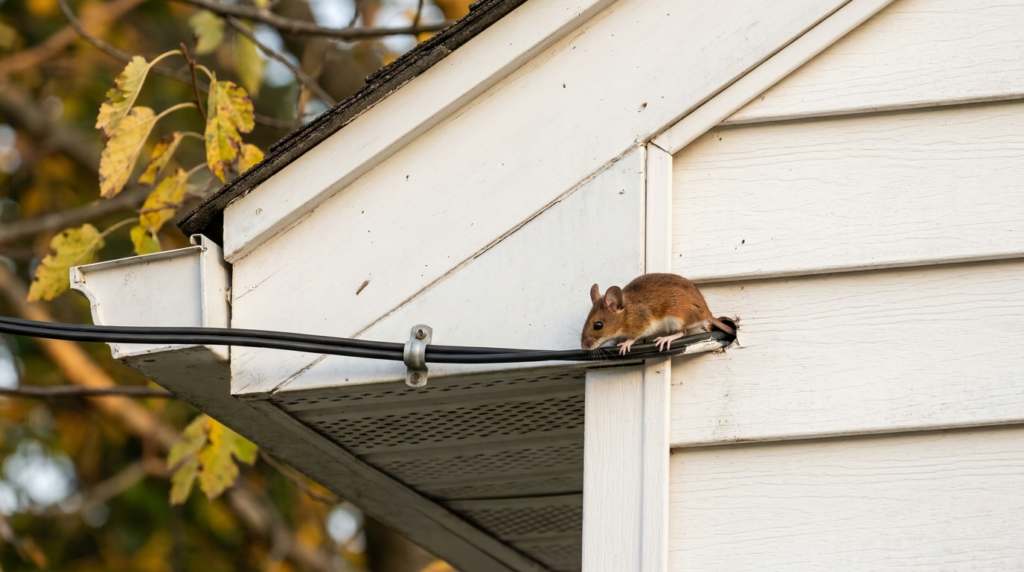
The timing matters too. The same Pest Note says that where house mice live outdoors, they frequently enter homes in the fall as nighttime temperatures turn colder, and an attached garage is part of the home. This guide assumes a detached or semi-detached Staten Island house with a garage beside it, under it or out back. For the professional route, see our Staten Island rodent control page.
Mice getting into your Staten Island garage?
We do professional pest-proofing and rodent-proofing, and every technician is licensed by New York State.
What Draws Mice Into a Staten Island Garage, and How Do You Stop It?
Food and cover. The New York State Department of Health (NYS DOH) tells you on its mouse control page to watch for mouse droppings and nests “in storage areas, such as garages and basements.” If your garage is where the seed, the pet food, the firewood and the boxes end up, take the draws one at a time:
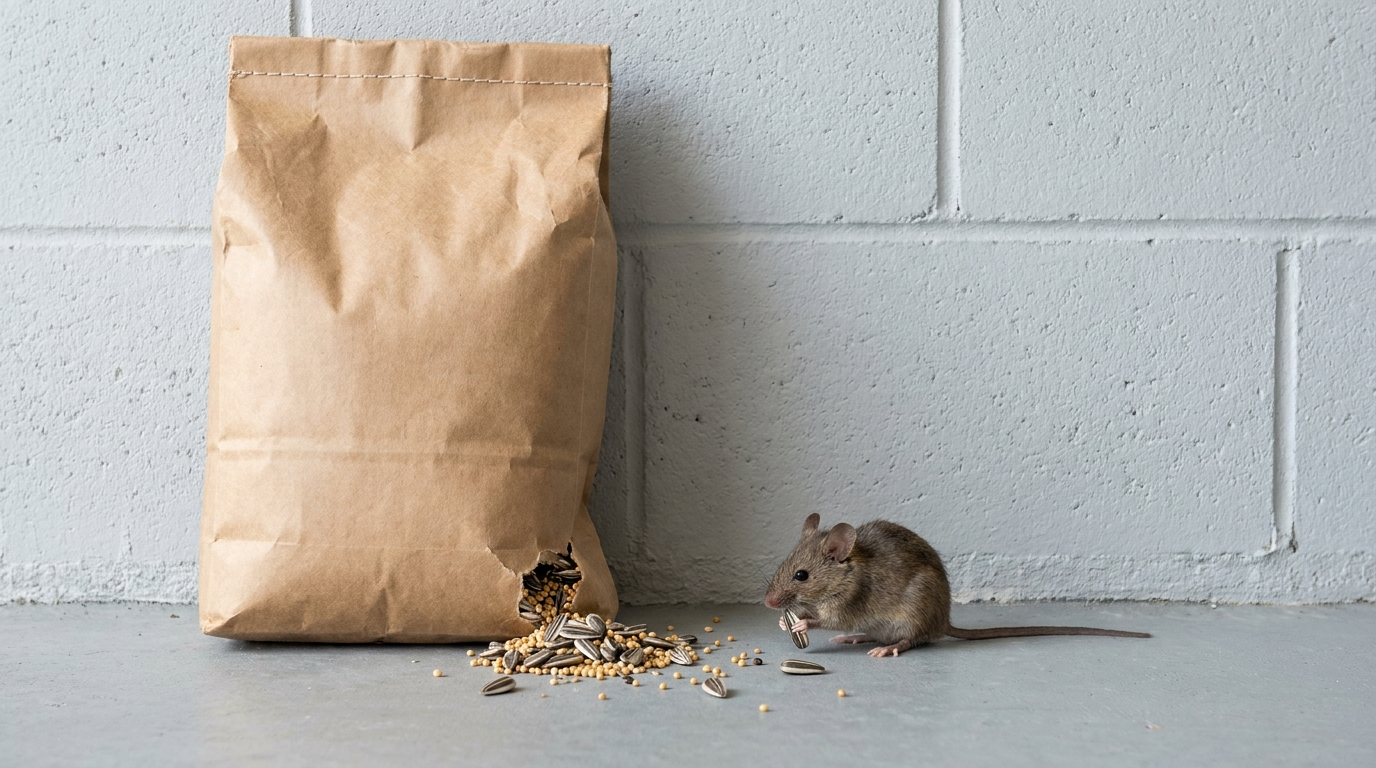
- Birdseed and grass seed. Are mice attracted to grass seed? To a house mouse it is food. The University of California’s Pest Note lists cereals, grasses, roots and seeds among what house mice eat, and a torn sack of either one on the garage floor is a meal left out.
- Pet food. A sack of dry dog or cat food is a meal left out too, and so is a bowl left down in the garage overnight.
- Firewood. Do mice live in wood piles? They can nest there: the Pest Note’s tips send you to look around woodpiles, behind boxes and in garages for nests made of finely shredded paper or other fibrous material. Cornell IPM’s exclusion page says to remove firewood piles from near the foundation.
- Boxes. The stored-items section below deals with cardboard, including whether mice are drawn to it.
If your lot backs onto trees or a wooded lot line, you can’t move the woods. You can control what sits inside the garage.
Taking those reasons away comes first, but on its own it is not the whole job: the Pest Note says good sanitation “will seldom completely control house mice,” though poor sanitation can attract them and let them thrive in greater numbers. So putting the food away is where you start, not where you stop: after it comes removing the mice already inside, and only after that, closing the way in. The next three sections take the door, the stored items and the removal step in turn, and the door section explains why its fix comes last.
How Do You Prevent Mice Slipping Under the Garage Door on Staten Island?
One condition comes before any fix: if mice are already living in the garage, closing the gap under the door shuts them in, not out. Find the gaps now, and close them once the mice inside are gone. The section on removing garage mice below explains how to tell when that is.
Daylight makes the gaps easy to find. On a bright day, stand inside the closed garage with the lights off and look along the whole bottom edge of the door, at the two bottom corners and up the strips on each side. Wherever light shows, check whether the gap is ¼ inch or more, the size the University of California’s Pest Note says house mice can squeeze under.
Then look at the door’s bottom edge. If it is a rubber or vinyl strip, check it for tears, flattened stretches and gnawing. The Pest Note says doors should fit tightly, that it may be necessary to cover the edges of doors with metal to prevent gnawing, and that rubber and vinyl are among the gnawable materials it calls ineffective for plugging holes used by house mice. If the garage also has a side door, that is an exterior door too, and NYS DOH’s mouse control page says to keep a tight-fitting door sweep on all exterior doors.
If the door no longer sits level on the floor when it closes, the gap is coming from the door itself, and that is a repair for whoever services it. For the materials that hold up in other gaps, and how to use them, see our guide to getting rid of mice in an NYC home.
Which Stored Items Should You Remove to Keep Mice From Nesting in the Garage?
Start with anything a mouse can eat, then anything it can hide behind.
- Seed and pet food. Birdseed, grass seed and dry pet food come out of their sacks and into mouse-proof containers, which NYS DOH’s mouse control page describes as “metal or heavy-duty plastic with tight fitting lids.” Spilled seed and kibble on the floor count as food too; if droppings are mixed in, use the cleanup method below rather than a broom.
- Firewood. For the reasons above, it moves out of the garage and away from the foundation.
- Boxes. Are mice attracted to cardboard? A box gives a mouse cover, close to a wall, in a spot nobody checks, which is why boxes are on the list of places to look for nests in the first section. Paper, cardboard and fabric as nesting material have their own section in our post on what attracts mice to NYC homes, so the garage question here is simpler: boxes you have not opened in years can go, and the rest come up off the floor and away from the walls, where you can see behind them.
- Anything already chewed or nested in. A sack, box or rag with gnaw marks, droppings or nesting in it goes out, handled the way the next part describes.
If You Find Droppings or Nests as You Sort the Garage
A garage that has been shut up with mice in it can hold a lot of droppings and nest material. For large amounts of rodent droppings or nest materials, NYS DOH’s hantavirus fact sheet sets out a cleanup method. Use all of it. Before you start, keep children and pets out of the garage, and read the label on whatever disinfectant you plan to use. The fact sheet’s steps follow, in an order that puts each protection ahead of the work it guards against, with hand washing last:
- Air the garage out by opening its windows and doors before you go back in, to keep rodent dropping particles from getting into the air, where they can be inhaled.
- Put on disposable gloves, a dust mask, long-sleeved clothing and protective eyewear to help prevent personal exposure. For the wet-down step, the gloves are rubber or plastic.
- Do not use a vacuum cleaner or sweep with a broom, which will create dust in the air.
- Wet the debris down thoroughly with an Environmental Protection Agency-registered disinfectant or a household disinfectant solution, such as the fact sheet’s example of 1½ cups of bleach mixed in one gallon of water. A spray bottle with a fine mist is ideal for applying it.
- Wipe up the sprayed debris and put it in plastic bags for disposal, together with any cleanup materials such as paper towels.
- Wash your hands with soap and water after the cleanup is done.
Why Should Staten Island Homeowners Remove Garage Mice Before Sealing Gaps?
Because a sealed gap only keeps mice out if none are left inside. Cornell IPM’s exclusion page, which covers animals in buildings generally, puts it plainly: “Before closing animal entry sites in a building, be certain that animals will not be trapped inside.” It adds that animals already living in a building usually need to be removed before the sealing starts. A mouse you seal into an attached garage hasn’t left. It is still in there with the seed and the boxes, one wall away from the rest of your house.
For the removal, the University of California’s Pest Note says that for most situations trapping works well and is “a great first step in controlling house mice.” It also calls trapping time consuming, and the preferred method in homes, garages and other structures where only a few house mice are present. Before a single trap goes down, the Centers for Disease Control and Prevention (CDC) says in its guide to trapping rodents to keep baits and traps out of reach of children and pets and to always follow the instructions for traps.
The same CDC page recommends traditional snap traps and says not to use glue traps or live traps, because they can scare the rodents, causing them to urinate, which can increase your chance of getting sick. NYS DOH’s hantavirus fact sheet likewise says that glue traps or live traps are not recommended, and it says to set snap traps in an empty container, such as a milk carton lying on its side, or on newspaper, to prevent contact with droppings that could be infectious. For where to place snap traps, go back to the NYC home guide linked in the door section.
How do you know the garage is clear before you seal? Cornell IPM’s exclusion page gives a check for any opening you are unsure about: monitor it for at least two days, with newspaper placed in the hole, cardboard stapled over it or duct tape over it. If the covering has been disturbed, treat the opening as still in use and keep trapping.
When a trap does catch, handle it the way NYS DOH’s hantavirus fact sheet describes for a used trap: put on rubber or plastic gloves first, wet down the used trap, the container or newspaper it sits in, and the rodent thoroughly with the same kind of disinfectant as the cleanup above, put everything in a plastic bag for disposal, and wash your hands with soap and water afterward. The CDC’s trapping guide says to check traps daily and immediately dispose of any dead rodents.
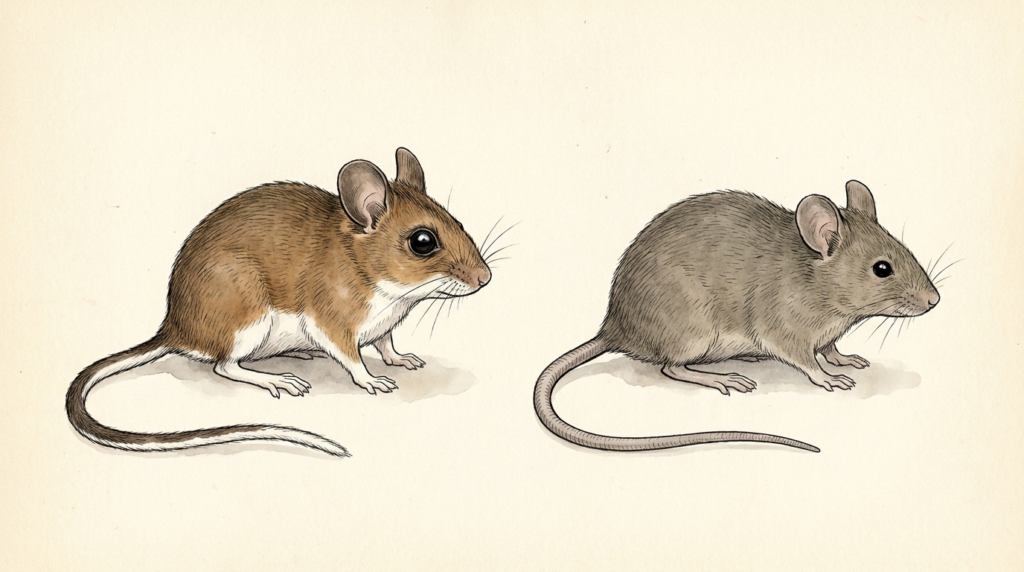
Which kind of mouse you have caught is a separate question with its own answer. It does not change the order here: mice out first, gaps sealed second.
Garage mice moving into your Staten Island home?
We have family and pet-friendly options, and we waive the inspection fee when you have the work done.
How Do You Stop Garage Mice Moving Into Staten Island Homes?
Treat the wall between the garage and the house like an outside wall, because in fall it can be the last one between the mice and your living space. The rule from the last section still comes first: close nothing between the garage and the house while mice are still living on the garage side. Then work through the openings that link the two. Cornell IPM’s page on managing mice and rats tells you to seal openings that allow pests to enter or move from room to room, and a garage and the room beside it are that pair of rooms.
- The door into the house. Give it what the garage’s side door gets in the door section above: a tight-fitting sweep, and the same daylight check as the garage door.
- What passes through the shared wall or ceiling. Pipes, wires, vents and ducts can each leave a gap where they go through, and a gap there can be a route from one room into the other.
- A garage that stands on its own. Then the line to hold moves to the house itself: its doors, its foundation and the places where utility lines come in.
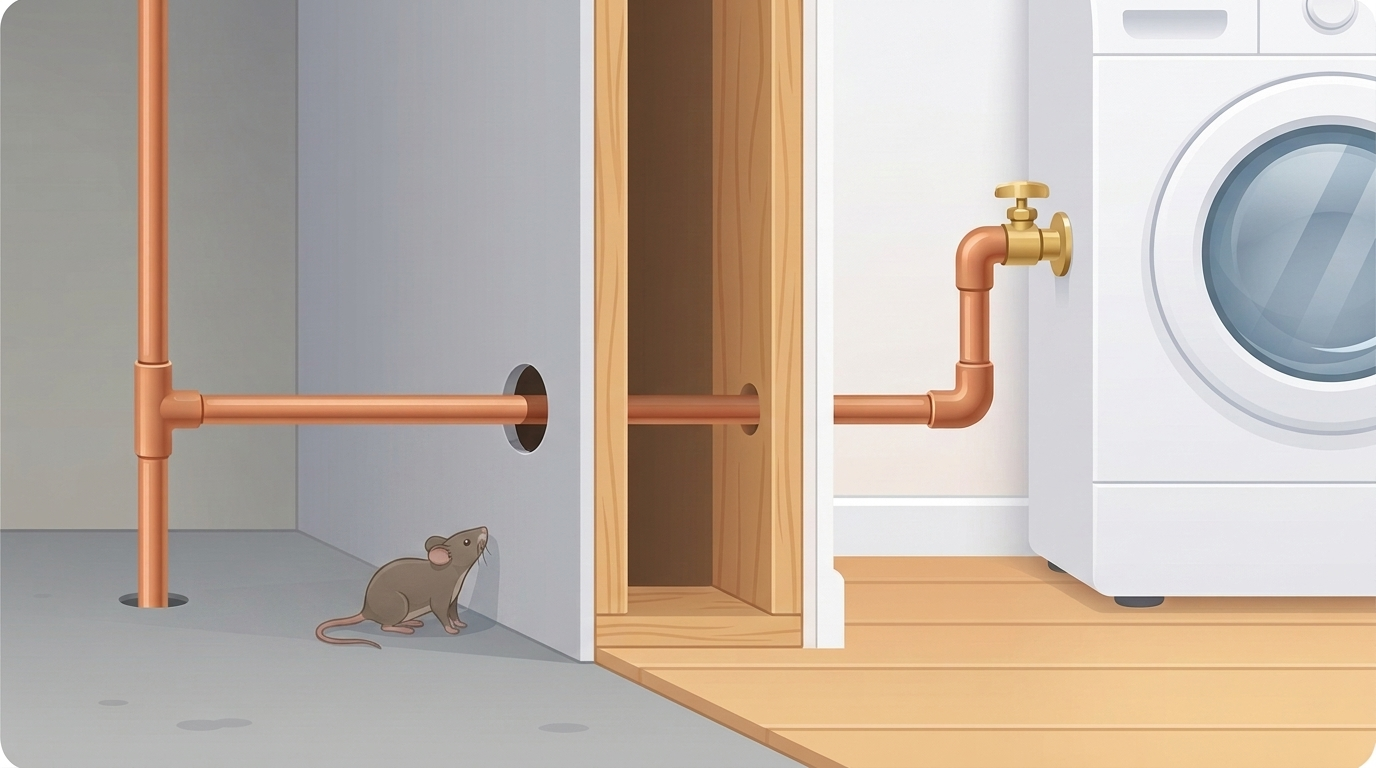
How do you tell whether they have already crossed? NYS DOH’s mouse control page says you might not see the mice, but you can probably hear them after dark, as mice are often more active at night, and it gives a track test that suits the floor on the house side of that door: dust the area with a light coating of unscented talcum powder or mason’s chalk dust, wait a day, then shine a flashlight across it. Small tracks in the powder mean mice have been there.
Some of those gaps are hard to see and harder to reach. We do professional pest-proofing and rodent-proofing, and our rodent control service page describes the work.
Can Mice Damage Car Wiring in a Staten Island Garage, and How Do You Deter Them?
Yes. The University of California’s Pest Note says house mice “can cause damage to structures and vehicles by gnawing on electrical wires and gas lines.” The CDC’s guide to cleaning up after rodents adds that rodents may build their nests in cars, trucks, campers and other vehicles, especially if the vehicles are used infrequently, a description that fits a car that spends most of its time parked in the garage.
What does it mean if you find gnaw marks on wiring, or droppings or nest material under the hood or in the cabin? A rodent has been in the car, and the car is in the garage. Treat it as the garage’s problem as much as the car’s, and work through the steps above. Have a mechanic look at any gnawed wiring. For droppings or nesting in the car itself, the CDC page linked above has a section on inspecting and disinfecting a vehicle; use it as written rather than in pieces.
How do you deter mice? Start with food. The same CDC section says not to leave any kind of food anywhere in the car, as it can attract rodents. Then be skeptical of devices. The Pest Note says house mice are easily frightened by strange or unfamiliar noises but quickly become accustomed to regularly repeated sounds, and that there is little evidence that sound, magnetic or vibrational devices of any kind will drive established house mice or rats from buildings or provide any prevention or control. It is writing about buildings, and a garage is one. What keeps mice away from a parked car is what keeps them out of the garage: nothing to eat, nothing to nest in, the mice already there removed, and the gaps closed after that.
When Should You Call a Pro to Eliminate Mice From a Garage on Staten Island?
When the garage problem has become a house problem, or a reach problem. If the powder test or the sounds after dark say mice are already on the house side, the job is no longer one room, and the trapping, cleanup and sealing above now cover two. The CDC’s guide to sealing up against rodents says you can contact a pest control specialist if rodents have gotten into areas that cannot be reached to clean. The inside of the wall between a garage and a house is one of those places.
Two more signs the job has outgrown a weekend: you are still catching mice, or finding fresh droppings, after the food is put away and the traps have been down for a while; or the openings you found are beyond your tools or your ladder, like a door that no longer meets the floor or gaps you cannot reach.
We treat mice, and we cover all five boroughs. We are NY State certified in Category 7A (structural and rodent). Our mouse exterminator service page lays out the removal process step by step, and our Staten Island pest control page lists the other pests we handle on the island.
Quick Recap
- Work in order. Take away food and cover, remove the mice already in the garage, and close the gaps only after that, so no mouse gets sealed in.
- The door has to meet the floor. Check its bottom edge, corners and side strips for daylight; the University of California’s Pest Note says house mice can squeeze under gaps ¼ inch tall. A side door gets a tight-fitting sweep.
- Stored items. Seed and pet food go into metal or heavy-duty plastic containers with tight-fitting lids, firewood moves away from the foundation, and boxes come up off the floor or go.
- Cleanup. For large amounts of droppings or nest material, use the NYS DOH fact sheet’s method from start to finish: air the space out, put on protection, no vacuum or broom, wet the debris down with disinfectant, wipe it up and bag it, wash your hands.
- Before you seal. Watch any opening you are unsure about for at least two days, with newspaper in it or cardboard or duct tape over it, as Cornell IPM’s exclusion page describes.
- Into the house. Once the garage side is clear, seal what links the garage to the house, and listen after dark or use the powder test to see whether mice have crossed.
- The car. Gnawed wiring means a rodent has been in the car. Have a mechanic look at it, keep food out of the car, and don’t count on sound or vibration devices to drive mice off.
- When to call. Mice in the house as well as the garage, rodents somewhere you can’t reach to clean, or trapping that isn’t ending it.