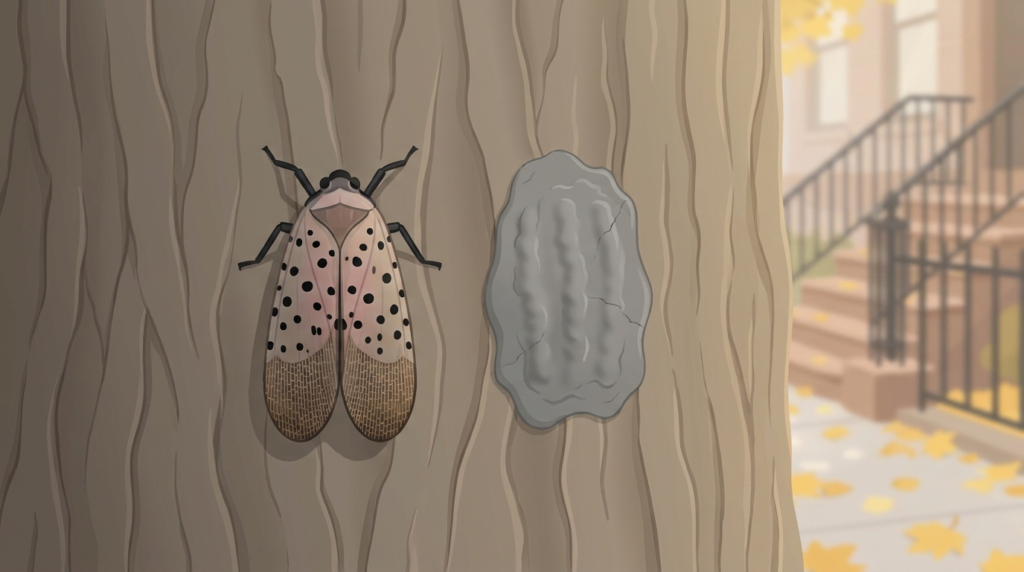
Spotted lanternflies lay their eggs in the fall. In NYC, laying starts in September and keeps going until freezing weather kills the adults, which can run into December. The eggs then wait out the winter and start hatching in May.
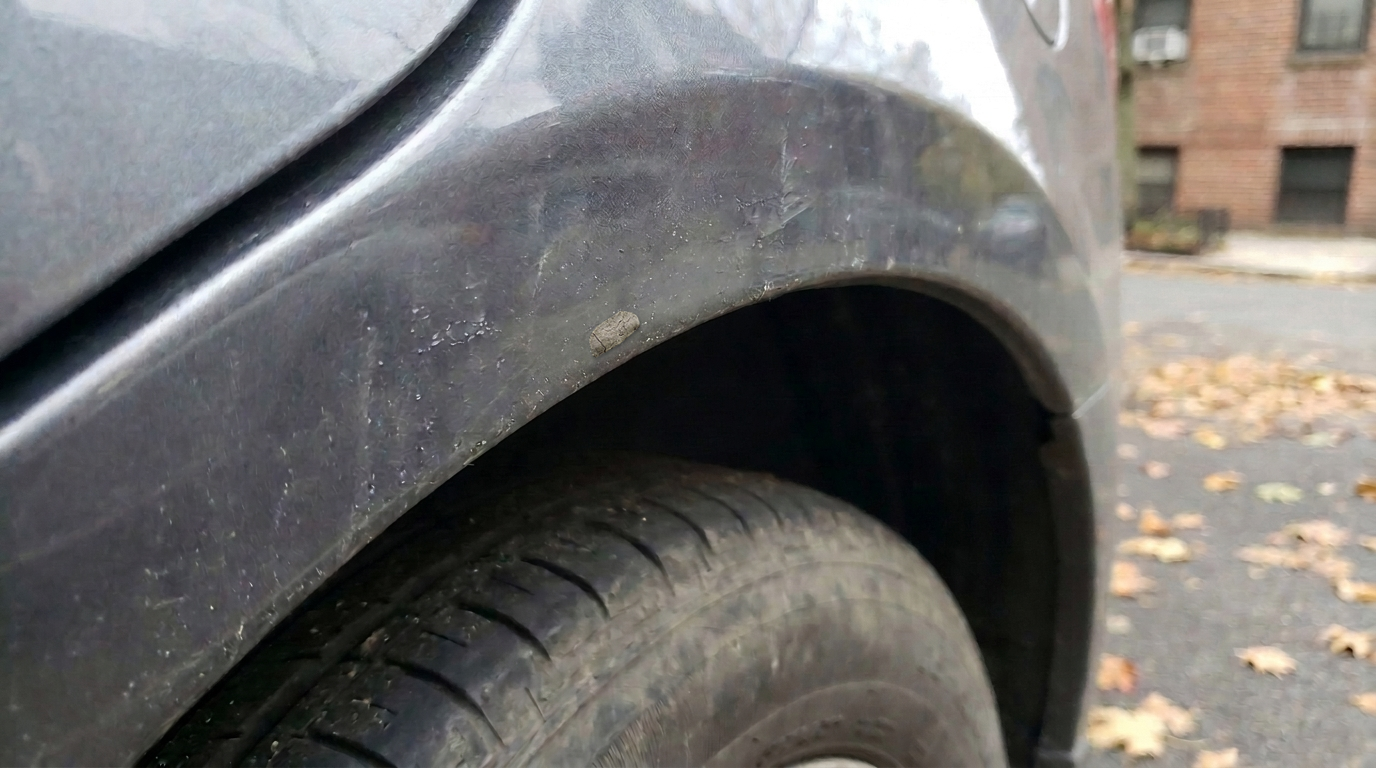
That calendar matters because the adults die off but their eggs do not. Lanternflies have turned up in all five boroughs. So from late fall to spring, a smear like dried mud on a street tree, fence or car bumper could be next year’s lanternflies. If they are already a problem around your home, our spotted lanternfly control page is the place to start.
Pests showing up around your NYC home?
Every technician is licensed by New York State. Call us and a real person answers.
What Months Do Spotted Lanternflies Lay Eggs in NYC?
September through November is the main window, and a mild fall can stretch it into December. Adults start mating in late August. They begin laying in September and are gone by mid-December, according to the New York State Department of Agriculture and Markets. In nearby Pennsylvania, most egg masses go down in October, inside that same September to December span.
Laying stops once freezing temperatures kill the adults, and in the city that date moves around from year to year. Central Park’s first fall frost averages November 20 but has ranged from October 15 to December 22 (New York Botanical Garden, 1991 to 2020 data).
Until the adults are gone, new egg masses can keep appearing on anything left outdoors, from the Bronx to Staten Island. So if you scrape a fence in early November while adults are still around, fresh masses can show up after you’re done.
Where adults can feed on tree of heaven, laying starts sooner and more eggs get laid. Late in the season, though, adults tend to move to trees like maples and willows, and they usually lay near where they feed. Say you notice adults crowding a maple on your block on a mild November afternoon. They can still be laying. An egg-laden adult killed before it lays takes its eggs with it, since eggs that never leave the body never hatch.
Once the adults are gone, nothing new goes down until next September. Masses, or what’s left of them, can turn up any time of year, but most show up between fall and early summer.
Can Lanternfly Egg Masses Ride Out of NYC on Your Car or Firewood?
Yes. Lanternflies spread mostly through people moving things, and egg masses are among their most common hitchhikers. The New York State Department of Environmental Conservation (DEC) says adults lay eggs on firewood, vehicles, stone and outdoor furniture, which then travel unnoticed. Masses also turn up on trailers, tarps, grills, building materials and even kiddie pools.
NYC311 asks anyone leaving the New York City region to check vehicles, luggage, gear and outdoor items for egg masses and adults first. Say you’re loading the car for a weekend upstate, packing a moving truck, or bringing firewood to a campsite. Each trip moves the kinds of items on those lists. The same goes for a business moving pallets, containers or anything stored outdoors off its site.
On a car, USDA APHIS says to check the doors, sides, bumpers, wheel wells and roof before leaving a parking lot or work site. While adults are still around in the fall, keep the windows closed when you park, since they can ride inside too. A bike locked outside all fall can carry a mass as well. APHIS also says to check outdoor items you may bring indoors for winter, like patio chairs headed for the basement.
A DEC rule for invasive pests generally keeps New York firewood within 50 miles of its source unless heat-treated to 160°F for 75 minutes.
The New York State Department of Agriculture and Markets doesn’t need sighting reports from the five boroughs or Long Island for now. The same goes for seven counties north of the city. People living elsewhere in the state can help by reporting a sighting immediately.
Long Island already has lanternflies too. So the bigger risk on a trip out of town is carrying eggs somewhere they haven’t reached yet.
Do Spotted Lanternfly Eggs Survive a New York City Winter?
Yes. Lanternflies spend the winter as egg masses, and that is the only stage that makes it through. The adults die in the cold, while the eggs usually sit under a coating thought to help them survive the winter. Even masses laid without that coating can still hatch.
In late fall the eggs go dormant, pausing their development until conditions turn favorable in spring. Say a mass went down on your fence in October. It sits through the coldest months doing nothing.
The eggs also handle hard cold well. In a 2025 Environmental Entomology study, deep cold cut hatching in lab-chilled Pennsylvania egg masses, but the estimated lethal point was near 18 below zero. Central Park’s coldest reading on record is 15 below, from February 9, 1934, in National Weather Service records updated January 1, 2026. Lab numbers can’t tell you exactly how the eggs on your block will fare, but don’t count on a cold snap to clear them.
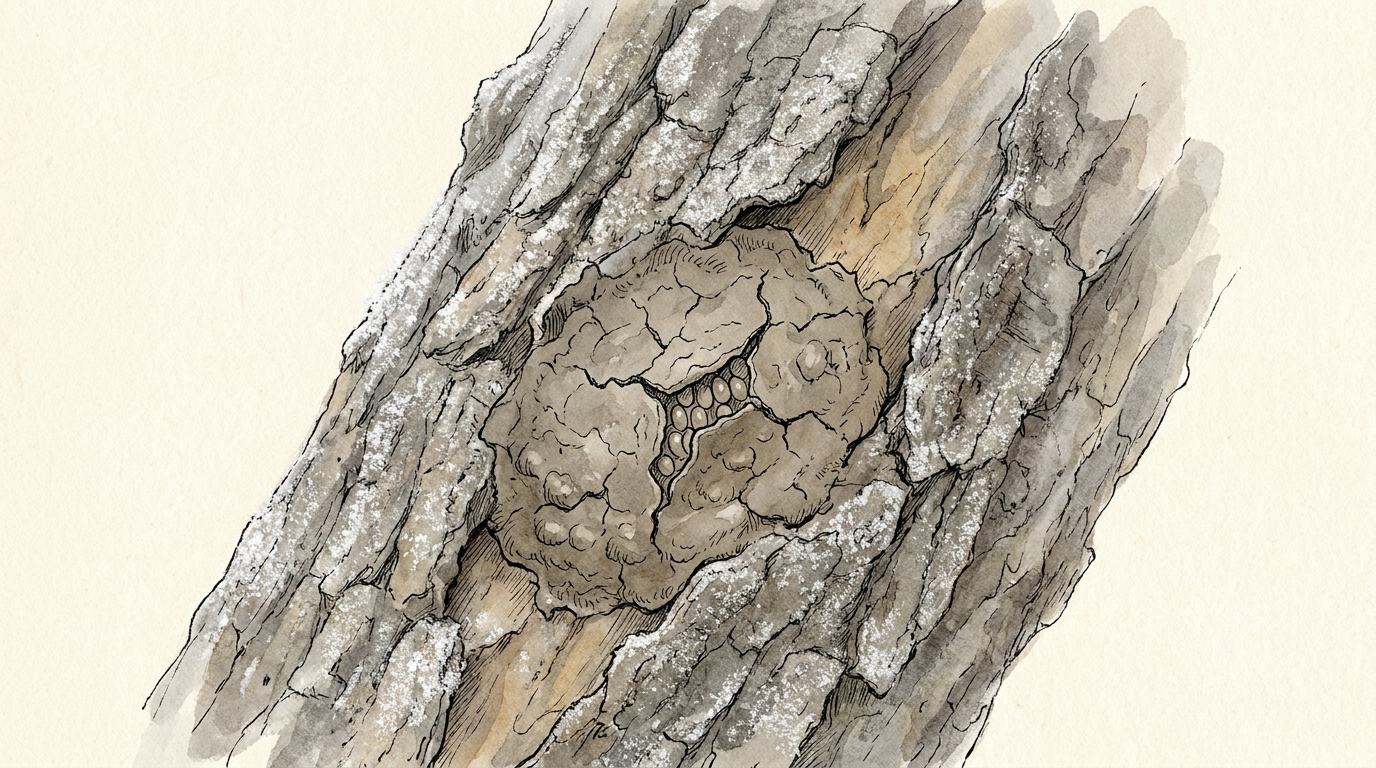
When spring arrives, hatching starts in May and is spread over weeks, so new nymphs can keep appearing into June.
What Happens If NYC Lanternfly Egg Masses Are Left Until Spring?
They hatch, and each one turns into a batch of new lanternflies right where it was laid. USDA APHIS puts a newly laid mass at 30 to 50 eggs.
Young nymphs stick to tender plants and new growth, and they have turned up on garden plants like basil, cucumbers and roses. As they grow, they move on to tougher bark and branches. They become adults starting in July and begin laying the next round in September. Put simply, the eggs on your fence in February can become the adults around your yard in August.
One mass is often not alone, either. Lanternflies prefer to lay near existing masses, so masses tend to turn up in clumps. Cornell IPM says each egg-laying adult leaves one or two. Find one mass on a tree or wall, and there may be more close by.
Clearing masses before May is how you cut those numbers. Egg masses are the only stage that stays put, which makes them an easy target. Every mass you destroy takes its eggs out of next year’s count.
From May on, check before you scrape. A mass with small oval holes across the top has already hatched. Old, empty cases can stay on a tree or wall long after the nymphs are gone.
Scraping won’t make lanternflies disappear from the city. The goal is fewer lanternflies around your home next summer, not zero. Once they hatch, they join the rest of the warm-weather crowd, and our month-by-month NYC summer pest calendar covers what else picks up.
Want a pro to look at a pest problem in NYC?
Our technicians turn up in uniform and put booties on before they come through your door.
When Should NYC Property Owners Get Help With Lanternfly Egg Masses?
Do the low work yourself, and bring in help only for the tree itself. Masses on a car, fence, patio furniture or a trunk within reach are a do-it-yourself job. Our guide to spotted lanternflies in NYC shows how to spot and scrape them, and when swarming adults are worth a call.
Stop at what you can reach from the ground. On maples 30 to 40 feet tall, Penn State Extension found fewer than 2% of egg masses within 10 feet of the ground. The share may differ on other trees, but expect many masses to sit out of reach. Don’t use a ladder or climb the tree for the rest. For any mass you can reach, scraping or smashing works better than an egg-killing spray.
If you rent, flag masses on the building’s trees or fences to your super or landlord.
Street trees are NYC Parks’ to care for, and its Tree Work Permit page lists “Managing Pests on Tree” among jobs that need a permit. The application has to name who will do the work. Parks says it is not currently considering widespread lanternfly treatment, though it may treat limited high-value trees if needed. So a mass high on a street tree is one to leave alone.
A tree in your own yard is your call. If lanternflies on it become a nuisance, some owners hire a certified pesticide applicator equipped for tree injections, bark sprays or soil drenches.
The Bottom Line on Spotted Lanternfly Eggs in NYC
Set two calendar reminders to look for egg masses: one for after the first hard freeze, and one for early spring.
We cover all five boroughs, Nassau County and Suffolk County. For pests in and around your home, our pest control in Queens and Staten Island pest control pages are a good place to start.