
If you have ever tried to enjoy a summer evening on your patio only to retreat inside within minutes, you already know the problem. From Queens backyards and Brooklyn brownstone gardens to Bronx patios, Manhattan terraces, and the bigger lawns out on Long Island, mosquitoes turn our outdoor spaces into no-go zones from June clear through October. We have spent 26-plus years fighting them for NYC and Long Island families, and the single most common question we hear is a practical one: how to keep mosquitoes away without dousing yourself in repellent every time you step outside.
The honest answer is that it starts with your yard, not your skin. Most of the mosquitoes biting you were born within a couple hundred yards of where you are standing, so the way you manage your own property is the biggest lever you have. In this guide we will walk through exactly what works, in the order we would tackle it ourselves, from free five-minute habits all the way to the point where professional mosquito control in NYC earns its keep. If you want to confirm they are actually breeding on your property first, our companion guide on how to spot the early signs of mosquito activity covers what to look for. This post is about the next step: keeping them out for good.
Mosquitoes taking over your NYC backyard?
26-plus years of NYC and Long Island mosquito control. Ask about our Ecovia MT plant-based yard treatment that is family and pet-friendly, with no annual contracts and a free estimate to start.
Why Are Mosquitoes So Hard to Control in NYC and Long Island Yards?
Mosquitoes feel relentless because they play a numbers game we rarely see. A female only needs a bottle cap of standing water to lay her eggs, and in our summer heat an egg can become a biting adult in about a week. One overlooked planter saucer can seed hundreds of new mosquitoes before you notice a single one.
They are also homebodies. Most of the species biting you in a Queens or Nassau County yard are weak fliers that spend their whole lives within roughly 150 to 200 yards of where they hatched. That is good news and bad news. The good news: clean up the breeding sites on your own property and you starve the population at the source. The bad news: if your neighbor’s clogged gutter, a nearby creek, a Long Island salt marsh, or a city catch basin is doing the breeding, you can do everything right and still get bitten. That is exactly why blanket “kill the adults” spraying disappoints so many homeowners, and why the smartest approach borrows from Integrated Pest Management. As Penn State Extension frames it, you start by asking why the pest is here, then remove the conditions letting it thrive.
There is a health reason to take this seriously, not just a comfort one. According to the New York State Department of Health, mosquitoes here carry West Nile virus and Eastern Equine Encephalitis (EEE), and 2024 saw 100 human West Nile cases across New York State, the highest count in over a decade. We are not telling you that to scare anyone. We are telling you because the same weekly habits that make your backyard livable also lower a real risk for your family.
How Do We Eliminate the Standing Water Where NYC Mosquitoes Breed?
If you only do one thing from this entire guide, make it this: eliminate standing water every single week. No repellent, candle, or gadget comes close to the payoff of denying mosquitoes a nursery in the first place. This is the foundation of everything our team does on a yard, and it costs you nothing but ten minutes.
The rhythm we recommend is a weekly “tip and toss” walk of your property. Once a week, empty, scrub, turn over, cover, or throw out anything holding water. The scrub matters, because eggs stick to the sides of containers above the waterline and simply dumping the water can leave them behind to hatch at the next rain. Cornell’s New York State IPM program makes the same point with a simple example: after a storm, walk out and flip the wheelbarrow, the trash-can lid, the kids’ toys, and the puddle problem often solves itself. For features you want to keep, like a birdbath, the New York State Department of Health advises changing the water at least twice a week so larvae never reach adulthood.
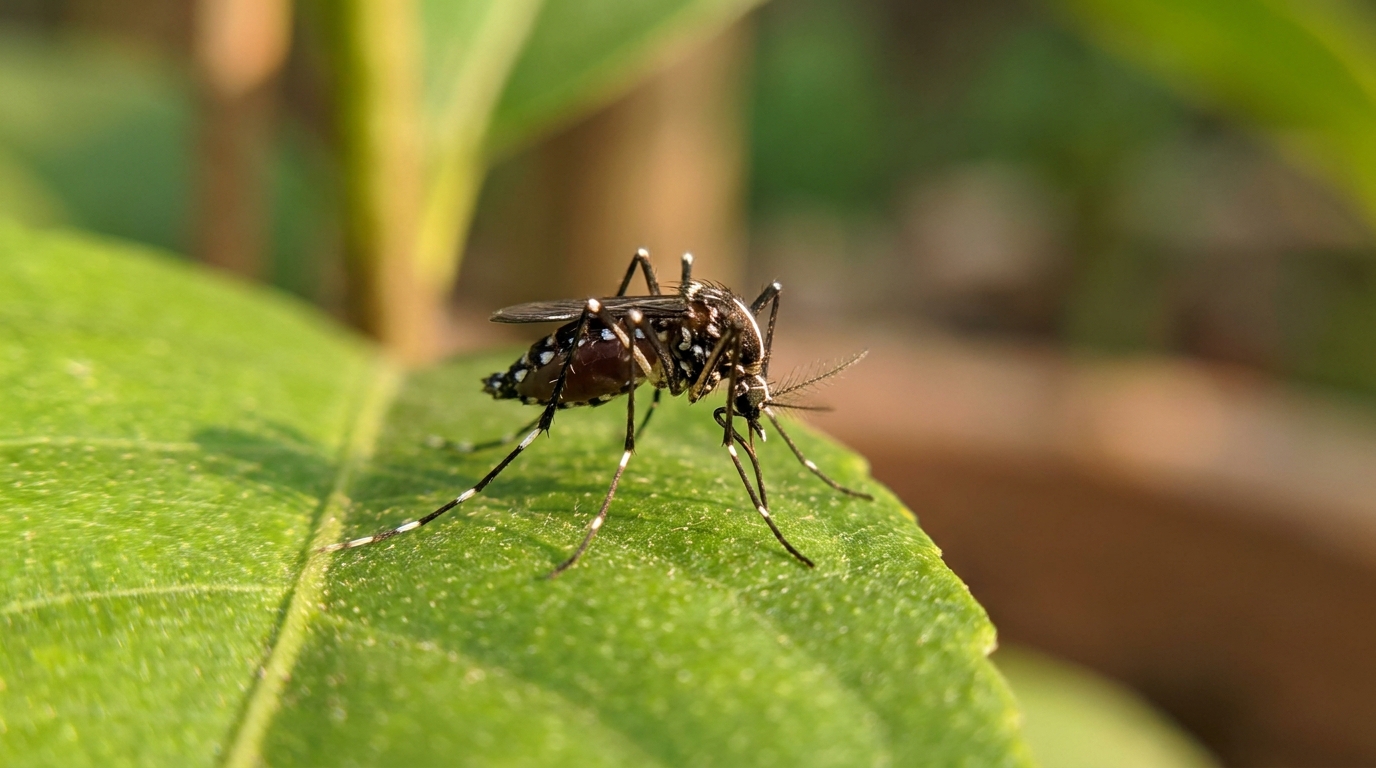
Do this on the same day each week and it becomes a two-minute habit rather than a chore. Right after rain is the highest-value time to check, because that is when fresh water collects in spots you forgot existed. Which brings us to the real question: where exactly is that water hiding?
What in Your Long Island Yard Is Breeding Mosquitoes?
After 26 years of walking NYC and Long Island properties, we can tell you the breeding sites are almost never the obvious pond. They are the small, forgettable containers tucked around the house. Use the checklist below as your weekly loop. It applies whether you have a compact Brooklyn garden or a half-acre lot in Suffolk County.
| Where water hides | Common in these yards | What to do weekly |
|---|---|---|
| Clogged gutters and downspouts | Every borough; older LI homes with tree cover | Clear debris so water drains fully |
| Flowerpot and planter saucers | Terraces, stoops, brownstone gardens | Empty saucers after every watering and rain |
| Birdbaths and fountains | Nassau and Suffolk lawns | Refresh water twice a week or add a dunk |
| Buckets, wheelbarrows, watering cans | Garages, sheds, side yards | Store upside down when not in use |
| Tarps, pool covers, boat covers | Long Island driveways and yards | Pull taut or drain the sagging pockets |
| Kiddie pools and outdoor toys | Family yards across the five boroughs | Drain and flip when the day is done |
| Recycling bins and trash-can lids | Row houses, shared alleys, curbsides | Drill drainage holes or cover them |
| Corrugated drain pipe and extenders | Sloped LI properties | Flush out trapped water and debris |
| Tree holes and old stumps | Mature yards in Queens and on Long Island | Fill with sand or drain after rain |
| AC condensate trays and drip pans | Window units in pre-war walk-ups | Wipe out standing water weekly |
| Low spots, ruts, and poor drainage | Compacted city yards and driveways | Fill low spots with soil or sand |
| Clogged street catch basins | NYC blocks and curbsides | Report persistent water to 311 |
Notice how many of these hold only a cup or two of water. That is the whole point. Mosquitoes do not need your neighbor’s swimming pool when your forgotten planter saucer will do just fine.
How Do Larvicide Dunks Kill NYC Mosquito Larvae Before They Hatch?
Some water simply cannot be dumped. A rain barrel you rely on, an ornamental pond, a low spot that refills every storm, a birdbath you love, or a clogged catch basin on your Queens block are all going to hold water no matter how diligent you are. For those, the answer is a larvicide “dunk.”
The active ingredient in the common dunk is Bti, short for Bacillus thuringiensis israelensis, a naturally occurring soil bacterium. Here is why we like it: Bti is highly specific. It kills mosquito larvae in the water but does not harm fish, birds, pets, or pollinators like bees and butterflies, which makes it a family and pet-friendly tool for water you have to keep. Cornell’s New York State IPM program recommends exactly this approach for the ponds and containers you cannot flip. A dunk typically lasts about 30 days, and crumbled “bits” work faster for smaller containers.
There is even a clever offense you can run with it. Some homeowners set out a dark bucket with a handful of grass clippings or hay, let it steep into an irresistible brewing spot, then drop in a dunk. Egg-laying females flock to it and their offspring never survive. If you try that trick, cover the bucket with wire mesh so a curious chipmunk or squirrel cannot fall in. Just remember: a dunk treats the water you keep. It is a partner to your weekly tip-and-toss, never a replacement for it.
Still getting bitten in your own yard?
We treat mosquito resting spots across the five boroughs and Long Island with barrier fogging and Ecovia MT, no annual contracts, and a free estimate so you know what you are dealing with first.
How Do We Deter Mosquitoes From an NYC Yard With Screens and Fans?
Once you have cut off the breeding, the next job is making the space you actually use unpleasant for the mosquitoes that wander in from elsewhere. Two low-tech tools do the heavy lifting, and neither one involves chemicals.
Start with screens. The New York State Department of Health recommends keeping window and door screens in good repair, free of the rips and tears that let mosquitoes drift indoors from a Brooklyn backyard or a Bronx airshaft. Close doors behind you, keep the garage shut, and run the AC when you can, since mosquitoes struggle in cool, moving air. In an older pre-war walk-up, a torn screen on a single window is often the reason they keep finding you at night.

Then there is the fan trick, the runaway favorite among city and suburban homeowners for good reason. Mosquitoes are famously weak fliers, so a simple box fan or an outdoor oscillating fan on your patio, deck, or terrace creates a breeze they cannot push through. It keeps them off your guests during a barbecue without spraying a thing, which is ideal when kids and pets are underfoot. For a small terrace or a brownstone garden nook, a fan plus a zone repellent device can make an evening genuinely comfortable. It will not fix a whole yard, but it reliably protects the seating area where you spend your time.
How Does Yard Maintenance Keep NYC Mosquitoes Away?
Between rains, mosquitoes need somewhere shady and humid to rest, and an overgrown yard is a five-star hotel. This matters even in a tight Bronx or Manhattan yard, where dense plantings against a fence line or building wall create exactly the cool, still pockets they crave.
Keep it tidy and you remove the harborage. Trim shrubs, tall grass, ivy, and dense ground cover, especially on the shaded north and east sides of the property where the sun lingers longest and the ground stays damp. Clear leaf litter and piles of clippings, which hold moisture and hide resting adults. Keep those gutters clean, since they double as both a breeding site and a resting spot. Improve airflow by thinning crowded plantings near your seating, patio, or roof-deck planters, and remember to empty the saucers under those planters while you are at it.
None of this is glamorous, but it compounds. When we treat a yard, the difference between a client who keeps up on maintenance and one whose ivy has swallowed the fence is night and day. A trimmed, well-drained yard gives mosquitoes far fewer places to shelter during the heat of the day, which means fewer of them waiting to bite you at dusk.
Do DIY Yard Sprays and Traps Really Get Rid of NYC Mosquitoes?
This is where honesty matters, because the internet is full of confident promises. Here is our real-world read on the popular do-it-yourself options, based on what we actually see work on NYC and Long Island properties.
- Box-fan and bucket traps: genuinely useful and gentle on pollinators. A fan protects a seating area; a Bti bucket trap chips away at the local population over time. Both are worth doing.
- Garlic and essential-oil barrier sprays: they can knock things back for a few days, but they wash off and fade fast, so you are re-spraying constantly. Fine for a one-off party, not a season-long fix.
- Perimeter bait stations and personal repellents: repellents with DEET, picaridin, or oil of lemon eucalyptus protect you but wear off, and they do nothing to shrink the yard’s population.
The one approach we urge you not to rely on as a standalone fix is DIY blanket fogging. To meaningfully reduce a yard’s mosquitoes you generally have to knock down the vast majority of the adults, and off-the-shelf foggers rarely come close, so the survivors simply repopulate within days. Worse, the broad insecticides in consumer foggers are non-selective. They drift onto neighboring yards and kill the bees and butterflies you want to protect, which is why spray backlash is so common in our neighborhoods. Fogging has a place, but only as one targeted piece of a larger plan, applied by someone who knows where and when it actually helps.
When Should We Call a Pro to Treat Mosquitoes in a Long Island Yard?
DIY carries most yards a long way. But there is a point where it stops being enough: when you back up to a creek, marsh, or wooded lot; when you have a large Long Island property with more resting habitat than you can maintain; when the pressure is simply relentless; or when you have an event and cannot afford to guess. That is when bringing in a professional pays off.
Here is how our team approaches it, because the method matters more than the label. We start with an inspection and go after the breeding sites first, larviciding the water that cannot be drained, because killing larvae is far more effective than chasing adults. Then we apply a targeted treatment to the shady resting spots where adults actually hide, using Ecovia MT, a plant-based, eco-friendly product, along with barrier fogging where it makes sense. It is a family and pet-friendly program, we offer same-day service during business hours, and everything is month-to-month with no annual contracts, so you are never locked in.
We will always be straight with you about expectations: no honest company can promise a permanently mosquito-free yard, especially when a neighbor’s property or a nearby marsh keeps reseeding the block. What we can do is knock the population down hard and keep it low with a sensible repeat cadence through the season. Because the same shady, damp yards that breed mosquitoes also harbor ticks, many clients have us protect the same yard from ticks on the same visit. We cover the five boroughs plus homeowners throughout Nassau and Suffolk, and if you want a sense of the pressure ahead, our overview of what this year’s Long Island mosquito season looks like lays it out.
The Bottom Line on a Mosquito-Free NYC and Long Island Yard
Keeping mosquitoes out of your yard is not about one magic product. It is a short stack of habits, done in the right order. Eliminate standing water every week, because that is where most of the battle is won. Drop a Bti dunk in the water you cannot dump. Fix your screens and park a fan on the patio. Keep the yard trimmed and draining. Be realistic about DIY sprays, and skip the standalone fogging. Then, when a creek, a big Long Island lot, or sheer summer pressure outmatches your best efforts, bring in a pro who leads with source reduction and treats with a family and pet-friendly approach.
Do the free parts starting this week and you will feel the difference by the next warm evening. Handle the water, and you have already won most of the fight for your NYC or Long Island backyard.