
If you run a restaurant, an office, a warehouse, or a rental building anywhere in the five boroughs, the question tends to arrive the moment you spot the first mouse dropping behind the line or the first roach on a prep table: what is commercial pest control actually going to cost? It is a hard number to pin down online, because most cost pages blend national averages with residential jobs, and neither one reflects what a New York City business really pays, or what is riding on getting it right when a Health Department inspector can walk through your door unannounced.
We have protected NYC commercial accounts for more than 26 years, from restaurants and offices to warehouses and apartment buildings across all five boroughs and out to Nassau and Suffolk, so this guide gives you real 2026 numbers instead of a national average. We will separate the general NYC market range from exactly what our own commercial pest control for NYC restaurants and other facilities costs, break the price down by facility type, and cover the part the calculators skip: why a restaurant pays more than an office, why square footage is not the real driver, and why the cheapest quote is usually the most expensive one in the end. By the time you finish, you should be able to price your own building instead of guessing.
Running a NYC restaurant or office with a pest problem?
26+ years protecting NYC commercial accounts. We show up same-day during business hours, keep DOH-ready service logs, and never lock you into an annual contract. Ask for a free estimate when you call.
How Much Does Commercial Pest Control Cost in NYC in 2026?
For most New York City businesses, ongoing commercial pest control runs somewhere between $75 and $1,250 per month in 2026, with the majority of small-to-midsize accounts landing in the $100 to $500 per month band. A one-time commercial treatment for an acute problem typically runs $250 to $600 and up, and severe or large-facility jobs go higher. Those are general market ranges across NYC providers, not our pricing, and the spread is wide for a reason: a quiet insurance office and a 24-hour diner with a basement prep kitchen are not the same job.
Here is the reframe to hold onto before you read any table: with commercial work, the number that matters is the annual cost of staying protected, not the teaser price of a single visit. Commercial pest control is recurring by nature, so a $250-a-month restaurant account is really a $3,000-a-year decision, and it should be measured against what a single failed inspection or a week of closure would cost you instead.
| Facility type — general NYC market range (not our pricing) | Typical monthly service | Typical one-time / initial |
|---|---|---|
| Small office or professional suite | $75 – $200 / mo (often quarterly) | $150 – $400 |
| Retail store or storefront | $100 – $300 / mo | $200 – $500 |
| Restaurant / food service (small) | $100 – $300 / mo | $250 – $600 |
| Restaurant / bar / high-volume kitchen | $300 – $800 / mo | $400 – $900 |
| Warehouse / industrial / large facility | $200 – $1,250+ / mo | $500 – $2,000+ |
| Apartment building (4+ units, priced as commercial) | Per unit + common areas | Per unit (covered below) |
NYC commercial pricing sits noticeably above the national average, generally 30 to 60 percent higher, because of higher labor and insurance costs, denser buildings, tighter regulations, and constant reinfestation pressure from neighboring units. Our own pricing sits inside these bands, and we walk through exactly what we charge further down. First, it helps to understand what actually moves your number, because two businesses with identical square footage can get quotes hundreds of dollars apart for good reasons. For a wider view of how commercial pricing compares to residential work, our full breakdown of NYC pest control prices lays out the residential side in detail.
What Drives NYC Commercial Pest Control Costs Up or Down?
The single biggest misconception we correct on commercial estimates is that price tracks square footage. It does not, at least not the way most owners assume. In our experience, three things move a commercial pest control price far more than floor area: how much foot traffic the space sees, how much pest pressure is already present, and how much time a proper visit actually takes. A low-traffic office where people sit at desks is a quick, light job. A high-traffic kitchen with an active German roach population takes longer, needs more monitoring and baiting, and carries far more risk, so it prices higher even at the same square footage.
| Cost driver | Pushes the price down | Pushes the price up |
|---|---|---|
| Facility type & compliance risk | Low-traffic office, no health code exposure | Restaurant or food facility with zero-tolerance inspection stakes |
| Foot traffic | Quiet, low-volume space | Busy restaurant, bar, or retail floor |
| Existing pest pressure | Preventive, no active infestation | Active roach, rodent, or fly pressure, often from neighbors |
| Service frequency | Quarterly | Monthly, or bi-weekly for high-volume kitchens |
| Square footage & layout | Compact, simple floor plan | 50,000+ sq ft, multiple kitchens or storage areas |
| Pest type | General perimeter pests | Bed bugs, termites, or heavy rodent work (add-on) |
Service frequency is the lever that swings the annual number the most. A quarterly office plan and a bi-weekly restaurant program can start from a similar per-visit rate and still finish thousands of dollars apart over a year, simply because one gets four visits and the other gets twenty-six. That is not padding. In a food environment, pest reproduction outpaces the protection a quarterly visit provides, so the frequency is the service. We would rather set the right cadence than sell you a cheap visit count that leaves you exposed at the worst possible moment.
How Much Does Restaurant Pest Control Cost in NYC?
Restaurants and food service are the most expensive slice of the commercial market, and it is not close. For a small NYC restaurant or cafe on a monthly program, the general market range runs about $100 to $300 per month. A full-service restaurant usually lands in the $200 to $500 per month range, and a high-volume kitchen, a bar, or a spot that needs bi-weekly service can run $300 to $800 per month. In a real commercial contract, materials are included, so those figures cover the products, the monitoring devices, and the labor together rather than tacking chemicals on separately.
| Restaurant type — general NYC market range (not our pricing) | Typical frequency | Typical monthly cost |
|---|---|---|
| Cafe, quick-service, or small kitchen | Monthly | $100 – $300 / mo |
| Full-service restaurant | Monthly | $200 – $500 / mo |
| High-volume kitchen, bar, or multi-kitchen | Bi-weekly | $300 – $800 / mo |
Two things push restaurant numbers up that owners often do not expect. The first is rodent pressure that is not even yours. In a dense block, mice and rats move between adjacent businesses through shared walls and utility chases, so part of what you pay buys a perimeter program that keeps a neighbor’s rodent problem from becoming your 4K or 4L violation. The second is the compliance stakes, which we cover next. If you want the operational side of surviving an inspection, our guide on how NYC restaurants pass a DOH pest inspection walks through the violation codes and the prep in detail.
Why Do NYC Restaurants Pay More for Commercial Pest Control?
The reason food service pays a premium is not the pests themselves. It is what a pest sighting costs you with the New York City Department of Health and Mental Hygiene. Every food service establishment in the five boroughs is inspected unannounced at least once a year, and the letter grade in your window is a cumulative-points score: 0 to 13 points earns an A, 14 to 27 lands you a B, and 28 or more drops you to a C. Pest evidence counts as a public-health-hazard violation, which carries a minimum of 7 points and is weighted to escalate quickly, so a live-roach sighting can push you toward that 28-point C line in a hurry.
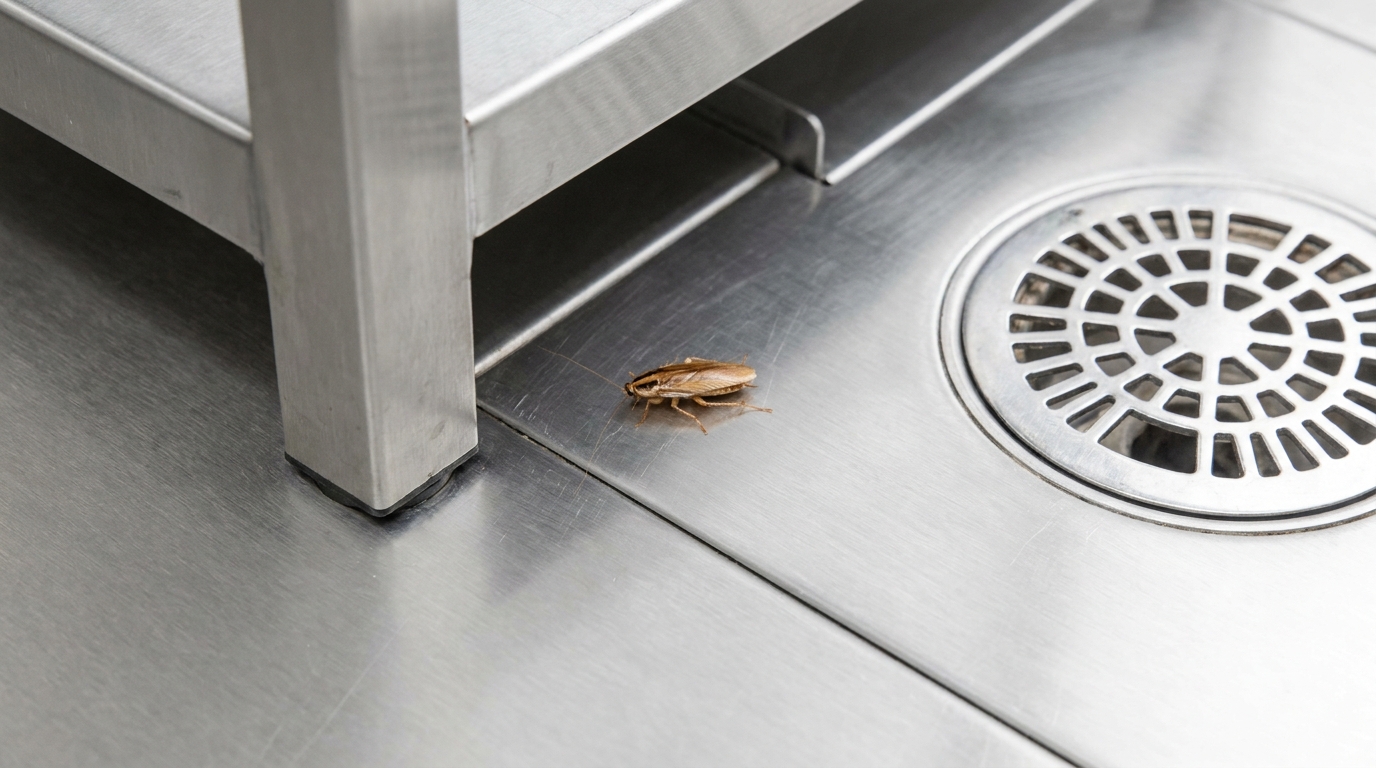
That is the math that justifies a real program. The FDA’s model Food Code, which New York’s rules build on, requires food establishments to keep the premises free of pests, and the city expects to see an actual system behind that, not a can of spray under the sink. The NYC Health Department’s own guide for keeping pests out of food establishments lays out the integrated pest management approach inspectors want to see: monitor where pests could live, seal off harborage, and use targeted treatment instead of broadcast spraying. Building and documenting that program is a real part of what a food-service account costs.
Here is why the premium is still a bargain. A B or C grade can noticeably dent a NYC restaurant’s foot traffic and revenue during the Grade Pending window, and a single pest violation runs $200 to $400, with citations stacking past $1,000 on a bad visit. A forced closure costs full revenue plus payroll for every day the doors stay shut. Measured against that, a documented monthly program that keeps you at an A is one of the cheapest forms of insurance a restaurant buys. When operators tell us pest control feels like an expense, we point out that a full year of it usually costs less than a single closure costs in a few days.
What Does Pest Control Cost for an NYC Office or Warehouse?
Offices and warehouses sit at the calmer end of the commercial spectrum, but for opposite reasons. An office is cheaper because the pest pressure and compliance stakes are lower. A warehouse is priced mainly on size, layout, and how much of that space needs monitoring, so a small storage unit and a 50,000-square-foot distribution center are worlds apart even though both are “just a warehouse.”
| Facility — general NYC market range (not our pricing) | Typical frequency | Typical cost |
|---|---|---|
| Small office or professional suite | Quarterly or monthly | $75 – $200 / mo |
| Larger office or mixed-use floor | Monthly | $150 – $350 / mo |
| Warehouse under ~20,000 sq ft | Monthly | $200 – $500 / mo |
| Large warehouse or distribution (50,000+ sq ft) | Monthly or bi-weekly | $500 – $1,250+ / mo |
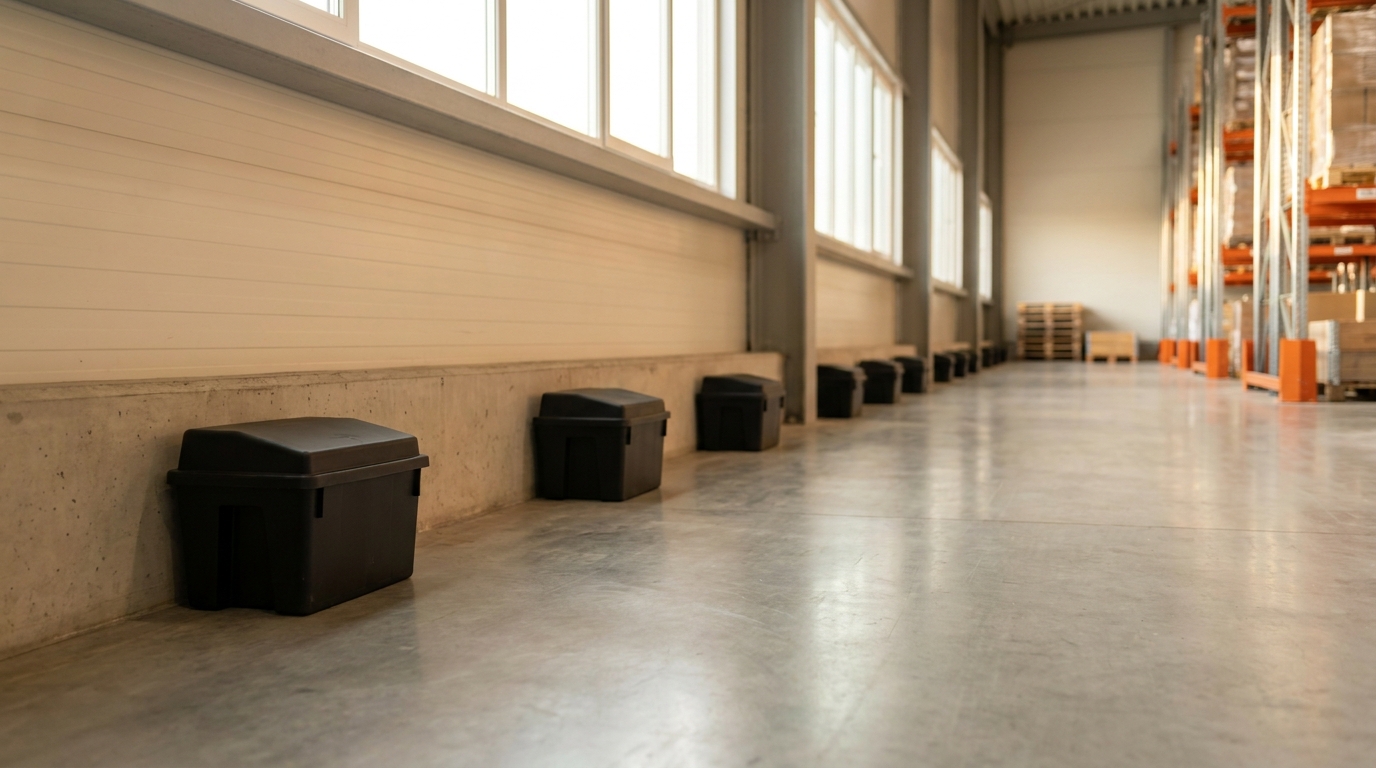
Offices usually do well on a light monthly or quarterly perimeter program built around the kitchenette, the trash room, and the entry points, with monitoring stations placed where activity would show up first. Warehouses are a different animal: they need a mapped network of tamper-resistant rodent stations around the perimeter, interior monitoring along the walls, and attention to loading docks and bay doors, which are the front door for both rodents and birds. If your warehouse stores or handles food, the stakes climb, because federal good-manufacturing rules for food facilities state plainly in 21 CFR Part 117 that pests must not be allowed in any area of a food plant. That is exactly the kind of account we protect across the Long Island City and Maspeth industrial corridor, and it is where a well-run program earns its keep. For a building that needs coordinated coverage across multiple spaces, our building-wide commercial program is built for exactly that.
Want a real number for your restaurant, office, or warehouse?
26+ years protecting NYC commercial accounts across the five boroughs and Long Island. We quote per facility, bill month-to-month with no annual lock-in, and build the documentation a DOH inspector wants to see. Your estimate is free.
What Does Advanced Pest Management’s NYC Commercial Pest Control Cost?
Here is exactly how our commercial pricing works, kept separate from the general market ranges above so you can compare honestly. We do not publish a fixed per-industry menu, because a real quote depends on the traffic, pest pressure, and time your specific building needs. What we can give you are our real anchors, the actual numbers our commercial accounts are built on.
| What you are booking (Advanced Pest Management) | What it covers | Our price |
|---|---|---|
| Commercial inspection | Full facility walk-through and written findings | $150 – $200, waived when you book the work |
| Recurring commercial visit | Per-visit service, quoted per facility | from about $250 / visit |
| Large warehouse account (a real example) | Initial setup, then ongoing monthly service at two visits per month | $1,500 initial + $500 / month |
| Apartment building unit (4+ units = commercial) | Per-unit initial treatment | $250 + tax per unit |
| Apartment / unit recurring | Ongoing monthly service per unit, plus courtesy callbacks | $65 – $75 / month per unit |
| Single small location — seasonal plan | 4 visits a year, a 1-year guarantee, and unlimited callbacks for covered pests | $700 / year |
The clearest anchor we can share is our warehouse math, because it is a real account type and our most common large-facility setup: a large warehouse is $1,500 to get started and $500 a month after that, which is two scheduled visits a month at about $250 per visit. That $250-per-visit figure is the reference point for how we price commercial work. A smaller, lower-pressure office visit can run less than that; a high-traffic restaurant with active roach or rodent pressure can run more, because, as we covered above, traffic, pest pressure, and time drive the number, not square footage alone. Whatever your facility, the quote you get lands inside the general-market bands in the tables above, not outside them.
| Your facility | Frequency we would typically set | Where it lands with us |
|---|---|---|
| Small office, low pest pressure | Monthly or quarterly | Quoted per facility, billed per visit, month-to-month |
| Restaurant or food service | Monthly, bi-weekly for high-volume | Quoted per facility to the food-service range above, set by visit frequency |
| Large warehouse or distribution | Two visits per month | Our real anchor: $1,500 initial + $500 / month |
| Apartment building (4+ units) | Monthly, building-wide | $250 + tax per unit to start, then $65 – $75 / month per unit plus common areas |
A few things never change across our commercial accounts. Tax is waived when you pay cash. We work month-to-month with no annual lock-in, so you are never trapped in a contract that outlasts the problem. We offer same-day service during business hours, and we treat an emergency as something we handle within 24 hours, which matters when an inspector is due or a sighting hits the dining room mid-service. And every visit is documented, because in a commercial setting the paperwork is half of what you are paying for.
How Do NYC Apartment Buildings Fit Into Commercial Pest Control Pricing?
This is the piece of NYC commercial pricing that surprises the most people: once a residential building has four or more units, we treat it as a commercial account, not a string of apartment calls. For landlords, co-op boards, and property managers, that is actually good news, because building-wide pricing and coordinated treatment beat paying unit by unit every time a tenant complains.
Our structure for multifamily is straightforward. An initial treatment runs $250 plus tax per unit, and ongoing monthly service is $65 to $75 per unit, with courtesy callbacks between visits and the common areas, basements, compactor rooms, and garbage chutes handled as part of the program. Garbage chute treatment matters more than most owners realize, because a single dirty chute feeds roaches and flies to every floor it touches. Coordinating treatment across a whole building also solves the problem that dooms unit-by-unit work: pests simply move next door and come back. Under New York’s warranty of habitability, keeping the building free of pests is the owner’s responsibility, and tenants can escalate through 311 and HPD when it is ignored, so a documented building-wide program protects the owner on both the pest side and the paperwork side.
Why Is the Cheapest NYC Commercial Exterminator Often the Most Expensive?
Both ends of the price spectrum have warning signs, but on commercial accounts the cheap end is where businesses get burned. In 26 years of getting called in to fix programs that failed an inspection, here is what we have learned to watch for in a lowball commercial exterminator quote.
- No documentation. A cheap visit with no service logs, no monitoring records, and no corrective-action trail is worthless the moment an inspector asks for your pest management records. In a DOH inspection, if it was not written down, it did not happen.
- An annual lock-in contract. Long contracts favor the company, not you. We work month-to-month, because a real program keeps you by earning it, not by trapping you.
- A flat phone price with no walk-through. Anyone quoting a commercial building without asking about traffic, pest history, frequency, and compliance needs is guessing, and guesses run either too high or dangerously short.
- An unlicensed applicator. Only a technician registered with the New York State Department of Environmental Conservation may apply pesticides in a commercial kitchen. A manager or a cut-rate operator using hardware-store products is a violation on its own.
- Vague answers about products and methods. Ask what is being applied, whether baits are rotated, and whether the options are family and pet-friendly. We rotate our baits so roaches do not build resistance, and we tell you exactly what goes down and where.
The budget play that actually works in commercial is boring: pay a fair monthly rate for a documented program from a licensed local company, keep the paperwork current, and skip the cheap-then-fail cycle that ends in a re-inspection fee and a Grade Pending sign. A program that costs a little more every month is far cheaper than one bad Wednesday afternoon.
Ready to protect your NYC business from a costly pest violation?
26+ years on NYC commercial accounts, from restaurants to warehouses. We offer same-day service during business hours, DOH-ready logs, rotated baits, and month-to-month terms, with a free estimate to price your facility.
The Bottom Line on NYC Commercial Pest Control Costs
For most New York City businesses in 2026, expect general market pricing of $75 to $1,250 a month depending on facility type, with small offices at the low end, most restaurants between $100 and $800 a month, and large warehouses at the top. One-time commercial treatments generally start around $250 to $600. Food service pays the most, not because the pests are worse, but because a live-roach sighting is a public-health-hazard violation that can push you toward the 28-point C line and a Grade Pending window can cost you real walk-in revenue.
With us, the numbers are simple and separate from those market ranges: a commercial inspection is $150 to $200 and waived when you book, recurring visits start around $250 each, a large warehouse account is $1,500 to start and $500 a month, and apartment buildings run $250 plus tax per unit to start with $65 to $75 per unit monthly. Everything is month-to-month with no annual lock-in, materials and documentation included.
The number that matters is the annual cost of staying protected and inspection-ready, not the teaser price of one visit. Get the frequency right for your facility, insist on real documentation, and use a licensed local team, and you will not overpay. If you want a real number for your specific restaurant, office, warehouse, or building, we offer free estimates across all five boroughs and out to Nassau and Suffolk, with same-day service during business hours, a team that has been doing this since 1999, and a 4.8-star record across more than 300 reviews. The estimate is free, the inspection fee is waived when you book, and the plan you get will spell out exactly what is included so you can compare it against anyone else.