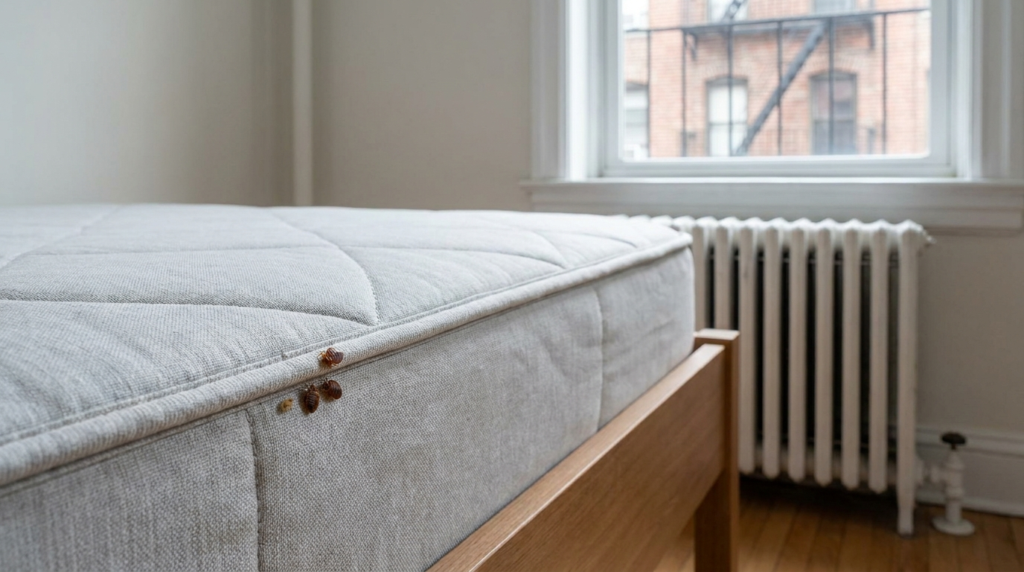
The bed bug filings that New York City’s Department of Housing Preservation and Development (HPD) collects show Bronx building owners reporting bed bugs in a small share of their units. In HPD’s Bedbug Reporting data on NYC Open Data, downloaded October 20, 2026, Bronx owners reported 787 infested units out of the 395,405 units their filings covered for November 2024 through October 2025, about 2 in every 1,000. That number can’t tell you whether your own apartment has bed bugs, and neither can an itch. The EPA’s How to Find Bed Bugs page calls bites on the skin “a poor indicator of a bed bug infestation” and says a more accurate way to identify a possible infestation is to look for physical signs of bed bugs. So if you’re asking whether you have bed bugs or you’re just being paranoid, the answer is in what you can find, not in what you feel.
If you’ve already found them, our page on bed bug treatment in the Bronx is the place to start. The physical signs of bed bugs in the Bronx, from live bugs to the marks they leave, are in our guide to the signs of bed bugs in NYC. This guide covers what the city’s filings add: what they count, where in the Bronx they come from, how the borough compares, what a clean filing can miss, where NYCHA residents report, and what the same buildings show year to year.
Seeing signs of bed bugs in your Bronx apartment?
We treat bed bugs, and we waive the inspection fee when you have the work done.
What Do HPD Filings Tell You About Bed Bug Infestations in Bronx Buildings?
They tell you how many units each building’s owner says had bed bugs over a year, and nothing finer than that. HPD’s Bedbugs page says owners of multiple dwellings, the legal category that covers apartment buildings, file a Bed Bug Annual Report every year between December 1 and December 31 for the previous November 1 through October 31.
Each filing carries four counts for the whole building, per HPD’s page: its dwelling units, the units that had a bed bug infestation during the year “as reported or otherwise known to the owner,” the units where eradication measures were used, and the units that had bed bugs again after those measures. HPD posts the filings on NYC Open Data as the Bedbug Reporting dataset, which describes them as “self-reported information filed annually by property owners.” So every number below is an owner’s count, not a city inspection.
For the latest complete year, November 2024 through October 2025, HPD’s filings show 14,902 Bronx buildings covering 395,405 units. In those HPD filings, Bronx owners reported 787 infested units, about 2.0 for every 1,000 units, and 426 buildings, about 3 in every 100 that filed, reported at least one infested unit.
A note on how these numbers were counted. The dataset keeps every filing, including a second one for the same year, and says that when a property files twice for the same period, “the second filing is the active final submission for the period.” So this guide counts each building’s latest filing for the year, and when a building’s latest filings share one date but disagree on the building’s dwelling-unit count or its infested-unit count, it leaves that building out of that year (76 Bronx buildings for November 2024 through October 2025 in HPD’s data). Filings with blank or impossible numbers are left out, and the borough comparison below names the three that matter.
Where in the Bronx Do Buildings Report the Most Bed Bug Infestations?
By ZIP code, the most infested units in HPD’s filings for November 2024 through October 2025 came from 10467, 10457, 10453, 10468 and 10456. The table shows each one with the neighborhood areas that HPD’s data assigns to the most buildings that filed there (the dataset’s Neighborhood Tabulation Area field), the units those filings covered and the infested units their owners reported.
| ZIP code | Neighborhood areas with the most filings | Units covered | Infested units reported | Per 1,000 units |
|---|---|---|---|---|
| 10467 | Williamsbridge-Olinville, Norwood | 30,048 | 71 | 2.4 |
| 10457 | Tremont, Mount Hope | 26,836 | 69 | 2.6 |
| 10453 | University Heights (South)-Morris Heights, Mount Hope | 26,473 | 66 | 2.5 |
| 10468 | University Heights (North)-Fordham, Bedford Park | 26,968 | 63 | 2.3 |
| 10456 | Concourse-Concourse Village, Morrisania | 23,144 | 57 | 2.5 |
Read those counts with two cautions. First, a ZIP code with more units will tend to report more infested ones, which is why the last column matters: against about 2.0 per 1,000 across the Bronx in HPD’s filings, all five sit a little above the borough figure, between about 2.3 and 2.6. Second, a ZIP code’s total can lean on a single building. For example, one filing from 10456 in HPD’s data reported all 19 units in its building infested, which is 19 of that ZIP code’s 57.
The clearest pattern in the Bronx filings is building size. In HPD’s data for the same year, 112 of the 666 Bronx buildings with 100 or more units reported at least one infested unit, against 39 of the 6,287 buildings with five or fewer. Part of that is arithmetic, since a building with more apartments has more chances for one of them to report bed bugs. Still, it means the answer to “where” is as much “in which kind of building” as “in which ZIP code.”
How Does the Bronx Bed Bug Rate Look Next to Other Boroughs?
On HPD’s filings, the Bronx sits at the low end of the five boroughs, not the top. For November 2024 through October 2025, HPD’s data has Bronx owners reporting about 2.0 infested units per 1,000 units, close to Manhattan and Staten Island at about 2.2 each and below Queens and Brooklyn. Here is the full comparison from the same filings, with the boroughs in alphabetical order.
| Borough | Buildings that filed | Units covered | Infested units reported | Per 1,000 units | Buildings reporting any |
|---|---|---|---|---|---|
| Bronx | 14,902 | 395,405 | 787 | 2.0 | 426 |
| Brooklyn | 47,070 | 627,112 | 1,765 | 2.8 | 844 |
| Manhattan | 23,833 | 904,733 | 1,985 | 2.2 | 939 |
| Queens | 22,659 | 421,829 | 1,028 | 2.4 | 470 |
| Staten Island | 1,367 | 20,051 | 44 | 2.2 | 27 |
| All five boroughs | 109,831 | 2,369,130 | 5,609 | 2.4 | 2,706 |
Two cautions keep that from being a ranking to lean on. The gaps are small, a few tenths of a unit per 1,000, and they move with the counting rules: under some reasonable variations, such as also setting aside filings in HPD’s data that report every unit in a building infested, the Bronx and Manhattan figures come out nearly level, though the Bronx stays below Brooklyn and Queens under every variation tested for this guide. And three filings in HPD’s data are left out because they would swamp a borough’s total: a Queens building listed with 414,754 units, every one of them infested; a Manhattan building listed with 117,406 units; and a 517-unit Brooklyn building that reported every unit infested, which, left in, would push Brooklyn’s figure up, not down.
Count buildings instead of units and the order changes. In HPD’s filings for the same year, about 3 in every 100 Bronx buildings that filed reported at least one infested unit, more than in Brooklyn, Queens or Staten Island (about 2 in 100 each) and fewer than in Manhattan (about 4 in 100). That’s the building-size pattern again: Bronx buildings in HPD’s filings average about 27 units, against about 13 in Brooklyn, 15 on Staten Island, 19 in Queens and 38 in Manhattan, so the average Bronx building has more units that could report bed bugs than the average building in Brooklyn, Queens or Staten Island.
So the honest reading is that owners across the city report bed bugs at similar, low rates, and that the Bronx isn’t where owners report the most per unit. These are still owners’ numbers, though, which is the next question.
Why Can a Clean Filing Still Hide Bed Bugs From Bronx Tenants?
Because a filing is the owner’s count of what the owner heard about, for a whole building, for a year that’s already over. Four limits matter if you rent in the Bronx.
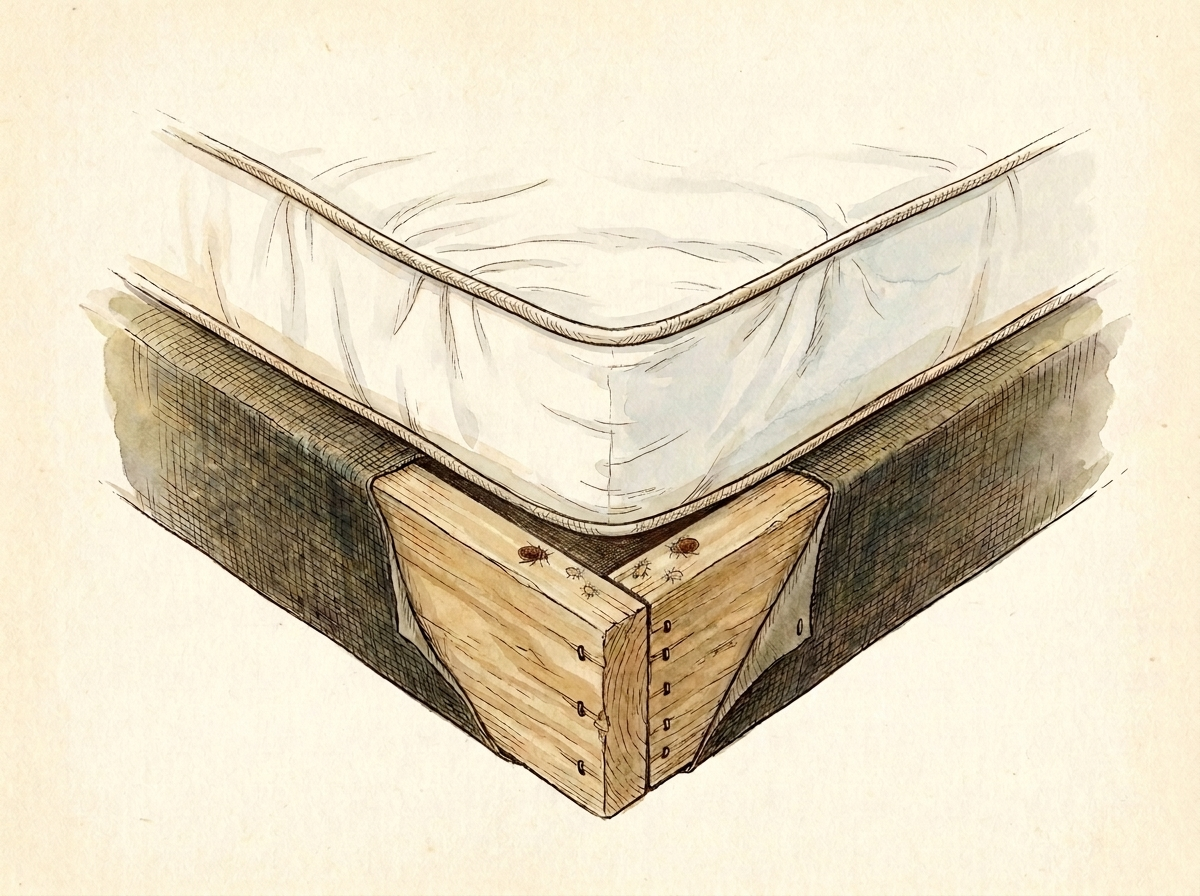
It counts what was reported. HPD’s Bedbug Annual Reports FAQ defines the infested count as units “as reported by a tenant or otherwise known to the property owner,” and if a tenant doesn’t want to share, it says the owner “must employ best efforts to obtain information from all units.” So a unit whose tenant doesn’t know or doesn’t say, and that the owner doesn’t otherwise learn about, isn’t counted. NYC Health’s Bedbugs page says some people “do not have a reaction to bites and may be unaware that bedbugs are in their home until they see them.” It also says the bugs like to hide inside mattresses, under the mattress seams and in the cracks and crevices of box springs, and often in cracks in furniture, floors and walls near where people sleep or lounge.
It’s one number for the whole building. HPD’s FAQ says owners file “an aggregate report of the bedbug infestation history of the multiple dwelling,” not “an infestation history for an individual dwelling unit.” So a filing that reports one infested unit doesn’t say whose, and a filing of zero doesn’t clear any particular apartment.
It looks backward, and it often arrives late. The year a filing covers ends October 31, and HPD’s Bedbugs page sets the filing window as December 1 to December 31. In HPD’s data for November 2024 through October 2025, about half of the Bronx filings (7,555 of 14,902) were made in January 2026 or later, the latest on October 13, 2026. A zero for that year tells you about that year, not about this fall.
The NYCHA gap. None of the 691 Bronx addresses on NYCHA’s own residential address list, which NYCHA publishes on NYC Open Data, matches a building in HPD’s Bedbug Reporting data for any filing year, by address or by building identification number. The data doesn’t say why. Either way, if your building is on that list, you won’t find it in these filings, which is why the next section covers where NYCHA residents report.
If you’re weighing an apartment before you sign, our guide to looking up a building’s bed bug history before a lease walks through the records. If you think you have bed bugs now, start with the first five places to check for bed bugs in our Brooklyn guide.
Bed bugs in your Bronx building?
Call us and a real person answers, and one-time services carry a 30-day guarantee.
Where Do NYCHA Residents Report Signs of Bed Bugs in the Bronx?
To NYCHA itself. NYCHA’s Pest Control at NYCHA page says residents with pests in their apartment should enter a work order by calling the NYCHA Customer Contact Center or by using the MyNYCHA app or website. Here is how each route works, from NYCHA’s own pages:
- By phone. NYCHA’s Customer Contact Center page says representatives take calls 24 hours a day, 7 days a week for emergencies and schedule routine repairs Monday through Friday, 6:00 AM to midnight. The number is listed on that page.
- Online or in the app. NYCHA’s MyNYCHA page says the free app or website lets public housing residents request repairs 24/7, with a log-in of your last name, date of birth and the last four digits of your Social Security number, and that you can add up to five photos to a request.
- In person in the Bronx. The Customer Contact Center page lists a Walk-In Center at 478 East Fordham Road (1 Fordham Plaza), 2nd Floor, open Monday through Friday, 8:00 AM to 5:00 PM, where you can book an appointment.
Whichever route you use, NYCHA’s Customer Contact Center page says representatives can help you better when you give your name, address, phone number and development name, where the problem is, the floors affected, when and how the problem began, and any previous work ticket number. For bed bugs, that means when and where you first found a bug or its marks.
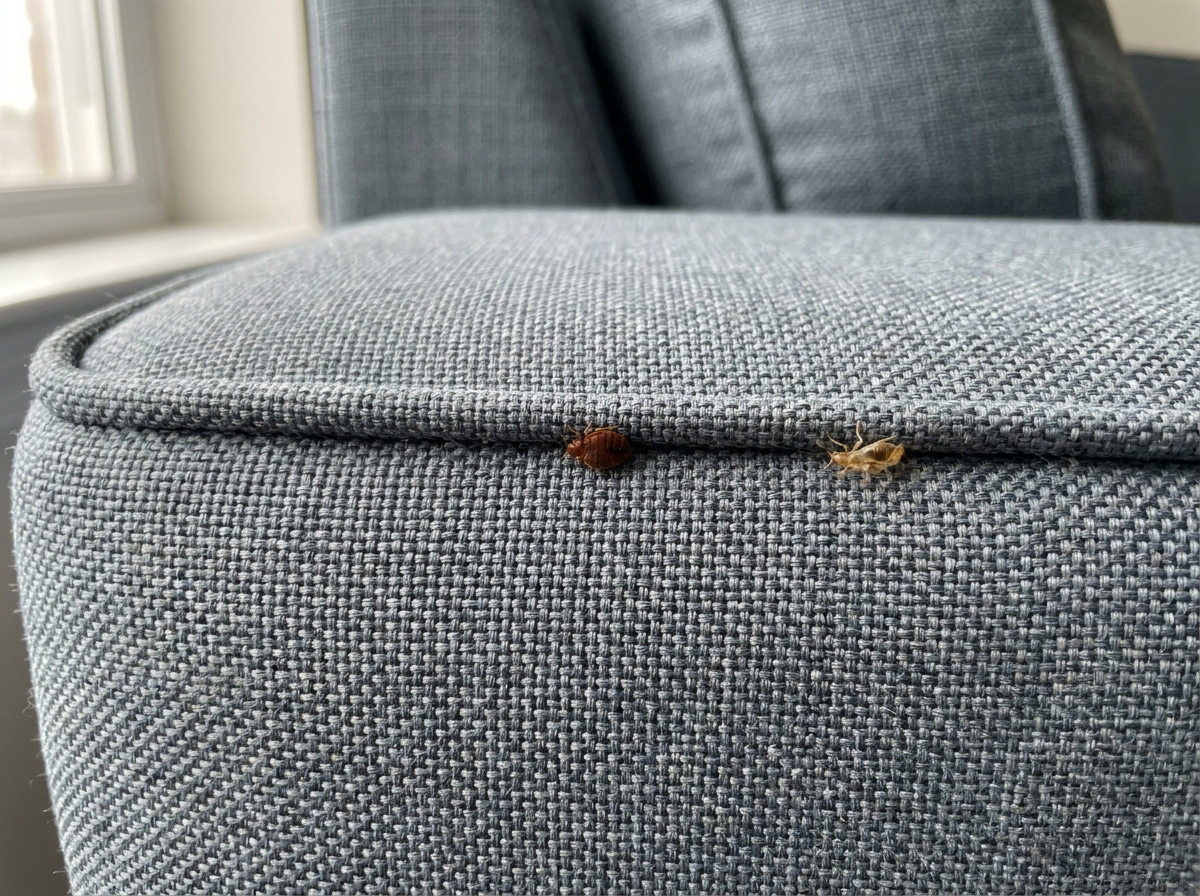
After the report, NYCHA’s Pest Population Estimates page says, “We almost always visit the location on the work order within 10 days.”
NYCHA keeps its own numbers, too. Its Pest Population Estimates page says it estimates the population of rats, mice, cockroaches and bed bugs at each development each quarter from resident complaints, with adjustments for over- and under-reporting, because “Not all residents submit a complaint when there are pests in their apartments.” The quarterly estimates by development are posted on that page.
One thing to check: if your development has been converted under NYCHA’s PACT program, NYCHA’s PACT page says property management partners are responsible for the day-to-day operation and upkeep of the buildings and grounds, and that the PACT program will address building-wide issues, pests among them. So ask your property management office which route your development uses. Where needed, the same page says, NYCHA can step in to resolve issues between residents and the new management team. If you rent in a private Bronx building instead, our guide to HPD tenant rights around bed bugs covers your route.
What Do Bronx Landlords Find When They Track Bed Bug Filings Year to Year?
Two things: the borough’s reported numbers have dropped a long way, and bed bugs tend to be reported again in the same buildings while still appearing in new ones.
In HPD’s filings, Bronx owners reported about 7.4 infested units per 1,000 for November 2019 through October 2020 and about 2.0 for November 2024 through October 2025, with most of that drop done by the year ending October 2024 (about 2.1). HPD’s data puts the Bronx below the all-borough figure in each of the last three filing years. The first two filing years drew fewer than 5,000 Bronx filings each in HPD’s data, against more than 11,000 a year since, so the comparison starts with the year ending October 2020. And because these are owners’ own counts, a falling number can reflect changes in what gets reported as well as in bed bugs.
Following the same buildings shows what a year’s total hides. In HPD’s filings, 12,650 Bronx buildings filed for both of the last two years. Of those, 462 reported at least one infested unit for November 2023 through October 2024, and HPD’s data shows 153 of them, about 1 in 3, reporting at least one again for November 2024 through October 2025. Of the 12,188 that reported none the first year, 237, about 2 in 100, reported bed bugs the next year in HPD’s filings.
Those 237 buildings with a clean prior year made up about 6 in 10 of the buildings in that group that reported bed bugs for November 2024 through October 2025, and HPD’s filings for the year before show a similar split.
For an owner tracking a building, that cuts both ways. Last year’s report is a real signal, since a building that reported bed bugs was far likelier to report them the next year than one that didn’t. But a clean year isn’t a guarantee, because in each of the last two years most of the buildings in that group that reported bed bugs had reported none the year before. How bed bugs move between units is covered in our guide to how bed bugs spread between units in a high-rise, and the travel route in our guide to the signs you brought bed bugs home from a trip.
What an owner owes once bed bugs show up, and who pays, is set out in our guide to who pays for bed bug treatment in NYC. If you own or manage a Bronx building, our bed bug treatment service is the place to start: we treat bed bugs, and we cover all five boroughs. For roaches, mice or rats in the same building, see our page on pest control in the Bronx.
The Recap
What HPD’s Bedbug Reporting data shows for the Bronx, in short:
- For November 2024 through October 2025, Bronx owners reported 787 infested units out of 395,405 in HPD’s filings, about 2.0 per 1,000, and 426 of the 14,902 buildings that filed reported at least one.
- The most infested units came from ZIP codes 10467, 10457, 10453, 10468 and 10456, and in HPD’s data, buildings with 100 or more units were far likelier to report bed bugs than buildings with five or fewer.
- Per 1,000 units, the Bronx sits at the low end of the five boroughs in HPD’s filings, by small margins: close to Manhattan and Staten Island and below Queens and Brooklyn.
- A clean filing is the owner’s count, for a whole building, for a year that’s over, and none of the Bronx addresses on NYCHA’s residential address list appears in the data.
- NYCHA residents report through the Customer Contact Center or MyNYCHA; at a PACT development, ask the property management office which route the development uses, and NYCHA can step in where needed.
- Of the Bronx buildings that filed both years and reported bed bugs for November 2023 through October 2024, about 1 in 3 reported them again the next year in HPD’s filings, and buildings with a clean prior year made up about 6 in 10 of that group’s reports.
If it’s the bugs you’re dealing with rather than the filings, our Bronx bed bug page is the place to start.