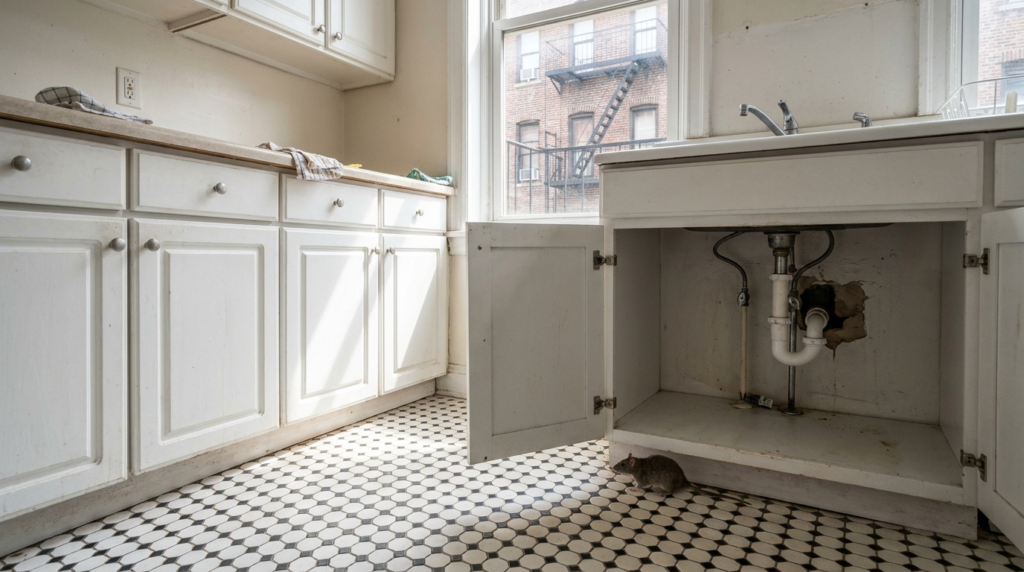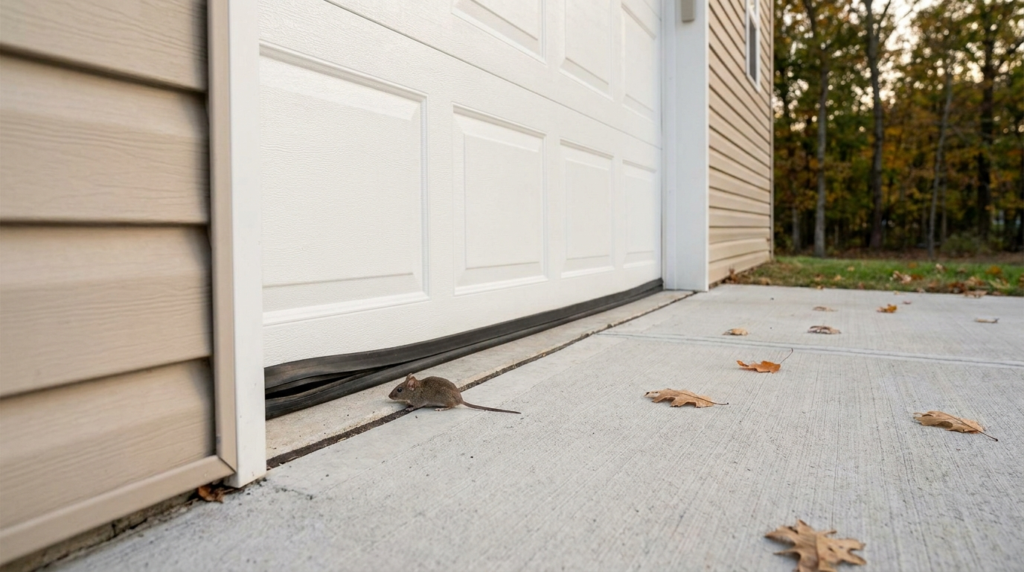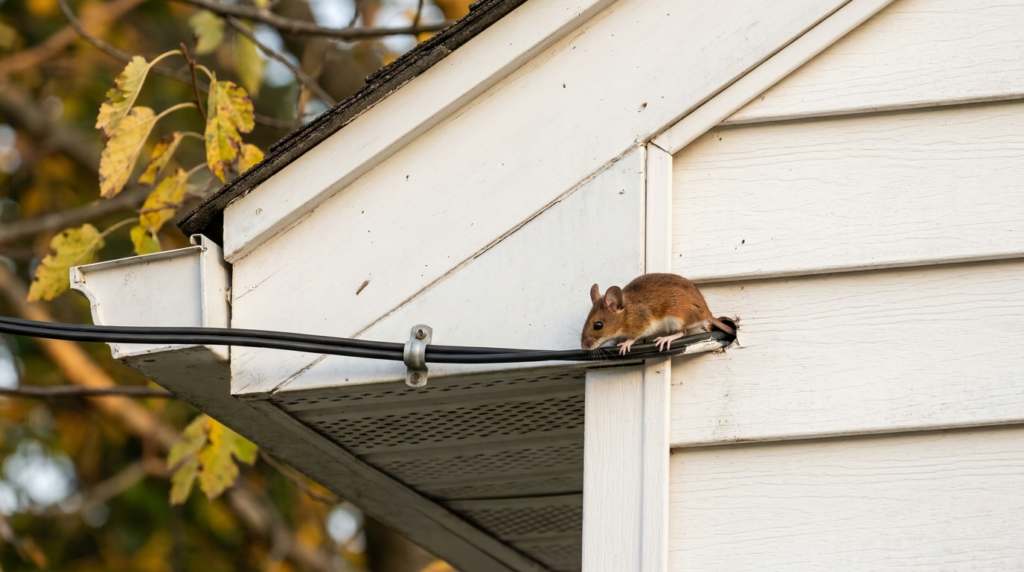
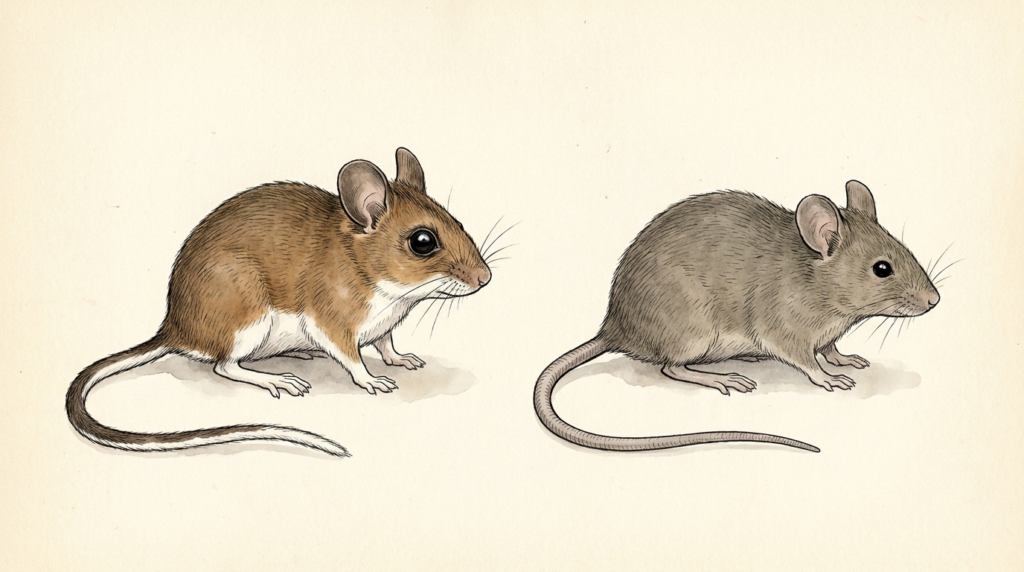
Check the belly first, then the tail. The University of California’s Pest Notes on the house mouse spell out the difference: a deer mouse has a white underside with a distinct line where it meets the darker back, and a tail that is furred, dark on top and light underneath, while a house mouse has an overall gray coat and a tail with almost no fur. On Long Island, the two-toned mouse may turn out to be a white-footed mouse, a name we sort out below. Found one in the house? The CDC’s You Can Prevent Hantavirus brochure advises avoiding all wild rodents and says not to sweep or vacuum their droppings, and Cornell Integrated Pest Management’s rodent identification page says finding a deer mouse indoors means there is an opening it uses to get in.
Which mouse you have points to where the work starts, inside the house or at its outside walls, and that holds for rodent control in Nassau County and Suffolk homes alike.
Deer mouse or house mouse in your Long Island home?
We do professional pest-proofing and rodent-proofing, and we waive the inspection fee when you have the work done.
How Do You Tell a Deer Mouse From a House Mouse on Long Island?
Go by color pattern and tail, not by size. The table below sets the two side by side, drawing on the University of California’s Pest Notes for the house mouse and the deer mouse and on Cornell IPM’s identification page.
| Mark | Deer mouse | House mouse |
|---|---|---|
| Back and belly | Brown back and white belly, with a distinct line where the colors meet | An overall gray coat, light brownish in some mice, with the back and belly roughly the same color |
| Tail | Moderately to well furred, dark on top and light underneath | Almost no fur |
| Eyes | Larger than a house mouse’s | Small and black |
| Ears | Typically larger than a house mouse’s | Relatively large |
| Size and shape | About the same as a house mouse | About the same as a deer mouse |
Read the marks in that order. The belly line is a quick first check, because, as the table shows, a house mouse’s belly is roughly the color of its back, and the tail confirms it. Size is the mark to ignore: Cornell calls the two about the same size and shape, so a large mouse is not automatically a deer mouse.
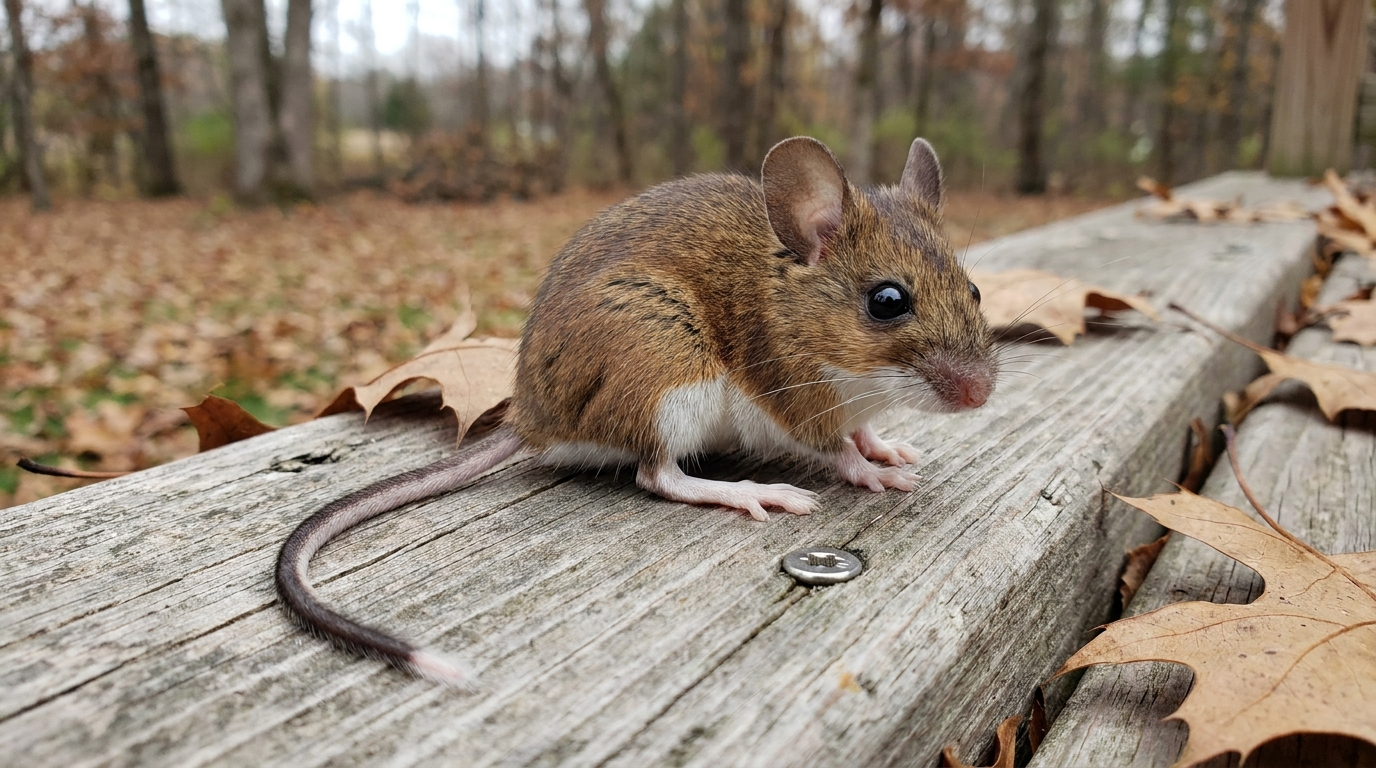
If all you have is a photo, the same order works. A side view that shows the line between back and belly, plus the underside of the tail, answers most of the question. A shot from directly above shows only the back, and from that angle a brownish house mouse and a deer mouse can look alike.
Then weigh where and when you saw it. Cornell’s identification page describes white-footed and deer mice as living mostly outdoors and moving into buildings from fall through spring, and says a house mouse can spend its whole life indoors. A two-toned mouse that shows up in a Long Island house in October fits the first pattern. A gray mouse that has been in the kitchen all summer fits the second. Neither pattern proves anything on its own, which is why the marks come first.
Which Tail, Belly and Ear Marks Identify a Deer Mouse at a Glance?
The belly and the tail do most of the work; the eyes and ears back them up.
The Belly Line
Look for a clean edge between the brown back and the white belly. Some house mice are brownish, as the table notes, so a quick look from above can fool you; check the underside before you decide.
The Tail
If you only get one good look, spend it on the tail. The University of California’s deer mouse Pest Note calls the bicolored tail the easiest feature for telling a deer mouse from a house mouse. Look for the color split, dark on top and light underneath, before you try to judge the fur, which is hard to see on a mouse that is moving.
The Eyes and Ears
The ears are the subtlest mark. The deer mouse Pest Note says these mice typically have larger eyes and ears than house mice, but the house mouse Pest Note describes house mice as having relatively large ears of their own, with small black eyes. So check the eyes first and use the ears as backup, once the belly and tail have done the main work.
Reading the Marks Without Handling the Mouse
If a trap catches one, that is your chance for a clear look, as long as you look without touching. The New York State Department of Health’s hantavirus fact sheet says to avoid touching live or dead rodents, so read the belly and tail where the mouse lies, or take a photo, and leave disposal to the cleanup steps linked in the droppings section below.
Is the Deer Mouse You Find on Long Island Really a White-Footed Mouse?
It may well be, and the names cause half the confusion. Strictly, the deer mouse (Peromyscus maniculatus) and the white-footed mouse (Peromyscus leucopus) are two closely related species, and Cornell IPM lists both, along with the house mouse, among the common pest rodents in New York. In everyday use, though, the names get swapped: the University of California’s deer mouse Pest Note says the deer mouse is often referred to as a white-footed mouse.
The white-footed mouse is at home in this part of the country. The University of Michigan’s BioKids species account says it is found throughout most of the eastern United States, calls it the most abundant small rodent in mixed forests there, and notes that it also does well in suburban and agricultural settings. Its description could pass for the deer mouse marks above: a brown back, a white belly and white feet, and a tail darker on top than underneath.
The sources we checked do not say which of the two shows up more often in Long Island homes, and for a homeowner the answer changes little, because the habits in the first section and the hantavirus list further down cover both. Since most of the sources quoted here either describe the two together or use one name for both, from here on “deer mouse” in this post means either species unless we name one.
Where Do Deer Mice Hide in Long Island Homes Over the Winter?
In quiet corners where nest material is close at hand. The University of California’s deer mouse Pest Note says deer mice do not hibernate, though they may go dormant when the weather is especially severe, that they nest in family groups throughout the winter, and that they damage upholstered furniture, mattresses, clothing and paper while building their nests.
Inside a lived-in Long Island house, that points to the spare-room mattress, a stored armchair or sofa, and boxes of clothes or papers in the basement or a back closet.

Outdoors, their cover can sit right beside the house. The same Pest Note calls wood and brush piles prime nesting areas that could harbor deer mice that may then enter homes, and on a Long Island property that can mean the firewood stacked against the house or under the deck for winter.
A short walk-through in early fall makes these spots easy to check, with one rule first: look, but do not touch or disturb what you find. The New York State Department of Health’s hantavirus fact sheet says to avoid contact with rodent droppings or urine and not to disturb rodents, burrows or nests, and the CDC cleanup steps described in the droppings section below come before anything is moved. The spots to check are the spare-room bed, upholstered furniture that sits unused, boxes of clothes or papers in the basement, and the woodpile. Shredded fabric or stuffing, or a stash of seeds tucked somewhere it should not be, is worth a closer look. Keeping stored soft goods in closed plastic bins leaves a mouse less to build with.
We have left attics and garages off this list on purpose. Each needs its own approach, and this post sticks to telling the species apart.
Deer mice moving into your Nassau or Suffolk home?
Call us and a real person answers. Same-day service during business hours.
How Can Long Island Families Tell If Deer Mice Bring a Hantavirus Risk?
Start with the odds. The New York State Department of Health’s hantavirus fact sheet says hantavirus infections are rare in New York, and it counts six New York State residents diagnosed with hantavirus infection from 1995 to 2023. That is a statewide count, not a Long Island one.
Then look at which mouse you have. The CDC’s You Can Prevent Hantavirus brochure lists the deer mouse and the white-footed mouse among the North American mice and rats that can spread the hantaviruses that cause hantavirus pulmonary syndrome (HPS). The house mouse is not named on that list, but the same brochure says it is hard to tell whether a mouse is infected just by looking at it, so its advice is to avoid all wild rodents and to clean up any rodent urine, droppings or nests in your home with care.
Next, know how people get infected. The New York State Department of Health’s fact sheet says breathing in the virus is the most common way, after it is released into the air from rodent urine, saliva or feces disturbed in a confined space, and that entering rarely opened or seasonally closed buildings with rodent activity can also cause infection. On Long Island, that is the day you open up a pool house, a shed or a summer cottage out east after it has sat shut all winter. If you find droppings or nests inside, leave them undisturbed, as the same fact sheet advises, until you can follow the CDC cleanup steps described in the droppings section below.
Finally, know what to watch for and who to tell. The CDC’s About Hantavirus page says HPS symptoms usually start 1 to 8 weeks after contact with an infected rodent, that early symptoms can include fatigue, fever and muscle aches, and that anyone who suspects hantavirus disease should see a physician immediately and mention a potential rodent exposure. Health questions belong with your doctor.
Ticks and Lyme disease are a separate worry, and our post on ticks and Lyme risk on Long Island covers them.
What Does Spotting a Deer Mouse Indoors Mean for a Long Island Homeowner?
It means there is a way in. Cornell IPM’s reading is direct: finding white-footed or deer mice indoors means there is an opening they use to enter the structure. A deer mouse in the house is a mostly outdoor animal that found a gap, so the fix has to reach the outside of the house, not just the kitchen.
It also means one sighting may not be the whole story. Deer mice spend the winter in family groups, as the section on winter hiding places describes, so the mouse you saw may have company in a nest nearby. And because both species are on the hantavirus list above, anything it left behind deserves care.
Before you call anyone, write down what you saw, and leave any droppings or nests where they are: the New York State Department of Health’s fact sheet, quoted earlier, says to avoid contact with rodent droppings or urine and not to disturb nests. The details that help are where the mouse was and when, what its belly and tail looked like, where any droppings are, and whether you have found a pile of seeds or nuts tucked away. Those details tell whoever comes out which mouse they are dealing with and where to start looking for the gap.
What to do next is less about the mouse than about the opening. The New York State Department of Health’s fact sheet says that if rodents are in the home, you should consult an exterminator or your local health department for additional information on rodent removal and control. We do professional pest-proofing and rodent-proofing, and we cover Nassau County and Suffolk County. For what a visit involves, see our page on Long Island rodent removal; Suffolk homeowners can also start from our page on pest control across Suffolk County. If the mouse in your trap turns out to be a gray house mouse instead, our mouse exterminator page covers that side of the problem.
How Do Long Island Homeowners Tell Deer Mouse Droppings From House Mouse Droppings?
Mostly, you can’t, at least not from the droppings alone. The University of California’s deer mouse Pest Note says the nests, droppings and other signs left by deer mice are similar to those of house mice. The same Pest Note says deer mice have a much greater tendency than house mice to cache food such as acorns, seeds or nuts, which may help identify which mouse did the damage. So look at what is around the droppings, and keep it to a look: the CDC’s hantavirus prevention page says people should avoid contact with rodent urine, droppings, saliva and nesting materials, and the cleanup steps at the end of this section come before anything is moved.
- A food cache points to deer mice. A hidden pile of acorns or seeds near the droppings is the clue to look for.
- A musky smell points to house mice. The same Pest Note calls a telltale musky odor typical of house mouse infestations, and the University of California’s house mouse Pest Note says that odor is common in large or long-term infestations, so a small, new problem may not smell yet.
- Season and setting are clues, not proof. Droppings that appear in the fall in a seldom-used room fit the outdoor pattern from the first section; droppings in the kitchen all year fit the house mouse.
- The mouse itself settles it. If a trap catches one, read the belly and tail as described above.
For what each species eats, see the house mouse vs deer mouse section of our post on what mice eat.
Do all mouse droppings carry hantavirus? No: the virus comes from infected rodents. The CDC’s hantavirus prevention page says it can get into the air when fresh urine, droppings or nesting materials of an infected rodent are stirred up. Because an infected mouse is hard to tell apart by looking, as the hantavirus section above explains, the CDC’s brochure applies its cleanup advice to any rodent droppings in your home. The symptoms to watch for, and when to see a doctor, are in that section too.
That care starts with what not to do. The CDC’s You Can Prevent Hantavirus brochure says not to sweep or vacuum mouse or rat urine, droppings or nests, because that can increase your risk of inhaling the virus. Its full cleanup steps, with the gloves and disinfectant they call for, are the method to follow, and our rat vs mouse guide covers droppings cleanup in its section on rodent diseases.
In Summary
- Check the belly, then the tail. The University of California’s Pest Notes give the deer mouse a white underside with a distinct line where it meets the darker back and a furred tail that is dark on top and light underneath, and the house mouse an overall gray coat and a tail with almost no fur.
- On Long Island, the two-toned mouse may be a white-footed mouse, and this post uses “deer mouse” for either species.
- Cornell IPM says finding a deer mouse indoors means there is an opening it uses to get in.
- The New York State Department of Health says hantavirus infections are rare in New York. The CDC’s brochure lists the deer mouse and the white-footed mouse among the North American mice and rats that can spread the hantaviruses behind HPS, and the CDC says anyone who suspects hantavirus disease should see a physician immediately and mention a potential rodent exposure.
- Deer mouse and house mouse droppings look similar, according to the University of California’s deer mouse Pest Note. A food cache points to deer mice and a musky smell to house mice, and the CDC’s brochure says not to sweep or vacuum droppings, because that can increase your risk of inhaling the virus.
Name the mouse, find its way in, and leave the droppings to the CDC’s cleanup method.