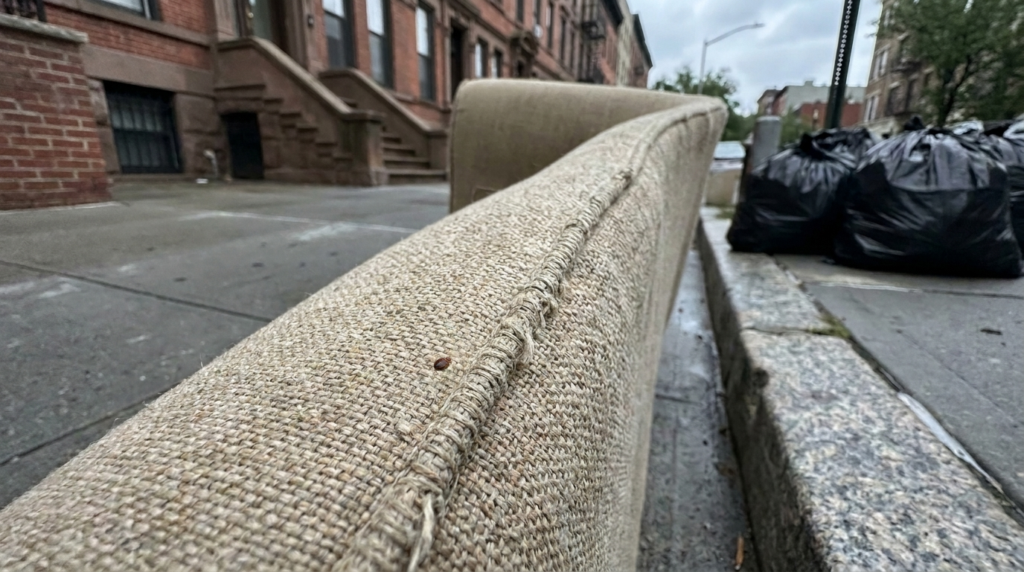
How long can bed bugs live without a host in an NYC apartment? Long enough that “nobody has been here for a while” is not the same thing as “nothing is here.” That hope sits behind a lot of New York decisions: renting the apartment that sat empty after the last tenant left, carrying a good-looking armchair home from the curb, unpacking boxes that spent a season in storage, or sleeping on the couch until the bedroom clears out on its own.
The honest answer is not one number. How long a bed bug lasts without a meal depends on where it is in its life cycle and how warm or cool the room is, which is why the figures quoted online disagree with each other. If you are already finding bugs or bites, you are past the waiting question, and bed bug treatment in NYC is the place to start. For everyone else, we sort out those figures below, then apply them to the places New Yorkers actually ask about: an apartment between tenants, furniture on the curb, storage units and moving boxes, and a building where neighbors share walls.
Did bed bugs outlast the last NYC tenant?
Every technician is licensed by New York State, and we offer same-day service during business hours.
How Long Do Bed Bugs Live Without Feeding in a New York Apartment?
The University of Kentucky’s ENTFACT-636 fact sheet on bed bugs says nymphs and adults alike can go months without feeding, puts a more typical stretch at about 1 to 4 months in temperature-controlled buildings, and says survival runs longer at cooler temperatures — potentially up to a year or longer at 55°F or less. For a heated New York apartment, that temperature-controlled figure is the practical one.
The range you will see repeated on pest-control sites is wider, and it comes from the University of California’s Statewide IPM Program. UC IPM’s Pest Notes on bed bugs say bed bugs can go without feeding for 20 to 400 days depending on temperature and humidity, that older nymphs survive longer without feeding than younger ones, and that adults have survived more than 400 days in the laboratory at low temperatures.
Side by side, most of the disagreement goes away. The long end of each — UC IPM’s laboratory record for adults and the Kentucky fact sheet’s figure at 55°F or less — comes from cool conditions, and a heated apartment sits at the other end of that scale. That makes the Kentucky figure for temperature-controlled buildings the better guide indoors in New York.
Neither source gives a separate figure for a bug on clothes, in a couch or in a cardboard box. What they vary is temperature, humidity and life stage. So if your real question is whether an apartment has been empty long enough, the Kentucky fact sheet’s figure for nymphs and adults in temperature-controlled buildings means you are counting in months, and the sections below explain why even that is not the whole story.
Do Bed Bug Eggs and Nymphs Survive as Long as the Adults?
No — and that is less reassuring than it sounds, because an egg does not need a host to keep going.
UC IPM’s Pest Notes say the eggs, laid on rough surfaces such as wood or paper, are covered in a gluelike material and hatch in about 10 to 15 days at room temperature, and that each of the five nymphal stages needs at least one blood meal before it can molt to the next, with development fastest between 70° and 82°F.
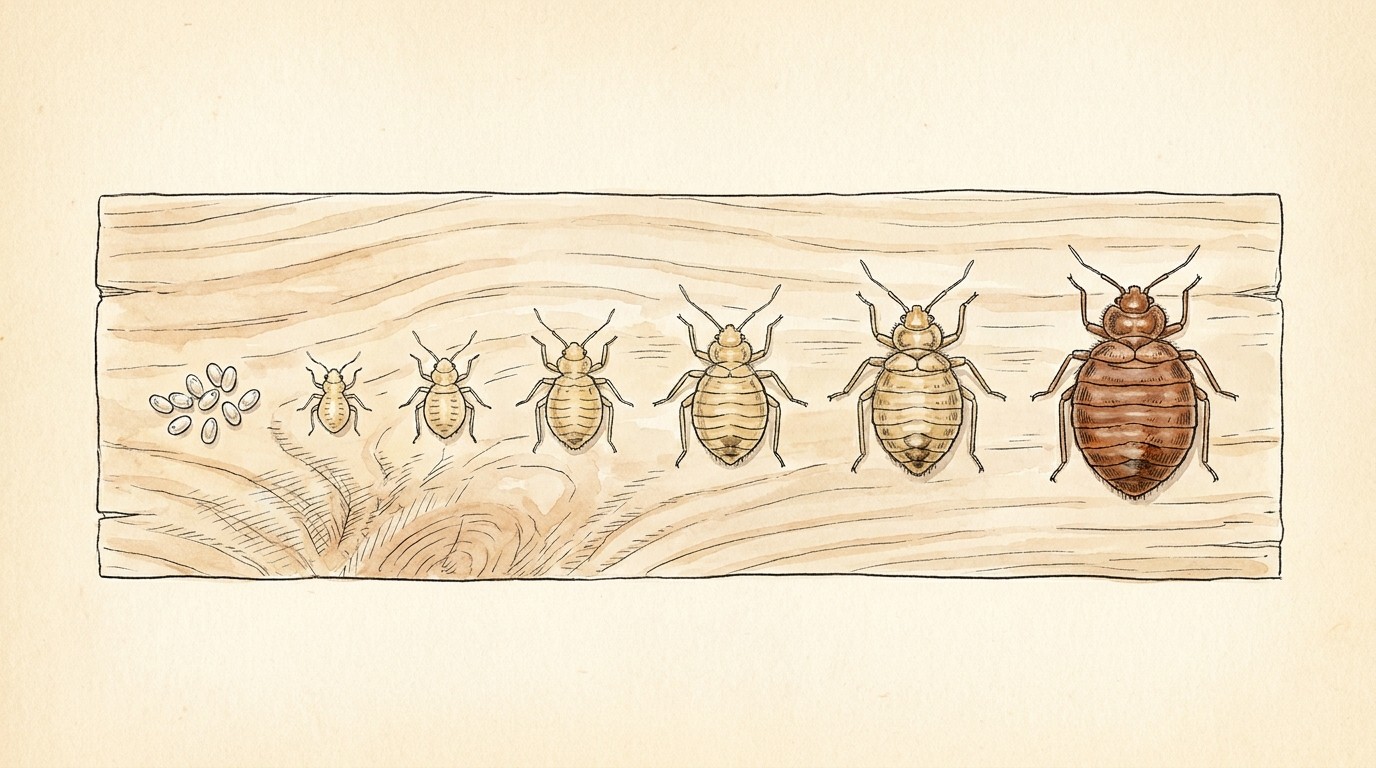
Now picture an apartment that just emptied out. Eggs laid before the last tenant left keep hatching on their own schedule, and each hatchling needs a meal before it can molt to the next stage. Those first-stage nymphs are the bugs most likely to run out of time — that is UC IPM’s point about older nymphs outlasting younger ones — while the older nymphs and adults are the ones built to wait.
So the stages do not last equally long, but the difference does not help anyone waiting for an infestation to die out. A unit that has been empty a short while can still hold newly hatched, hungry nymphs, and a unit that has been empty longer can still hold the older nymphs and adults that, in UC IPM’s account, outlast them. By the UC IPM and Kentucky figures above, a few empty weeks in a heated apartment can line up badly: long enough for eggs to hatch, not long enough for the older nymphs and adults to run out.
Does NYC Apartment Heat Help Bed Bugs Survive Longer Without a Meal?
No. Heat works against a bed bug that cannot feed, and for one that can.
For a bed bug that cannot feed, warmth is bad news. The University of Kentucky fact sheet ties the longer survival times to cooler temperatures, so a warm room shortens the wait rather than stretching it. An apartment with the radiators going is a warm room for much of the winter, and the cool-weather records from the first section do not describe it. If anything, New York’s radiator heat is a reason those figures are the wrong ones to plan around indoors.
Now the well-fed bug. This is where UC IPM’s 70°-to-82°F range for the fastest development comes in: an apartment kept that warm, with someone sleeping in it every night, is where bed bugs grow up fastest. Heat does not stretch a starving bed bug’s clock, but it does speed up an infestation that has a host.
That is why playing with the heat does not work as a plan in either direction. Turning the heat down and leaving gives the bugs cooler air to wait in, which by the Kentucky fact sheet’s account lengthens survival, and turning it up while you stay does nothing to starve them, since you are still there to feed on. If what you really want to know is whether you can push the temperature high enough to kill them, that is a separate question with a separate answer, and it is the one our post on what temperature kills bed bugs covers.
Can Bed Bugs Outlast a Vacancy Between Tenants in NYC?
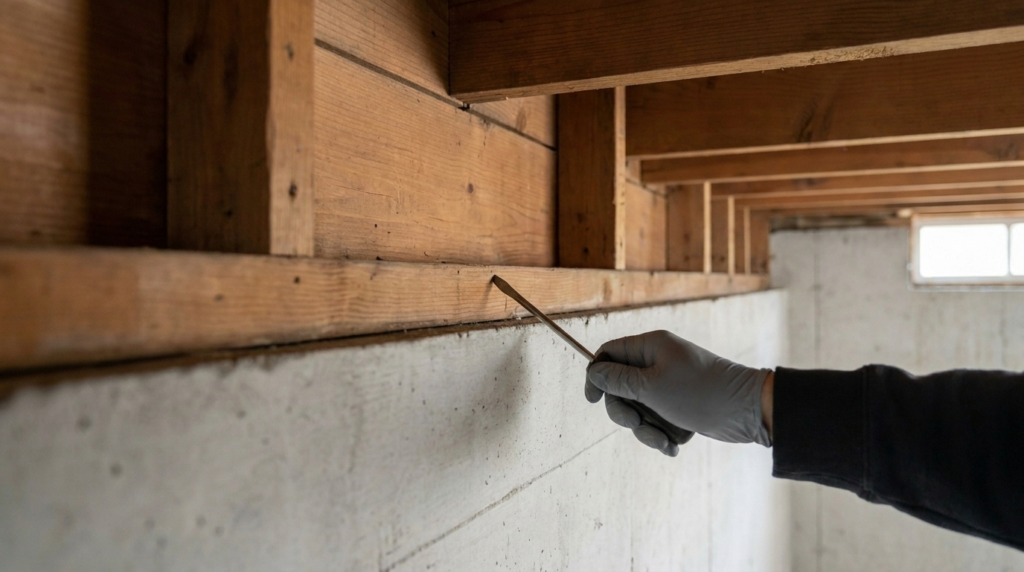
Yes, they can. It is a question New York renters bring to Reddit’s r/AskNYC in one form or another: the last tenant is gone, the place has sat empty, so anything left behind must have starved by now. Measured against the survival figures above, a gap of a few weeks between leases is not long enough to count on, and the sources add two reasons an empty unit is not proof of a clean one.
The first is food. Cornell’s Integrated Pest Management program says in its bed bug FAQs that if people move out, bed bugs can survive by feeding on rats or mice, and that bed bugs “could already be present in clean, vacant apartments.” A vacant unit, in other words, is not automatically a unit with nothing to feed on.
The second is behavior. The University of Kentucky fact sheet calls it usually impractical to leave a home unoccupied in hopes of starving an infestation, and says that when apartments are vacant, bed bugs often disperse to nearby units or reduce their activity until the unit is reoccupied. That last part is the incoming tenant’s problem. Quiet is not the same as gone, and the first sign of a hidden population can arrive after the new bed does.
The city has a view on this, too. The NYC Health Department’s guidance for tenants and building owners directs owners to inspect units after a vacancy and to have vacant units thoroughly cleaned and free of pests before a new tenant moves in. So ahead of your move-in date, it is fair to ask the landlord or management two plain questions: was the apartment inspected after the last tenant left, and was anything found? A clear yes to the first and a clear no to the second is the answer you are hoping for. Anything vaguer is worth a follow-up question before your furniture goes in.
Looking up the building’s bed bug history ahead of signing is a separate step, and we cover it in our guide to checking a building’s bed bug history before signing a lease.
Bed bugs in an NYC curb find?
Call us and a real person answers. After the visit you get a service report and a warranty call.
Are Bed Bugs Still Alive in Furniture Left on an NYC Curb?
They can be. Whatever is on the curb has probably been out for hours or days, not months, and New Yorkers know how fast anything worth taking disappears from a sidewalk. Even a piece that sat out for a week has been without a host for a small slice of the time the survival figures above describe, and you cannot see from the street what is inside its seams and joints.
There is not much room for interpretation in the city’s advice. The NYC Health Department’s guidance for tenants puts it in one line: “Never take in furniture found on the street.”
The city’s sanitation rules explain something you will notice on trash night. DSNY requires mattresses and box springs to be sealed in plastic bags before they go out — a rule its page says is there to prevent the spread of bed bugs — but its rules for couches, chairs and other bulky furniture say nothing about bagging. The bag on a mattress tells you the owner followed the rule. It tells you nothing about the armchair standing next to it.
If you have already carried something inside, our guide to the signs of bed bugs in an NYC apartment shows what to look for and where. And if the furniture going out is yours and it has bed bugs, the Health Department’s bed bug fact sheet covers how to mark it so nobody else carries it home.
Do Bed Bugs Die Off in Storage Units and Moving Boxes in New York?
Not quickly, and not on a schedule you can count on from a few weeks or months in storage. The federal yardstick for isolated belongings is a long one. EPA’s do-it-yourself guidance on bed bugs says items that cannot be treated should go into a sealed plastic bag or storage container and stay there “for up to a year to ensure any active bugs are dead.”
Moving the boxes into a storage unit does not speed that up. A unit without heat runs closer to outdoor temperatures, and cool is the direction the University of Kentucky fact sheet ties to longer survival. A climate-controlled unit lands nearer the Kentucky fact sheet’s figure of about 1 to 4 months, for nymphs and adults, in temperature-controlled buildings. Either way, a season in storage is not a treatment. Whether a hard freeze in an unheated unit would kill them is a temperature-and-time question, and the post on what temperature kills bed bugs linked above is where that answer lives.
Moving boxes are their own problem. Cardboard is a paper product, and paper is one of the rough surfaces UC IPM names as egg-laying sites, with the eggs glued in place. A box packed in an infested apartment can carry eggs as well as bugs, and those eggs hatch on their own schedule wherever the box ends up — in a storage unit, in a new apartment, or in the hallway of a building you are moving into.
Luggage after a trip is a related but different situation with its own checklist, covered in our post on the signs you brought bed bugs home.
Why Can’t You Starve Out Bed Bugs When NYC Neighbors Share Walls?
Because the plan asks the bugs to wait longer than you can, and in an apartment building they may not have to wait.
The clock comes first. The sources above point the same way: months for nymphs and adults in a heated apartment by the Kentucky fact sheet’s figure, longer where it is cool, and eggs that keep hatching into hungry nymphs on their own schedule. Few people can stay out of their own bedroom, or their own apartment, for that long.
Then come the neighbors. NYC’s Health Department says bed bugs can enter homes by traveling along connecting pipes and wiring — the kind of route that links one apartment to the next in a building where units share walls, floors and ceilings.
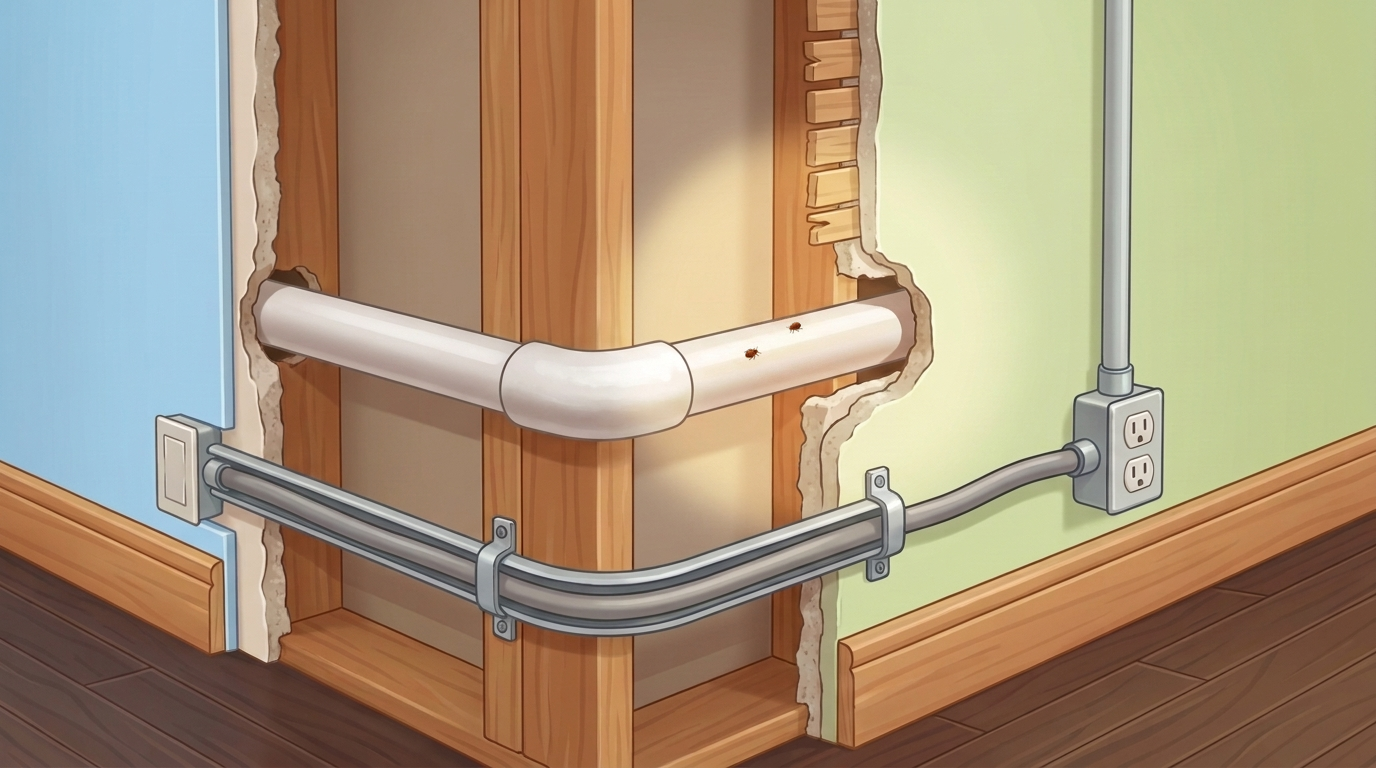
Together, those facts turn the starve-out plan around. Leaving an apartment empty does not take the bugs’ food away so much as send them looking for it, and in a building the next meal may be one wall, floor or ceiling away. It is the University of Kentucky pattern from the vacancy section above, where bed bugs in vacant apartments often disperse to nearby units. In a New York apartment building, the people next door are part of the equation whether anyone planned for them or not.
That is why a bed bug problem in an apartment building is a building problem, not a waiting game. The practical side — the treatment protocol, the follow-up visits and the mattress encasements — is in our guide to getting rid of bed bugs without heat, and building owners and managers will want our page on commercial bed bug treatment.
Wrapping Up
Waiting is a weak plan against bed bugs. The short version:
- The answer depends on the bug’s life stage and the temperature, with humidity playing a part in UC IPM’s account, which is why the published figures disagree.
- For a heated New York apartment, the Kentucky fact sheet’s figure for temperature-controlled buildings is the realistic guide, not the cool-weather or laboratory records.
- Eggs keep hatching after the last tenant leaves, the newest nymphs are the most likely to run out of time, and the older nymphs and adults, in UC IPM’s account, outlast them.
- Apartment heat shortens a starving bed bug’s clock but speeds up an infestation that has someone to feed on.
- An empty apartment is not proof of a clean one, which is why the NYC Health Department tells owners to inspect units after a vacancy.
- Curb furniture is a bad bet, and a bagged mattress on the curb tells you about DSNY’s bagging rule, not about the couch beside it.
- EPA’s do-it-yourself guidance keeps untreatable items sealed for up to a year, so a few months in storage is not a cure.
- In a building, bed bugs in an empty apartment often disperse to nearby units, in the Kentucky fact sheet’s account, so leaving an apartment empty tends to push the problem next door rather than starve it.
We treat bed bugs, and we cover all five boroughs. If you would rather know than wait, our borough pages for Manhattan bed bug treatment and bed bug treatment in the Bronx walk through how a visit works, and our breakdown of what bed bug treatment costs in NYC covers the numbers.