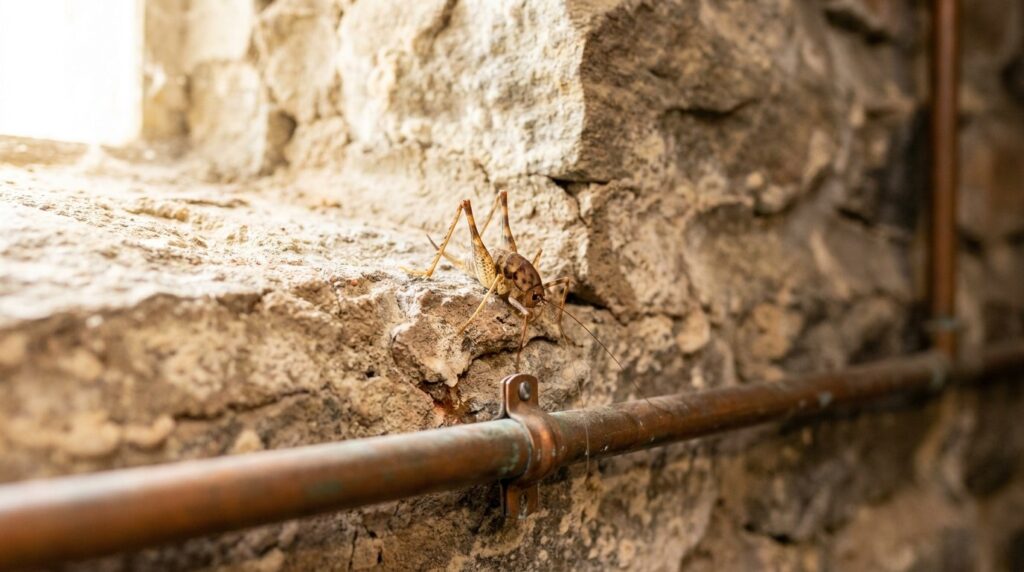
If you have gone down to your Staten Island basement and found a big humpbacked insect with impossibly long legs sitting on the wall, and you have never once heard it chirp, you are not dealing with the cricket you think you are. That is a camel cricket, and it is silent. It has no wings to rub together, so it cannot make a sound at all.
That single fact changes the entire job. People search for crickets in the basement, picture the chirping insect they know from a summer yard, and buy a spray built for that animal. Meanwhile the thing actually living in the cellar is grazing on fungus growing across damp masonry, and no perimeter spray on earth fixes a moisture problem.
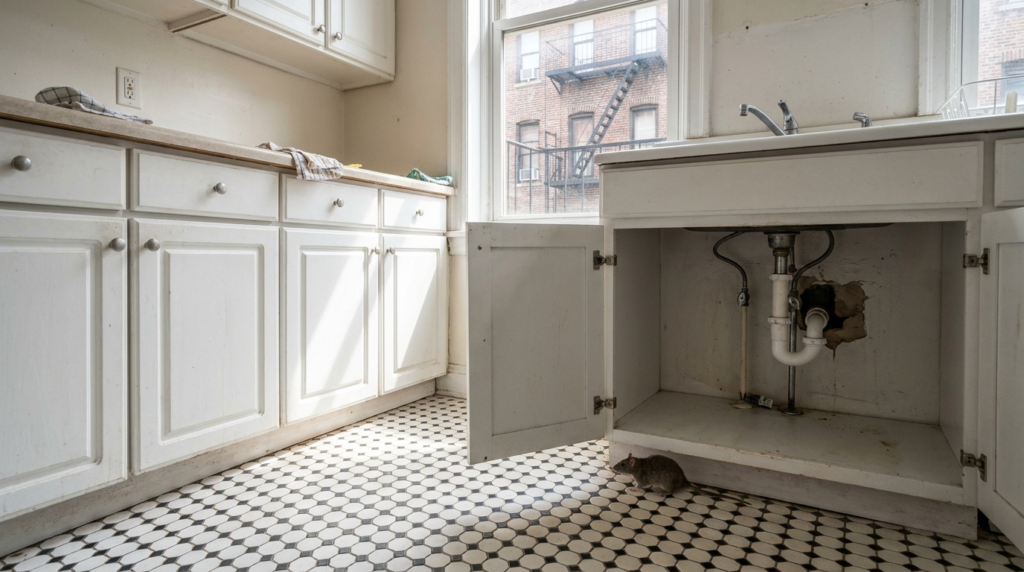
We handle Staten Island pest control out of our Queens office, and this is one of those calls where the bug has almost always been misidentified before we get there. The borough’s older detached houses, cellars cut into rubblestone and fieldstone, and the damp that comes with both add up to near-ideal camel cricket habitat. Here is what works, in the order it works, plus the honest limitation nobody selling a sealing job tends to mention.
Camel crickets in your Staten Island basement?
26+ years treating Staten Island basement crickets. We track down the moisture source first, set a glue board line along the walls, and we waive the inspection fee when you move forward with treatment.
How Do You Get Rid of Camel Crickets in a Staten Island Basement?
Three things, in this order of importance: dry the space out, trap along the walls, and seal what can genuinely be sealed. Camel crickets are in your basement because it is damp and dark and there is fungus on the masonry for them to eat. Take the damp away and you have taken the food away. Traps clear the ones already inside while the drying does its slow work, and sealing slows the resupply from outside.
That order matters, because it is the reverse of what most homeowners try. The instinct is to spray, then seal, then maybe buy a dehumidifier if the first two do not stick. Run it backwards and the problem finally goes somewhere.
Do Camel Crickets Bite?
No. The National Pest Management Association’s pest guide is direct about it: they “lack fangs or the ability to bite.” They are not a health threat. What they have is size, a set of absurd legs, and a habit of turning up at eye level on a cellar wall.
They do jump, and here is where we want to be careful. Ask anyone who has met one in a basement and you will hear the same complaint: they jump at you. Homeowners say it over and over on pest and home forums, and it is often the first thing people tell us on the phone. That perception is real and widely shared. It is not documented behavior. The NPMA describes leaping as pure defense, the only thing a camel cricket has to scare off a predator, and the explanation that fits everything we have read is that a startled cricket launching in an unpredictable direction inside a cramped, dim cellar simply reads as a charge. We could not find an entomology source that documents deliberate targeting, so we are not going to tell you they aim.
Will They Wreck Your Stored Boxes?
Maybe, occasionally, and mostly in a heavy infestation. This one is worth being straight about, because the sources genuinely disagree. NC State Extension and the Rutgers fact sheet both say stored garments, linens and cardboard can be chewed once an infestation runs unchecked and the crickets cannot find better food. The University of Minnesota Extension’s fact sheet says flatly that they do not harm property, fabrics included. Our read sits closer to the middle: treat boxed fabric and cardboard as an occasional casualty, not as the reason to act. The reason to act is that the population grows, and nobody wants to share a cellar with them.
How Do You Tell Which Cricket to Kill in a Staten Island Home?
Listen. That is the whole test. If the insect in your basement makes no sound, it is a camel cricket, and it is the one worth doing something about. If you are hearing chirping, you are hearing a different animal.
Michael Waldvogel, the household and structural entomology specialist behind NC State Extension’s camel cricket page, puts the diagnostic plainly: “If you are hearing chirping sounds indoors, then you likely have field crickets.” Chirping takes wings. A male field or house cricket makes the sound by rubbing a hard edge on one forewing across a file-like ridge on the other. Adult camel crickets have no wings at all, so the sound is physically unavailable to them.
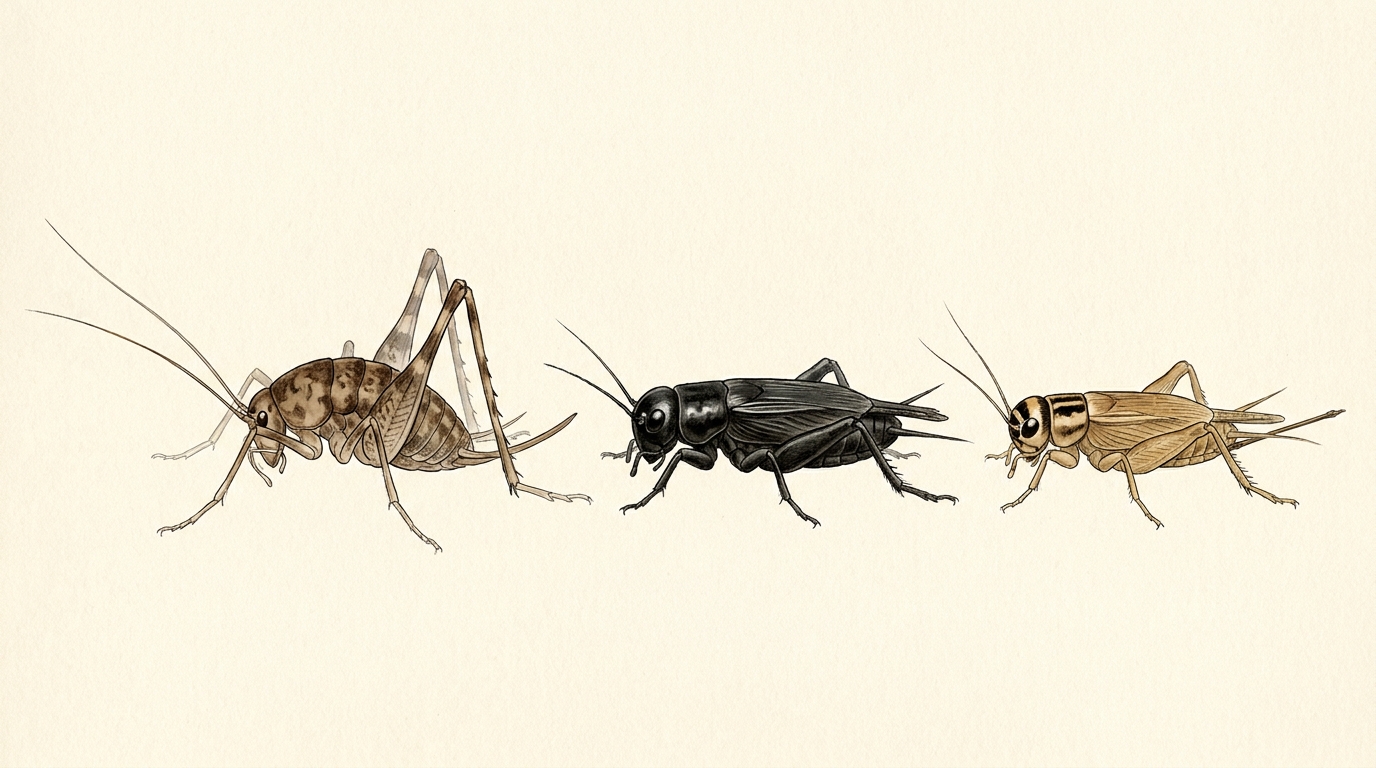
They are not even close relatives. Camel and cave crickets sit in the family Rhaphidophoridae. The chirping crickets are Gryllidae. Different families, not two versions of the same bug, and the distinction matters, because plenty of pages online get it wrong and then recommend a field cricket treatment for a basement full of something else.
| Camel / cave cricket | Field cricket | House cricket | |
|---|---|---|---|
| Does it chirp? | No. No wings and no sound-producing structures. | Yes. The classic outdoor chirp. | Yes. |
| Wings | None as an adult. | Winged. | Winged. |
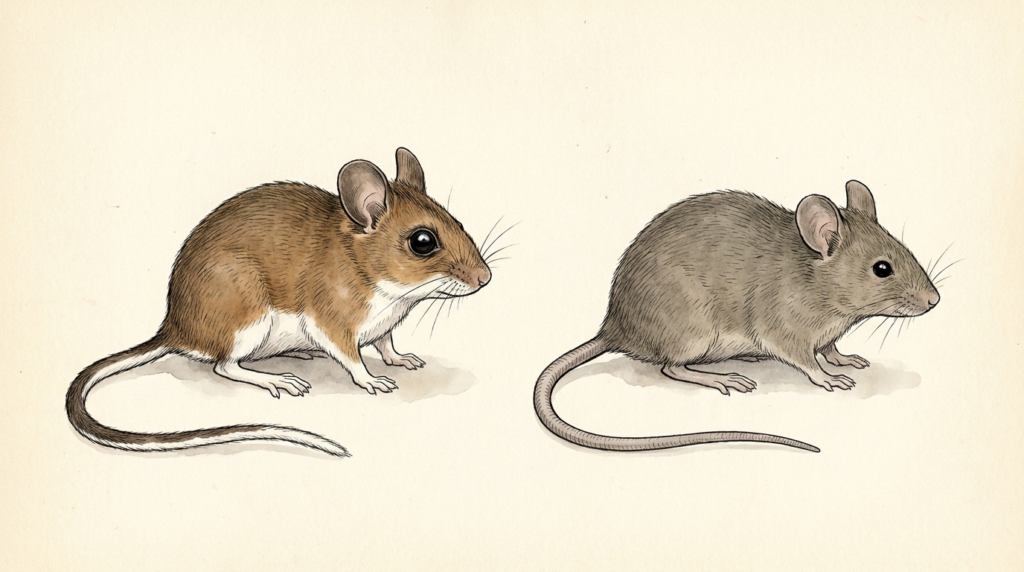
| What it looks like | Humpbacked, tan to mottled brown, very long hind legs and antennae, half an inch to an inch and a half. | Robust and black, half an inch to an inch and a third. | Yellowish-brown, three dark bands across the head, about three quarters of an inch. |
| Where you find it | Damp basements, cellars and crawl spaces. | Often lower floors and the basement too, which is why the two get confused. | Anywhere in the house, and fond of warmth. |
| Drawn to light? | No. | Yes, strongly. | Yes, strongly. |
| What it eats | Fungus on damp masonry, organic debris, occasionally fabric or cardboard, and other camel crickets. | Omnivorous generalist. | Omnivorous, and can damage fabric soiled with food or body oils. |
Camel crickets are also not drawn to light, while field and house crickets are, strongly, as University of Missouri Extension states outright. So insects piling up under your porch light are not your basement problem walking out the door.
You will also run into the nickname “sprickets,” short for spider crickets, which is what plenty of homeowners land on the moment the legs register.
And if the leggy thing startling you down there turns out not to be a cricket at all, the other regular tenant of a damp cellar is covered in our guide to house centipedes and where they hide.
Do Soapy Water Traps Remove Crickets From a Staten Island Cellar?
They catch crickets. They do not remove an infestation on their own. Worth saying, because trapping is where most of the advice online stops.
The soapy water trap is real and it costs nothing. Set open containers of soapy water on the floor along the damp walls. Camel crickets go toward water, fall in and drown. Colin Purrington, a former biology professor who wrote the method up, explains that the soap is no poison: it cuts the waxy coating on the exoskeleton so the cricket sinks instead of floating and climbing back out.
Glue traps do more of the work. That is the homeowner term, and it dominates every thread we read; extension pages call the same product a sticky board. NC State’s guidance is to put them in corners and behind appliances. A pest control business owner replying on a New Jersey outdoors forum described running glue boards around the perimeter, especially behind stored items and around the sump pump, then vacuuming up whatever he spots in between. Crickets travel the wall-floor junction, so the boards belong there, not out in the middle of the floor.
Purrington’s other trick is a strip of duct tape baited with a piece of dry cat food, which works on the same principle for a fraction of the price.
The most-upvoted answer we found in a Long Island thread on this exact problem ran four words: “Glue traps. Dehumidifier. That’s the solution.” One hundred and fifty-one people agreed with it. That is not a scientific consensus, but it is the same two-part answer every extension fact sheet gives, arrived at independently by people in the same damp housing stock we work in.
One more tactic: camel crickets are cannibals. It shows up in university writing on the species and in homeowner threads alike, and one commenter in another Long Island thread, with forty-five votes behind the comment, advises leaving the caught ones on the board so they pull others in. We would not build a plan around that, but it costs nothing to leave a loaded board where it is.
How Do You Dry a Staten Island Basement to Stop Crickets Breeding?
A dehumidifier, sized for the square footage, running continuously, draining to the sump or a floor drain so nobody has to remember to empty a bucket. That is the highest-leverage thing you can do, and it is the step homeowners skip because it feels indirect. It is not. Pull the humidity out and the fungus on the masonry stops. Take the fungus away and there is nothing down there for a camel cricket to eat, which is what keeps a basement population from sustaining itself year after year.
What number should you aim for? Here we have to be careful, because none of the extension fact sheets we checked put a figure on it. They say “reduce moisture” and stop. The numbers come from homeowners, and across four separate threads they converge on the same band: somewhere between 30 and 45 percent relative humidity, and certainly under 50. One Long Island homeowner, relaying what their bug guy had told them, put the target under 45 percent and described the population collapsing once the fungus was gone and the crickets had nothing left to eat but each other. In a heavily-read home improvement thread, the top reply, with one hundred and one votes, was simply to measure first and get a dehumidifier if it reads above roughly 55 percent.
A cheap hygrometer settles that argument in an afternoon.
While you are down there:
- Fix the leaks. A weeping pipe or a slow foundation seep will out-produce any dehumidifier you can buy.
- Get the cardboard off the floor. The Rutgers fact sheet points out that the glue in cardboard boxes is itself a food source. Lidded plastic bins solve two problems at once.
- Check that the sump is actually working, and that its discharge carries water away from the house rather than dumping it back into the soil beside the wall.
- Pull stored clutter off the walls so air moves behind it and so the traps have somewhere sensible to sit.
Drying a cellar pays off well past crickets. The same conditions feed the other insects that follow moisture around this city, so if you are turning up more than one thing down there, we cover silverfish in a New York basement separately.
How Do You Seal a Staten Island Foundation to Prevent Crickets?
You seal the obvious openings, you accept that you will not get all of them, and you treat sealing as the third lever rather than the first. The standard exclusion list is worth doing properly:
- Caulk the gaps around window and door frames, and where the sill plate meets the foundation.
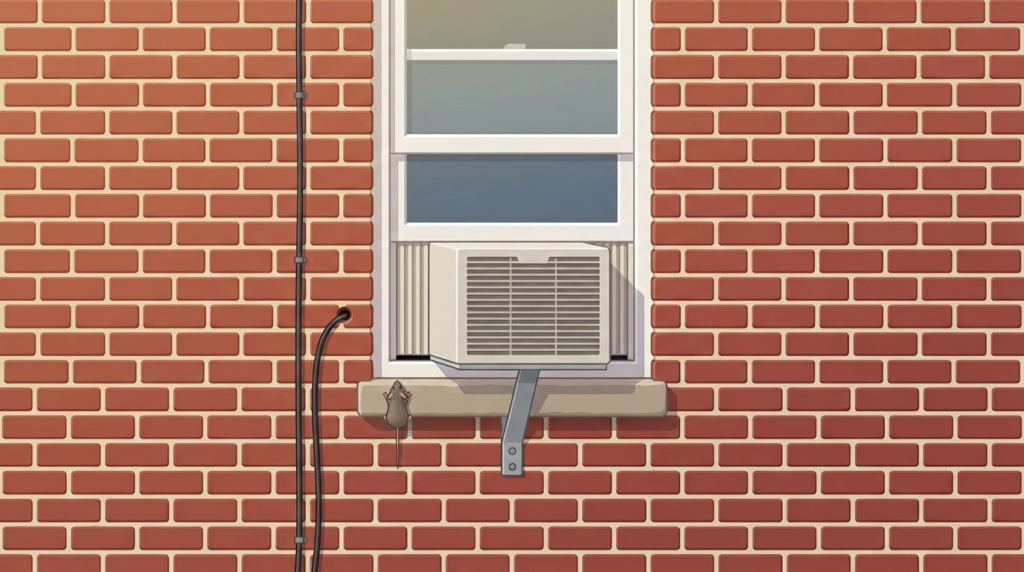
- Seal every utility penetration: heating and cooling lines, plumbing, and the clothes dryer vent.
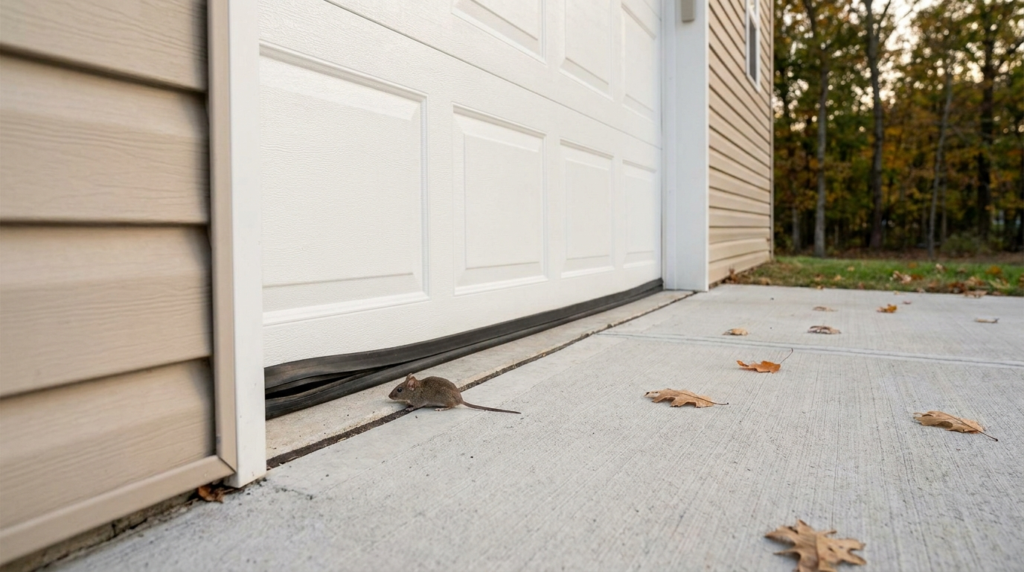
- Weather-strip basement and crawlspace access doors, and check the sweep on the bulkhead.
- Screen or cover crawlspace vents and close up soffit gaps.
- Clean out the window wells. A well packed with wet leaves against a basement window is harborage and an entry point in the same square foot.
Then go around the outside. A 2014 peer-reviewed survey of camel crickets in North American houses found them significantly more abundant in traps set within a meter of the house than in traps farther out. They live in the strip right against your foundation. Leaf litter, deep mulch, stacked firewood and anything else holding moisture against the wall is the staging ground, and moving it back a few feet does real work.
While you are out there, get water moving away from the building. Clean gutters, downspouts extended past the drip line, and grade that falls away from the wall. That same walk-around is where our mosquito control here on the island starts, since standing water beside a house is both what keeps a cellar damp and where mosquitoes lay their eggs.
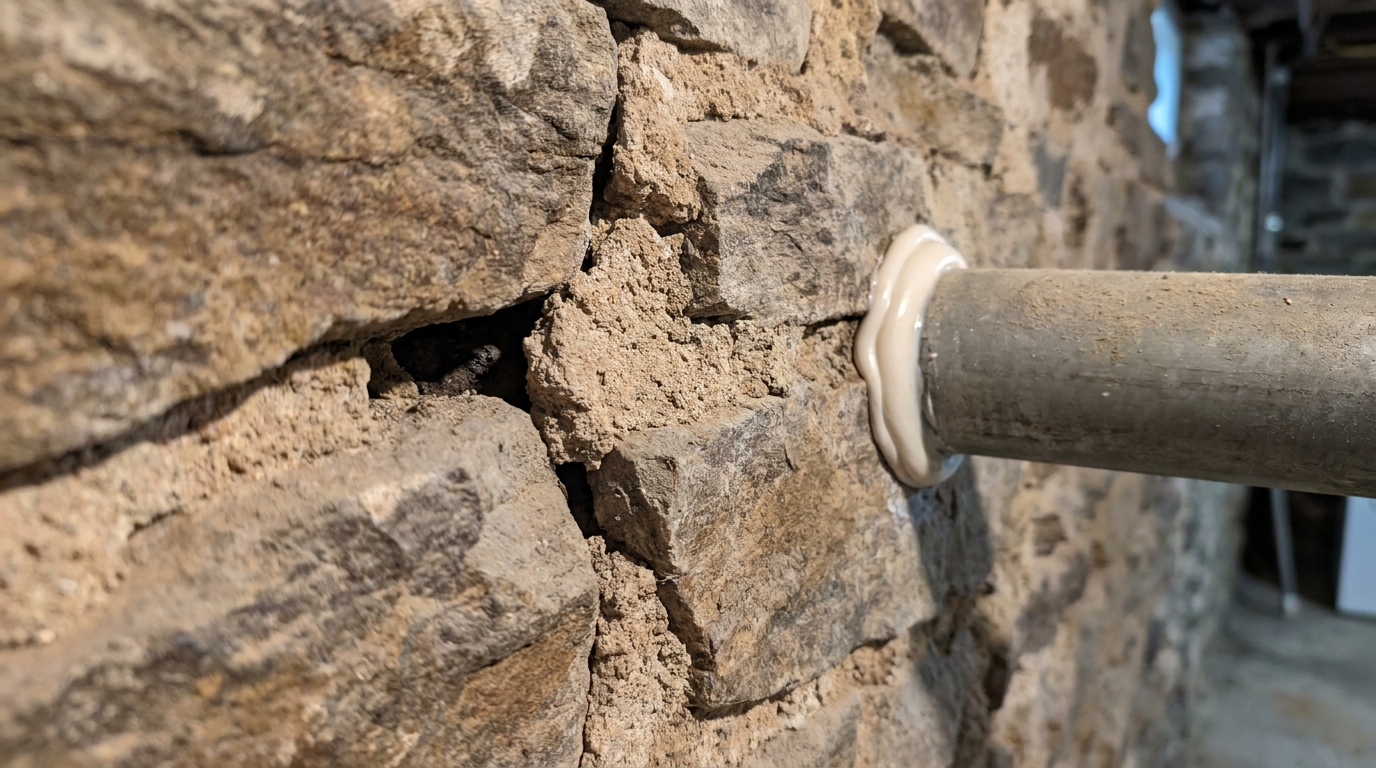
Now the part that usually gets left out. On a lot of Staten Island houses you cannot seal your way out of this, and pretending otherwise sells work that will not deliver. A homeowner on a New Jersey outdoors forum described it exactly, back in 2018, with no pest company anywhere near the conversation. Everything online told him to dry the basement and seal all the openings, and his answer was: “Original part of the house is 200+ years old with a rubblestone foundation so that ain’t happening.”
That is the same masonry a good share of the borough’s older detached houses sit on. A rubblestone or fieldstone wall is irregular stones and mortar with a functionally endless number of small voids in it. You can point it and re-mortar it and still not close it. Colin Purrington spent a few years re-mortaring his own basement and wrote that it was an enormous amount of work and was not doing a great deal for his cricket population.
Cornell Cooperative Extension of Nassau County, the closest extension office to us in this whole stack of sources, says the same thing in gentler language on its own cave cricket resource: “there is no one time fast way to eliminate the problem.” Its sequence is to seal what you can, pull the damp harborage away from the house, keep basements and crawl spaces as dry as possible, run sticky traps to hold the population down, and get the vacuum out. Notice what is doing the heavy lifting in that list. It is not the caulk.
Crickets still jumping in your Staten Island cellar?
26+ years treating Staten Island crickets. We work damp cellars and crawl spaces across the borough, we use family and pet friendly products, and we waive the inspection fee when you move forward with treatment.
Why Do Chirping Crickets in Staten Island Yards Need No Treatment?
Because that is a different animal doing something completely normal, and treating a yard for it is money spent on nothing.
The chirp is a male field or house cricket calling for a mate. He makes it by rubbing his wings together, which is this whole post in one sentence: the insect chirping in your yard has wings, and the insect in your basement does not. Not the same species, not the same family, and not the same problem.
Notice what the extension literature does not say. Across every fact sheet we read, the control advice is written for crickets that have already come indoors: seal the openings, dry the basement, set traps, treat the band around the foundation when pressure is high. Not one of them recommends treating a lawn because crickets are audible in it. A yard full of chirping on a warm Staten Island night in late summer is a season, not an infestation.
It becomes your problem when the singing moves inside. Field and house crickets are strongly drawn to light, unlike the camel crickets in your cellar, so shielding outdoor lighting near doors and the garage, and not leaving doors propped open after dark, cuts how many ever reach the threshold. Anything that does get in is a glue board and a door sweep away from being handled.
When Should You Call a Staten Island Pro to Eliminate Crickets?
Honestly, later than most companies would tell you. The dry, trap and seal sequence above is genuinely a homeowner job in a lot of houses, and we would rather you try it first. Call us when one of these is true:
- Six weeks of a running dehumidifier and a live trap line, and the counts are not falling. Something is feeding the moisture that you have not found.
- You are seeing dark fecal smears on walls, shelving or stored goods. NC State flags that as the mark of a heavy infestation rather than a few strays.
- The crawlspace is the real problem and you cannot get into it. Plenty of Staten Island crawlspaces are half-height dirt-floor voids nobody is trapping properly on their stomach with a flashlight.
- You cannot find the water. Sometimes it is grading, sometimes a failed sump, sometimes a slow leak inside a wall that only shows up as a humid room.
- The foundation is old stone and you have accepted you cannot seal it. That is a case for ongoing management, not a one-time fix, and you should be told so plainly before anyone takes your money.
What we do on a cricket call is not exotic. We find the moisture source and tell you what it will take to fix, even when that fix belongs to a mason or a drainage contractor rather than to us. We treat the harborage band against the foundation and the interior wall-floor junction, dust the voids the crickets travel through, and set a glue board line that we come back and actually read instead of leaving you to guess. Our products are family and pet-friendly, and same-day service during business hours is realistic here rather than a slogan.
Twenty-six years and hundreds of positive reviews in, we have learned that the cricket call is almost never about the crickets. It is about the water, and that is where we start. We waive the inspection fee when you move forward with treatment.
The Bottom Line on Crickets in a Staten Island Basement
If it is silent, it is a camel cricket, and it is in your basement for the damp and for the fungus that damp grows on masonry. That makes the dehumidifier the treatment and the spray a distraction. Glue traps along the wall-floor junction clear out what is already inside while the drying does the slower work. Sealing helps and is worth doing properly, but on the borough’s older rubblestone and fieldstone foundations it will never be finished, and any plan built on a perfect seal is a plan that fails.
Outside, the chirping in the yard is a different insect living a normal life, and it needs nothing from you at all.
Buy a hygrometer, get the humidity under 50 percent, the number homeowners in similar basements report working, and hold it there, run a trap line for a month, and see where you stand. In most Staten Island cellars, that is the whole answer.