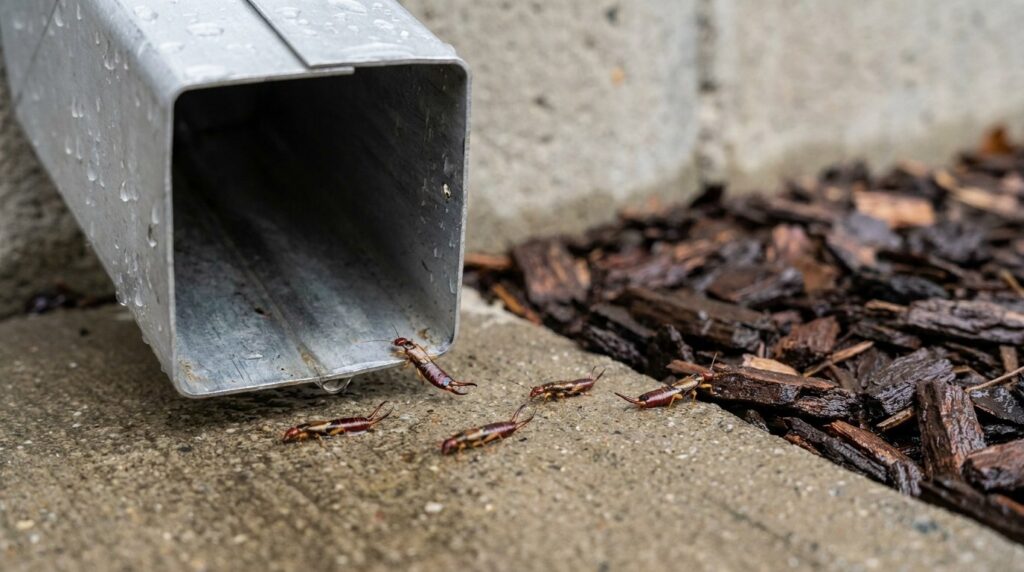
Open the back door on a warm July evening and five or ten earwigs come scurrying in past your feet. There are more in the shoes on the step. Lift a paver on the patio and the whole underside moves.
That is what an earwig problem looks like out here — sudden, concentrated into a few weeks, almost never a slow build. A homeowner on r/longisland described exactly that this summer: earwigs pouring in every time the back door opened, and a perimeter spray that held for one day before they were back.
That one-day result is the whole story, and it is why this guide is ordered the way it is. We run pest control in Nassau County and across Suffolk all season, and the earwig calls almost always trace back to something in the yard that flooded, dried out, or got moved. Correct that first, then treat the exterior. Do it in the other order and you are buying yourself about twenty-four hours.
One fact reframes everything else on this page: the earwigs did not breed inside your house. There is no colony in your walls. What you are looking at is a population that was living outdoors, in the mulch, and got pushed out of it.
Earwigs taking over your Long Island yard?
We strip the mulch harborage back from your foundation and treat the exterior band where earwigs actually nest. Month to month, no annual lock-in, and we waive the inspection fee when you have the work done.
How Do You Get Rid of Earwigs Already Inside a Long Island House?
Start with removal, not with a spray can. Because the earwigs indoors are strays rather than a breeding population, the fastest fix is mechanical. NC State Extension lists a broom and dustpan or a vacuum cleaner as the removal method, and that is what our techs do on the first pass — baseboards, corners, the track of the slider — then empty the canister into an outdoor can right away.
Then go looking, because they hide during the day and move at night. The indoor spots we find them in on Long Island are consistent:
- Basement corners and the sill plate where the foundation meets the framing
- Crawl spaces, especially under a kitchen addition or a converted porch
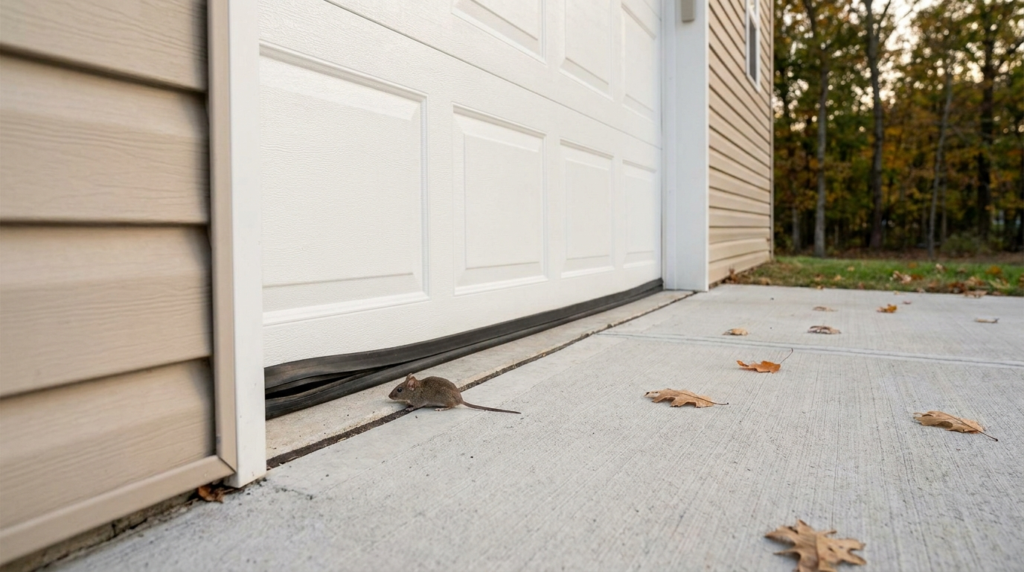
- The garage slab edge and the gap under the overhead door
- Bathrooms and laundry rooms, or anywhere with standing moisture
- Shoes, towels, and folded laundry left on a basement floor
Cornell Cooperative Extension makes the same point about how they get in: earwigs turn up indoors by accident, and during long stretches of heat and drought. They are not hunting for you. They are hunting for damp.
Two things we deliberately will not do. We will not broad-spray the interior — indoor work for earwigs is crack, crevice and spot treatment only, and blanketing baseboards accomplishes nothing the vacuum did not. And we will not spend this page on indoor humidity: a bathroom that never dries or a basement that sweats is a different pest profile with a different fix, and we covered it in our guide to getting rid of silverfish in a damp bathroom.
One more, since it is always the next question: if the pincers have you worried, we cover whether earwigs actually bite or pinch separately.
Why Do Long Island Homeowners Suddenly Have to Remove Hundreds of Earwigs?
Because something displaced them.
An earwig nest is burrowed under mulch, under a rotting stump, under a landscape rock — somewhere dark and permanently damp. It is not something you find by accident, and it can hold a startling number of insects. When that harborage floods or gets torn open, every earwig in it has to relocate at once, and the nearest large dry vertical surface is the wall of your house.
A professional applicator explains it on video in exactly those terms. A mass appearance on a patio or a wall usually means “you flooded them out” — a sprinkler zone that ran too long and filled the nest, or a load of mulch moved for landscaping that opened it up. Two triggers, and both of them are things that happened in your own yard in the last few days.
That is not one contractor’s theory. Penn State Extension lists, as an actual control step, “repair poorly placed rain downspouts and broken irrigation systems.” A land-grant extension service putting irrigation repair on an earwig control list is the same claim arriving from the other direction: your water schedule is a pest-control variable.
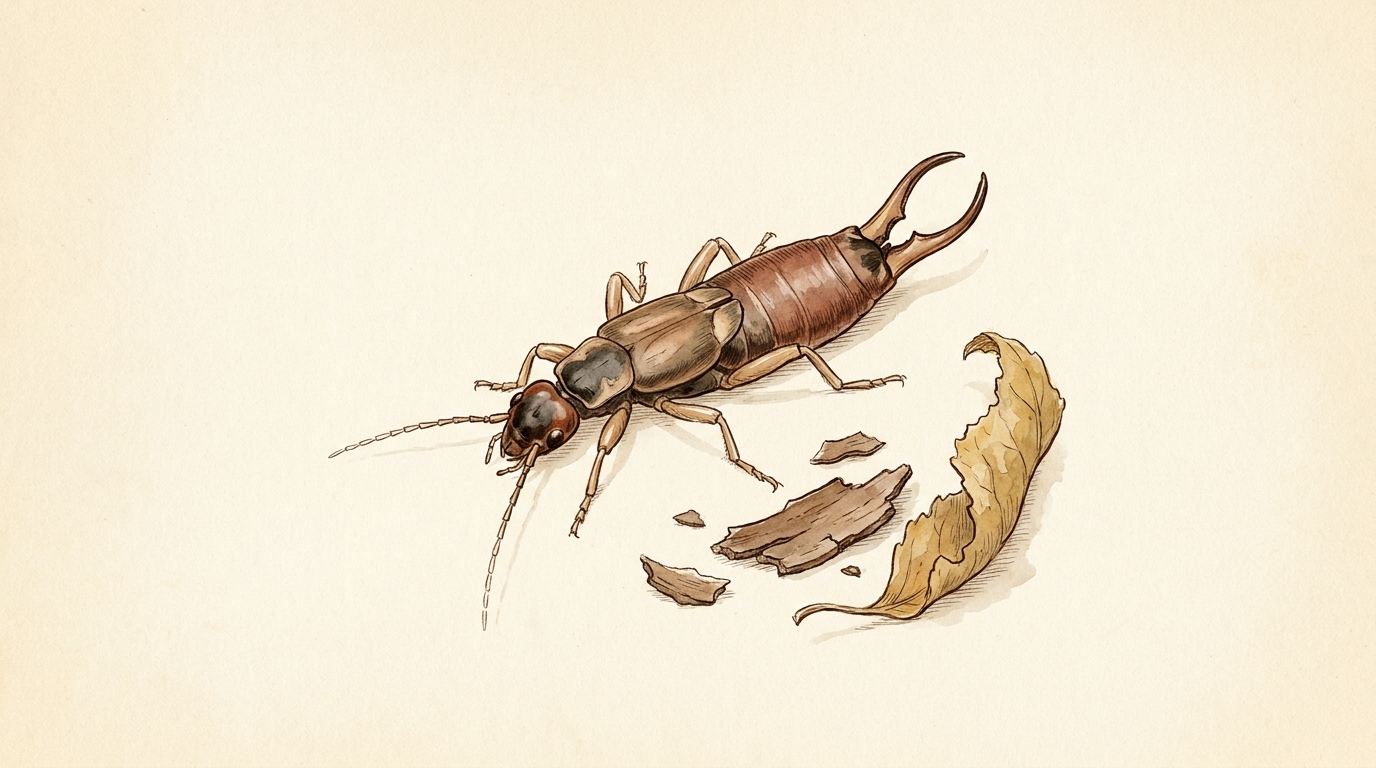
The moderator of r/pestcontrol, answering a homeowner who kept finding them indoors, asked the diagnostic question before offering any product: had there been a lot of rain, or a lack of it? Flooding and drought push them the same way. A homeowner in that thread described waking at three in the morning to twenty-five earwigs on the living room carpet after a heavy summer rain.
One honest qualification, because this would be easy to overstate. A genuinely good earwig year is a real thing — one r/Entomology commenter (3 points) put a regional surge down to a population boom compounding with earwigs fleeing heavy rain and cool nights. Both mechanisms are real and they stack. What is not happening is a colony breeding behind your drywall. Whatever the regional numbers are doing this season, the earwigs in your kitchen came from outside, from a specific place, and that place is usually within a few feet of your foundation.
Which is why that Long Island perimeter spray held for a single day. The product did its job on the earwigs that crossed it. It could do nothing about the population still living in the mulch bed two feet away, and they kept coming.
How Do You Remove the Mulch and Leaf Litter Long Island Earwigs Nest In?
This is the step that actually reduces the population, and Penn State is blunt about the order: eliminating the breeding and nesting places is the first step in controlling earwigs, not the fallback after the spray fails. Here is what that means on a typical Long Island lot.
Pull the Mulch Back Off the Foundation
Mulch banked against the foundation wall is a nest with a heater on it. Rake it back so there is a clear strip of bare, dry ground between the bed and the wall. NC State’s gravel border recommendation puts a 12- to 18-inch band of gravel in that gap — it drains, it dries between waterings, and earwigs will not settle in it. If you are re-mulching this season, build the gap into the plan and keep the new layer thin rather than piled.
Clear the Window Wells
This one gets missed constantly, and Long Island’s basement stock is full of them. A homeowner on r/homeowners, going into a second summer of being overrun, named the window wells as the likely source before anyone else suggested it: leaves, decay, and a bottom that never dries out. Scoop every well down to gravel and cover it if you can.
Take Away the Rest of the Harborage
- Leaf litter and grass clippings — the piles along the fence line and behind the shed. Cornell’s harborage list is specific: boards, tree holes, decaying bark, decaying plant matter, and piles of leaves or clippings.
- Rotting stumps — on video, the only true earwig nest that applicator reported ever finding was a rotting stump. If there is one at the back of the property, look under it first.
- Firewood and landscape stone — up off the ground, away from the foundation, and not stacked against the garage.
- Flat objects sitting on soil — plywood, a tarp, an upturned wheelbarrow, toys left at the lawn edge. Anything that traps moisture underneath is a daytime harborage.
The most upvoted answer in the homeowner threads we read makes a point worth repeating: earwigs are decomposers and unusually attentive mothers, which is why you find them piled together rather than one at a time, and why a surge is a reliable sign of a lot of organic matter somewhere on the property. If you are finding clusters, you are standing near their food.
How Should You Treat a Long Island Foundation to Stop Earwigs?
Now the product, and only now — because a band applied over an untouched mulch bed is the one-day result.
The treatment is an exterior perimeter band. Penn State’s control guidance is that most spraying belongs outside the house, to create a barrier the earwigs will not cross, and it names the targets: building foundations, the ground along fences and walks, around trees and utility poles, and around wood piles and rocks. NC State supplies the dimensions — roughly 18 to 24 inches up the foundation wall, plus, in some cases, another 3 to 6 feet of ground next to it.
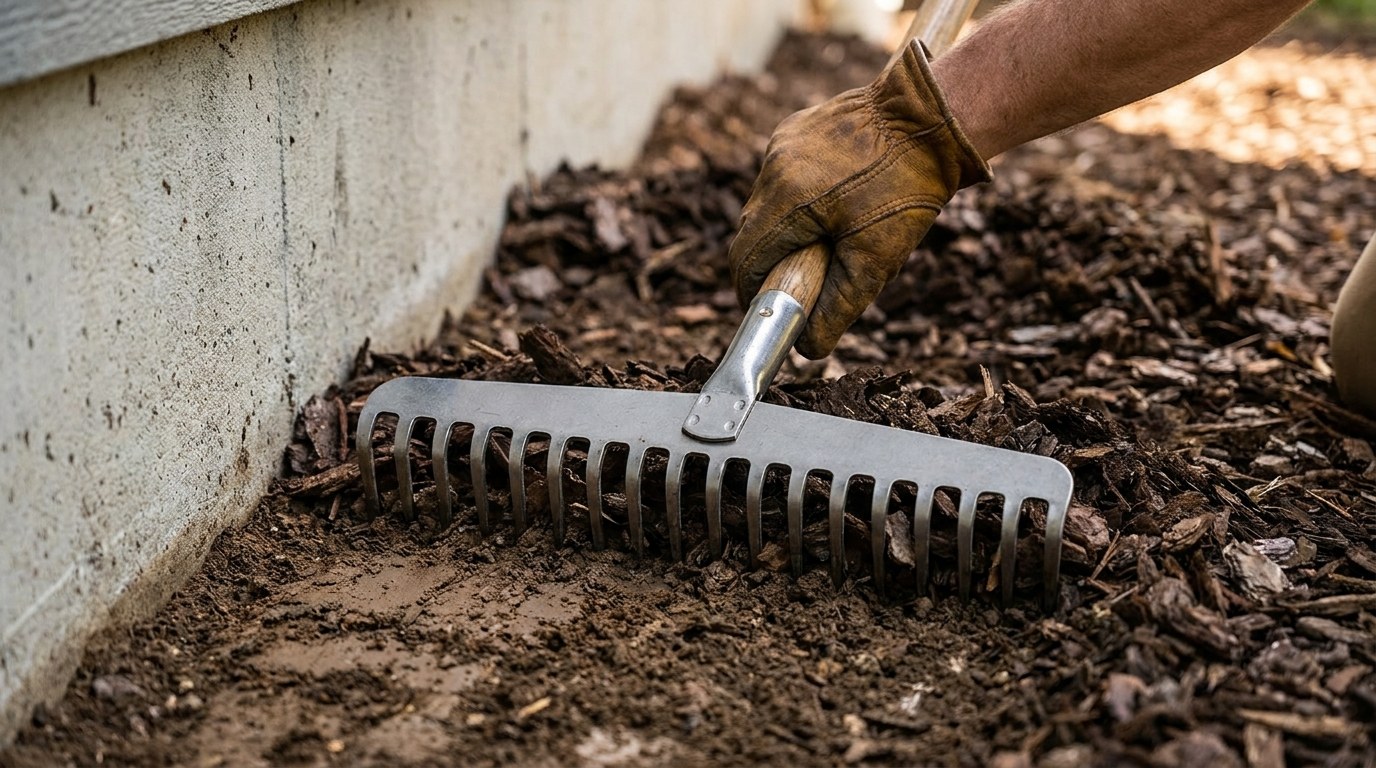
How we run it on a Long Island house:
- Harborage first. Mulch pulled back, wells cleared, debris gone. Treating before this is treating the wrong surface.
- Ground band before the mulch goes back. Granules go down on soil, in the strip where the bed meets the foundation, so the material sits where the insects actually travel.
- Low band on the wall. The foundation itself up to about two feet, plus the openings they use — door thresholds, window frames, the garage door seal, utility penetrations.
- Timed for night activity. Earwigs move after dark, so we want the exterior band down and dry before the evening they start crossing it.
On materials, the useful category is a controlled-release residual: the active ingredient sits in microcapsules, so it knocks down on contact but keeps working for weeks instead of burning off in the first hot afternoon, usually paired with a granular in the mulch line. That is the mechanism worth understanding, whatever ends up in the tank. We use family and pet-friendly formulations outside, and we will tell you what is going down, where, and how long to keep the kids and the dog off the band.
Earwigs also do not get a program of their own. They ride the same exterior band as the other crawling pests that dominate the Nassau and Suffolk residential mix — the visit that covers the exterior perimeter program we run for ants is the visit that covers earwigs.
Does exterior product work? Yes — when it is repeated and the harborage is gone. One homeowner in the r/homeowners thread treated the outside perimeter and the doorway on two separate occasions with an over-the-counter product and stayed clear afterward, though they would not call it settled until the summer was out. That is the honest version: two applications and a corrected yard, not one pass with a hose-end sprayer.
Do Traps Kill Earwigs in a Long Island Basement or Garage?
Traps catch earwigs. They do not solve an earwig problem. That distinction matters more here than with most pests, because the trapping advice online is abundant and aimed at the wrong end of the problem.
What works, and how far it goes:
- Grooved board traps. Cornell’s earwig fact sheet describes these and attaches the condition most people skip — they have to be emptied daily. A trap left full is a harborage you built on purpose.
- Rolled newspaper and shallow oil dishes. Both exploit the same instinct: a dark, tight, damp place to spend the day. They work as designed and they will fill up. They will not make a dent in a nest of any size.
- Diatomaceous earth. A mechanical control rather than a poison — it works by abrasion. One commenter reported good results from a light dusting at the doorways. The catch on Long Island is that it quits working the moment it gets damp, which in July is most mornings, so it belongs in a dry garage corner or under a sill, never in the mulch bed.
- A vacuum. Still the fastest tool in the house for a mass appearance, and the one we reach for first.
The genuinely valuable use of a trap is as a monitor. Set a few along the basement or garage wall and see which fill. The heaviest catch tells you which exterior wall the pressure is on, and that points you at the harborage outside. The wall with the loaded traps is almost always the wall with the deepest mulch bed, or the downspout that dumps at the corner.
What we would skip: the assortment of home remedies that get recommended in every thread. That same homeowner put it flatly — they tried a long list of natural approaches, none of them worked, and the perimeter treatment is what changed it.
Earwigs taking over your Long Island yard?
We strip the mulch harborage back from your foundation and treat the exterior band where earwigs actually nest. Month to month, no annual lock-in, and we waive the inspection fee when you have the work done.
How Do You Prevent Earwigs From Coming Back to a Long Island Yard?
Prevention for earwigs is mostly a water problem, which is not how most pest advice frames it.
Fix the Water Before You Fix Anything Else
- Irrigation timing. Run zones in the early morning so the beds dry through the day. Watering at night leaves the mulch line soaked through the exact hours earwigs are active.
- Irrigation repair. A stuck head or a cracked line soaking one corner of a bed builds the nest for you. This is the step Penn State puts on its control list right alongside clearing debris.
- Downspouts. Extend them past the bed so roof water discharges onto lawn or into a drain, not into the mulch against the foundation.
- Grade. Any low spot that still holds water a day after a storm, within a few feet of the house, is a future harborage.
Keep the Dry Strip Dry
The gravel or bare-soil gap at the foundation is not a one-time job. Mulch creeps, leaves blow in, and by August the gap has closed again. Walk it once a month through the season and re-open it.
Close the Doorway
Earwigs rarely fly. They move readily on foot and they hitchhike — NC State lists cardboard boxes, lumber, laundry baskets and cut flowers among the rides they take. So the entry points are low and physical: a worn door sweep, the gap under the garage door, failing weatherstripping on a slider, an unsealed utility penetration. Fix those and most of the traffic stops at the threshold. Swapping a bright white porch bulb for a warm-toned one helps too, less for the earwigs than for the night insect traffic it pulls onto the patio.
Hit the Season Before It Starts
One Long Island commenter described the pattern as three to four weeks every summer, like clockwork. That is the shape of it from Hempstead out to Smithtown — not a year-round pest, a concentrated window. So the work above pays off most before that window opens: spring cleanup, mulch pulled back, irrigation checked when the system is turned on, the first exterior band down ahead of the surge instead of in the middle of it. A recurring program is built around that timing, and it is what we set up for Suffolk County homes and Nassau addresses that get hit the same weeks every year.
Worth knowing: the same damp foundation edge that feeds earwigs feeds other occasional invaders, so these corrections tend to clear up more than one problem at a time — including the spiders that turn up in Long Island basements.
When Should You Call a Long Island Pro to Eliminate an Earwig Problem?
Some earwig situations are a Saturday of yard work. Some are not. Call us when:
- You already sprayed and it held for a day. That is not a bad product. That is an untreated harborage, and it has to be found before anything else will stick.
- They are in the living space. Shoes, towels, bedding — one homeowner reported finding them in all three. At that point the volume outside is high enough that exclusion alone will not keep up.
- You cannot get at the source. A stump you cannot pull, a slab edge, a neighbor’s bed at the property line, a crawl space you would rather not be in.
- It happens every summer. A recurring three-to-four-week event means a permanent harborage on a seasonal trigger, and it will keep recurring until that harborage is gone.
- It came on overnight after rain or a landscaping job. Displacement events move fast, and a mass appearance is much easier to shut down in the first few days than in the third week.
What a visit looks like: we walk the perimeter first and find the harborage — mulch depth, window wells, downspout discharge, irrigation heads, the stump nobody mentioned — before anything comes off the truck. Then the exterior band, then the entry points, then a plan for the rest of the season. We run same-day service during business hours across the Long Island towns we serve, and a one-time treatment carries a 30-day guarantee, so if they are back inside that window, so are we.
If you are not sure the problem needs a treatment at all, ask for a free estimate and a walkthrough. We would rather tell you the fix is your sprinkler timer.
The Bottom Line on Getting Rid of Earwigs on Long Island
Earwigs are an outdoor insect having a bad week in your house. They did not breed inside, there is no colony in the walls, and the number you are seeing indoors is a symptom of a harborage outside that flooded, dried out, or got dug up.
So the order goes: vacuum up what is already in. Pull the mulch back off the foundation and open a dry strip. Clear the window wells and the leaf piles. Fix the sprinkler zone and the downspout that keeps that corner wet. Then treat the exterior band — 18 to 24 inches of wall and, in some cases, a few feet of ground beyond it, outside, where the insects actually are. Traps monitor, they do not cure. Home remedies mostly do not survive a Long Island July.
Done in that order, it holds. Done in reverse, you get one good day.
If the yard work is finished and they are still coming, that is our call to take — get in touch and we will find what is producing them.