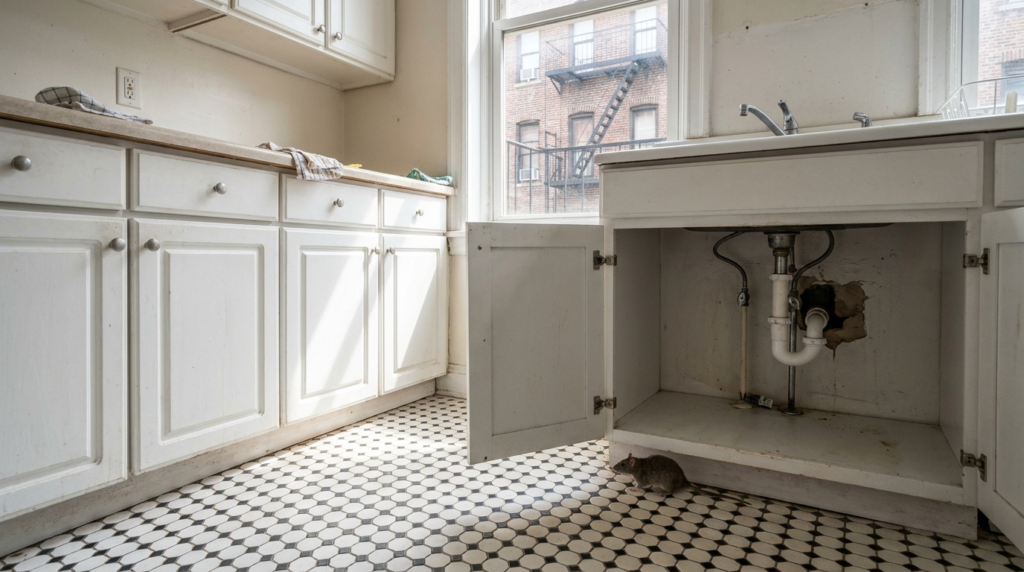
To get rid of rats in a Bronx apartment or house, work one sequence, not one product: confirm it’s rats and find where they travel, cut off their food and water, trap the ones inside, close the holes they use, and clean up once they’re gone. Fast? Not instantly. The University of California’s integrated pest management program (UC IPM) says in its Pest Note on rats that rats often avoid traps and baits for the first several days after they’re put down, and maybe weeks, so the quickest route is the one that skips no step. In an apartment building, rat poison goes through the owner: the NYC Health Department’s booklet Preventing Rats on Your Property says that if you own a commercial or multiunit property, it is illegal to place rodent bait yourself, and you must hire a pest professional.
Below, we take each step for a Bronx apartment, row house or two-family house. The section on closing holes comes early because it starts from your sketch, but work the steps in the order above, and close a hole only after the check in that section. To have us treat the rats instead, start with our page on rodent control in the Bronx.
Need rats out of your Bronx apartment or house fast?
Same-day service during business hours, and we waive the inspection fee when you have the work done.
What Is the First Step to Get Rid of Rats in the Bronx?
Confirm it’s rats, then map where they travel inside your home, before you set a single trap or seal a single gap. The traps and the repairs both go where that map says. Cornell University’s Integrated Pest Management program (Cornell IPM) puts it the same way in its guide to managing mice and rats: start with a detailed inspection to determine the source of the problem and to accurately identify the rodent. Its inspection section then asks why rodents are present, where they nest and how they get into the building.
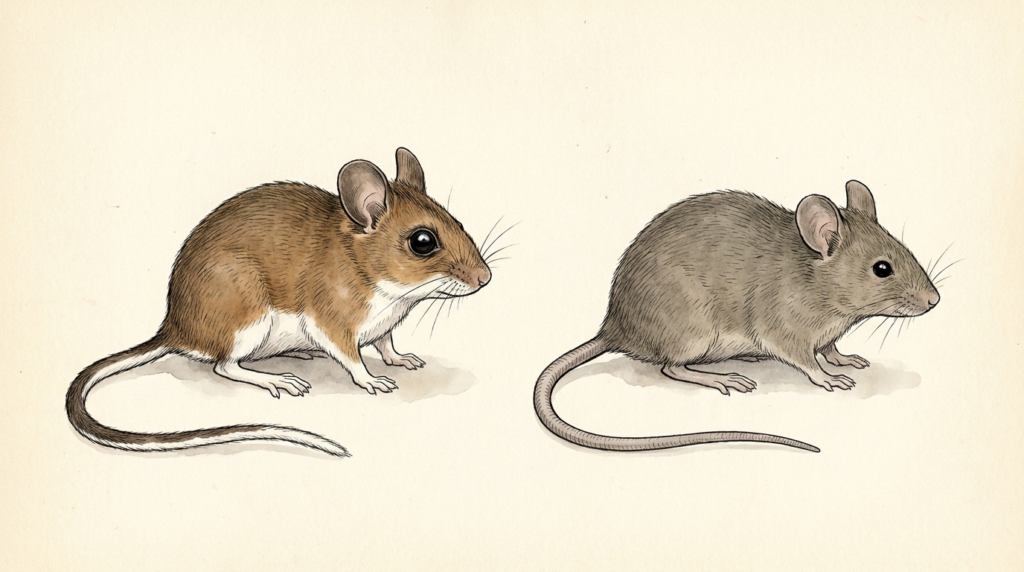
Identification comes first because rats and mice call for different traps, as the trap section below explains. Our other guides cover identification in detail: the signs of rats inside an apartment, and how to tell rat droppings from mouse droppings.
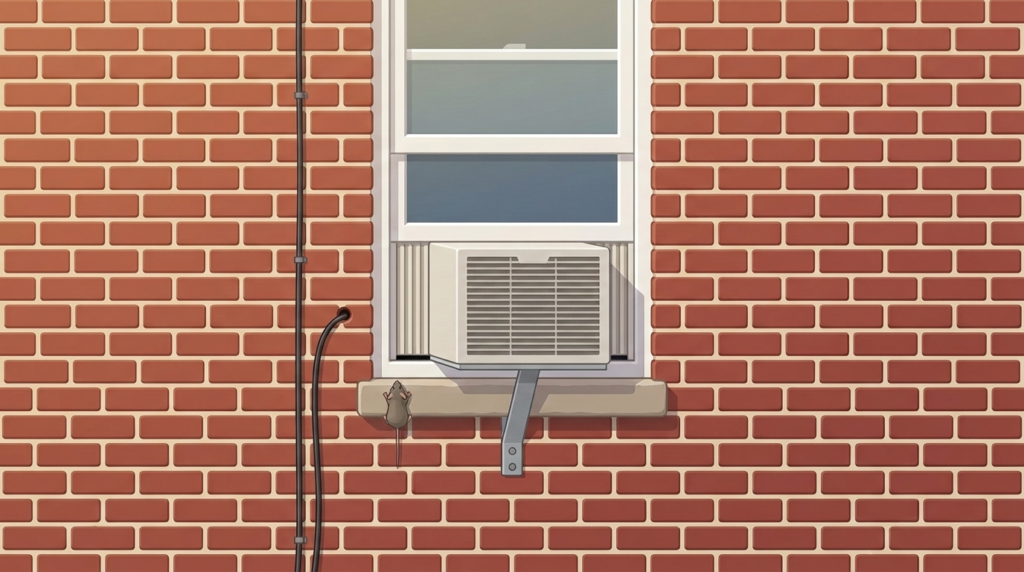
Then map the routes, and look without cleaning: leave any droppings where they are until the last section of this guide, because how you clear them matters. NYC Health’s page of rat information for tenants and property owners says rats come out at night and run along the same path repeatedly, so they often leave runways. In a Bronx apartment, follow the walls: behind the stove and the refrigerator, under the sink where pipes come through the wall or floor, and along the baseboards to the entry door. Mark each hole, gap and worn path on a quick sketch of the apartment. That sketch does two jobs later on: it shows you where the traps go, and it becomes the repair list you hand the super.
If you find a hole and can’t tell whether rats still use it, Cornell IPM’s pest exclusion page, which is written for animals in buildings generally, describes a check for it; use that check as written before you close anything.
How Do You Stop Rats Getting In and Keep Them Out of a Bronx Apartment?
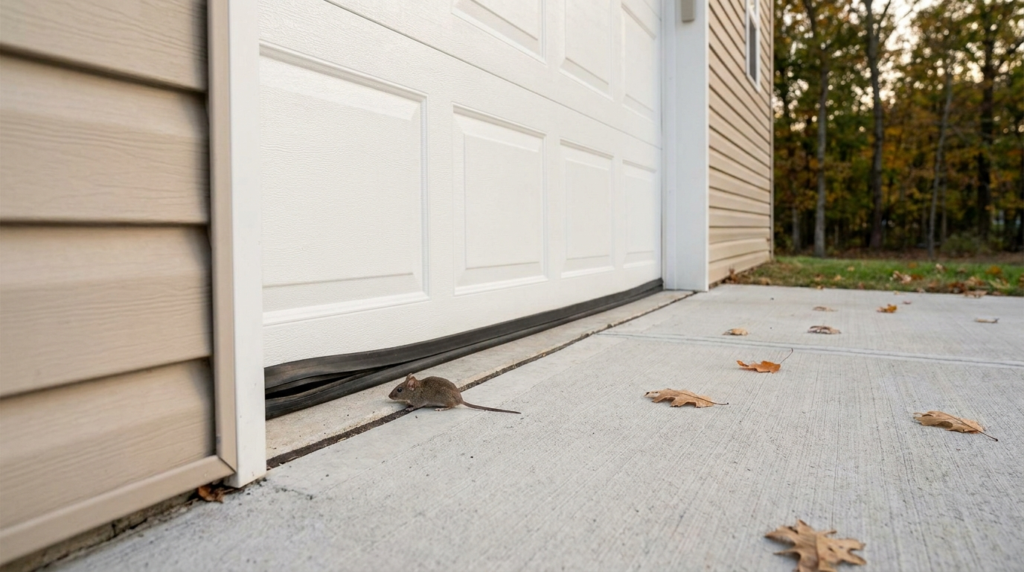
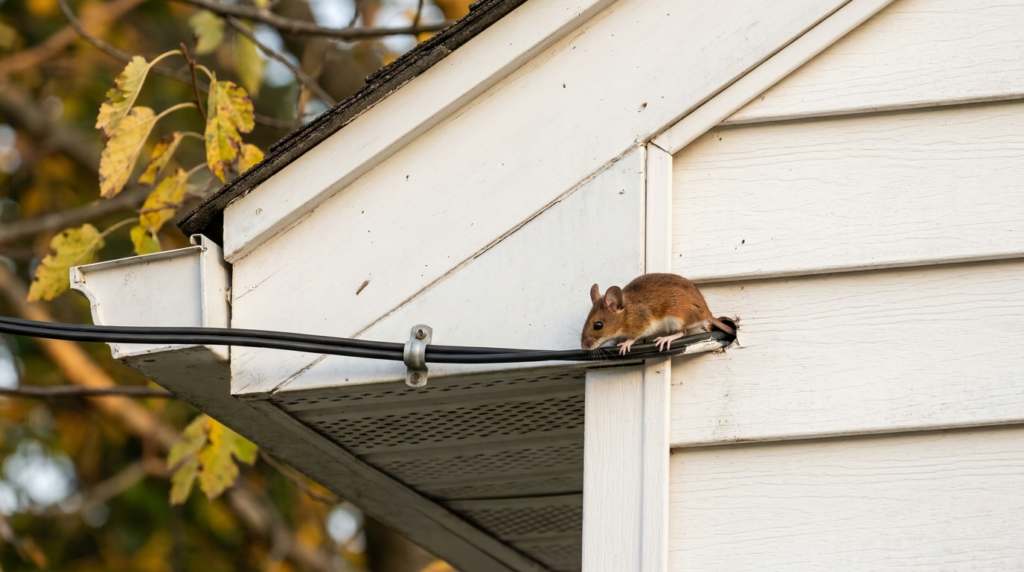
You close the openings on your sketch with metal, cement and construction-grade sealant rather than ordinary caulk, after one check. Cornell IPM’s pest exclusion page says to be certain that animals will not be trapped inside before entry sites are closed. In a rental, you then take the list to the building: NYC Health’s Preventing Rats on Your Property booklet tells owners to seal all holes and cracks in foundations, walls and floors, and the spaces underneath doors and around windows, and it says most repairs can be done by maintenance staff, superintendents or pest control professionals.
Inside an apartment, start with the openings that connect your unit to the rest of the building: the gap under the entry door, holes where pipes and wires pass through walls and floors, and drains. Drains are on that list because UC IPM says rats can get into structures by swimming through sewers and entering through toilets or broken drains.
For the repairs themselves, the NYC Health booklet is specific:
- Cracks and small holes: the booklet calls for construction-grade 1A polyurethane sealant or roofing cement, and it says to avoid inexpensive caulking compounds meant for minor repairs, as they are not strong enough to prevent rats.
- Gaps under doors: the booklet calls for rodent-resistant metal door sweeps, with less than one-quarter inch between the bottom of the door and the floor, and it says not to use vinyl weather stripping, which is meant to stop cool or warm air, not rats.
- Floor drains and vents: the booklet says to cover them with heavy-duty metal screening, secured with masonry nails or cement.
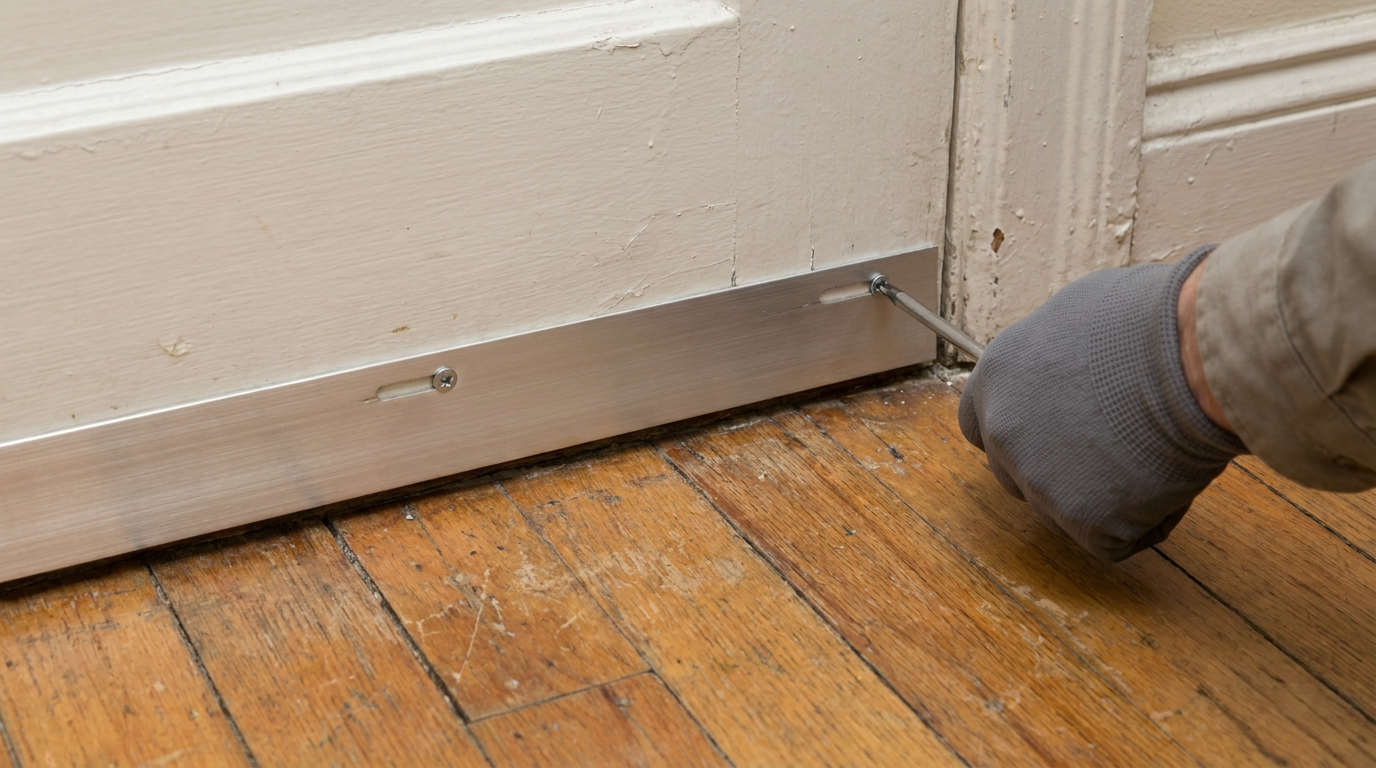
The booklet’s Keep Rats Out section has the rest, including large holes, ground-floor window frames and pipes that enter through outside walls. Its hardware cloth specification, and the smallest gap a rat can squeeze through, are in our guide to getting rid of rats in a backyard.
If you rent, show the super or the managing agent your sketch, gap by gap. If you own a Bronx row house, the booklet’s materials list is the standard to hold the work to, whether you do it yourself or hire it out. We do professional pest-proofing and rodent-proofing, and our rodent control service page is the place to start.
How Do You Remove the Food and Water Rats Need From a Bronx Kitchen?
Start with water. Cornell IPM’s page on mouse and rat biology and behavior says Norway rats need to drink standing water every day, and that water can be found in puddles or condensation on a pipe. In a Bronx kitchen, that means the drip under the sink, a sweating cold-water pipe, any condensation or puddle around the refrigerator and the pot left soaking overnight. Dry what you can before bed.
Then the food and the garbage. NYC Health’s one-page pest management tips for building residents lists the kitchen habits: keep food in sealed containers, keep counters and sinks free from food residue, don’t leave pet food out overnight, don’t leave dirty dishes in the sink, keep garbage in sealed bags or containers, and take garbage and recycling out of the unit every day. If your Bronx building has a compactor chute, the same sheet says to bag and tie garbage before sending it down the chute, and not to leave bagged garbage on the floor of the compactor room. It also tells residents to report pests, water leaks, holes and other conditions that can attract pests to building management, so the drip under the sink goes on the list for the super along with the gaps.
This step comes before the traps for a reason: NYC Health’s Preventing Rats on Your Property booklet says trapping will not be effective if food sources are not removed. How little food and water a rat needs in a day is covered in the same backyard guide.
Which Traps Remove Rats Indoors When Rats Shy Away From New Objects?
Rat-sized snap traps, set where the rats already walk, and given time. UC IPM’s Pest Note says rat-sized snap traps come in a variety of styles, and that finding the best locations to set traps may be more important than what type of trap is used. The size matters, too: Cornell IPM’s guide says a mousetrap will not inflict enough force to kill a rat.
The shyness is about newness. UC IPM says rats quickly detect and tend to avoid new objects and new foods, so they often avoid traps and baits for the first several days, and maybe weeks, and it adds that this fear of new objects is thought to be more pronounced in roof rats than in Norway rats. Cornell IPM’s biology page lists the Norway rat among New York’s common pest rodents and says roof rats are generally not found in the state. One way around a wary rat is pre-baiting, and our backyard guide covers how pre-baiting works.
Before a trap goes down anywhere a child or a pet could reach it, UC IPM’s condition comes first: in areas where children, pets, birds and other nontarget animals might encounter traps, it says to set the traps within boxes or stations, or to use a barrier. Then place them where a Norway rat travels. For Norway rats, UC IPM says to:
- install traps close to walls, behind objects, in dark corners and in places where rat signs have been seen, which are the spots on your sketch;
- position each trap at a right angle to the wall, with the trigger end nearly touching the wall, so a rat traveling along it passes over the trigger;
- set traps in pairs if they sit parallel to the wall, to intercept rats coming from either direction.
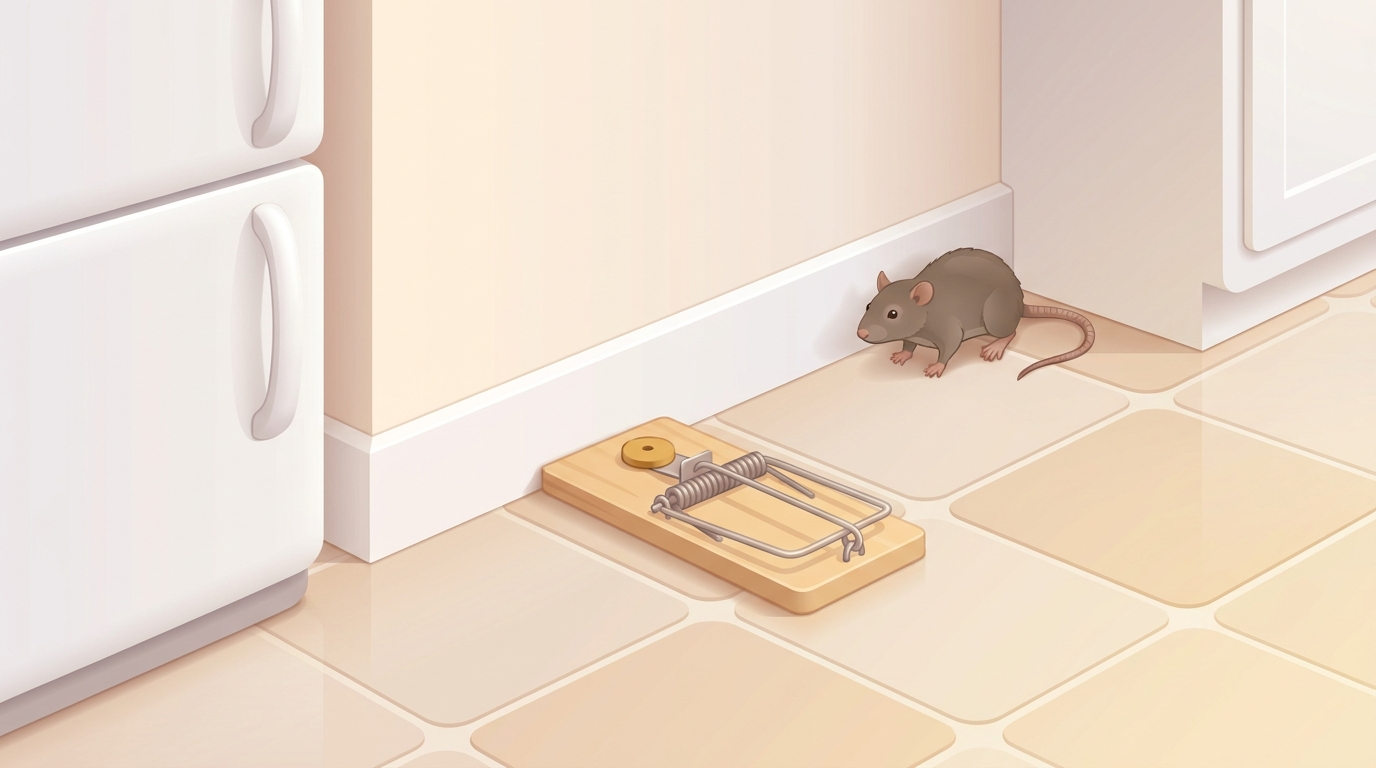
NYC Health’s booklet says traps should be monitored daily. When one catches a rat, don’t handle it with bare hands: the Centers for Disease Control and Prevention (CDC) has steps for a dead rodent that start with rubber or plastic gloves and cover bagging the rat and reusing the trap. UC IPM’s Pest Note has the rest of its trap method, including bait and spacing.
Rats in your Bronx apartment building?
Every technician is licensed by New York State, and one-time services carry a 30-day guarantee.
Who May Legally Treat Rats With Bait Inside a Bronx Apartment Building?
In a Bronx apartment building, NYC Health says the owner may not put rat bait down personally and has to hire a pest professional to do it. Its Preventing Rats on Your Property booklet is direct about it: if you own a commercial or multiunit property, it is illegal to place rodent bait yourself, and you must hire a pest professional.
The city’s Administrative Code has its own rule for apartment buildings. Section 27-2017.8, added by Local Law 55 of 2018, requires an owner whose premises are infested by pests to use integrated pest management, and its pesticide paragraph, as the local law enacted it, reads: “Any pesticide applied shall be applied by a pest professional licensed by New York state department of environmental conservation (DEC).” The city’s Department of Housing Preservation and Development (HPD) lists that rule on its indoor allergen hazards page among the Local Law 55 requirements for owners of residential buildings with three or more units.
If you rent, your side of it is narrower. NYC Health’s pest management tips for building residents say never to use foggers, bombs or loose rodent bait. Its page for tenants and property owners says effective poisons that can kill rats should be applied by a pest management professional licensed by New York State, and it asks tenants to report rats promptly to property owners, building managers or co-op associations. Neither page says more than that about a tenant setting out other rat bait inside their own apartment, so put that question to the NYC Health Department before you buy anything.
If you own a Bronx house and live there without tenants, NYC Health’s Preventing Rats on Your Property booklet says you can place rodent bait yourself, and to always read and follow the manufacturer’s label to avoid harming yourself, others and pets. NYC Health’s page for tenants and property owners gives the same permission, but adds that the department recommends you leave the job to the professionals. That permission is worded for someone living in their own home without tenants, so if you rent out a floor of a two-family house, ask the NYC Health Department before you bait.
For how these rules apply to your building, ask NYC Health or HPD, the city agencies behind these pages; that call isn’t ours to make. We treat rats, and every technician is licensed by New York State; see our professional rat removal service.
How Should Bronx Renters Remove Rat Urine and Droppings After the Rats Are Gone?
Wet-clean without sweeping or vacuuming, in the CDC’s order, once your traps have stopped catching rats. Then watch the spots you cleaned: Cornell IPM’s guide says new droppings appearing after cleanup indicate that control methods aren’t yet working, which is your cue to bring the landlord back in.
Check one thing before you start. The CDC’s How to Clean Up After Rodents page has a separate section of special precautions, down to coveralls and a respirator, for cleaning homes or buildings with a heavy rodent infestation. If the mess looks heavy, raise it with your landlord rather than doing it alone.
Then get the room and yourself ready, in this order:
- Open all doors and windows for 30 minutes before cleaning, and leave the area during that time, as the CDC’s page directs for homes.
- Keep children and pets out of the room until you’re done.
- Don’t sweep or vacuum. The CDC says sweeping or vacuuming rodent urine, droppings or nesting materials can put tiny droplets containing viruses into the air. NYC Health’s Preventing Rats on Your Property booklet, which is written for owners and managers, lists a vacuum with a HEPA filter for droppings indoors; this guide follows the CDC’s wet method.
- Pick your disinfectant: a household cleaner with the word “disinfectant” on its label, or a bleach solution the CDC says to make fresh, 1.5 cups of household bleach in 1 gallon of water (1 part bleach to 9 parts water). NYC Health’s booklet on getting rid of roaches and mice warns never to mix bleach with ammonia or other cleaning products.
Then follow the CDC’s seven steps for urine and droppings:
- Put on rubber or plastic gloves.
- Spray the urine and droppings with the bleach solution or an EPA-registered disinfectant until very wet, and let it soak for 5 minutes, or as long as the disinfectant’s label says, per the CDC.
- Use paper towels to wipe up the urine or droppings and the cleaning product.
- Throw the paper towels in a covered garbage can that is emptied regularly.
- Mop or sponge the area with a disinfectant, and clean all hard surfaces, including floors, countertops, cabinets and drawers.
- Wash your gloved hands with soap and water or a disinfectant before you take the gloves off.
- Wash your hands with soap and warm water after you remove the gloves, or use a waterless alcohol-based hand rub when soap isn’t available and your hands aren’t visibly soiled.
For what’s in the kitchen cabinets, the CDC’s guidance for homes adds two points: dispose of any cardboard boxes contaminated with urine or droppings, and plastic, glass or metal containers can be disinfected with the bleach solution or a disinfectant. A dead rat, a nest, stored boxes, clothing, bedding, carpets and upholstered furniture each get their own instructions on the same CDC page. For what rat urine and droppings can carry, see our rat vs mouse guide. And the CDC’s advice if you fall ill: talk to a healthcare provider if you think a recent illness may be due to a rodent-borne disease, and tell them about any exposure to rodents.
Tell your landlord or super if new droppings show up after you’ve cleaned, and bring your sketch of the holes and leaks. What an owner is required to do, and how a 311 complaint works if nothing happens, is in our guide to a landlord’s legal duties on rats and how 311 works.
Wrapping Up
- Map first: make sure the animal is a rat and sketch its routes and holes before any trap or seal.
- Keep them out: once you’re certain no animal will be trapped inside, close the gaps with the materials NYC Health’s booklet calls for, such as construction-grade 1A polyurethane sealant or roofing cement, rodent-resistant metal door sweeps and heavy-duty metal screening. In a rental, take your sketch to the super.
- Food and water: dry the kitchen at night, report leaks, keep food in sealed containers, and bag and tie garbage before it goes down the chute.
- Traps: rat-sized snap traps at a right angle to the wall where rats travel, set within boxes or stations, or behind a barrier, wherever children or pets might encounter them, and checked daily. Expect a wary rat to take its time.
- Bait: NYC Health’s booklet says it is illegal for the owner of a commercial or multiunit property to place rodent bait personally, and the owner must hire a pest professional. HPD lists Administrative Code section 27-2017.8, which requires any pesticide applied to be applied by a DEC-licensed pest professional, among the Local Law 55 requirements for owners of residential buildings with three or more units. The same booklet says a homeowner living without tenants may place rodent bait, following the label, though NYC Health’s page for tenants and property owners recommends leaving the job to the professionals. For tenants, NYC Health’s tips for building residents say never to use loose rodent bait, and its tenant page says effective poisons that can kill rats should be applied by a pest management professional licensed by New York State; ask NYC Health before setting out any other rat bait.
- Cleanup: wet-clean in the CDC’s order, with no sweeping or vacuuming, and tell your landlord if new droppings show up afterward.
If you would rather not do this yourself, we treat rats, and we cover all five boroughs. For roaches or mice in the same building, see our page on Bronx pest control.