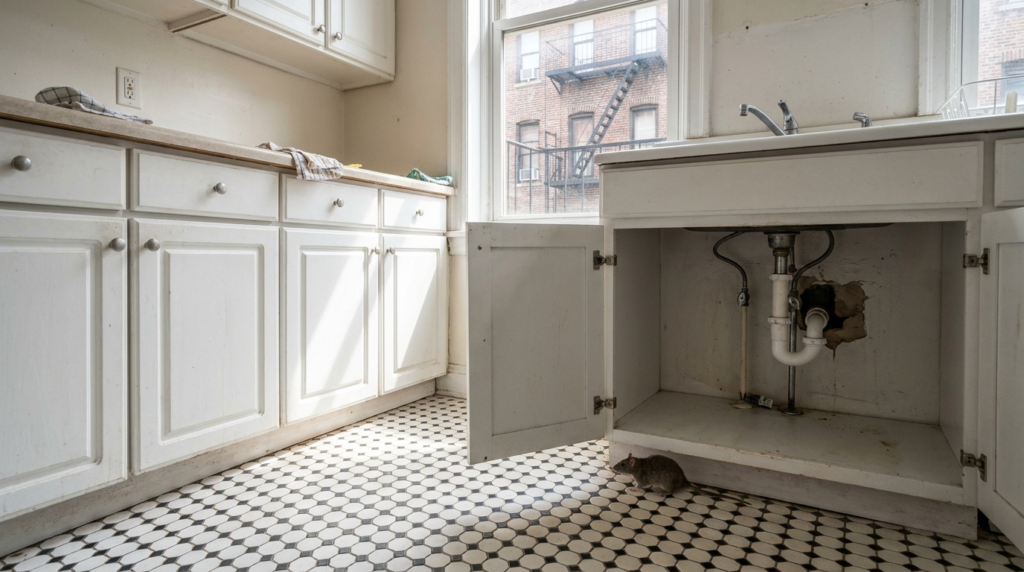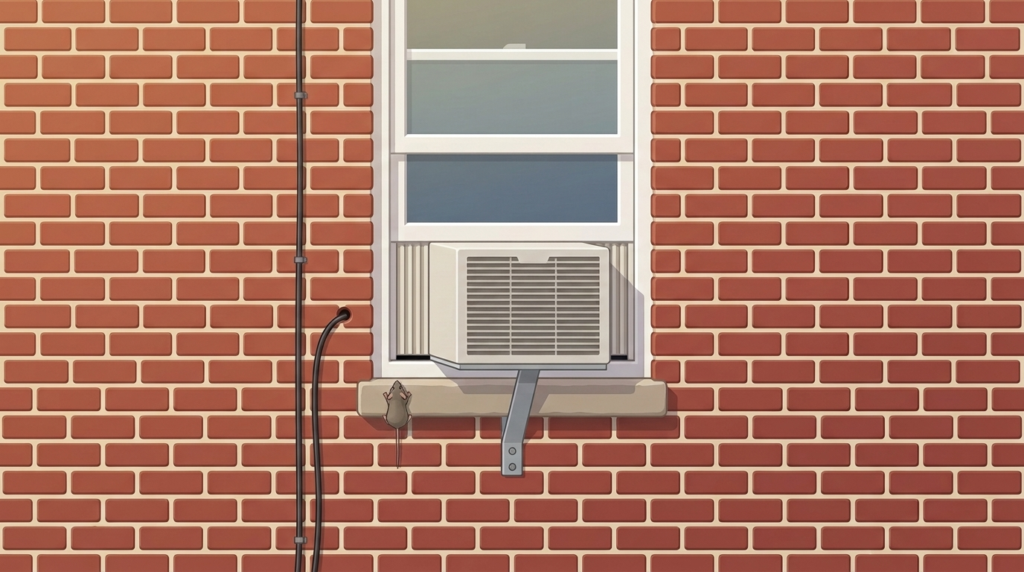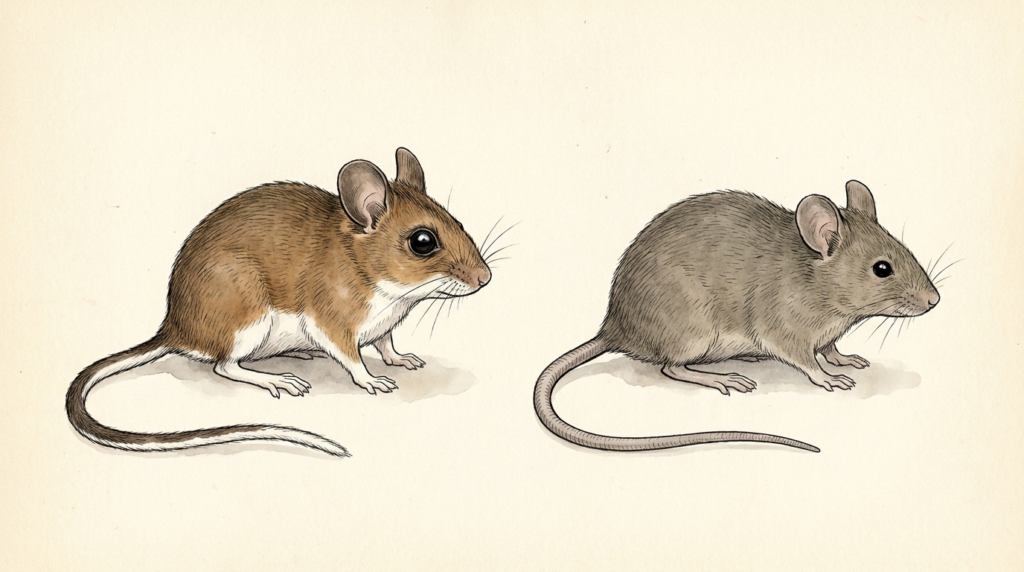
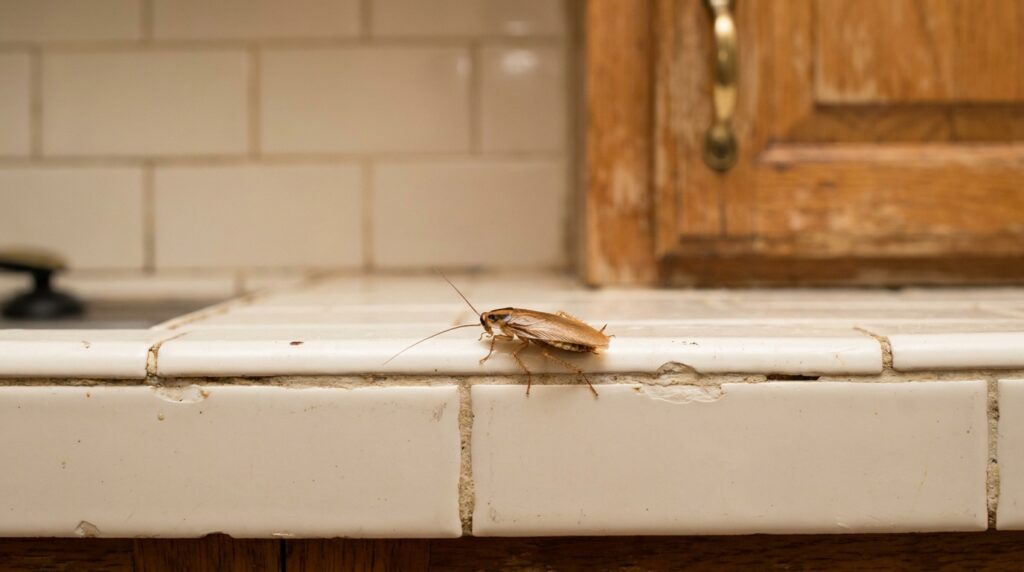
You flip on the kitchen light at 2 a.m., and something small and fast disappears behind the stove. If you live in a Queens apartment, the next thought is almost always the same one we hear on the phone every week: “Is this normal, or do I actually have a problem?” It’s a fair question, and the honest answer depends on what you saw and where you live. The insect that skitters across a Queens kitchen counter at night is almost always a German cockroach — small, tan, with two dark stripes behind the head — and knowing the early signs of roaches in an apartment is the difference between a quick fix and a months-long battle.
Our team at Advanced Pest Management has been treating roaches in Queens apartments for 26+ years, from pre-war walk-ups in Astoria and Jackson Heights to garden co-ops in Sunnyside and high-rises near Flushing. We provide pest control across Queens, and if there is one thing that job has taught us, it’s this: roaches in a Queens apartment track your building far more than they track your housekeeping. So before you blame yourself or panic-buy a can of spray, let’s walk through what the signs actually mean.
In the next few minutes you’ll learn which Queens neighborhoods rank highest in the city’s own cockroach data, how to tell a German roach from a harmless “water bug,” the cockroach signs every NYC tenant should recognize, why pre-war buildings spread them through the walls, and what your landlord legally owes you. No entomology degree required.
Roaches showing up in your Queens apartment?
We have treated Queens roaches for 26+ years. We dust the wall voids where the colony actually hides, we never lock you into an annual contract, and your estimate is always free.
Where Are the Worst Cockroach Hot Zones in Queens?
Queens isn’t one roach problem — it’s at least a dozen, and they don’t spread evenly across the borough. New York City’s own Environment & Health Data Portal publishes neighborhood-level data on adults who reported cockroaches inside their home, and the gap within Queens is enormous. Borough-wide, about 26% of Queens adults reported roaches — lower than the Bronx (35%), Brooklyn (33%), and Manhattan (28%). But that borough average hides the real story.
Break it down by neighborhood, using the city health department’s most recent survey data, and a clear hot core appears in the dense, older, northwest corner of the borough:
- West Queens — Jackson Heights, Corona, Elmhurst, Woodside, Maspeth — sits at roughly 42%, the highest zone in Queens and one of the three highest in the entire city.
- Long Island City and Astoria come in around 33%.
- Flushing and the Clearview area land near 28%.
- Ridgewood and Forest Hills sit around 23%.
- Eastern and southern Queens — Bayside, Little Neck, Fresh Meadows, and southeast Queens — drop to the mid-teens, less than half the West Queens rate.
The pattern is unromantic but useful: roach pressure in Queens rises with density and building age. The pre-war walk-ups and packed multi-unit blocks of Jackson Heights, Corona, and Astoria start from a much harder baseline than the single-family stretches of Bayside or Douglaston. If you’re in the northwest hot zones, a roach sighting is not a verdict on how clean you are. The same neighborhood-by-neighborhood story plays out across the river, as we cover in our guide to the cockroach hot zones in a Brooklyn apartment and in the signs of roaches in a Bronx apartment.
Which Roach Did You Actually Spot in Your Queens Apartment: German or American?
Telling the two common roaches apart in five seconds saves you from buying the wrong product and treating the wrong rooms. About four out of five apartment calls we take in Queens are German cockroaches. Most of the rest are American cockroaches that wandered up a drain.
The German cockroach (Blattella germanica) is small — 13 to 16 mm, about the length of a kidney bean — light tan to brown, with two thin, dark parallel stripes running front to back on the shield behind its head. According to Cornell’s Integrated Pest Management program, this is the most common cockroach pest, and it’s the one that actually lives, breeds, and dies inside your apartment. It has wings but is a weak flyer and a very fast crawler. If you saw a small light-brown roach dart behind the stove or under the dishwasher, that’s a German — and seeing even one usually means many more are hiding nearby.
The American cockroach (Periplaneta americana) is the giant, reddish-brown, up-to-two-inch insect most Queens tenants politely call a “water bug.” It comes up through plumbing, basement drains, and sewer access rather than nesting in your kitchen. A single American cockroach in a ground-floor Ridgewood apartment after a heavy rain is a different situation than repeated German sightings by the sink. Why it matters: the bait, the dust, and the treatment locations are completely different for each. Spray for one when you have the other and you waste time while the real colony grows.
What Are the Earliest Signs of Roaches in a Queens Apartment?
In our experience, the early signs are almost always present for two to four weeks before a tenant calls. Catching them early is the difference between a one-time treatment and a multi-month project. Here are the cockroach signs every NYC renter should know:
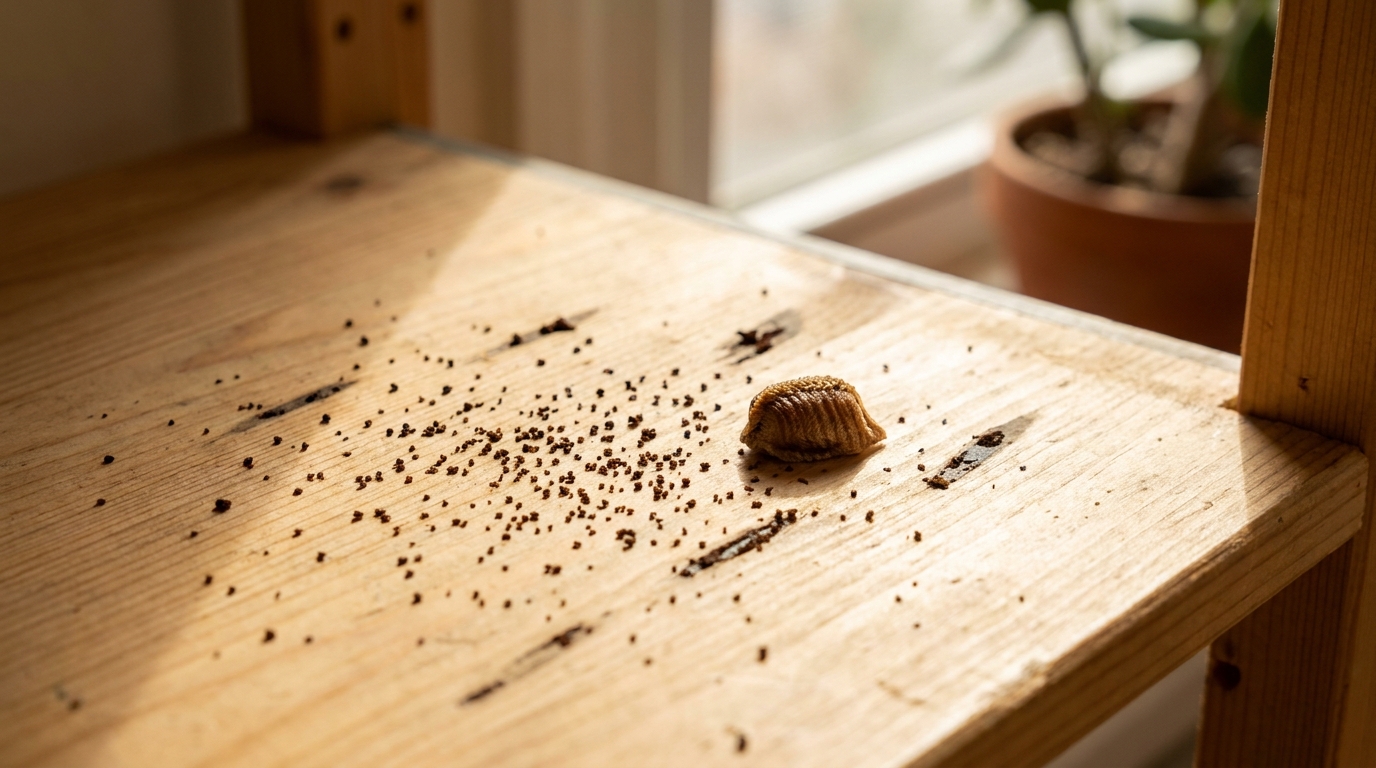
- Droppings. German cockroach droppings look like coarsely ground black pepper or coffee grounds. They collect in the corners of kitchen drawers, on top of high cabinets, behind the toaster, and along the channel where the under-cabinet meets the wall. Don’t confuse them with mouse droppings, which are larger and shaped more like grains of rice.
- Egg cases (oothecae). German egg cases are tan, elongated capsules, each holding roughly 30 to 40 eggs. Finding empty, translucent casings means a generation has already hatched and is hiding in your walls.
- Smear marks. In active areas, roaches leave dark, irregular grease tracks along baseboards and where the wall meets the ceiling. They run the same paths every night.
- A musty, oily odor. A heavier population gives off a distinct pheromone smell, almost like wet cardboard and old grease. If your kitchen smells “wrong” at night and you can’t name why, that’s often it.
- Live roaches at night. Roaches are nocturnal. A few darting for cover when you flip on the light is the classic early sign.
- Shed skins. As nymphs grow, they molt and leave behind pale, translucent husks. A freshly molted “white roach” isn’t a new species — its shell just hasn’t darkened yet.
How many sightings is “normal”? A rare stray in an old building can happen. But for German cockroaches specifically, even one confirmed sighting in an apartment without a maintenance program usually means a hidden colony. As Cornell IPM puts it, all roach problems start small, but roaches reproduce rapidly, so early action is strongly recommended. For a deeper photo-style walkthrough of each clue, see our full seven-signs cockroach guide for NYC apartments.
Where Do Cockroaches Hide in a Queens Apartment Kitchen and Bathroom?
If you want to confirm a problem yourself, grab a flashlight and check the spots roaches actually harbor. German cockroaches want warmth, moisture, and a tight, dark crack near food — which points to a short list of usual suspects:
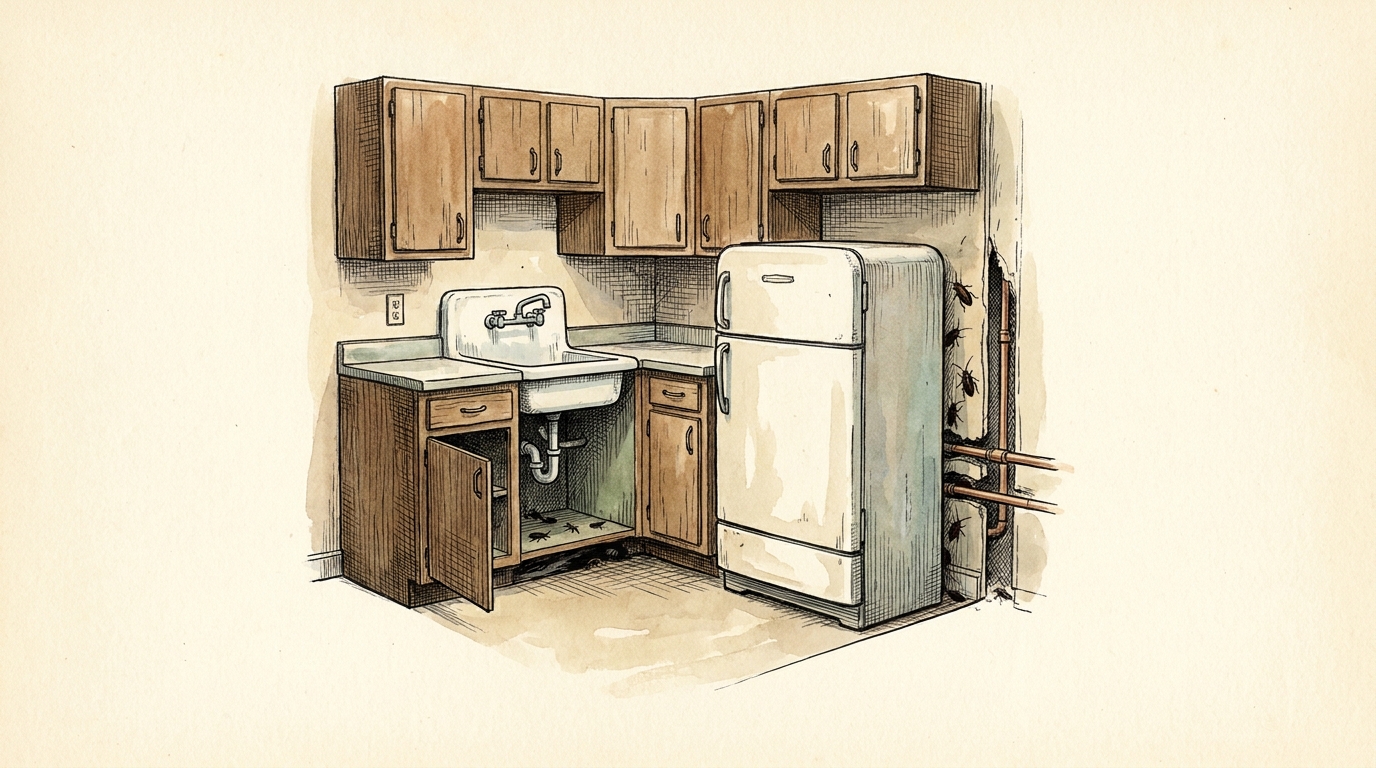
- Behind the refrigerator. Pull it away from the wall. The compressor and coils give off heat and moisture, it’s hidden, and it’s steps from food — the single most reliable place to confirm an infestation.
- Behind and under the stove and dishwasher. Warm, greasy, and rarely cleaned. Shine a light through the gap along the dishwasher.
- The under-sink cabinet in both the kitchen and bathroom, where pipes stay damp.
- Inside every cabinet — check the hinge joints and the top corners, where droppings collect first.
- Along hot-water pipe runs and inside outlet covers, which double as highways between rooms and units.
A cheap trick our technicians like: lay a strip of packing tape sticky-side-up along the base of the kitchen wall overnight. In the morning, tracks or caught nymphs in the adhesive confirm active traffic. If you shine a light and see roaches during the day, the population has already outgrown its hiding spots — a sign the problem is well established, not just starting.
Where Do Roaches Travel Between Apartments in Pre-War Queens Buildings?
This is the part no hardware-store label will tell you, and it’s the single biggest reason roaches come back in Queens. The building you live in matters more than how often you sweep. Much of Queens’ housing stock is pre-war and mid-century — the six-story walk-ups of Jackson Heights and Astoria, the garden apartments of Sunnyside and Woodside, the older co-ops around Forest Hills. These buildings are riddled with shared pathways that German cockroaches use like corridors:
- Shared party walls between adjoining units, with hairline cracks in the original plaster.
- The gap where the gas pipe enters the wall behind the stove, plus the chases around radiator and steam pipes.
- Electrical conduit and outlet boxes that connect one unit’s wall void to the next.
- Shared trash rooms, compactor chutes, and former incinerator chutes that act as vertical roach highways between floors.
Here’s why that matters for you: you can keep a spotless kitchen, bait every corner, and still see new roaches each week — because they aren’t living in your unit, they’re commuting in from a neighbor’s. Older construction means more unsealed voids, and the urban heat of a dense Queens block means there’s no cold-season die-off. If your apartment is clean and you still have roaches, that’s not a personal failing. It’s a building operating exactly the way an infested pre-war building operates, and it usually takes coordination beyond your four walls to fix.
German roaches spreading through your Queens building?
26+ years treating Queens roaches in pre-war walk-ups and co-ops. We offer same-day service during business hours, we coordinate whole-building treatment, and there is no annual contract. Ask for your free estimate.
What Does a Heavy Roach Infestation Look and Smell Like in a Queens Apartment?
Once you cross from “occasional sighting” into an active infestation, the experience changes. We’ve opened under-sink cabinets in Queens kitchens that genuinely seem to move when the flashlight hits them. The tells tenants describe before they call us:
- Daytime sightings. Roaches out in the open while the lights are on means the population has outgrown its nighttime hiding spaces.
- The refrigerator gasket and motor. Warm, damp, and crumb-filled — the most consistent hot spot in Queens German cockroach jobs.
- The “moving wall.” You flip the light and a dozen small bodies scatter. If that many are visible, hundreds are not.
- The smell. A steady musty, oily odor that doesn’t wash away.
There’s a health dimension worth taking seriously, too. Cornell IPM notes that proteins in cockroach feces are allergens that can cause and sustain allergic reactions, including asthma, in children and adults — and the city’s own data links neighborhood roach rates to asthma. We also want to name the part the big pest-control sites skip: the mental toll. We’ve taken calls from Queens tenants who stopped sleeping in the bedroom, who eat every meal out to avoid the kitchen, who are mid-lease-break over one infested unit. If that’s you, the situation is solvable — it usually just takes a coordinated plan rather than another trip to the store.
Why Do DIY Roach Treatments Fail to Find the Colony in NYC Apartments?
Most DIY rounds fail in NYC apartments for three predictable reasons: shared walls, the wrong product, and too small a treatment area.
The shared-wall problem we covered above — you’re treating your unit while roaches commute in from next door. The product problem is that hardware-store aerosols like Raid are pyrethroid repellents. They don’t finish a colony; they scatter survivors deeper into wall voids and into neighboring apartments, and they can contaminate any bait you’ve put down so the survivors won’t eat it. New York City’s Health Department specifically warns against foggers, bombs, and products like “Tempo” or “Roach Chalk” for consumer use — foggers don’t reach the harborage anyway, so they kill what’s exposed and leave the colony intact. The scope problem is that most people bait the kitchen and stop, while the colony has already relocated to the bathroom vanity or a shared-wall void.
What actually works is the opposite of a single spray: sanitation to remove food and water, gel bait placed into cracks and crevices (roaches carry it back and pass it through the colony), an insect growth regulator to shut down breeding, and dust worked into the wall voids where the females hide. That’s an integrated approach, and it’s why a store-bought can rarely finishes a real Queens infestation on its own.
When Should You Look Past Bait to Wall-Void Treatment for Queens Roaches?
Bait alone can clear a small, isolated colony — say, a German cockroach that hitched in on a delivery box and hasn’t spread yet. Bait alone fails when the infestation has dispersed into shared wall voids, when a neighboring unit is also infested, when egg cases are hatching behind built-in cabinets, or when a trash chute or ground-floor food tenant is feeding the building.
For those situations — which are the rule, not the exception, in pre-war Queens — the fix requires a technician with the tools and license to drill, dust, and treat at the source. Our approach pairs gel baits and insect growth regulators with wall-void dusting (we use a professional crack-and-crevice dust worked into the voids behind stoves and along shared walls), then monitors with sticky traps for a full month before calling it done. For buildings with compactors or old incinerator chutes, we also handle garbage-chute treatments with fogging and dusting, and we coordinate whole-line or whole-building work when one unit alone can’t succeed. All of it uses family and pet-friendly options applied by a licensed technician, with no annual contract required. You can see the full process in our cockroach control program.
Where Can Queens Tenants Turn When a Landlord Won’t Treat the Roaches?
You have more leverage than most tenants realize. Under New York’s Warranty of Habitability (Real Property Law § 235-b) and NYC Housing Maintenance Code § 27-2017, your landlord is legally required to keep the apartment free of pests. They cannot simply tell you to handle a cockroach infestation yourself.
Start by documenting the problem in writing to your landlord or managing agent — what you saw, when, and where, with photos. Verbal complaints don’t create a record. If they don’t act within a reasonable window, file a complaint through NYC 311’s residential pest complaint portal, which triggers an inspection by the Department of Housing Preservation and Development (HPD). HPD violations tend to produce action where a polite email didn’t. New York’s Local Law 55 goes further, requiring building owners to address the conditions that drive pests and to use integrated pest management rather than a one-off spray. And don’t accept the most common dodge — “your apartment must be dirty.” As the city’s own neighborhood data shows, roach prevalence in Queens tracks building stock and shared infrastructure, not your housekeeping.
Still seeing roaches after the store-bought sprays?
26+ years treating Queens roaches with gel bait, growth regulators, and wall-void dusting that finish the colony. We never require an annual contract, we offer same-day service during business hours, and we start with a free estimate.
When Should You Call a Queens Pro to Find and Finish the Roaches?
Honest answer: as soon as you know you have a German cockroach problem and you live in any building with shared walls. The math is unforgiving — a single female and her egg cases can turn a handful of visible roaches into several hundred hidden ones in a few months. Waiting rarely makes it cheaper.
Call us, or any reputable licensed Queens exterminator, when:
- You’ve seen more than one German cockroach in a week, in any apartment building.
- You’ve found egg cases (oothecae) anywhere in the unit.
- Your building’s contractor keeps spraying but the problem isn’t improving.
- You smell that musty pheromone odor in the kitchen or bathroom.
- You live in a pre-war walk-up or any building over 50 years old.
- You or a child in the home has asthma.
This is where 26 years in Queens apartments actually helps. When you call, we confirm the species first — no treatment plan until we know exactly what we’re dealing with — then inspect the harborage, treat at the source, and follow up. We’ve been doing this since 1999, we have 27 people on our team with roughly 20 technicians in the field, we hold a 4.8-star rating across more than 300 reviews, and we offer same-day service during business hours across all five boroughs and Long Island. We’d rather help you stop this at five sightings than fifty.
The Bottom Line on Spotting Roaches in Your Queens Apartment
If you take three things from this guide: first, roach risk in Queens tracks neighborhood and building stock — the northwest hot zones of Jackson Heights, Corona, Elmhurst, Astoria, and Long Island City run far higher than eastern Queens, and that’s about the buildings, not you. Second, the roach in your kitchen is almost certainly a German cockroach, and because it spreads through shared walls, a single spray rarely finishes it. Third, you have real rights — document in writing, escalate through 311 and HPD, and don’t let anyone blame your housekeeping for a building problem.
If the signs in your apartment match what we’ve described — coffee-ground droppings in cabinet corners, egg cases, daytime sightings, that musty smell — a professional inspection sooner saves time, money, and stress. We’ve been treating roaches in every Queens neighborhood since 1999, and same-day service is the standard, not the exception.