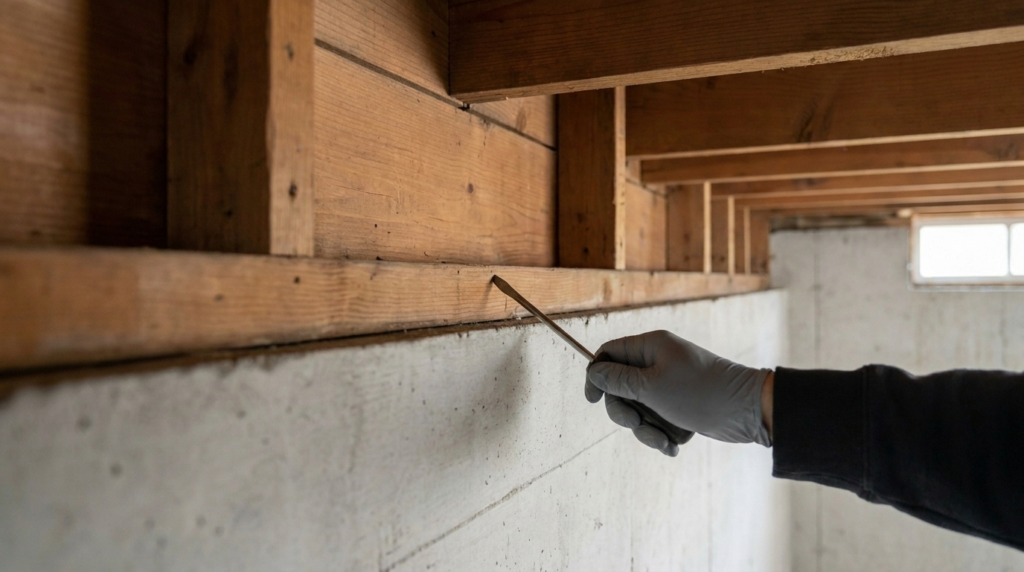
If you’re buying a house in Nassau or Suffolk, book the termite inspection as soon as the seller accepts your offer, so the report is back before you sign a binding contract. That’s the window where a finding can still change the deal: the price, who pays for treatment, or whether you go ahead at all.
This post sticks to the buying process: when to book the inspection, who asks for the wood-destroying insect (WDI) report, what it costs, why a clean report can miss termites, how to negotiate, which records to ask the seller for, and whether a seller’s termite warranty can come with the house. We cover Nassau County and Suffolk County, and if the inspection does find termites, our page on termite treatment on Long Island covers the treatment side.
Termite questions on a Long Island home you're buying?
Same-day service during business hours, and we waive the inspection fee when you have the work done.
When Should You Order a Termite Inspection on a Long Island Home Purchase?
As soon as your offer is accepted. If you can, book it for the same visit as your general home inspection so both reports come back on the same timeline. Three things make early the right call.
The seller’s answers come first. Under New York’s Property Condition Disclosure Act (Real Property Law § 462), most sellers of one- to four-family houses must give you, or your agent, a signed Property Condition Disclosure Statement before you sign a binding contract of sale, and two of its questions are about termites. Read those answers before the inspector arrives so you know whether there’s history to ask about. The records section further down covers what the form asks and which sales it skips.
Your loan may call for a report anyway. On a VA loan, VA requires wood-destroying insect information for homes in Nassau and Suffolk, according to its list of local requirements, and on an FHA loan, HUD’s handbook can have the appraiser make the appraisal subject to a pest inspection (both are covered in the next section). Ordering your own inspection early means you hear about a problem from your inspector, not from your lender’s list of loan conditions.
The season won’t show you much. Cornell University’s Integrated Pest Management program says on its termite page that a colony can take several years to produce winged termites, and that those swarms come in spring, from February to May. A house you tour in the fall or early winter is unlikely to show you swarmers whether or not it has termites, and a young colony may not have swarmed yet at all. If you do see winged insects at a spring showing, our guide to telling flying ants from flying termites will help you sort out which one you’re looking at. Either way, the inspection is how you find out.
Who Asks for the WDI Report When You Buy a House on Long Island?
Your lender might, depending on the loan. You should either way.
In a purchase, the report is normally written on the National Pest Management Association’s NPMA-33 form: NPMA’s guidelines for completing the NPMA-33 say it must be used for HUD and VA guaranteed transactions and is typically used on conventional sales as well, and that a state mandating its own form uses that instead (New York is not on NPMA’s list of those states). Our termite treatment cost guide lists what the inspection covers as part of a treatment quote, so we won’t walk through the form here. What matters for a buyer is who wants the report.
VA loans. The Department of Veterans Affairs keeps a list of local requirements for VA home loans (last updated July 11, 2025) that names the New York counties where it requires wood-destroying insect information, and Nassau and Suffolk are both on it. Where the requirement applies, VA’s Circular 26-22-11 says the VA Notice of Value is conditioned on the report, and any repairs the report identifies to meet VA’s minimum property requirements must be completed before VA guarantees the loan.
FHA loans. HUD’s FHA handbook (Handbook 4000.1, in the update issued August 12, 2026) has the appraiser look at the foundation and perimeter for evidence of wood-destroying pests, and it says that look is not required to be at the level of a qualified pest control specialist. If there is evidence of an infestation, or the appraiser is told of one, including a prior treatment, the appraisal is made subject to an inspection by a qualified pest control specialist. For an existing house, the lender then has to obtain that inspection and evidence of any required treatment.
Conventional loans. Ask your lender early whether its conditions include a WDI report, so the answer doesn’t arrive after you’ve signed.
You. Even when no lender asks, you’re the one who lives with whatever is in the walls. If you want the right to act on what the inspector finds, that belongs in your contract, and the wording is your attorney’s job.
What Does a Termite Inspection Cost Before You Close on a Long Island Home?
Our inspection fee is $150 to $200, and we waive the inspection fee when you have the work done. That range is our own fee, not a national average, and we’re not quoting anyone else’s prices here.
If you order the inspection, plan on paying for it. If you’d rather the seller cover it, put that in the contract. On a VA loan, VA’s Circular 26-22-11 allows veterans to be charged the inspection fee where the Notice of Value requires the report.
Is it worth paying for? New York’s own disclosure form answers part of that question. The buyer’s acknowledgment on the statement says it is not a warranty of any kind by the seller and is not a substitute for any home or pest inspection.
The other part is knowing what the fee buys. NPMA’s guidelines say the report covers conditions on the date of the inspection only, and that no warranty comes with the report unless an attachment says so. So the money pays for a trained look at the house before you’re committed. It isn’t a promise about next spring, which is why the next section matters.
Why Can a Clean Termite Inspection Miss a Colony Behind Finished Walls?
Because a termite inspection is a visual inspection, and termites mostly stay out of sight. NPMA’s guidelines describe the inspector’s job, under generally accepted practices, as inspecting for and reporting on visible evidence of wood-destroying insects and visible damage. The clean result on the form reads “No visible evidence of wood destroying insects was observed.” That sentence is about what could be seen that day, not about what’s inside a finished wall.
Termites themselves make that gap wider. The EPA’s consumer page on termites says they rarely emerge from the soil, mud tubes or food sources they tunnel through, and that most people don’t know they have termites until they see a swarm or come across damage during construction.
Finished space is where those two facts meet. NPMA’s guidelines say virtually every property will have some obstructed or inaccessible areas, and the example they give is a basement with boxes stored against the wall, paneled walls and a tile ceiling, all of it noted on the report as obstructed. A first-time buyer on Reddit’s r/longisland described that situation last year: termites showed up on the inspection, and because the basement was finished with wood paneling, “there was a lot left unseen.”
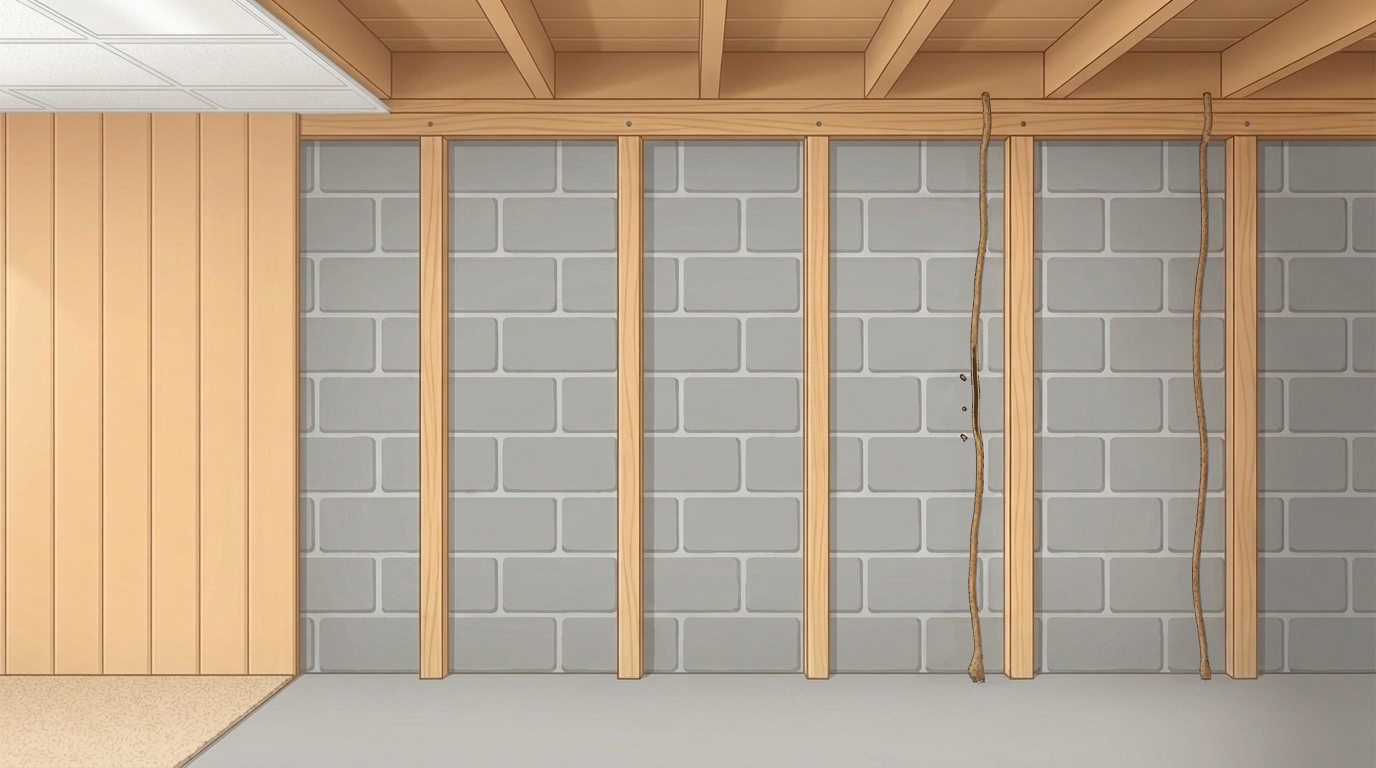
We’ve written separately about what can surface when a finished basement gets opened up after a sale, in our guide to termite swarm season on Long Island. For a buyer, the useful moves come before closing:
- Ask the seller’s agent to have stored items pulled away from basement walls, and the crawl space and attic access cleared, before the inspection, so less of the house ends up on the obstruction list.
- Read the obstructions section of the report before you read the verdict. A paneled basement or a finished room listed there is a place the clean result doesn’t cover.
- Ask the inspector what they could and couldn’t see, and whether anything they did see makes the hidden areas worth a closer look.
Termites found on a Long Island house you're buying?
Every technician is licensed by New York State.
How Do You Negotiate When the Inspection Finds Termites in Suffolk or Nassau?
Get the facts on paper first, then decide what to ask for. It helps to take it in this order.
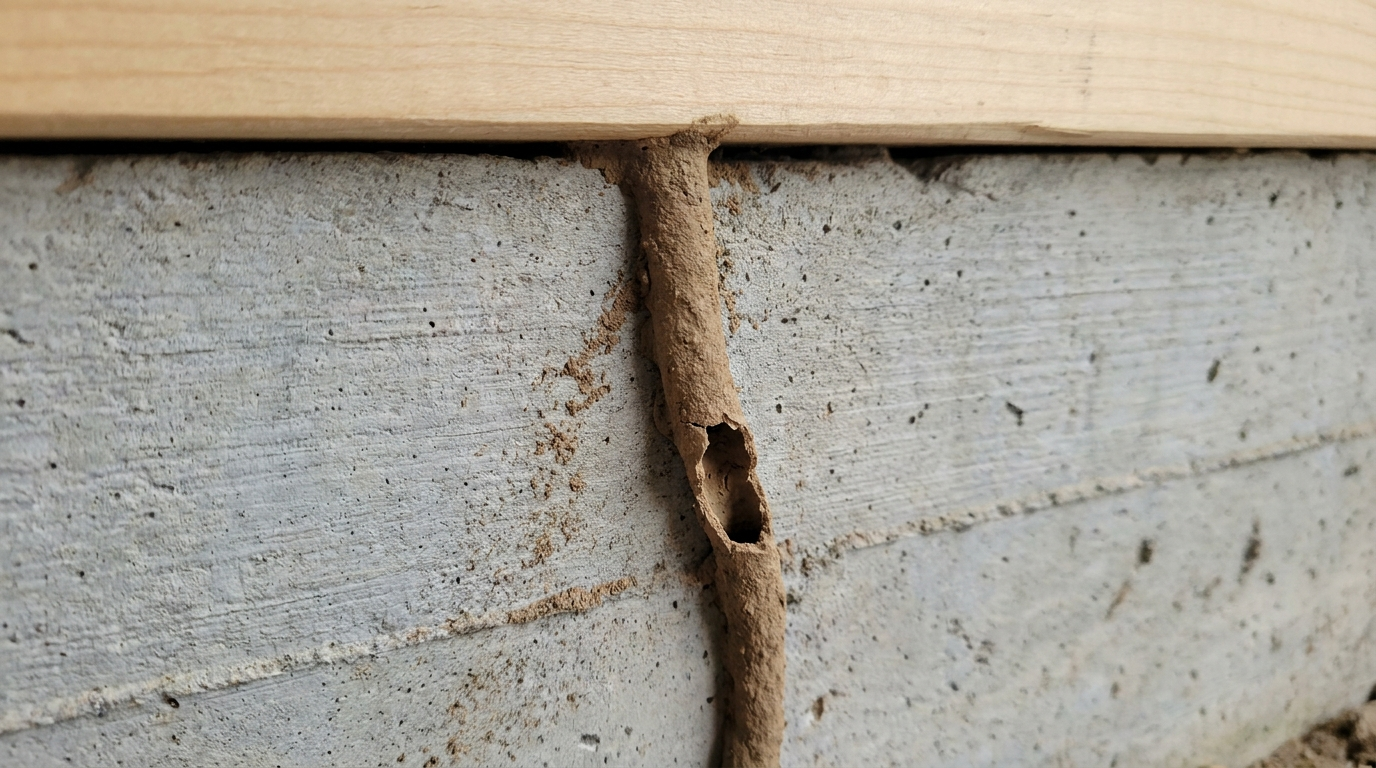
1. Read what the report actually says. NPMA’s guidelines separate live insects from other evidence, such as dead insects or shelter tubes (the mud tubes subterranean termites build), and from visible damage. They also have the inspector check the evidence box for any visible evidence regardless of its extent or age, so a report that finds termites may be describing old tubes rather than a live colony. If the report notes damage, the same guidelines say the inspector is not a damage expert and that questions about reported damage should go to a qualified structural professional. Get that look before you put a number on repairs.
2. Get a written treatment proposal. The EPA’s termite page says firms offering termite services must be licensed by your state, and it tells you to ask to see the company’s license. Ask whoever writes your proposal to show you theirs. Termites are one of the pests we treat, and our termite treatment service page is the place to start.
3. Choose the ask. In the first-time buyer’s r/longisland thread from the section above, one reply told the buyer to get remediation quotes and use them to negotiate the price down, and another suggested asking the seller to deduct the cost of treatment from the price. In a different r/longisland thread, a reply suggested having the seller pay their pest control company to treat and issue a warranty. Those are different deals. A credit or a lower price leaves the treatment, and the choice of company, to you. Seller-paid treatment puts it in the seller’s hands before closing, along with paperwork you’ll want to see (the next two sections cover it). Have your attorney write whichever one you pick into the contract.
4. Know where your loan sets the floor. On a VA loan, Circular 26-22-11 lets veterans pay for repairs needed to meet VA’s minimum property requirements, and it encourages them to negotiate the cost of the inspection and those repairs with the seller. On an FHA loan whose appraisal went out subject to a pest inspection, the lender has to obtain evidence of any required treatment, so ask your lender early how it wants that documented.
5. Settle it before you close. After closing, the house is yours, termites included, and homeowners insurance may not help. Allstate’s consumer guide on termites and home insurance (updated June 2026) says many homeowners insurance policies don’t cover termite damage or removal, and it tells readers to check their own policy. If the finding changes your mind about the house, whether you can walk away depends on what your contract says, which is another question for your attorney.
Which Termite Records Should a Seller Share With Long Island Buyers?
Everything on paper about termites: the state disclosure form, past inspection reports, treatment records, repair records and any active service agreement. Here’s where each one comes from and why it matters.
The disclosure statement. The form set out in § 462 asks two termite questions: whether there is any termite, insect, rodent or pest infestation or damage, with an explanation if the answer is yes, and whether the property has been tested for termite, insect, rodent or pest infestation or damage, with the reports attached if it has. The seller certifies the answers only to their actual knowledge, unknown is one of the answer boxes, and the law says nothing in it requires a seller to inspect the property. The form doesn’t apply to every sale, either. Condo units and co-op apartments fall outside the law’s definition of residential property, and § 463 exempts some transfers, including a sale by a fiduciary settling an estate and a transfer at a foreclosure sale.
That’s why the form is a starting point. A Long Island buyer who found active termites shortly after closing wrote on r/longisland that the sellers “marked unknown on the sheet” about termites, and that the seller’s own exterminator later told the buyer he had recommended work the seller didn’t want to pay for before selling. The paperwork behind an answer can say more than the answer does.
Another r/longisland reply gave a buyer the simplest version of this advice: ask your agent for the seller’s last pest control inspection report. Ask for the rest at the same time:
- The signed disclosure statement, and any report attached under the testing question.
- Every past termite or WDI inspection report, clean ones included.
- Treatment records: who treated, when, which parts of the house, and what kind of treatment was used.
- Records of any repairs to termite-damaged wood.
- The current service agreement or warranty itself, not a summary of it (the next section explains why).
Get them to your inspector before the visit. NPMA’s guidelines tell inspectors to recommend treatment or corrective action when they see evidence of termites and there’s no documentation that the infestation was addressed, and they say documentation presented after the report is completed shouldn’t change the report; the inspector should advise that it go to the lender or other appropriate parties instead.
Can a Seller’s Termite Warranty Transfer to You on Long Island?
It depends on the seller’s contract with their termite company, so the answer is in that contract, not in the listing or in anyone’s memory of it. Ask for the contract itself.
New York’s disclosure form won’t settle it. It asks whether there is a transferable warranty on the roof, but it has no matching question for termite work.
A live agreement still matters at the inspection. NPMA’s guidelines say that when a documented treatment happened in the past, the inspector may still recommend treatment unless the structure is under warranty or covered by a service agreement with a licensed pest control company, and that any service agreement noted on the report should include its expiration date. So bring the agreement, with its dates, to the inspection.
Then read the conditions. The EPA’s Citizen’s Guide to Pest Control and Pesticide Safety warns that a termite company’s guarantee may become invalid if you make structural alterations to your home without giving the company prior notice. If you’re planning to redo a finished basement or add on, find out what notice the contract asks for before the contractor starts.
On r/longisland, the buyer who found termites after closing said the seller’s exterminator was “now mine by contract,” and another commenter in that thread said their own termite contract company called a later swarm a “special situation” the contract didn’t cover. What a contract covers is in its terms. Before closing, get written answers from the seller’s termite company to these questions:
- Can the agreement move to a new owner, and what do you have to do, by when?
- Is there a fee to transfer it or to renew it?
- What does it cover: retreatment, repair of new damage, or both?
- When does it expire, and how does renewal work?
- What voids it?
If it can’t move to you, plan on starting your own inspection schedule after closing. Cornell’s IPM program says annual inspections of the foundation, inside and out, can help identify termite damage or locate mud tubes early. Between inspections, our guide to the signs of termites shows what to look for.
What to Do Next
Here’s the short version for a Long Island purchase:
- Book the termite inspection as soon as your offer is accepted, so the report is back before you sign a binding contract.
- Ask your lender early. On a VA loan, VA requires wood-destroying insect information for homes in Nassau and Suffolk, and an FHA appraisal can be made subject to a pest inspection.
- Ask the seller for the disclosure statement, past reports, treatment and repair records and any service agreement, and get them to your inspector before the visit.
- Read the report’s obstructions before its verdict. A clean result covers only what the inspector could see.
- If termites show up, get a written proposal, ask to see the company’s state license, and have your attorney write your ask into the contract.
- Get written answers from the seller’s termite company about whether its agreement can transfer, what it covers and what voids it.
- After you move in, keep checking. Cornell’s IPM program says annual inspections of the foundation, inside and out, can help identify termite damage or locate mud tubes early.
We cover Nassau County and Suffolk County, and termites are one of the pests we treat. If you’re buying in Nassau or Suffolk, our pages on pest control in Nassau County and Suffolk County pest control are the place to start.