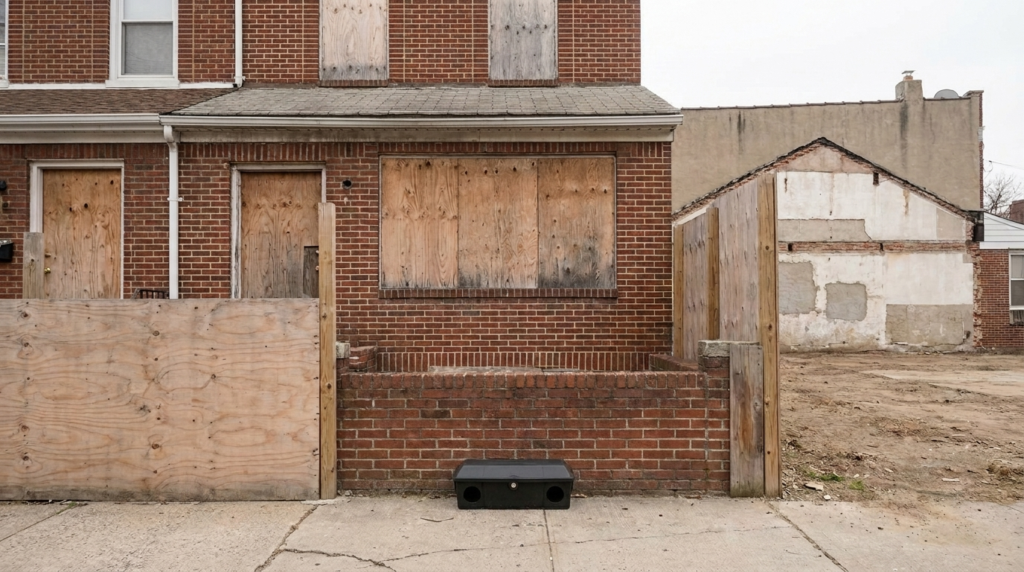
Yes, if the job is on the city’s list, and that list covers more than demolition. Section 3306.9.13 of the New York City Building Code requires a licensed exterminator to treat the premises for rodents for full demolition and three other kinds of large work, and the city’s Administrative Code makes the permit applicant certify that the exterminator has been retained before the Department of Buildings issues the permit. What sets it off is the scope of the work; the list doesn’t mention rat activity. So rat extermination before a Queens demolition starts as a permit question, not a pest sighting.
If what you need is a standing program for a business that’s already open, that’s commercial rodent control, and this guide sticks to what the city requires. Below, we take the rule apart the way a Queens owner runs into it: what it asks of you, which jobs trigger it, how it gets certified on a DOB filing, who hires the exterminator, what happens to a permit when the site isn’t treated, how the building next door can check, and what a pre-demolition rodent plan should cover. We quote the city’s own documents and say where they stop. For your own permit, the people filing your job, and DOB, have the final word.
Rats on a Queens demolition site?
We are NY State certified in Category 7A (structural and rodent), 7C (termite control) and 7F (food processing facilities).
What Does NYC’s Pre-Demolition Rat Rule Require of Queens Owners?
Two things: a licensed exterminator has to treat the premises, and the permit applicant has to certify, before DOB issues the permit, that one has been retained. Both sit in sections that Local Law 109 of 2022 wrote or rewrote: it amended Section 3306.9.13 of the Building Code and added a new Section 28-105.2.3 to the Administrative Code.
The Building Code section says a licensed exterminator “shall effectively treat the premises for rodent extermination” to the requirements of the city’s Department of Health and Mental Hygiene for the work it lists. The Administrative Code section, in the current text published by DOB, says that for that same work, “prior to the issuance of a permit authorizing work, the applicant shall certify that a licensed exterminator has been retained” to treat the premises to the Health Department’s requirements.
Notice who that names: “the applicant.” Section 28-105.5.1 of the same chapter, in DOB’s current text, defines the applicant for a permit as “the person who performs the work or who retains a subcontractor to do the work,” with an exception for plumbing, fire protection and suppression, electrical, and oil-burning appliance work. None of the three sections names the owner. That doesn’t take a Queens owner out of it. The permit for work on your building still waits on the applicant’s certification, and Article 151 of the New York City Health Code separately requires premises that can attract or support rodents to be kept free of them, and puts the measures needed to prevent and control rodents on the “person in control” of the property, a term it defines to include the owner.
Nothing in either rodent section limits the rule to particular neighborhoods, so it reaches a qualifying job anywhere in Queens, from Long Island City and Maspeth out to the Rockaways. DOB’s service notice on Local Law 109, dated June 2, 2023, says the treatment requirement took effect in May 2023, and it points readers to the Health Department at nyc.gov/doh for more on rodent control. Neither rodent section spells out what the Health Department’s treatment requirements are, which is why the rest of this guide sticks to what the city’s documents actually say.
Which Queens Construction Jobs Trigger the Rodent Extermination Rule?
Four kinds of work, and only two of them are demolition. Section 3306.9.13 of the New York City Building Code lists them: proposed construction work that involves 50% or more of a building’s floor area; a proposed vertical or horizontal enlargement that increases the building’s floor area by more than 25% over the existing floor area; proposed demolition that involves more than 50% of the floor area; and proposed full demolition.
Read that list twice if you’ve been calling it “the demolition rule.” The first item isn’t about demolition at all. It covers construction work, which can include a large renovation, and the second covers enlargements. So, depending on the numbers, the same requirement can attach to a detached Queens house coming down for a new two-family, a gut renovation of an old building on a commercial strip, or a second story going up on a small one.
Work that doesn’t fit any of the four isn’t on the list, so the permit certification doesn’t attach to it. The Health Code duty from the last section applies either way.
The sorting happens in the filing itself. DOB’s service notice says the applicant answers the related questions on the Plans/Work (PW1) application in DOB NOW, and a yes to any of them is what requires the permit applicant to make the certification described in the next section. If you’re not sure which side of a line your job falls on, that’s the conversation to have with whoever is preparing the filing, before it goes in.
How Is a Licensed Exterminator’s Work Certified on a DOB Demolition Permit?
On the PW2, with an added item for full demolitions, according to DOB’s service notice, dated June 2, 2023. The notice says that beginning June 6, 2023, if the applicant answered yes to any of those PW1 questions in DOB NOW, the permit applicant must certify on the PW2 that a licensed exterminator “has been retained to effectively treat the premises for rodent extermination.” It uses two terms there, “the applicant” for the PW1 answers and “the permit applicant” for the PW2 certification, and doesn’t say whether they’re the same person.
For full demolitions, the same notice says all applicants for Full Demolition permits in DOB NOW make that PW2 certification, and that applicants for Full Demolition permits in DOB NOW and in the Buildings Information System (BIS) must also submit a “Rodent Control Required Item/Document” before the permit is issued.
NYC311 describes a further certification, and it’s about the extermination itself rather than the hiring. NYC311’s article on the Building Demolition Rat Extermination Certificate says that before demolition, companies must certify that the pre-demolition extermination “was performed and adequate,” and that the certification form must be filed with DOB, with a copy sent by email to the NYC Health Department. Neither NYC311 nor DOB’s notice says whether that form is the same document as the “Rodent Control Required Item/Document.”
Put together, here’s the timing. The PW2 certification that an exterminator has been retained comes before the permit. For a full demolition, the rodent control item comes before the permit too. And on NYC311’s description, the certification that the extermination was performed and adequate comes before demolition. None of these sources says what the exterminator personally signs or hands over, so ask the people filing your job which documents the permit will need and what they’ll need from your exterminator, and get the answer in writing at the permit stage, not the week the excavator shows up.
Who Hires the Exterminator Before a Long Island City or Maspeth Demolition?
On NYC311’s description, the demolition company: its article says demolition companies “are required to hire an exterminator to exterminate for rats before demolishing a property.” The code comes at it from the permit side instead. It doesn’t say who does the hiring. It says the applicant must certify, before the permit is issued, that a licensed exterminator has been retained. So whether the contract on a Long Island City tower lot or a Maspeth warehouse site names the demolition contractor, the general contractor or the owner as the one who books the exterminator, the applicant can’t certify until somebody has.
Who pays is a separate question. Neither Local Law 109’s text nor DOB’s service notice says who covers the cost of the treatment, so write it into the demolition contract, along with who keeps the paperwork. For what commercial pest work tends to cost in the city, see our NYC commercial pest control cost guide.
Then there’s timing. The retention has to be certified before the permit, and on NYC311’s description the extermination has to be done before demolition, so the exterminator belongs on the schedule early. How early depends on what’s living there. NYC Health’s best-practice page for pest management professionals tells them to visit a property often until the job is done, so if rats have already settled into a building that has been sitting empty, leave room for repeat visits before the demolition date.
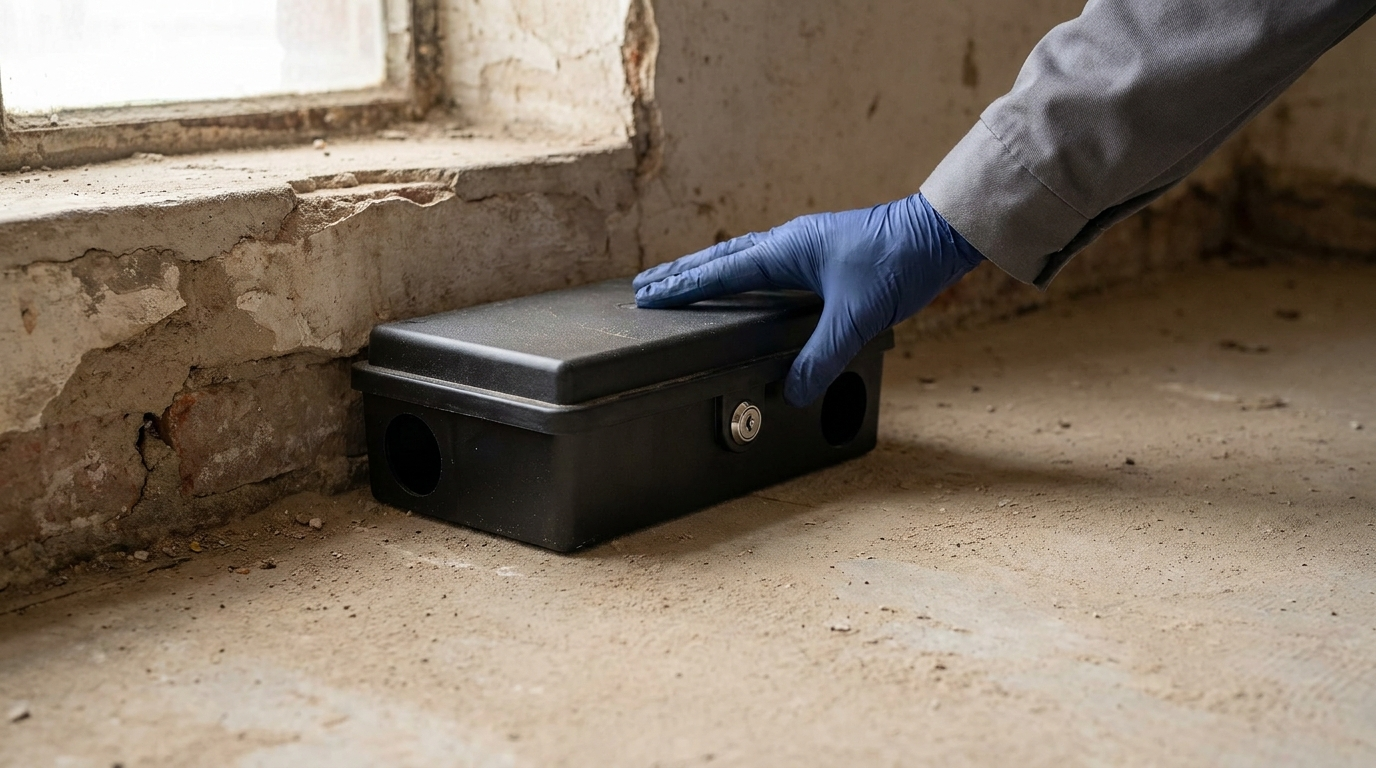
The code asks for a “licensed exterminator.” The same NYC Health page tells pest professionals to use certified pesticide applicators with the proper credentials for applying rat bait, and notes that the New York State Department of Environmental Conservation offers that certification, so it’s fair to ask any exterminator you’re considering about it. If you’re lining one up for a site in western Queens, our pages on pest control in Long Island City and pest control in Maspeth are a place to start.
Rats leaving a Queens job site?
We are BBB accredited with an A+ rating, and members of the National Pest Management Association and the New York Pest Management Association.
What Happens to a Queens Demolition Permit If the Site Is Never Treated?
If the rule applies, the permit isn’t supposed to issue in the first place. Section 28-105.2.3 makes the certification something that happens “prior to the issuance of a permit,” and DOB’s service notice puts the full-demolition rodent item “prior to permit issuance” as well. A Queens job on the list with no exterminator retained should stall at the permit stage.
The harder case is a permit that was issued for a site that still didn’t get treated. Neither of the two rodent sections carries a penalty clause of its own. One tool the code does give DOB is its general power over permits: under Section 28-105.10.1 of the Administrative Code, DOB’s commissioner may, on written notice to the permit holder, revoke a permit for failure to comply with the code or other applicable laws or rules, or where there has been a false statement or misrepresentation as to a material fact in the application or submittal documents, and that notice may be accompanied by a stop work order. “May” is the operative word. The section gives DOB the power; it doesn’t say when DOB will use it.
Meanwhile, the rats are still the property’s problem. Article 151 of the Health Code requires premises that can support rodents to be kept free of them, and its definition of premises includes vacant lots, so the duty doesn’t end when the building does. If the site fails a Health Department inspection after a 311 complaint and then fails the follow-up, NYC Health’s explainer What Happens to Your 311 Rat Complaint? says the owner receives a summons for a hearing at the Office of Administrative Trials and Hearings. The explainer says OATH assesses fines from a $300 minimum to a $2,000 maximum, and that owners who don’t show up to their hearings or who default on their fines may have their fines doubled.
How Can a Neighboring Building Check a Demolition’s Rodent Filing in Queens?
You can look the job up yourself, without an account, in DOB’s public portal, and what’s there tells you whether a permit was issued. That matters to the people next door, who live with a demolition’s rats. On r/AskNYC in January 2026, a renter whose end-unit apartment shares a wall with a building slated for demolition asked whether to move out before the baby arrived, and one reply warned that the rats and mice the work disturbs would head for the buildings next door. Under Engineering News-Record’s March 2023 article on the new rules, a reader commenting from Queens described mice getting into their home after the house next door came down, and wrote about calling 311 and DOB while still hoping to find an agency that would make the contractor put rodent control in place.
What to do about mice already coming through your own walls is a separate story, and our guide to the signs of mice in an NYC apartment covers it, including what nearby construction can do. If rats from the site are already in your building, that’s a job for rodent control in Queens, not for a records search. Here’s what the records can tell you.
DOB’s user manual for the DOB NOW Public Portal, dated November 4, 2022, says anyone can search a property there without a DOB NOW account and view the filings associated with it. Inside a job filing, the manual says, the Work Permit (PW2) tab lists the job’s permits with their status and issue date, and the Documents tab lists the documents uploaded for the job, each with its status and upload date.
Be clear about what that shows. The portal manual predates the rodent certification and doesn’t mention it, so don’t count on finding a rodent document by name. What you can see is whether a permit was issued, and the certification is supposed to come before the permit. If work is underway on a job that looks like it belongs on the list and you can’t find a permit at all, that’s a question for DOB.
If rats are already showing up, 311 is the place to report them. NYC311’s rat or mouse complaint page has separate reports for rats in an unoccupied building and on a vacant lot, and it sends a report of excessive trash and debris on a vacant lot to the Department of Sanitation instead.
What Should a Rodent Control Plan for a Queens Demolition Site Include?
Start with what the rule demands, then add what good rat control looks like on any job. The rule’s part is short: a licensed exterminator, treatment of the premises to the Health Department’s requirements, the certification of retention before the permit, the full-demolition rodent item where it applies, and, on NYC311’s description, the certification that the extermination was performed and adequate before demolition, whether or not that turns out to be the same document as the rodent item. A plan has to produce all of those, on time.
For the treatment itself, NYC Health’s best-practice list for pest management professionals makes a fair checklist, as long as you read it for what it is: general guidance on controlling rats, not a demolition requirement. Among other things, it says a professional should:
- give the customer the results of the inspection along with a plan for treatment, including referrals for structural repairs if they’re needed;
- use tamper-resistant, well-secured bait stations, follow the regulations for pesticide applications and the instructions on the label, and keep pesticides away from children and pets.
A demolition adds a few things no general checklist will hand you:
- Dates tied to the permit. When the exterminator is retained, when treatment starts and when the performed-and-adequate certification will be ready, all set against the permit and demolition dates.
- A written record of every visit. What was found, what was done and where, so the people certifying have something to certify against.
- The whole premises, spelled out. The rule says “the premises,” so the plan should name which parts of the property the treatment covers.
- Who holds the paperwork. Everyone who signs or files something for the job, and the owner, should know where the certifications are.
- The lot afterward. The Health Code’s rodent duty covers vacant lots, so decide who keeps watch between demolition and new construction.
Once a business opens on the site, that’s a different job: bait-station maps, service logs and Health Department documentation belong to an ongoing rodent program for NYC businesses, and dock-side exclusion for a warehouse is covered in our guide to rodent control for Queens warehouses.
Final Thoughts
The rule is short. Here’s what the city’s documents say, and what they leave to you:
- Section 3306.9.13 of the Building Code lists four kinds of work that need a licensed exterminator to treat the premises: construction work involving 50% or more of a building’s floor area, a vertical or horizontal enlargement adding more than 25% to the existing floor area, demolition of more than 50% of the floor area, and full demolition.
- DOB’s service notice says that if the applicant answered yes to the related PW1 questions in DOB NOW, the permit applicant certifies on the PW2 that a licensed exterminator has been retained, a certification the Administrative Code puts before the permit, and that full demolitions also need a Rodent Control Required Item/Document before the permit is issued.
- For demolitions, NYC311 describes a further certification before demolition, that the extermination was performed and adequate, filed with DOB with a copy emailed to the NYC Health Department; neither NYC311 nor DOB’s notice says whether it’s the same document as that rodent item.
- Who pays isn’t in Local Law 109’s text or DOB’s service notice, so settle it in the contract.
- Article 151 of the Health Code requires premises that can support rodents to be kept free of them, and its definition of premises includes vacant lots, so the duty outlasts the building.
- Neighbors can look a job up in DOB’s public portal without an account to see whether a permit was issued, and NYC311 has separate rat reports for an unoccupied building and a vacant lot.
If your Queens job is on that list, line up the exterminator before the permit, not after.