Every page that ranks for warehouse pest control tells you to seal your entry points. Almost none of them names the largest opening in a working warehouse, and that opening stands wide open on purpose for most of the shift. It is the loading dock, and more precisely the pit underneath the dock leveler. What comes through it shows up later as damaged product, a rejected load and an awkward call from a customer.
That gap is why a Queens distribution building can pass a clean walkthrough and still run rodent activity along the back wall all winter. It is also why our warehouse pest control programs start at the receiving dock rather than at the racking. We have serviced commercial accounts across the borough since 1999, plenty of them in the Long Island City and Maspeth industrial corridor, and the pattern hardly changes from building to building.
This is written for the people who run the facility: the operations lead, the warehouse manager, the quality coordinator who inherited the pest file. It is the operator’s side of the problem, worked from the dock inward.
Is the Dock the Weak Point in Your Queens Warehouse?
We have run commercial pest programs in Queens since 1999, including dock leveler pits and door seals that most vendors never inspect. Ask us for a free inspection.
How Do Queens Warehouses Stop Rodents From Getting In at the Dock?
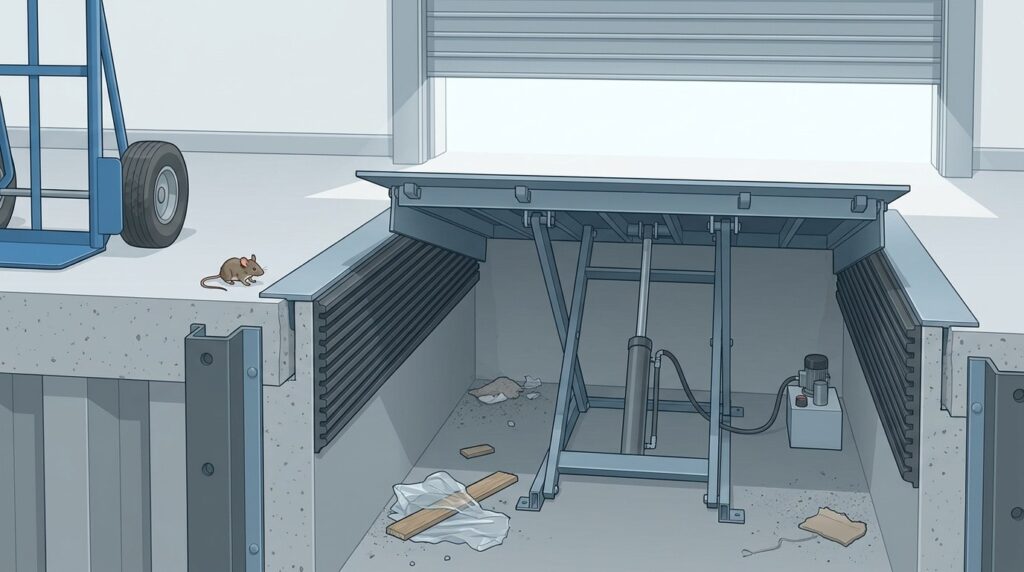
Start with the geometry, because it explains the rest. Loading docks are the largest openings in any warehouse or distribution center, which makes them a prime target for anything trying to get inside. The opening most people worry about is the door. The one that usually lets rodents in is the gap between the dock pit and the dock leveler, roughly an inch on each side, left open by design so the plate can move.
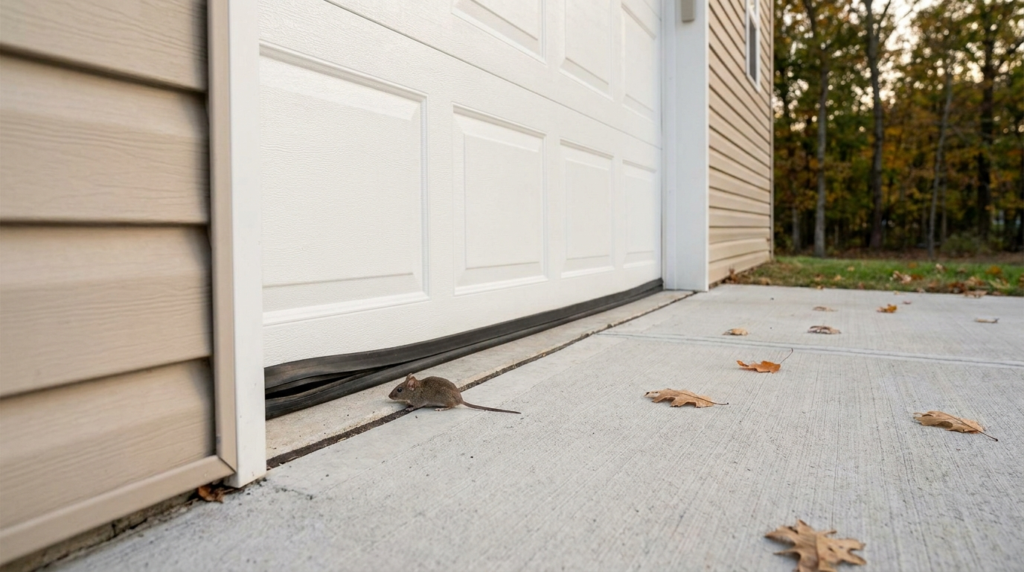
An inch is enormous. A mouse gets through a hole the size of a dime and a rat through an opening the size of a quarter, and a freight door left open or ajar hands them the rest. A dock pit is not a challenge to them. It is an entrance.
So the honest answer has two halves, and most programs only run the first one.
The first half is exclusion, done properly. That means the door bottom, the brush and compression seals on the leveler, the rear hinge area behind the plate, the pit walls themselves, every conduit and drain penetration inside the pit, and the wall to floor junction either side of the opening. Pest proofing is the part of this work we are known for, and our owner’s instruction to that crew has not changed in years: make it smooth, make it nice. A patch that looks like a patch gets caught by a pallet jack inside a month and stops being a seal.
The second half is the one almost nobody runs, and it is where we spend our time. You cannot seal an opening you need open. The door is up for hours a day because that is the job. Rather than pretend the dock can be closed, we manage it as a treated buffer. That is our own shorthand for three things running together: a maintained line of exterior stations on the approach and along the building line, interception devices set inside the door line where rodents actually travel, and a scheduled inspection of the pit itself instead of a one time seal and a hope.
The pit inspection is the piece that gets skipped. A dock pit is a dark, greasy, rarely visited box that collects shrink wrap, strapping, crushed product and standing water. We look at brush condition across the full width of the leveler, the rear hinge, the seal where the pit walls meet the frame, and whether anything is nesting in the debris. More often than not, the finding is not a rodent. It is the reason a rodent would want to be there.
Exclusion at a dock is construction work, not spraying. If a vendor’s answer to a leveler gap is a monthly treatment, you are buying a service call rather than a fix.
Which Pests Do Queens Warehouse Managers Have to Control Year Round?
The roster in a warehouse is shorter than most marketing pages suggest, and inside a heated building it barely moves with the calendar.
- House mice. The year round baseline in nearly every facility we service. They travel inside loads, nest in stored goods and stay close to their food, which is why activity clusters rather than spreads.
- Norway rats. Mostly an exterior pressure problem that becomes an interior one at grade level. They burrow along building lines and come in low, which is exactly where a dock sits. They also get controlled differently from mice, so it is worth telling Queens rats and mice apart before deciding where anything goes.
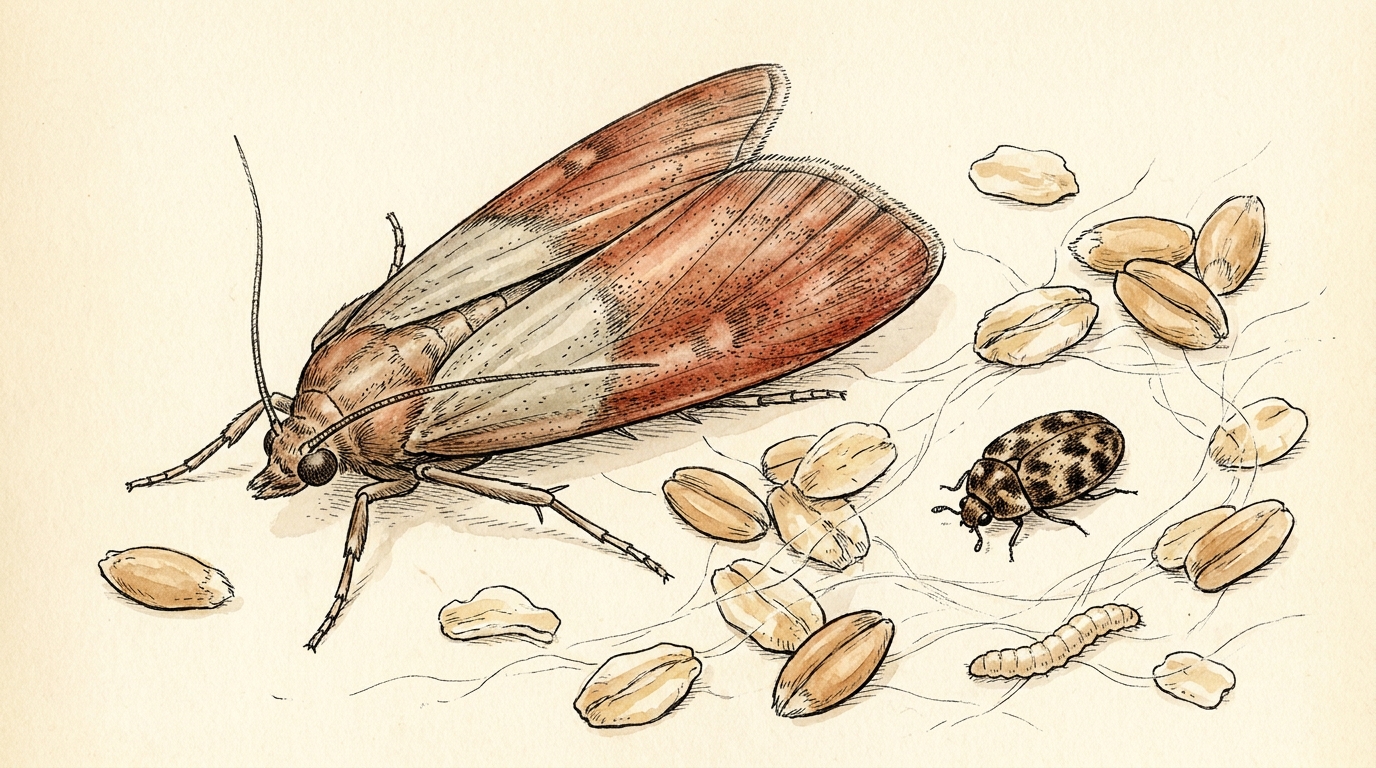
- Stored product insects. These arrive inside the product rather than through the building. The Indian meal moth and the warehouse beetle are the two names that come up most in dry goods, and they get their own section below.
- Cockroaches. Break rooms, locker areas and offices first, then anywhere warm and wet. Cardboard coming off deliveries is a reliable way to import them.
- Flies. Driven by the compactor, the trash dock, floor drains and the damaged goods pile. Fly pressure is a sanitation reading more than a spraying problem.
- Ants. Seasonal, usually along the perimeter and around whatever spilled and dried.
Seasonality changes the emphasis, not the membership. Rodent pressure climbs as the weather turns and the street population looks for somewhere warm, and fly and ant activity rises through the summer. Stored product insects ignore all of it, because your building is climate controlled and their food supply is sitting on a rack.
One more thing about year round pressure. In an online thread where a warehouse worker had noticed traps in the aisles and asked whether that was normal, the top reply put it plainly: warehouses that store food run a pest control process, and sometimes a pest still arrives on a trailer and gets inside anyway. That is the right expectation. A program is not a building that never receives a pest. It is a building where the ones that arrive are intercepted, recorded and dealt with before they establish.
How Should a Queens Warehouse Control Pests Around Pallet Racking?
Racking itself is not the problem. What collects in it, under it and behind it is. Cornell’s integrated pest management guidance for packing houses and storage areas leads with the same two levers we do, sanitation and exclusion. In a racked warehouse that turns into a few specific habits.
- Keep an inspection lane. Product pushed tight to a wall removes the only place a technician can read what is happening. Rodents run walls, and if nobody can walk that line with a flashlight, nobody knows.
- Treat the bottom position as different. Floor stacked pallets and the lowest rack position are where nearly every finding lands. They are reachable, dark underneath, and they take the equipment damage.
- Vacuum spilled product, do not blow it. Split bags and product dust on rack beams, behind uprights and in floor cracks keep a stored product population alive long after the infested pallet has shipped. Blowing down a pallet rack relocates that dust inside your building rather than removing it.
- Watch the pallets and the wrap. Wooden pallets split, hold residue and arrive from somewhere you did not inspect. Product coming off a cold trailer into a warm building sweats under its own shrink wrap, and that condensation makes damp cardboard both harborage and food. It is one of the quieter drivers of activity in a racked aisle.
- Handle damaged goods daily. The damaged goods area is the most common reservoir we find in a warehouse. Product that is broken, leaking and waiting on a credit decision is an open feeder. Let it sit a week and it is a colony.
Why Do Queens Warehouse Loading Docks Need Constant Rodent Control?
Because a dock seal is a maintained thing, not an installed thing. The standard preventive measure at a dock is a brush barrier fixed to the leveler, and as trade reporting in Food Logistics documents, these get damaged with use and leave gaps. The seal you signed off on two years ago is not the seal you have today, and nothing in the building will tell you it failed.
There is a check anyone can run before the next service visit. Put the door down, kill the lights on that bay, and look for daylight around the leveler and the door frame. Light coming through is a path. Inspectors walking a dock look for exactly that, and the same reporting flags worn leveler brush with missing sections as a known tell.
The dock also takes more abuse than any other part of your building envelope. Forklifts, trailer impact, water, salt and grease work on the same few feet of hardware every day. Add a door that is up by design, and the right model is not a repair. It is standing pressure management.
That is not only our opinion. Researchers looking at where rodent devices belong in commercial food buildings evaluated food warehouse distribution centers in New York and in Ontario against a long list of building characteristics. A dock door without a compression seal, and a door bottom that was not rodent proof, were among the ones they measured. The same work makes a broader point: the convention of spacing devices a fixed distance apart dates to the 1940s and 50s and carries less evidence than its universality suggests, while an assessment first approach, inspecting to find where activity actually is before placing anything, holds up better. At a dock that means re-walking it every visit instead of servicing a fixed line of stations and calling the area covered.
Then there is the borough. A dock on an industrial stretch of Queens does not sit in a vacuum: neighboring buildings, street level food waste, construction that displaces established burrows and constant trailer traffic keep replacing the pressure you removed last month. Rodents do not stay evicted, which is why the exterior perimeter deserves as much attention as anything inside.
Between visits your own team is the early warning system. Droppings along the wall to floor junction, gnaw marks on a door seal, greasy rub marks at a corner and chewed packaging low on the bottom rack are worth reporting the day they are seen rather than at the next service. We wrote up the early signs of mice in Queens if you want something short to hand a shift lead.
A standing program is a line item, and it is fair to want a sense of the range first. We have laid out what commercial pest control costs in NYC separately, which keeps this guide on the operational side.
How Do Queens Warehouses Prevent Stored Product Pests in Dry Goods?
Everything above assumes the pest is trying to get into the building. Stored product pests are a different problem, because they are already inside the pallet when it comes off the trailer. A stored product insect does not care how well your dock is sealed. It cares what is in the bag.
In dry goods the two names that come up most are the Indian meal moth and the warehouse beetle. Both live in the product, both move around a facility on a single pallet, and both are usually discovered when somebody opens a case and finds webbing, cast skins or insects in the top layer.
Prevention is mostly receiving discipline, and it is the least popular thing we ask for.
- Inspect product, not paperwork. Pull a case from a random position on inbound dry goods and open it. Look at the top layer, the case seams and the pallet base. A clean bill of lading says nothing about what is in the bag.
- Isolate anything suspect. Questionable pallets go somewhere separate, away from racked stock, until they are cleared or returned. Putting one into the rack to deal with later is how a pallet becomes an aisle.
- Rotate strictly. First in, first out, with real date marking. Stored product insects need time to complete a generation, and slow moving stock is what gives it to them.
- Clean at the residue, not the floor. Spilled grain, cereal, flour and pet food in rack beams and floor cracks will sustain a population long after the original pallet has gone. Sanitation is the lever with the most evidence behind it and the one most often reduced to a broom.
- Map the monitors. Monitoring in a dry goods zone only helps if each device has a fixed, recorded location, so a rise in counts points at a rack position rather than at the building in general.
Where product is handled under food grade conditions the standards get tighter and so does the paperwork, which is the work we do through our food grade facility pest programs. The receiving discipline above carries over to every warehouse regardless of what it stores.
Want Your Bait Stations Mapped and Actually Read?
Our team has serviced Queens warehouses since 1999, numbering and logging every station and monitor so a trend shows up early. Free inspection of your facility.
What Bait Stations and Monitors Control Pests in a Queens Warehouse?
Think in three layers, working from the street inward.
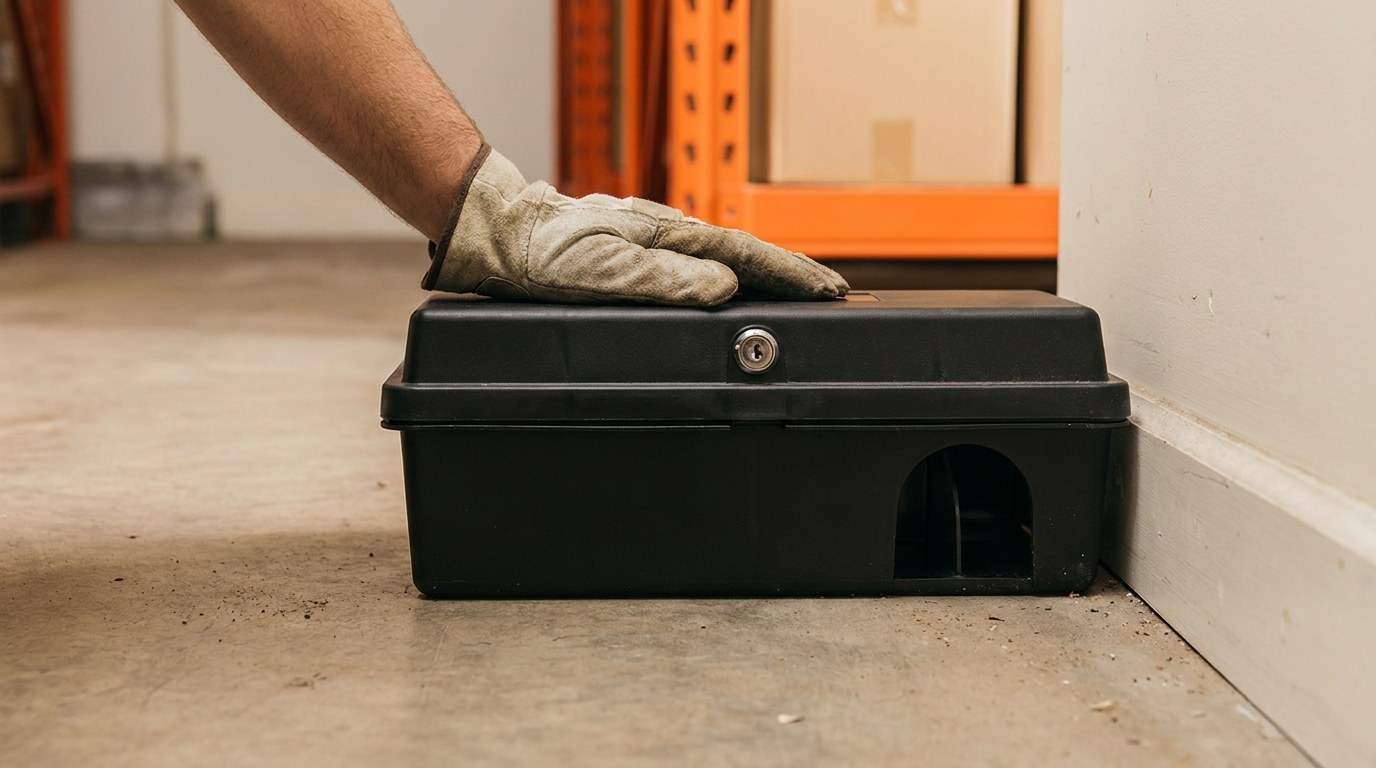
The exterior perimeter. This is where rodenticide belongs. We run tamper resistant stations from VM Products around the building line and along the approach to the dock, baited with Bell Labs First Strike, so pressure is intercepted on the way in rather than after it arrives. Stations get anchored, numbered and serviced on a schedule; one that slides, floods or disappears under a pallet has stopped being data.
The door line. Interception devices sit just inside the openings, tight to the wall on both sides of each dock door and personnel door. The trade name for this class of device is an interception or blunder trap, and they work for a simple reason: rodents travel walls and corners, not open floor. A device in the middle of an aisle is decoration.
The interior. Inside, the job shifts from killing to knowing. A monitoring device along a rack run, in a dry goods zone or in a break area tells you where activity is developing while it is still small enough to be a nuisance rather than a shutdown.
Placement matters more than count. The research cited at the dock is why we inspect before we place rather than measuring devices off a wall at a set interval, and why a device map has to change when the building does: a new receiving pattern, a new tenant next door or a construction project on the block should all move devices.
The last point decides whether any of this was worth buying. A bait station nobody reads is a plastic box. Every device should be numbered, fixed to a location on a map, and have its reading written down at every service, empty or not, because the value sits in the trend rather than in the visit. That is also what turns a device network into something you can show somebody, which brings us to the file.
The rodent side of this is the core of our commercial rodent control service, and in a warehouse it is at least as much exclusion and placement as it is bait.
What Pest Control Records Should a Queens Warehouse Keep for Audits?
This is about your file, not anybody else’s process. Customers audit their suppliers, receiving teams ask questions, and a new operations manager inherits whatever exists. What you want is a set of documents showing the program existed and ran, without anyone reconstructing it afterward.
- A dated service log. Every visit, the areas covered, what was found, what was done and by whom.
- A device map with readings. Every bait station and monitoring device numbered and located on a floor plan, with counts recorded over time. This is the document that shows a pattern instead of a pile of visits.
- Corrective actions, closed out. What was found, what was changed, and confirmation that somebody verified it afterward. An open finding with no closure reads worse than the finding did.
- Receiving and sanitation records. Rejected or quarantined loads, the cleaning schedule for dry goods, and the dates the damaged goods area was cleared.
- Application records. What material was used, where, in what quantity, and by which licensed applicator.
- Structural work. Dates that dock seals, leveler brush, door sweeps and pit repairs were inspected or replaced. Almost nobody keeps this one, and it is the record that proves the dock is managed rather than assumed.
Together those six things are your audit trail. Keep them in one place, keep them current, and make sure someone on site can produce them without calling the vendor first. If the only copy lives in a contractor’s software, you do not have records. You have access to records, and that access ends when the contract does. Ask any vendor to leave a written report after every visit and to hand over a current device map as a condition of the work. We do both on every commercial account we run.
One clarification, because these questions get mixed together. If your Queens operation includes a food service side rather than storage and distribution, that is a different inspection regime with its own scoring and its own consequences, and we covered it separately in how DOH inspects NYC restaurants for pests.
The Bottom Line on Warehouse Pest Control in Queens
Rodent control in a Queens warehouse comes down to a short list. The dock is the opening that matters, and the gap under the leveler is the part nobody names. A seal is something you maintain and inspect, not something you install once. Many racking problems are sanitation problems wearing a different hat. Stored product pests arrive inside the product, so receiving discipline beats any treatment applied afterward. Devices earn their place when they are numbered, mapped and read. And the file you can hand to somebody is what makes the whole thing defensible.
None of that is exotic. It is work that has to keep happening, in a borough where the pressure outside your building gets replaced every month.
We have been doing this in New York City since 1999, out of a single office in Queens, with about twenty field technicians among twenty seven people in total. We are members of the New York Pest Management Association and the National Pest Management Association, we hold a BBB accreditation, and 60 to 65 percent of our work is commercial, with large warehouse and distribution accounts among the biggest things we run. If you want somebody to walk your dock and tell you honestly what is there, our coverage across Queens means we can usually be out the same day during business hours.